Artwork
The Singel Bridge at the Paleisstraat in Amsterdam
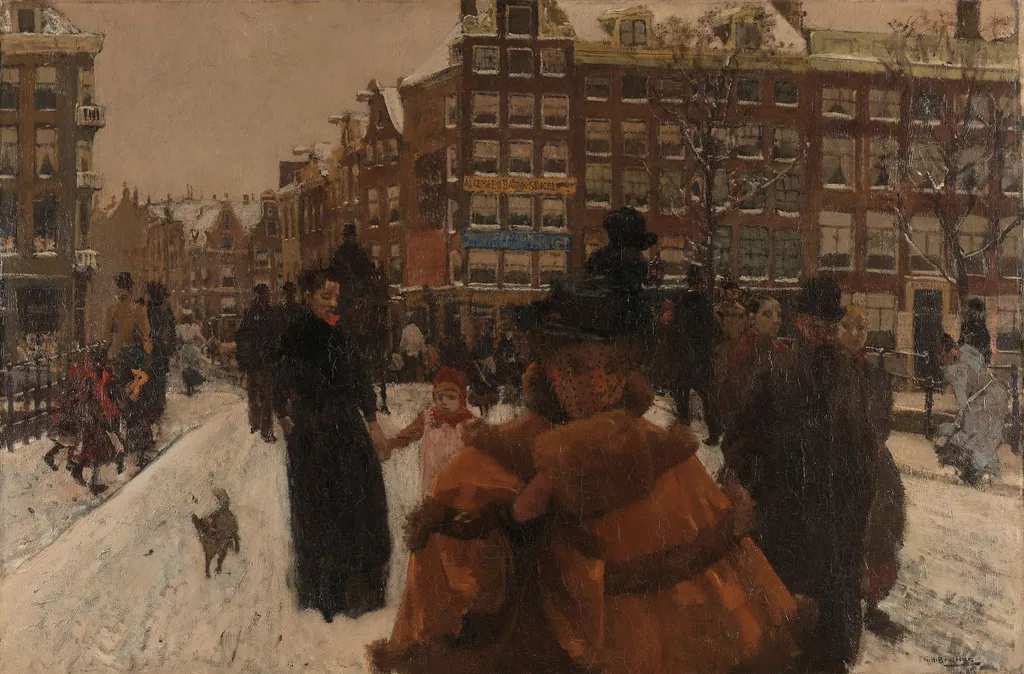
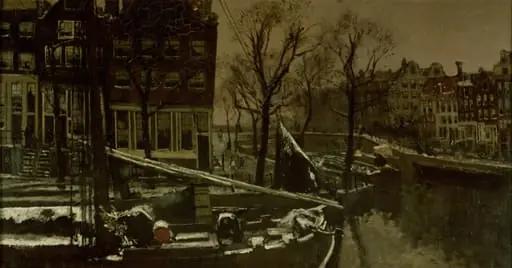
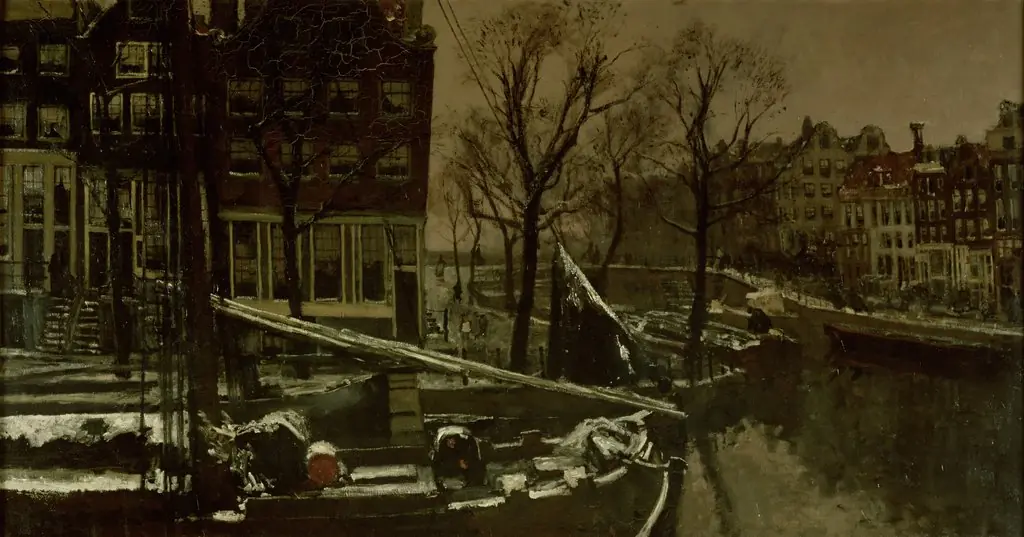
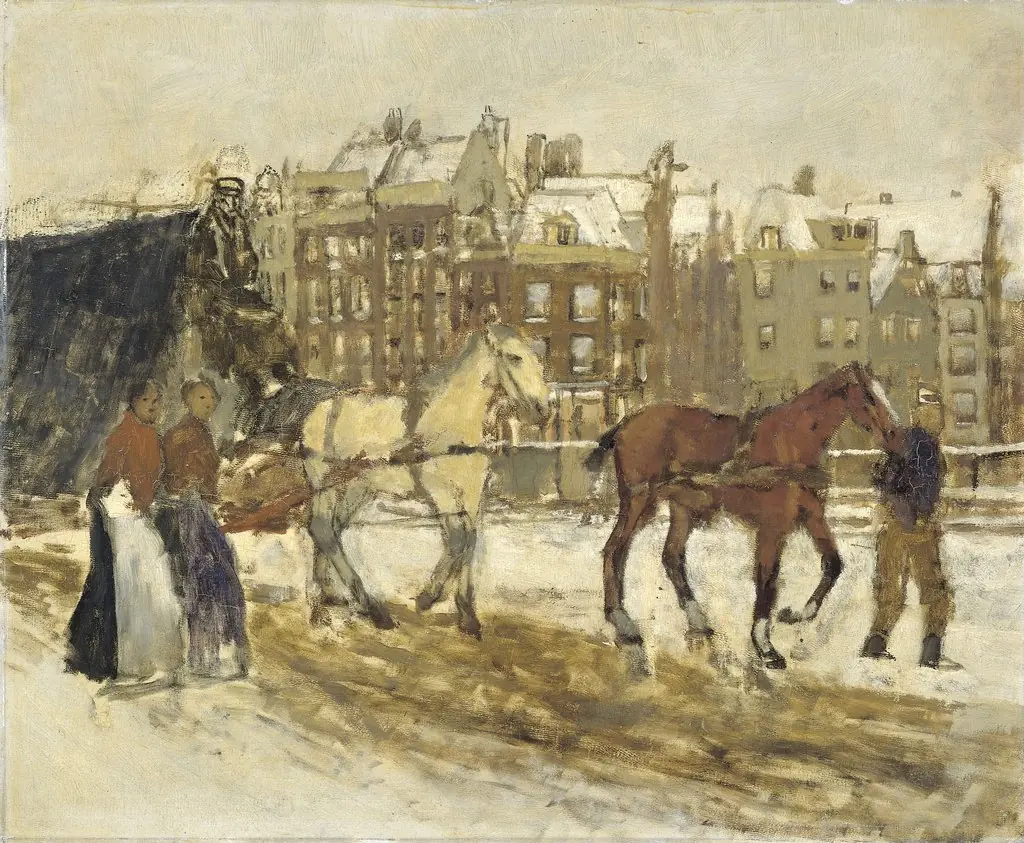
The Singel Bridge at the Paleisstraat in Amsterdam is an oil painting by the Amsterdam Impressionist artist George Hendrik Breitner. It dates from 1900 and is held in the collection of the Rijksmuseum.
About this work
This painting shows a bustling Amsterdam bridge scene. George Hendrik Breitner painted it with thick oil paint in 1896 or 1898. It’s a big canvas, over three feet tall and five feet wide.
Breitner loved city life. He often painted bridges and streets in motion. This work captures everyday Amsterdam in the late 1800s.
Check out more Dutch city scenes by George Hendrik Breitner.
Subject & Meaning
Her direct approach toward the viewer creates an immersive effect, enhanced by the composition's abrupt lower edge which mimics a photographic snapshot.
The painting captures a dark winter day at the turn of the twentieth century, depicting pedestrians crossing the Singel Bridge where the Paleisstraat meets the canal ring. The scene presents an everyday moment frozen in time, characterized by wet, gray snow and a dynamic interplay of black and reddish-brown tones. Figures populate the street, including girls playing on the left and a maid lifting her skirts on the right to avoid the slush.
Dominating the foreground is a fashionable woman dressed in the latest Parisian style, wearing an orange-brown pelerine with fur trim and a hat adorned with rooster feathers. Her direct approach toward the viewer creates an immersive effect, enhanced by the composition's abrupt lower edge which mimics a photographic snapshot. This central figure replaced an earlier depiction of a working-class woman following critical reception at its 1896 exhibition, shifting the work's focus toward a more cultivated representation of Amsterdam society.
Technique & Style
The painting is executed in oil paint on canvas, measuring 100 cm by 152 cm. It depicts a winter scene on the Singel Bridge at the Paleisstraat in Amsterdam, rendered in an impressionistic style with figures captured in a momentary, photographic-like composition. The work shows people walking across the bridge under a dark winter sky, including a fashionable woman in an orange-brown fur-trimmed pelerine and hat, positioned centrally in the foreground. The handling of light and color reflects Breitner's use of photographic techniques, such as cropping and contour tracing, to achieve dynamic spatial effects. The surface treatment and brushwork contribute to a textured, atmospheric quality characteristic of Amsterdam Impressionism.
History & Provenance
George Hendrik Breitner first exhibited the painting in 1896 at the Amsterdam artists' association Arti et Amicitiae. Following criticism of the foreground figure, and on the advice of the director of the Van Wisselingh & Co art dealership, Breitner replaced the original woman with a fashionable lady, reportedly inspired by a photographic portrait of the model Lise Jordan (sister of his later wife Marie) by his friend Willem Witsen. He also altered additional figures and details.
In 1898 Breitner offered the work for sale again through Van Wisselingh, and it sold immediately. The painting returned to the Van Wisselingh market in 1905 and in 1912 was purchased for 8,100 guilden, an exceptionally large sum at the time, by the collectors Jean Charles Joseph Drucker (1862–1944) and Maria Lydia Drucker-Fraser (1886–1944). The Druckers placed the work on long-term loan at the Rijksmuseum in 1919, and in 1944 it was bequeathed to the museum, where it remains in the collection.
The painting is held by the Rijksmuseum Amsterdam, where it is recorded as part of the permanent collection.
It was bequeathed to the museum in 1944 after earlier passing by inheritance from the Drucker collection, which had acquired it in 1912 for 8,100 Dutch guilders. The work entered the Rijksmuseum as a long-term loan in 1919 from Jean Charles Joseph Drucker and Maria Lydia Drucker-Fraser.
It appeared in the exhibition Clouds and Light: Impressionism in Holland at the Museum Barberini in 2023.
Context
Breitner’s move to Amsterdam in 1886 framed his practice around the city’s streets, and The Singel Bridge at the Paleisstraat in Amsterdam crystallizes his fusion of Impressionist immediacy with Dutch urban life. The work’s abrupt cropping and snapshot-like composition reflect his use of photography as a preparatory tool, sometimes tracing contours with tracing paper before transferring them to canvas.
Its first showing in 1896 at Arti et Amicitiae prompted criticism of a poorly realized foreground figure, prompting Breitner to replace the figure with a fashionably dressed woman inspired by a photograph of Lise Jordan, sister of his future wife and associated with Willem Witsen. This revision underscores Breitner’s iterative process and responsiveness to critical feedback, aligning the painting with the broader Amsterdam Impressionist milieu that valued quotidian scenes rendered with modern immediacy.
Overview
George Hendrik Breitner’s oil on canvas, titled The Singel Bridge at the Paleisstraat in Amsterdam, measures roughly one metre by one and a half metres. Executed in the late 1890s, sources differ between 1896 and 1898, the work belongs to the Rijksmuseum’s collection and presents a wide, horizontally oriented view of a city bridge.
Own this work as a print
Artist & collection
Artist
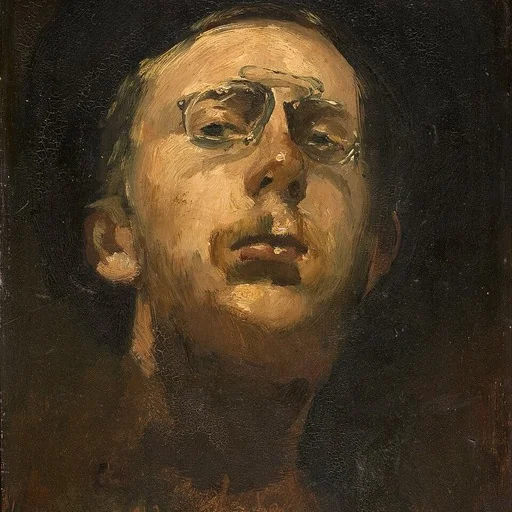
George Hendrik Breitner (12 September 1857 – 5 June 1923) was a Dutch painter and photographer.