Artwork
Ida Cushman
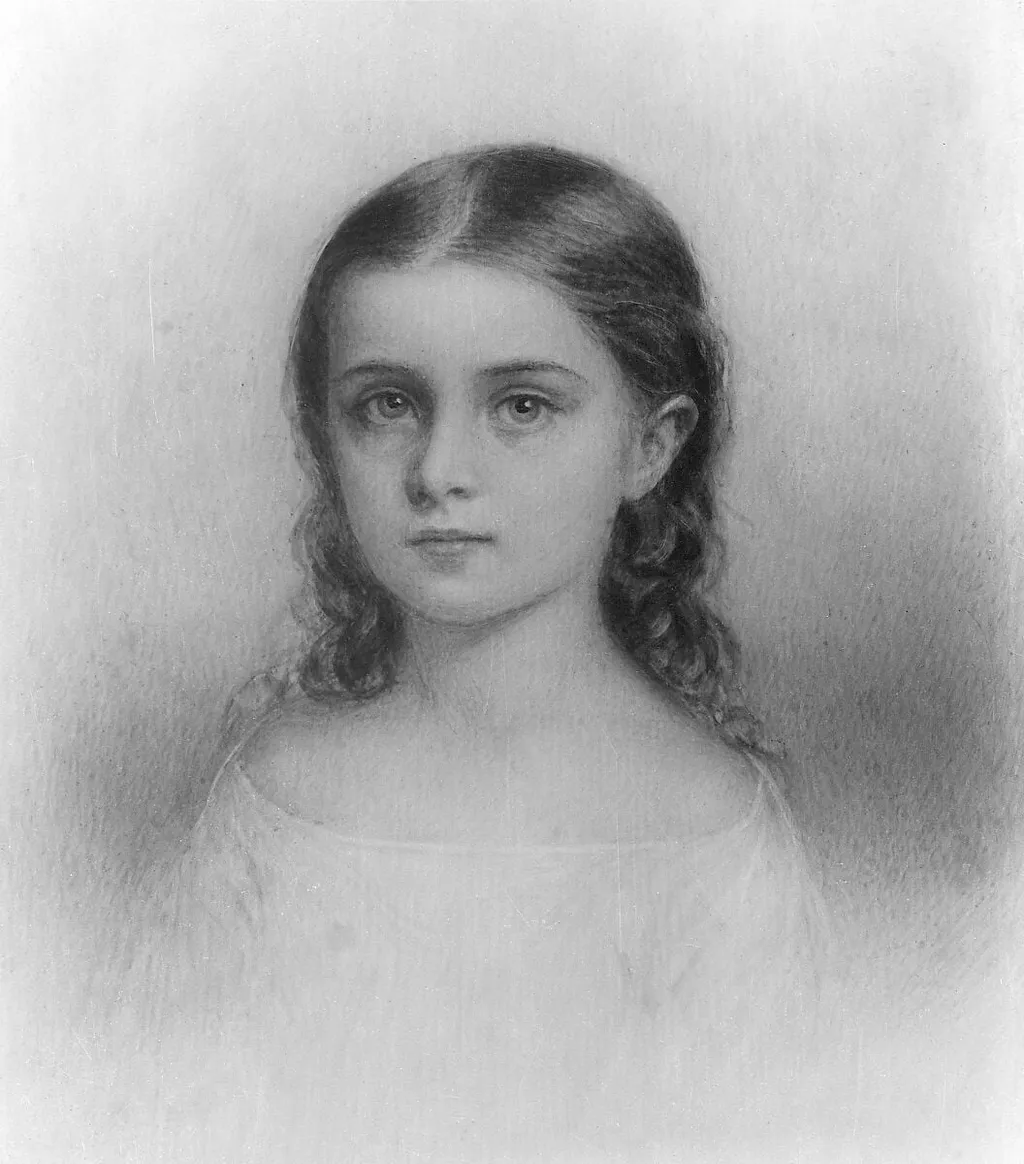
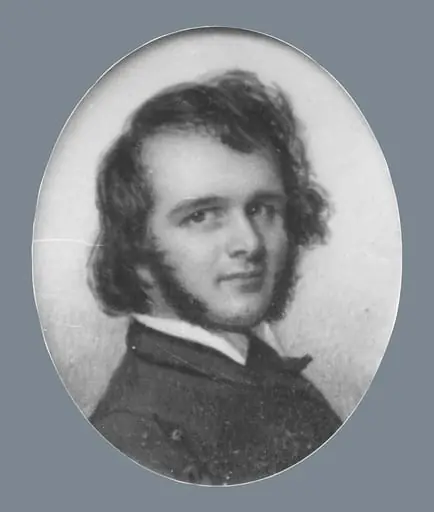
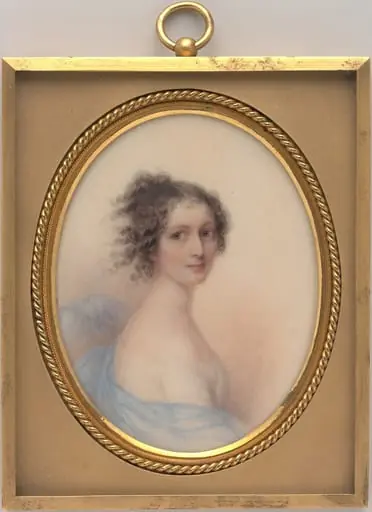
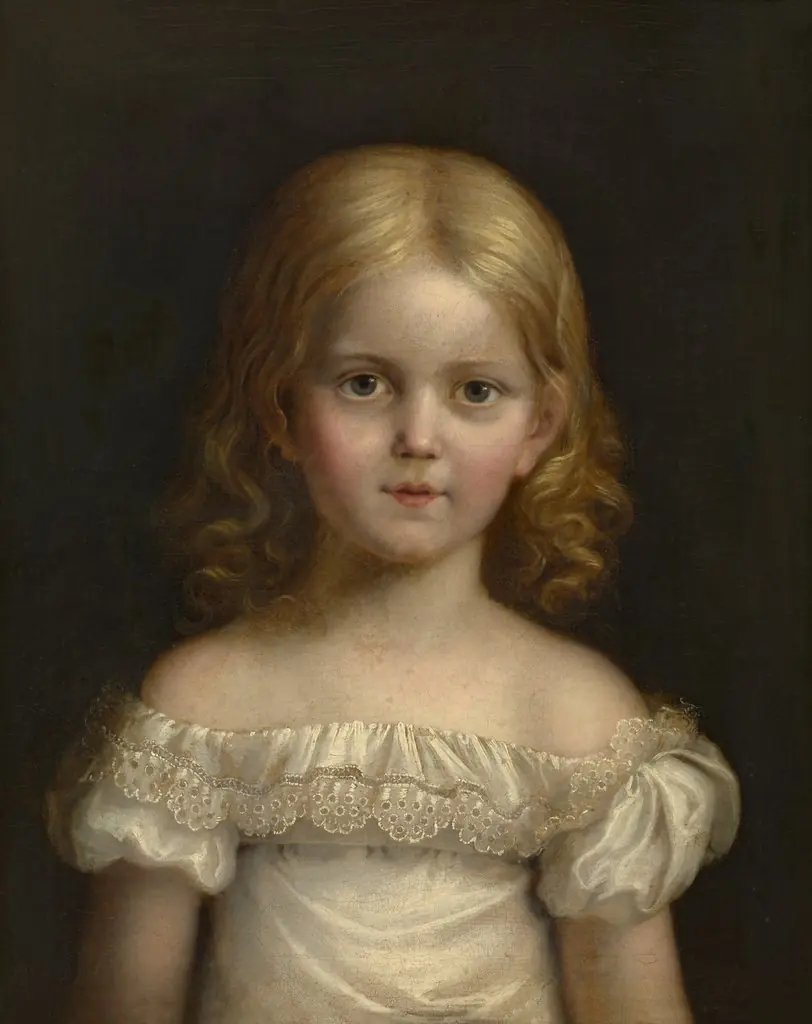
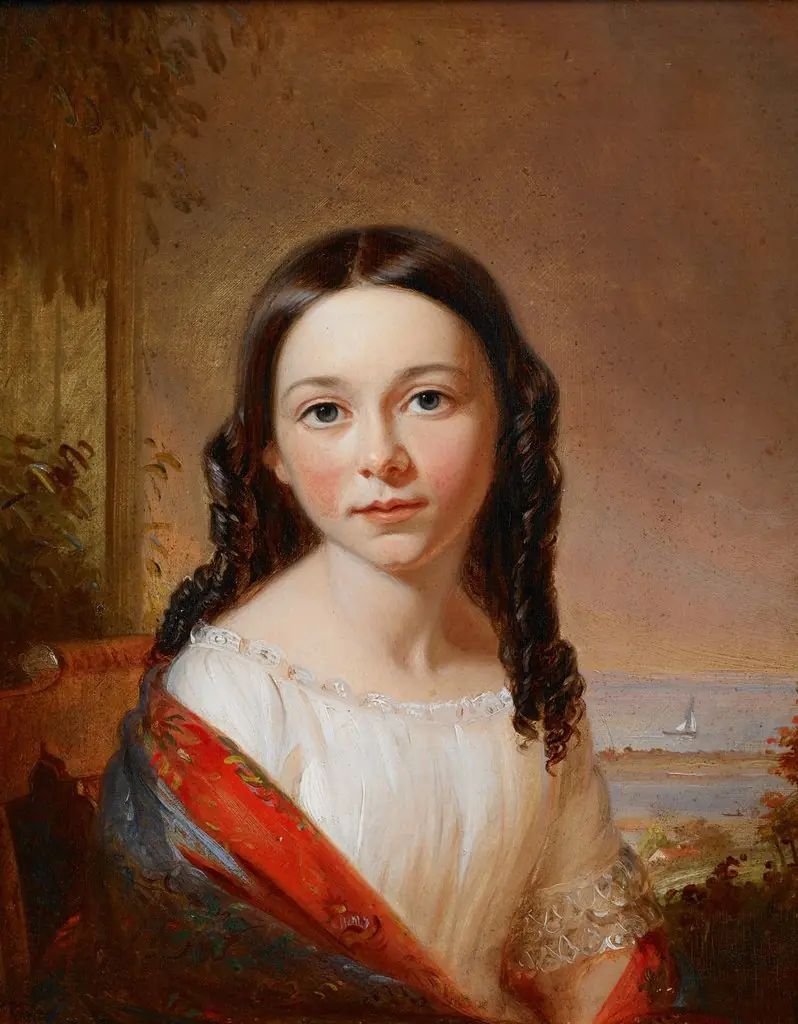
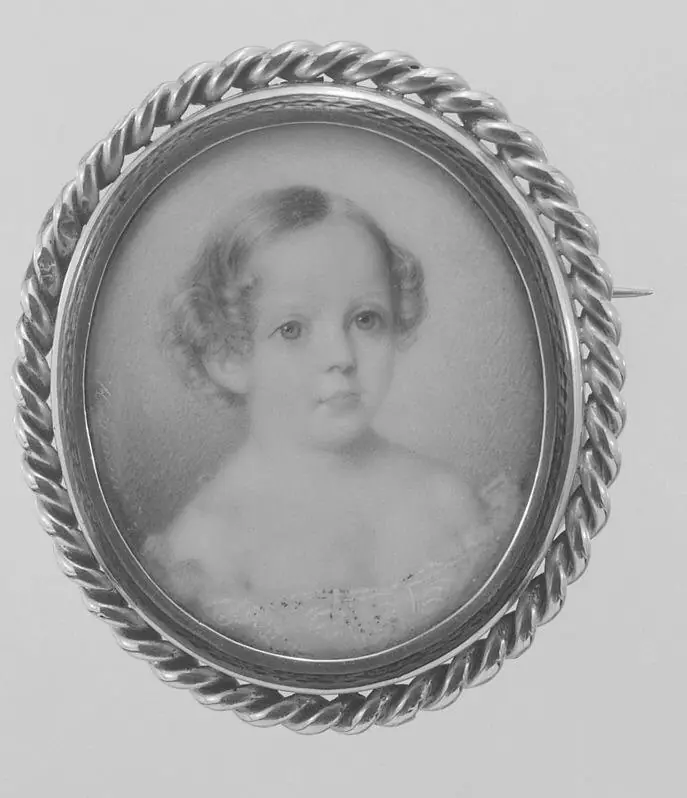
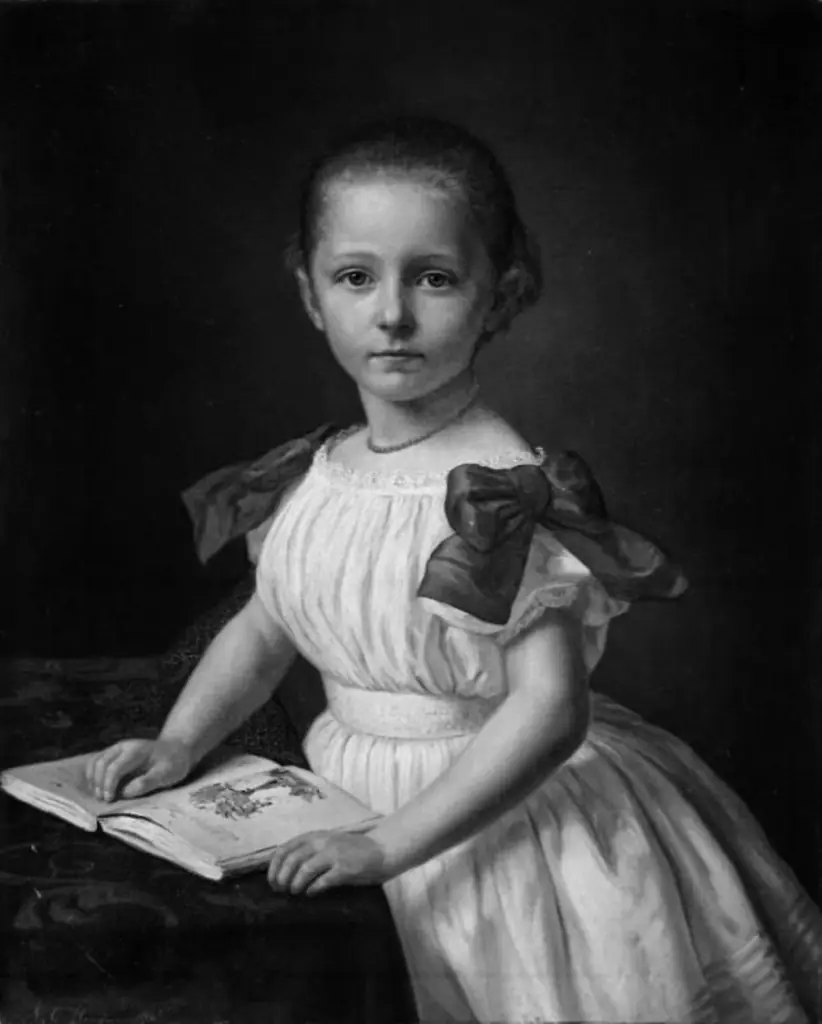
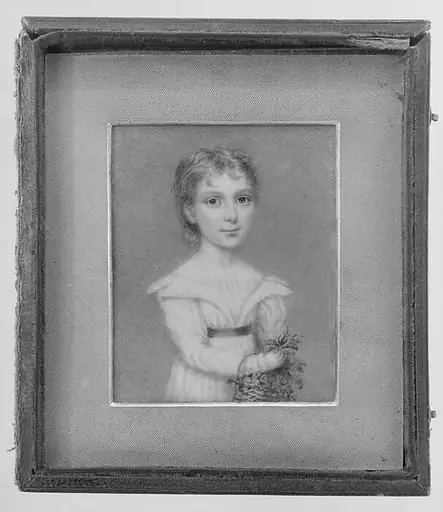
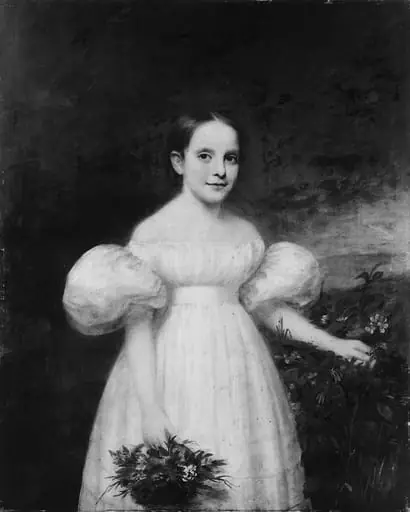
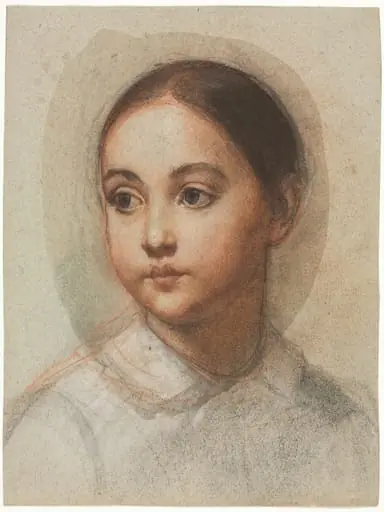
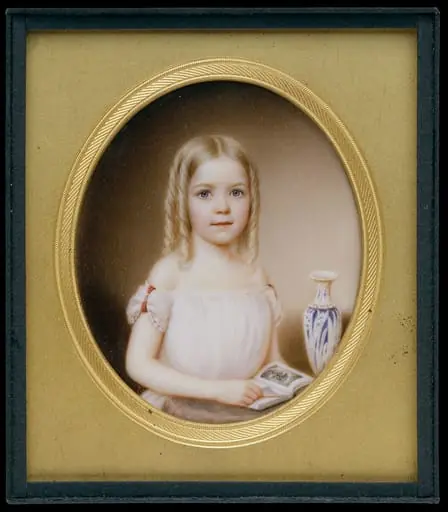
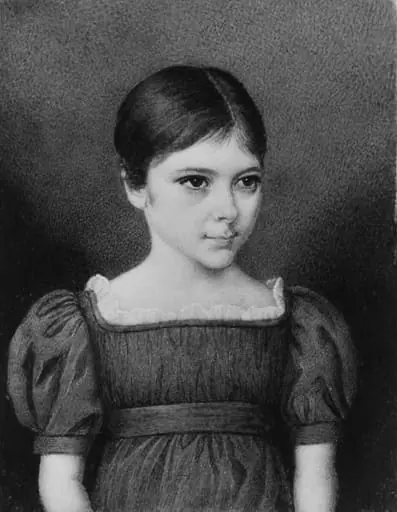
Ida Cushman is a watercolor painting by the American Folk Art artist George Hewitt Cushman. It dates from 1856 and is held in the collection of the Metropolitan Museum of Art. A young girl, possibly the artist's daughter, is portrayed in this delicate miniature.
About this work
Technique & Style
The condition of the work, as documented in institutional records, remains stable, with no significant losses or alterations to the paint layer or support.
The portrait of Ida Cushman employs watercolor applied to an ivory support, reflecting mid-19th-century miniature traditions. Measuring 11.1 cm in height and 8.3 cm in width, the work demonstrates refined handling typical of watercolor on ivory, with delicate brushwork and subtle layering to capture facial features and expression. The ivory support, a common material for portrait miniatures, provides a smooth, luminous ground that enhances the luminosity of the watercolor pigments.
Stylistically, the painting adheres to the conventions of portraiture, emphasizing naturalistic rendering and intimate detail. The condition of the work, as documented in institutional records, remains stable, with no significant losses or alterations to the paint layer or support.
History & Provenance
Created in 1856, this watercolor portrait on ivory was executed by the artist George Hewitt Cushman. The work depicts a young girl and is currently held in the collection of the Metropolitan Museum of Art, specifically within its American Wing. While the piece is firmly dated to the mid-19th century, the available records do not detail the specific circumstances of its commission, its original owner, or the chain of custody leading to its acquisition by the museum.
Context
The 1856 watercolor portrait by George Hewitt Cushman, documented in the Metropolitan Museum of Art’s American Wing, illustrates mid‑nineteenth‑century American portraiture practices, particularly the emphasis on intimate family subjects rendered in delicate media. Its classification as a portrait and inclusion in the museum’s collection underscore its relevance to scholarship on Cushman’s role in shaping early American artistic representation, situating the work within broader discussions of gender, childhood, and artistic technique in the period. The piece thus functions as a contextual anchor for understanding Cushman’s artistic legacy and the evolution of portrait painting in the United States.
Overview
A young girl, possibly the artist's daughter, is portrayed in this delicate miniature. Dressed in white, she sits with her dark hair neatly pulled back, her gaze directed outward. Crafted around 1856 by American artist George Hewitt Cushman, this watercolor on ivory exemplifies the intimate portraiture popular in the mid-19th century. Cushman, known for his miniature work, created this piece during his time in Philadelphia.
Subject & Meaning
The portrait features a young girl, presumably named Ida Cushman, seated sideways in a chair. Her dark hair is neatly styled, and her hands are gently folded in her lap as she looks directly at the viewer. This direct gaze, combined with the small scale of the artwork, creates an intimate connection.
The choice of a personal subject aligns with the artist's focus on miniature painting, often depicting family members or close acquaintances.
Artist & collection
Artist
George Hewitt Cushman (June 5, 1814 – August 3, 1876) was a top American engraver and painter of miniature paintings and portraits of his time (second only to Edward Greene Malbone).