Artwork
The Coal Waggon
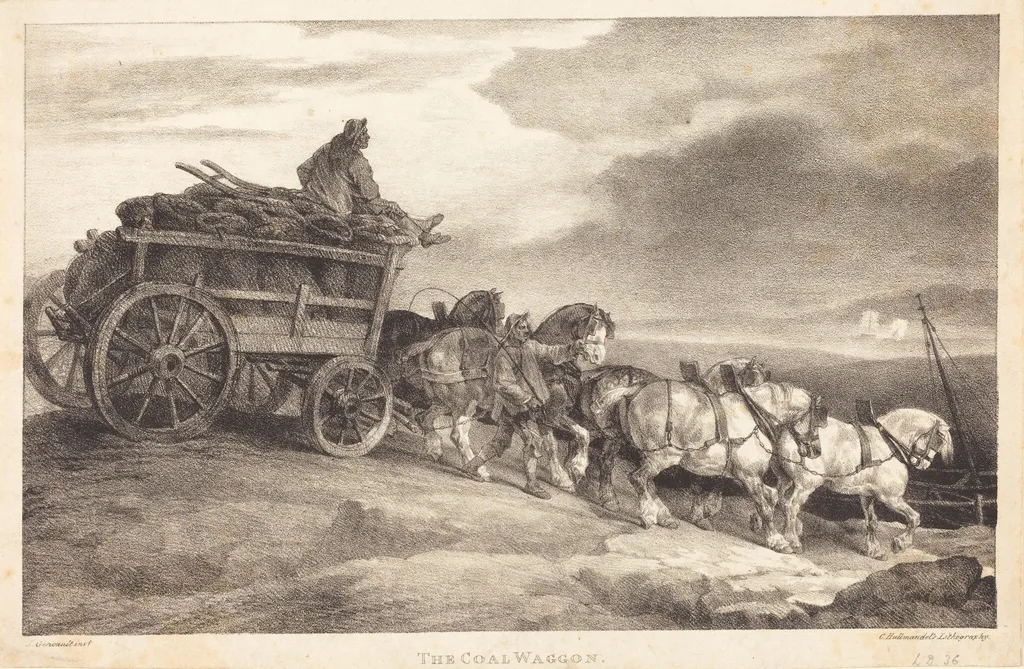
The Coal Waggon is an ink print by the Romanticist artist Théodore Géricault. It dates from 1821 and is held in the collection of the National Gallery of Art.
About this work
Overview
The Coal Waggon is a lithograph created by French artist Théodore Géricault in 1821, exemplifying his exploration of printmaking techniques during a period of artistic experimentation.
Subject & Meaning
The lithograph features a mundane scene of a heavy wooden wagon on uneven terrain, accompanied by a weary yet steadfast horse, highlighting Géricault's interest in depicting everyday life alongside more dramatic subjects.
Technique & Style
Characterized by sharp, realistic lines, the work conveys a sense of heaviness and immediacy, suggesting it may have served as a quick study rather than a meticulously refined piece. The pronounced shadows, accentuated by targeted lighting, add depth to the composition.
History & Provenance
Created in 1821, this lithograph is part of Géricault's body of work within the Romantic movement, though specific provenance details (ownership history) are not provided in the available information.
Context
Within Géricault's oeuvre, The Coal Waggon stands as an example of his lithographic experiments, contrasting with his more renowned dramatic paintings yet aligning with the Romantic emphasis on emotional and everyday themes.
Legacy
While The Coal Waggon may not be Géricault's most celebrated work, it contributes to the broader understanding of his artistic range and his contributions to the development of lithography as an expressive medium.
Own this work as a print
Artist & collection

Artist
Jean-Louis André Théodore Géricault (French:; 26 September 1791 – 26 January 1824) was a French painter and lithographer.

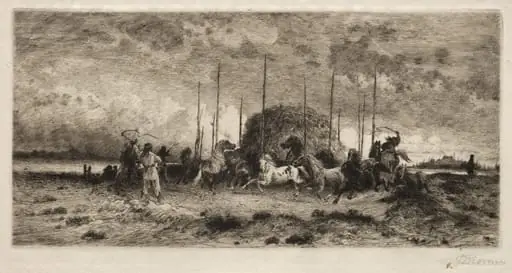 Harvest at San Juan, New Mexico
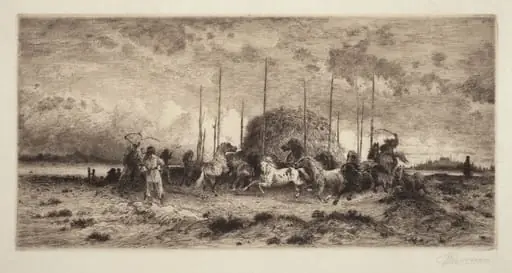 Harvest at San Juan, New Mexico
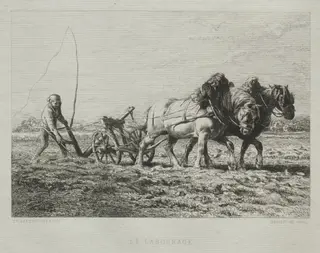 Ploughing
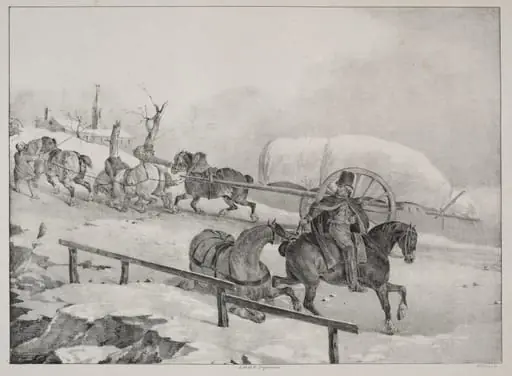 Wagoner Climbing a Hill
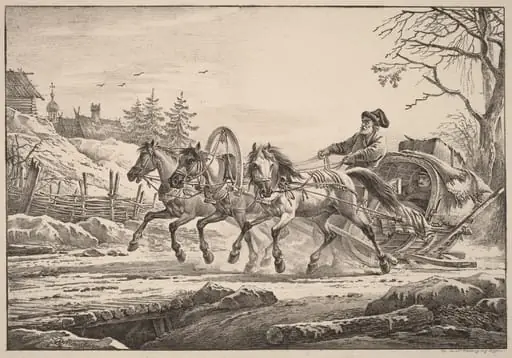 A Hired Coachman in Winter
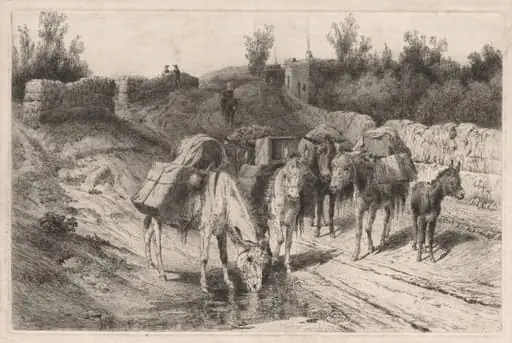 On the Road to Santa Fe
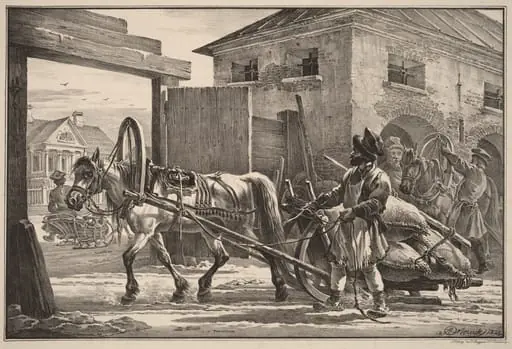 Sled Loaded with Flour Led by an Isvoschik
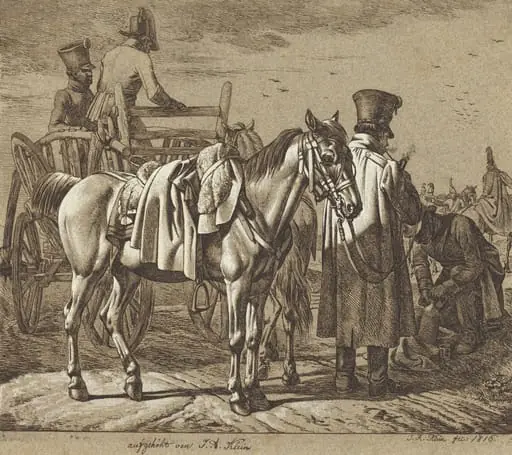 Horse with Soldiers Smoking Pipe/Military Scene
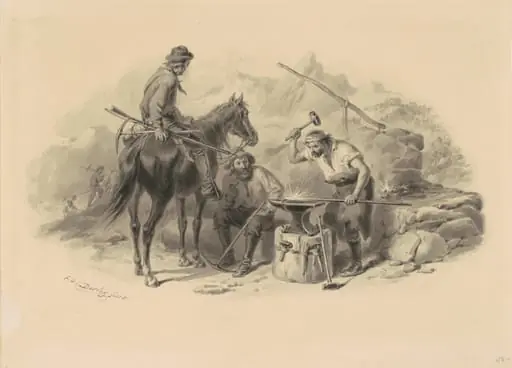 Blacksmith in the Goldfields
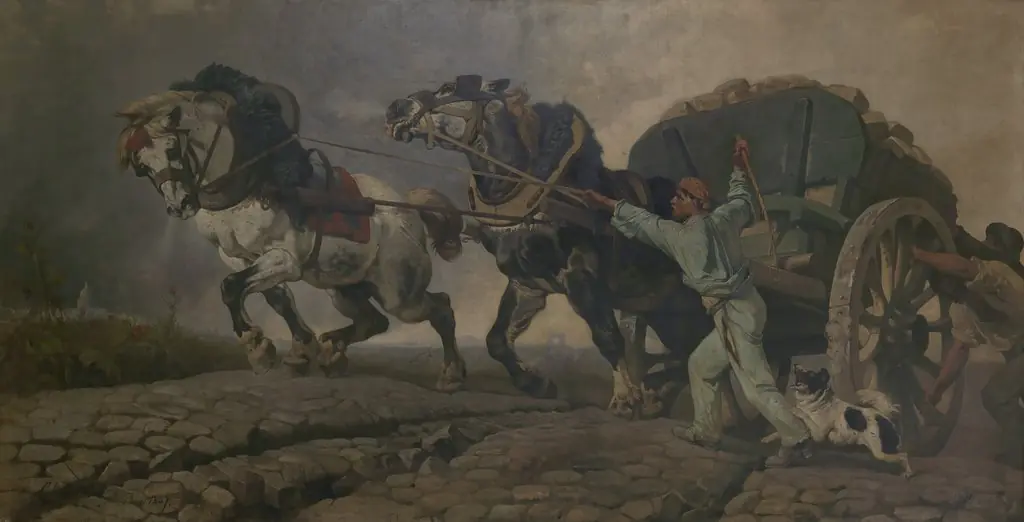 The heavy load
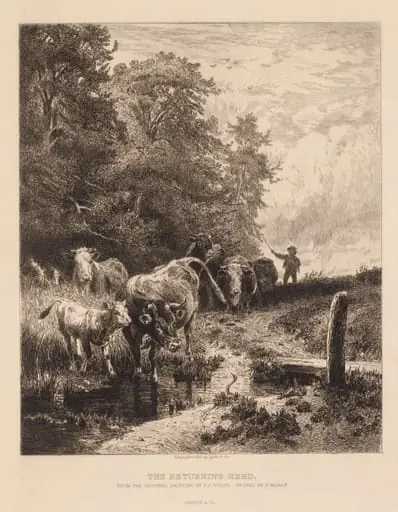 The Returning Herd
- The Coal Wagon