Artwork
Mounted Trumpeters of Napoleon's Imperial Guard
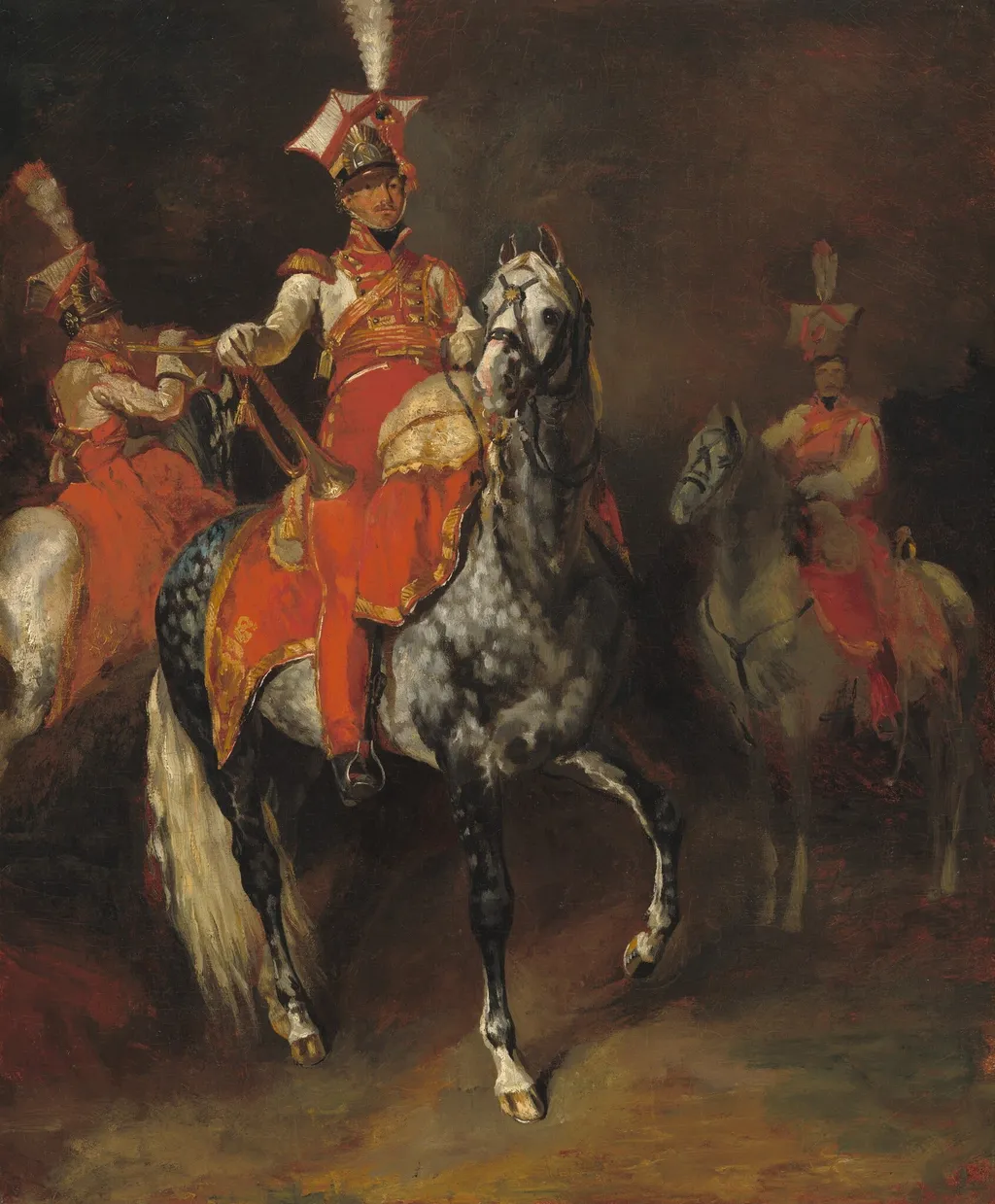
Mounted Trumpeters of Napoleon's Imperial Guard is an oil painting by the Romanticist artist Théodore Géricault. It dates from 1814 and is held in the collection of the National Gallery of Art.
About this work
Overview
6 centimeters, the work belongs to a series of small canvases depicting Napoleonic cavalry officers that Géricault painted between 1812 and 1814.
Mounted Trumpeters of Napoleon's Imperial Guard is an oil on canvas painting by the French artist Théodore Géricault, created around 1813. Measuring 60.4 by 49.6 centimeters, the work belongs to a series of small canvases depicting Napoleonic cavalry officers that Géricault painted between 1812 and 1814. The painting is currently held in the National Gallery of Art in Washington, D.C., where it is accessioned under the number 1972.25.1. The work is significant for its synthesis of two of the artist's great interests, the horse and the pomp of military life, and for its ambiguous, romantic vision of imperial grandeur created during a period of wartime hardship.
Subject & Meaning
The composition features three mounted trumpeters in vibrant military dress, with the central rider dominating the foreground and two companions flanking him in shadow. Rather than portraying specific individuals, Géricault invented the scene to present a romantic ideal of the dashing soldier. The riders wear the Polish czapka, establishing a visual link to Napoleon's Polish Lancers and raising questions about nationality, class, and power within the imperial framework. Created as France faced dramatic shifts and Napoleon's ambitions faltered, the painting deliberately avoids referencing the hardships or defeats of the ongoing wars. Instead, it presents an image of military grandeur, though one fraught with deliberate ambiguity. The work neither fully lauds the imperial project nor critiques it, instead capturing a haunted, unsettling tension between adoration and a subtle dread that hints at an era drawing to a close.
Technique & Style
Géricault executed the painting with a highly varied brushwork that emphasizes both detail and atmospheric movement. He used short, rapid strokes to define the central figures in the foreground, rendering the gold epaulettes, tasseled saddle cloths, and gleaming brass trumpet with tight detail. In contrast, he applied broader, more sweeping strokes to create the neutral, dark background. The palette relies on strong visual contrasts: the background is composed of dark, undefined brown and ochre tones, while the figures are rendered in warm, vibrant tones of crimson red and burnished gold that cause them to advance toward the viewer. Light falls strongly from the upper left, illuminating the central figure's face, chest, and the dappled gray horse's neck while casting deep shadows beneath the horses and across the rear figures. The overall finish is painterly rather than polished, conveying energetic movement and a romantic sensibility.
History & Provenance
The early history of the canvas prior to the twentieth century remains unknown. The painting first surfaced publicly in 1937 as catalogue number thirty in a Géricault exhibition at the Galerie Bernheim Jeune in Paris, lent by Édouard Napoléon César Edmond Mortier, the duc de Trévise. The duke had organized a major Géricault exhibition in 1924 without including this work, suggesting he acquired it sometime between 1924 and 1937. The painting was bought in at a sale at Galerie Charpentier on May 19, 1938. The duc de Trévise subsequently gave the painting to a relative, likely Jean, Comte Budes de Guébriant, who was based in Buenos Aires. It was later sold to Francisco Gowland Llobet of Buenos Aires, who placed it on consignment with Galerie Schmit in Paris in 1971. The National Gallery of Art in Washington purchased the work on July 19, 1972, using the Chester Dale Fund.
Context
Created during the height of the Napoleonic Wars, the painting reflects the broader socio-political anxieties of post-revolutionary France as it grappled with imperial legacies and faltering military ambitions. Géricault explored these themes through the lens of Romanticism, a movement then in full bloom, which favored emotional resonance, individual heroism, and dramatic movement over the cooler neoclassical ideals of the previous generation. By focusing on the visual splendor of the cavalry rather than the grim realities of the battlefield, Géricault engaged with the iconography of Napoleon's empire while simultaneously introducing an unsettling tension that questioned the very valor and purpose of the soldiers depicted.
Own this work as a print
Artist & collection
Artist
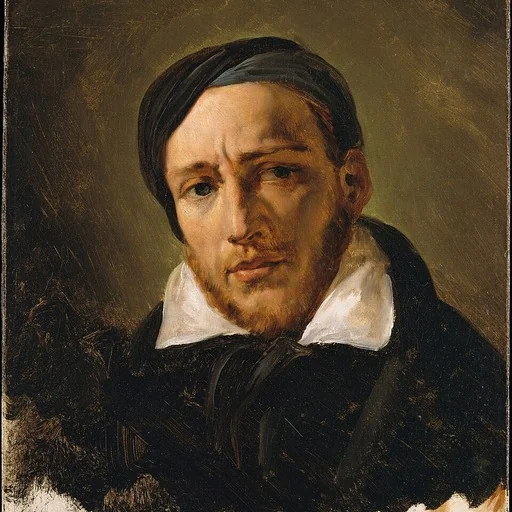
Jean-Louis André Théodore Géricault (French:; 26 September 1791 – 26 January 1824) was a French painter and lithographer.

 Light cavalryman charging
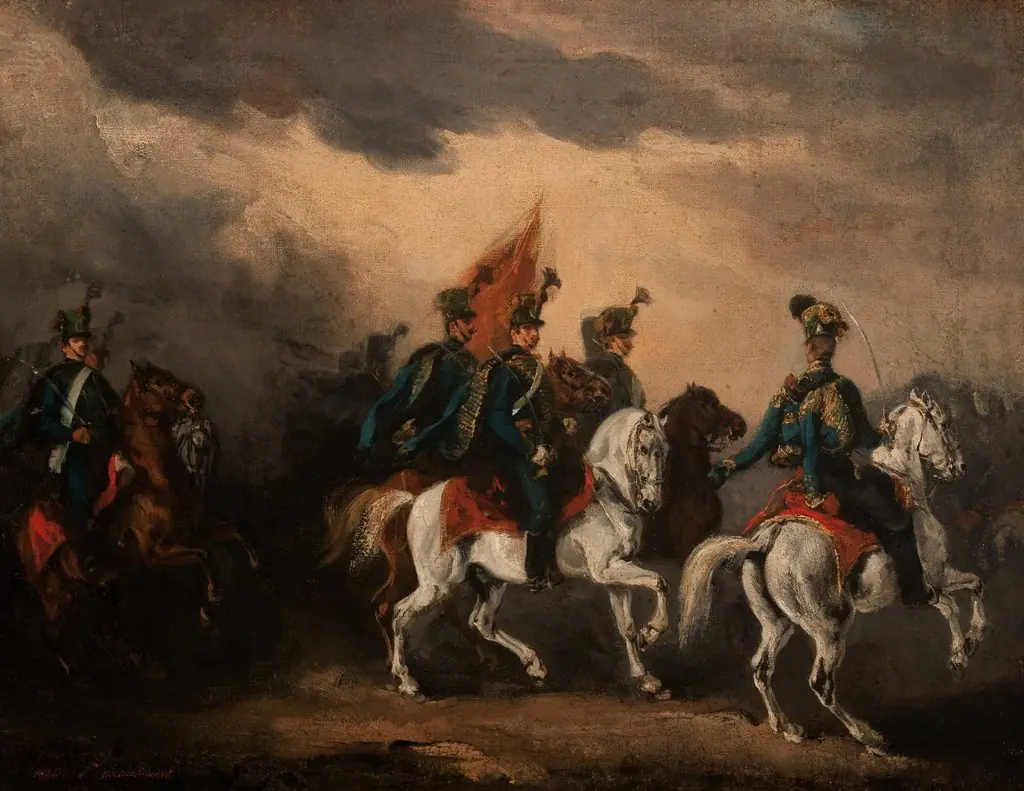 Blue Hussars
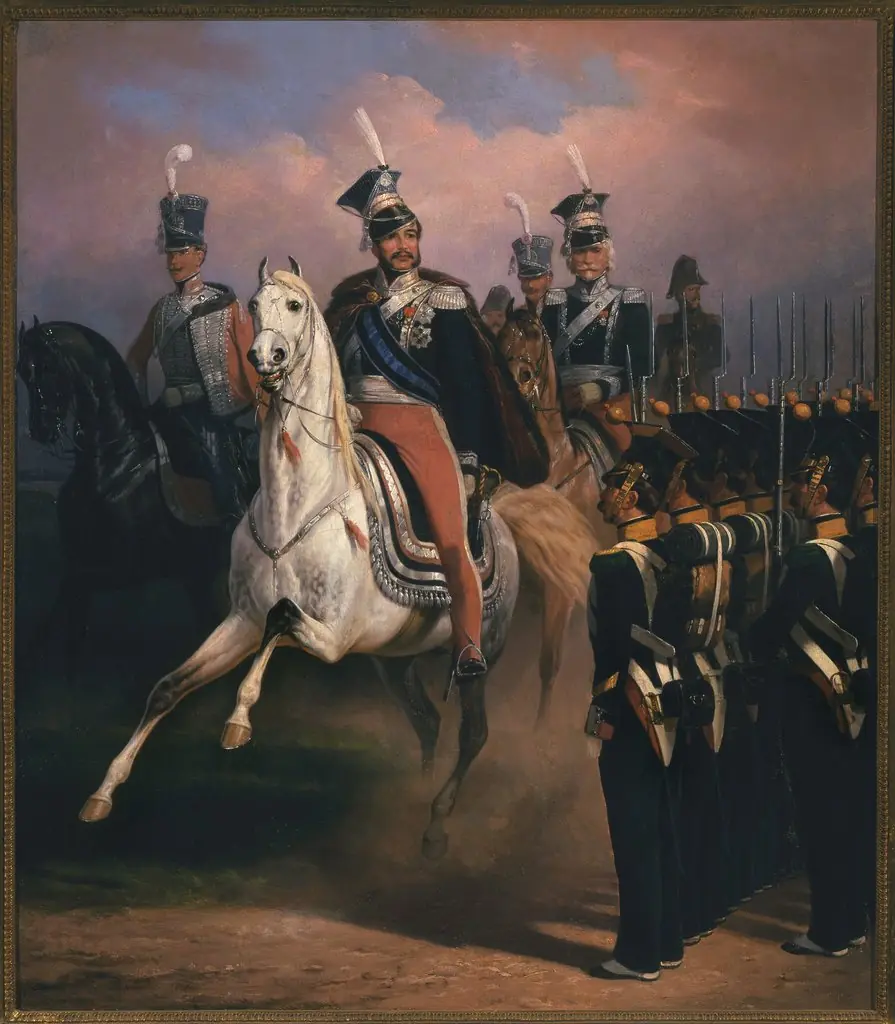 Prince Józef Poniatowski before the front of grenadiers
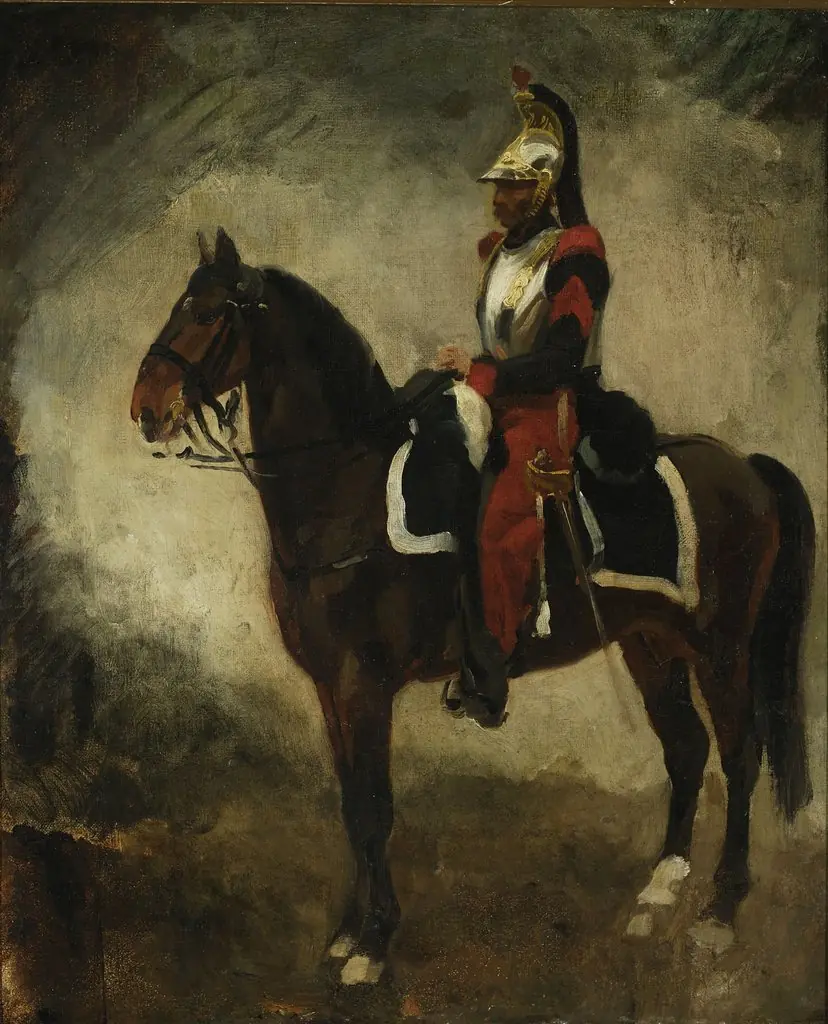 Cuirassier on a bay horse
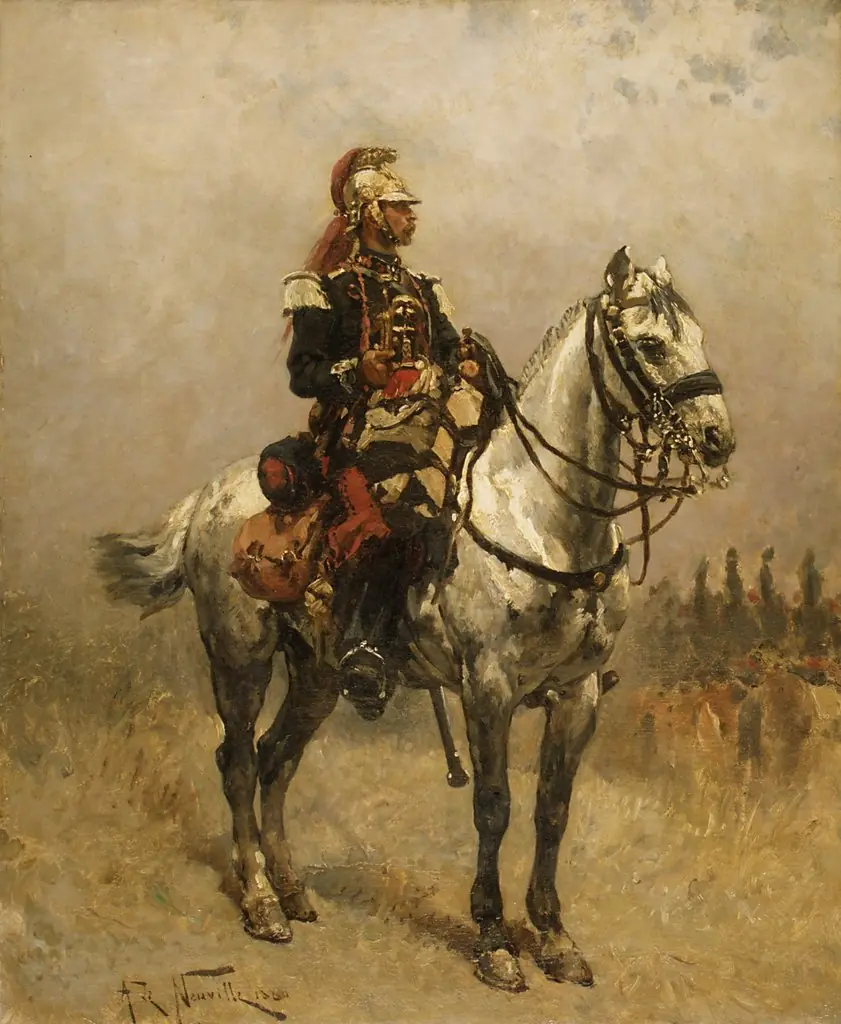 A Cavalryman
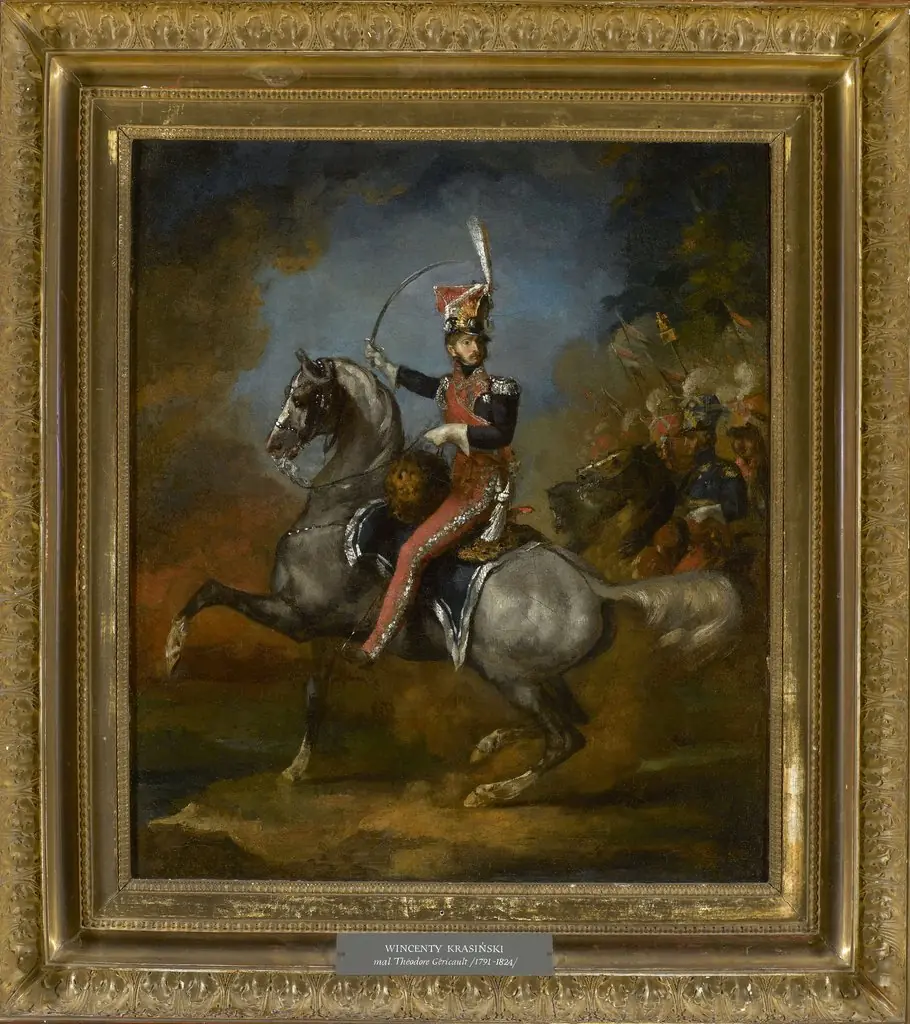 Portrait of general Wincenty Krasiński (1782–1858)
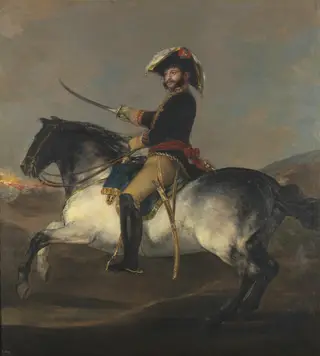 General José de Palafox on Horseback
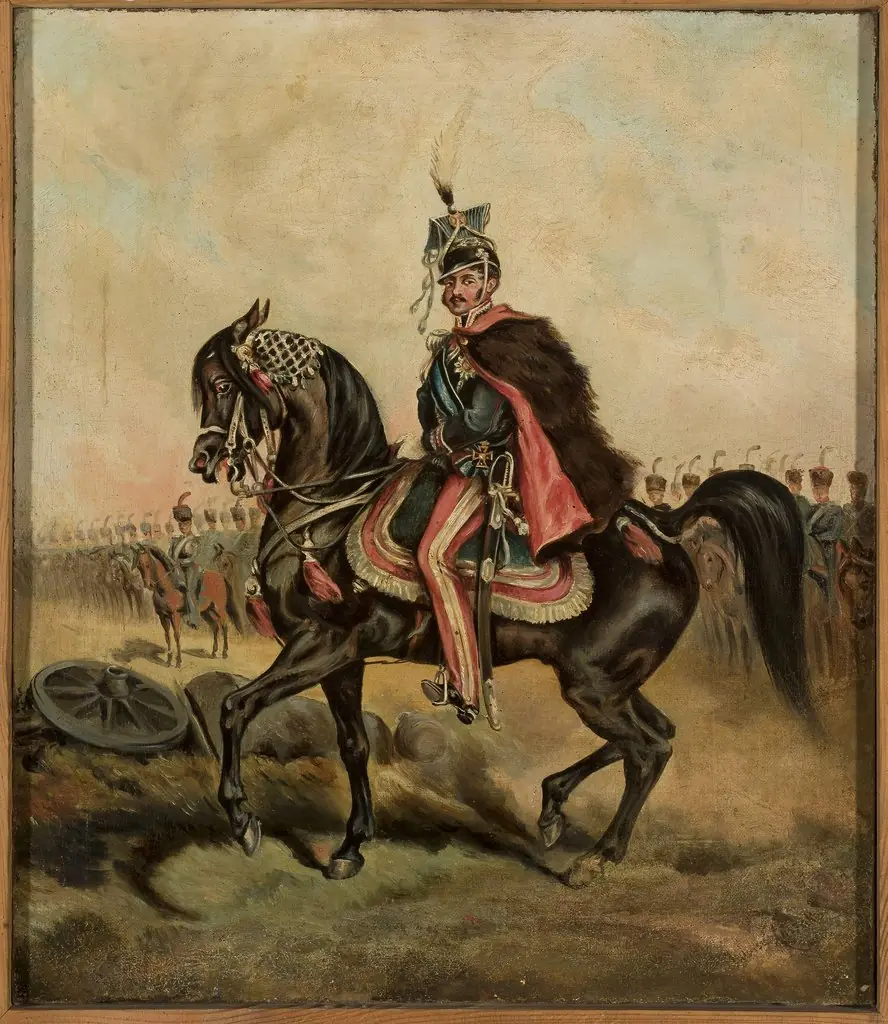 Prince Józef Poniatowski on the “Szuma” mare from Sanguszka stud farm
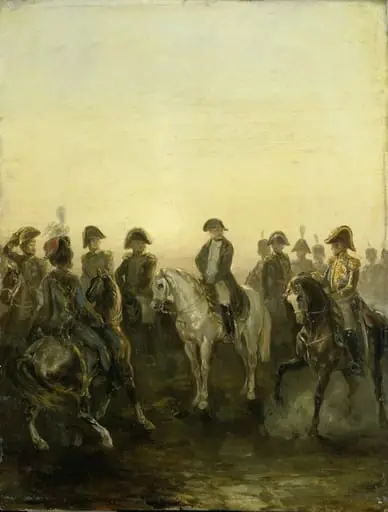 Napoleon with his Staff
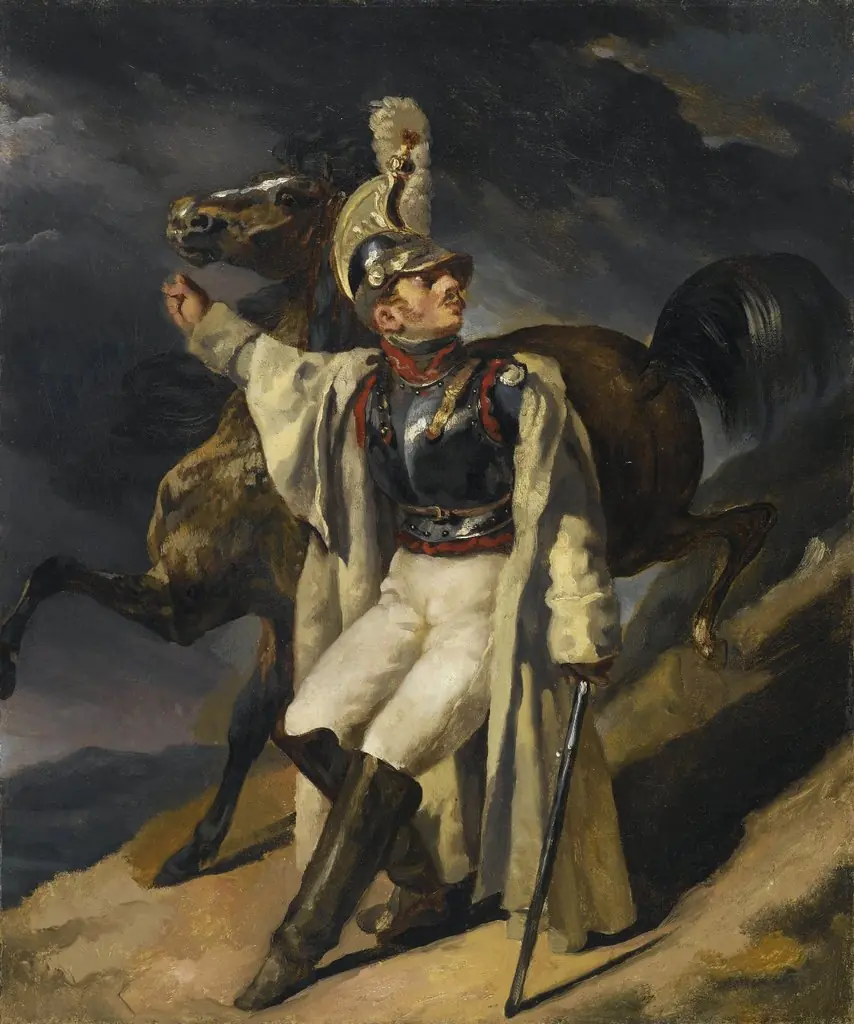 The Wounded Cuirassier, study