Artwork
Evening: Landscape with an Aqueduct
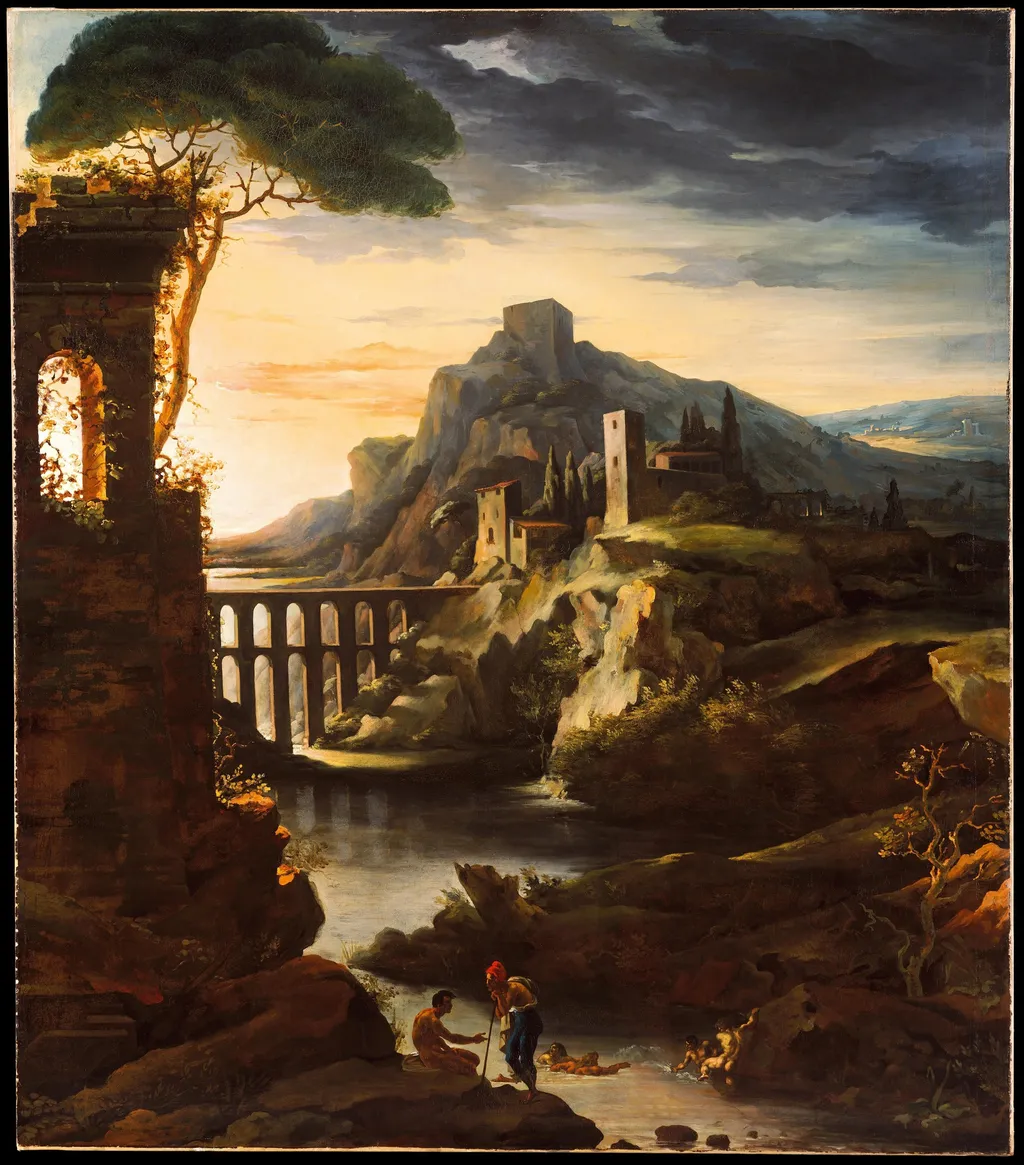
Evening: Landscape with an Aqueduct is an oil painting by Théodore Géricault. It dates from 1818 and is held in the collection of the Metropolitan Museum of Art.
About this work
A quiet landscape by Théodore Géricault, an aqueduct caught in evening light. He painted it in 1818, just after finishing the huge, dramatic Raft of the Medusa; by comparison this one feels small and calm. It now belongs to the Met.
Subject & Meaning
The painting captures the structure at dusk, framed by a turbulent, storm-laden sky that embodies the emotional intensity characteristic of Romanticism.
The subject depicted in Evening: Landscape with an Aqueduct centers on a monumental view of the Ponte delle Torri aqueduct near Spoleto, Italy, which Géricault visited in 1817. The painting captures the structure at dusk, framed by a turbulent, storm-laden sky that embodies the emotional intensity characteristic of Romanticism. The aqueduct, a feat of ancient engineering, serves as both a focal point and a symbol of human ambition confronting the sublime forces of nature.
The presence of a solitary figure in the foreground, though indistinct, further underscores the theme of isolation within the vast landscape. The work’s dramatic lighting and brooding atmosphere align with the Romantic movement’s emphasis on emotion, nature’s power, and the sublime, rather than offering a literal or topographical representation.
Technique & Style
Evening: Landscape with an Aqueduct is executed in oil paint on canvas, a medium typical of Géricault’s landscape experiments of 1818. The handling combines broad, atmospheric passages with more deliberate detailing, particularly in the aqueduct structure, to balance Romantic grandeur with topographical clarity. Stylistically, the work aligns with the artist’s monumental series of "Times of Day," using dramatic contrasts of light and shadow to convey the restless mood of early Romanticism.
The composition’s turbulent skies and dynamic recession of forms underscore Géricault’s engagement with the emotive potential of landscape.
History & Provenance
Théodore Géricault created Evening: Landscape with an Aqueduct in 1818 as one of a planned series of three monumental landscapes depicting different times of day, though a fourth intended work was never produced. The artist conceived the composition following his 1817 visit to the aqueduct of Spoleto in Italy, which he integrated with the turbulent atmospheric conditions characteristic of the emerging Romantic movement. Executed in oil on canvas, the painting was later acquired by the Metropolitan Museum of Art in New York City.
While the work is firmly dated to 1818, specific details regarding its initial commission or the precise chain of private ownership prior to its museum acquisition are not detailed in the available records. The piece remains a significant example of Géricault's exploration of heroic landscapes and temporal cycles during the Restoration period.
Evening: Landscape with an Aqueduct has been in the collection of the Metropolitan Museum of Art in New York City. Both the English and French reference sources confirm this institutional holding, and the Wikidata entry likewise lists the Metropolitan Museum of Art as both the collection and the location. No specific accession or inventory number is provided in the available sources.
The painting's exhibition history is not detailed in the supplied material, though Gary Tinterow's 1990 publication Gericault's Heroic Landscapes: The Times of Day, issued by the Metropolitan Museum of Art, is associated with the work and likely accompanied a related institutional display.
Context
Evening: Landscape with an Aqueduct (1818) is one of three large-scale landscapes that Théodore Géricault conceived to represent different times of day; the work combines a view of the aqueduct of Spoleto, which he inspected during a 1817 trip, with the dramatic sky and turbulent atmosphere characteristic of early Romanticism. Executed in oil on canvas, the painting entered the Metropolitan Museum of Art collection, underscoring Géricault’s engagement with European topography and classical subjects. Contemporary reception was limited, but later scholarship, particularly Gary Tinterow’s analysis of Géricault’s heroic landscapes, has emphasized the work’s innovative handling of light, mood, and compositional narrative.
Overview
Théodore Géricault's 1818 oil painting, Evening: Landscape with an Aqueduct, depicts a serene, twilight scene. This work is one of three large-scale landscapes the French artist created, each representing a different time of day. It is currently housed in the collection of the Metropolitan Museum of Art in New York City.
Own this work as a print
Artist & collection
Artist
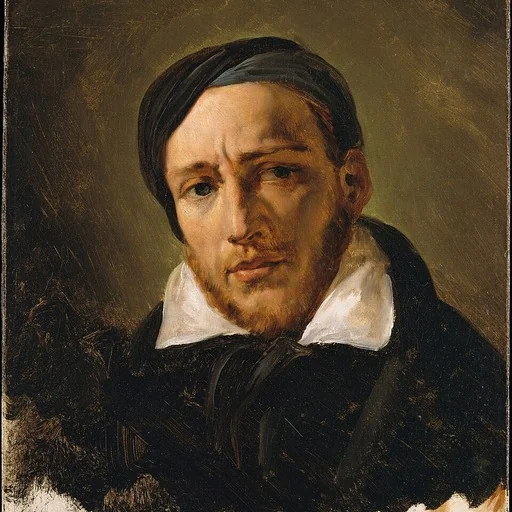
Jean-Louis André Théodore Géricault (French:; 26 September 1791 – 26 January 1824) was a French painter and lithographer.

- Arcadian Landscape with Setting Sun
 Landscape with the Vocation of St Peter
 Arcadian Landscape with Fishermen
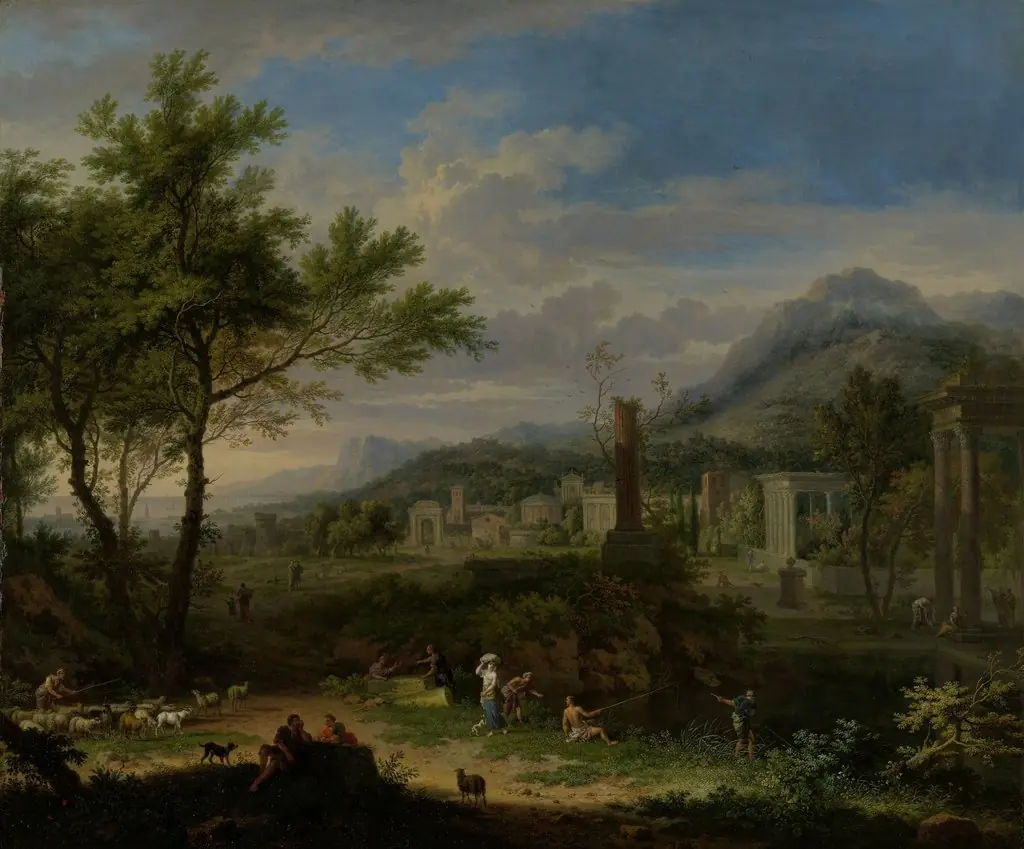 Arcadian Landscape with Fishermen
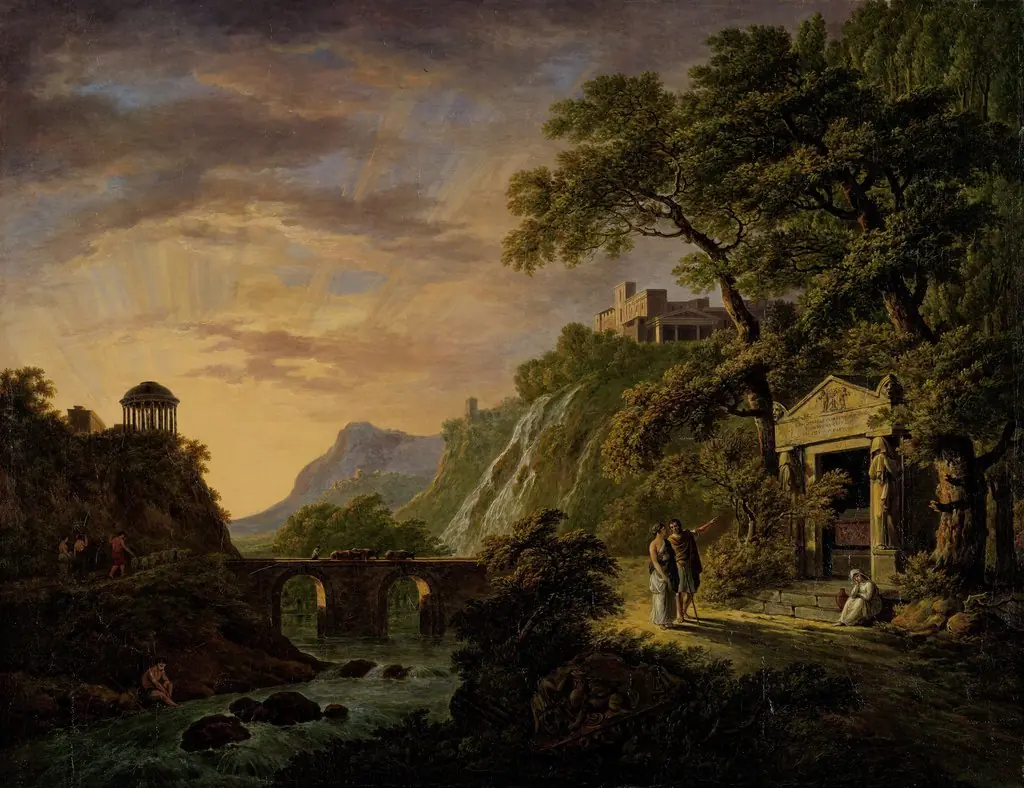 Arcadisch landschap met ondergaande zon
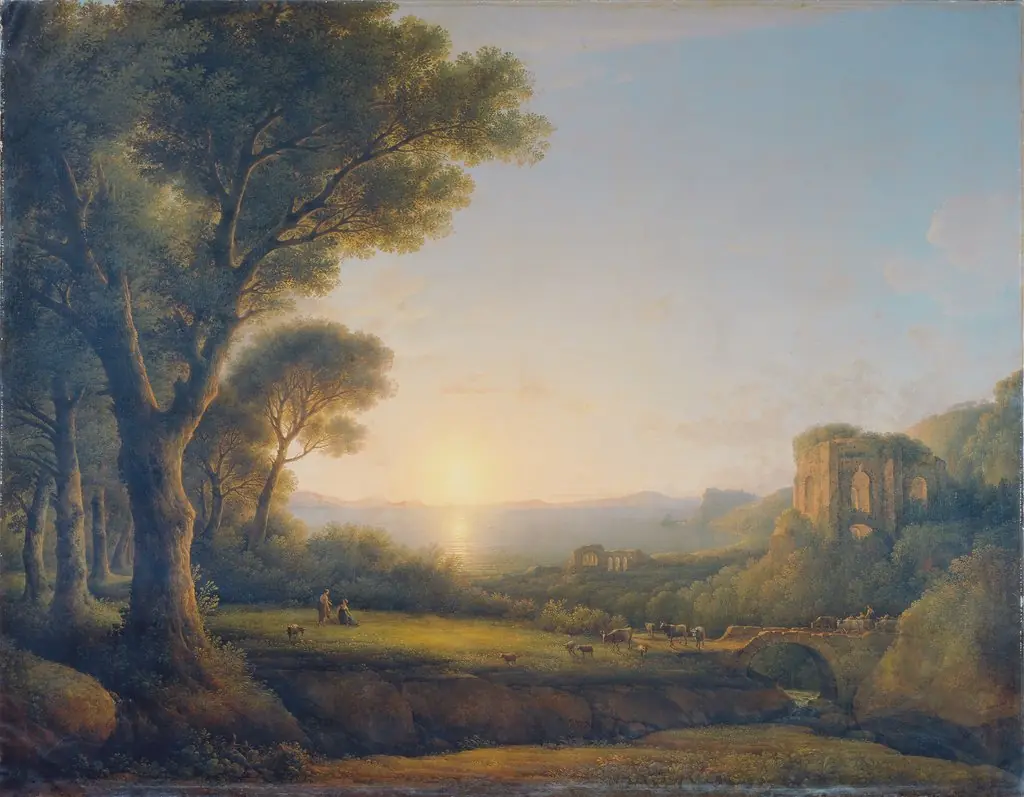 Der Meerbusen von Baiae bei Sonnenuntergang
 Italina landscape with round tower
 Ruins in a Rocky Landscape
 Italina landscape with round tower
 Ponte San Rocco and Waterfalls, Tivoli
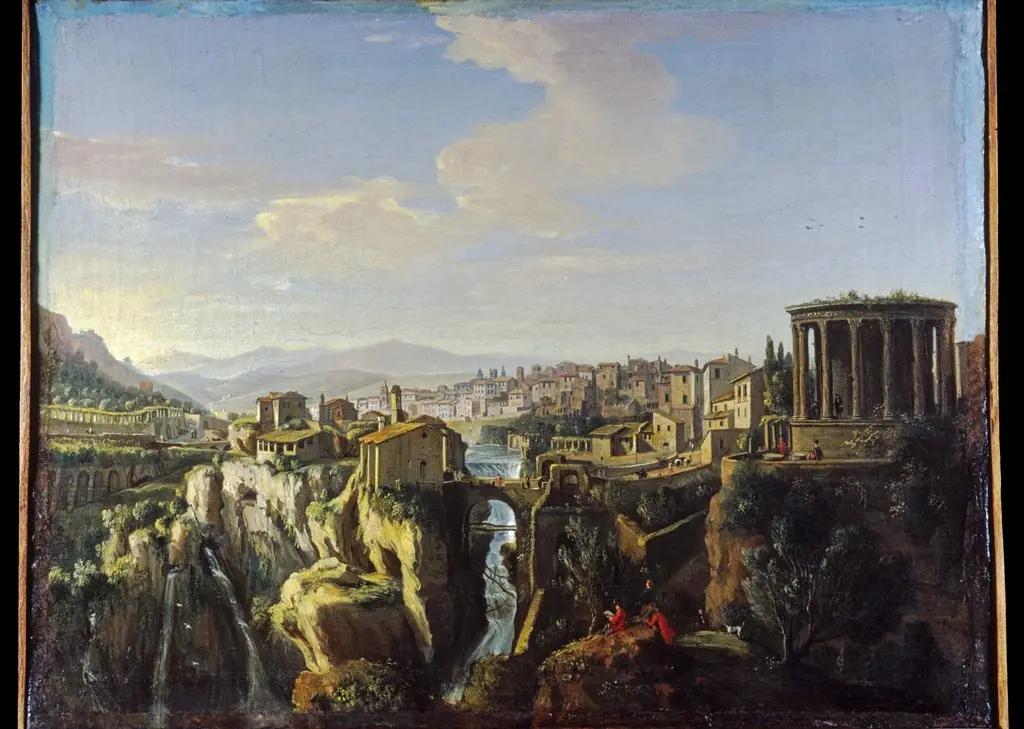 View of Tivoli
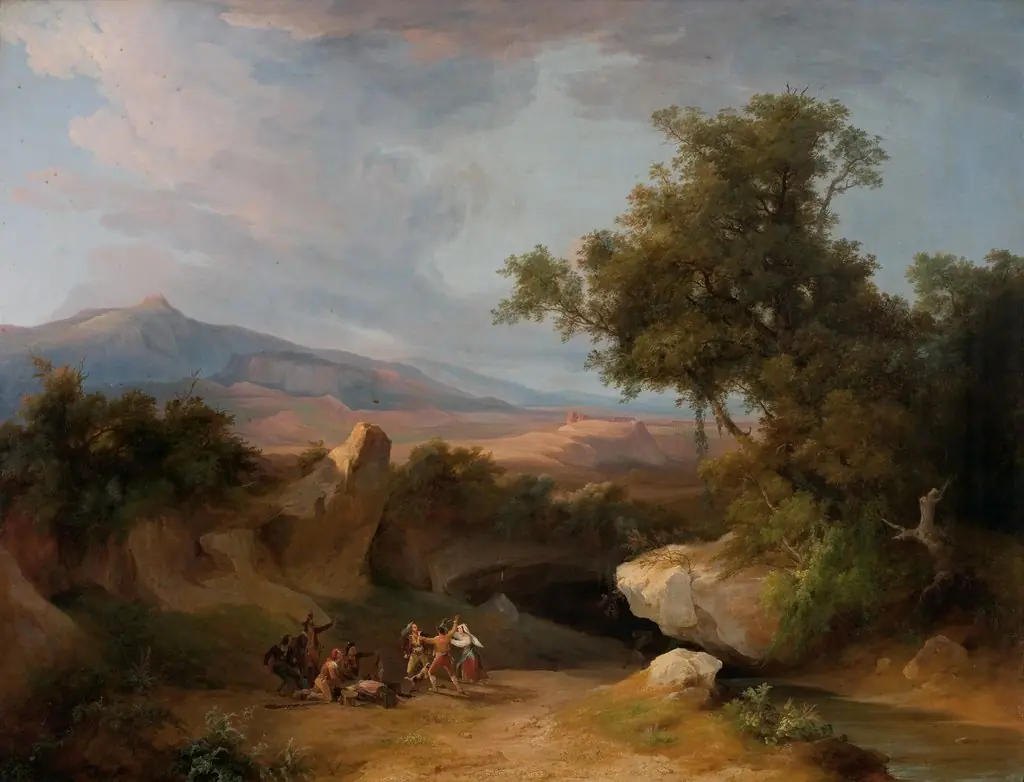 Bandits in Romagna