Artwork
The Crucifixion
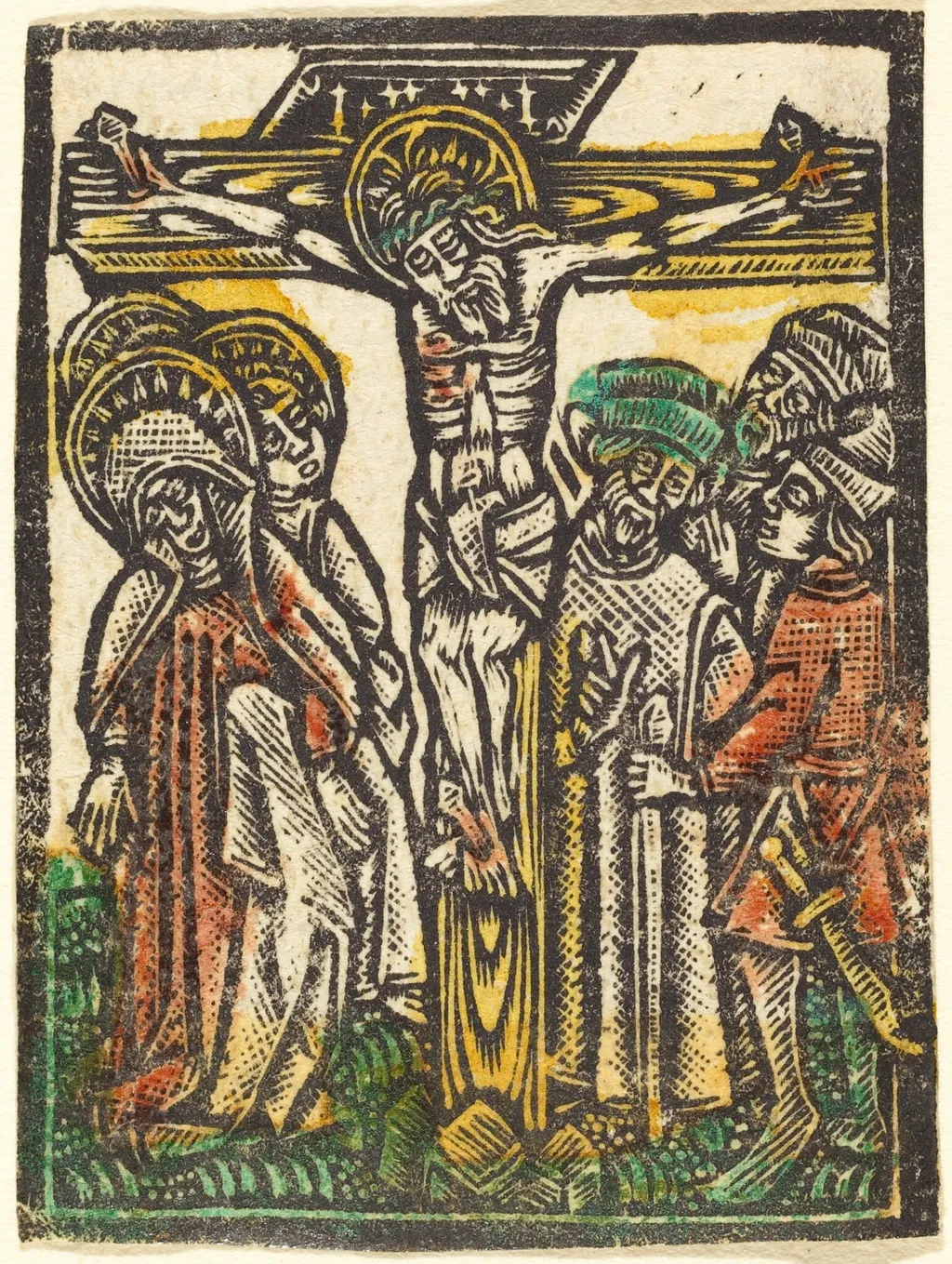
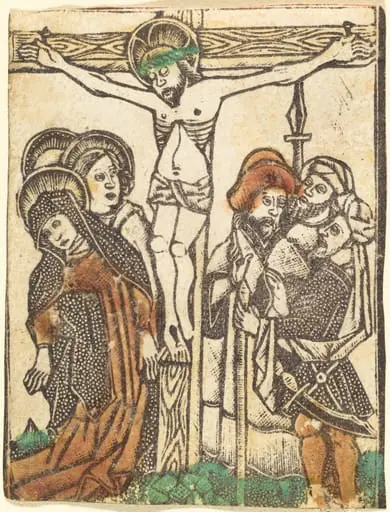
The Crucifixion is a paint print by the Renaissance artist German 15th Century. It dates from 1470 and is held in the collection of the National Gallery of Art.
About this work
Overview
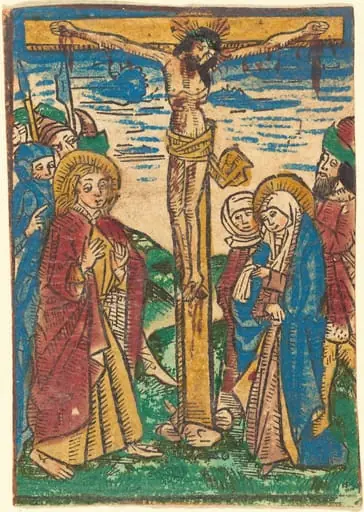
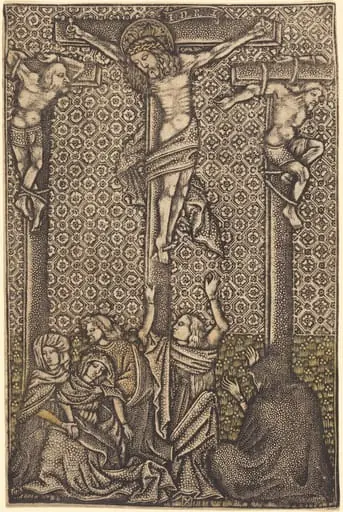
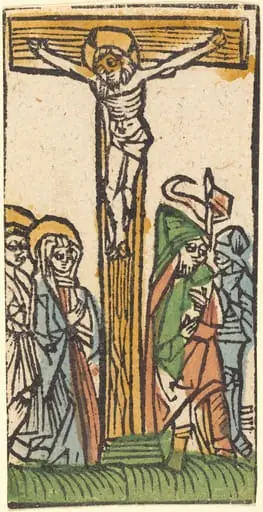
Created around 1470 by an anonymous German master active in the late 15th century, this metalcut depicts the Crucifixion of Christ.
Created around 1470 by an anonymous German master active in the late 15th century, this metalcut depicts the Crucifixion of Christ. The composition centers on a tall, slender figure of Jesus suspended on the cross, distinguished by a crown of thorns. The image is hand-colored with green, red lake, and yellow pigments, a technique that adds a devotional warmth to the stark black-and-white line work typical of the medium.
To the left of the cross, two female figures in long robes stand with hands clasped in prayer, gazing upward in grief. On the right, two armored soldiers observe the scene; one holds a spear, likely referencing the lance that pierced Christ's side. This work exemplifies the Northern European tradition of the metalcut, a printmaking technique that allowed for the mass production of religious imagery for private devotion.
The simplified, linear style and the specific arrangement of mourners and soldiers reflect the devotional priorities of the period, emphasizing direct emotional engagement with the Passion narrative. As a product of the German school during the transition from the Middle Ages to the Renaissance, it illustrates the widespread dissemination of religious iconography through affordable print media.
Subject & Meaning
The image presents the biblical moment of the crucifixion, emphasizing the contrast between the suffering of the central figure and the passive or hostile presence of surrounding figures. The women’s prayerful posture suggests mourning, whereas the soldiers’ detached stance underscores the event’s public and political dimensions.
Technique & Style
Executed with a metalcut process, the artist incised lines into a metal plate and then applied hand‑applied pigments in green, red lake, and yellow. The coloration is vivid though uneven, showing areas of fading. The design is characterized by a rough, direct line work that isolates essential forms and conveys emotional intensity without elaborate detail.
History & Provenance
The print belongs to the Renaissance period, a time when printmaking techniques such as woodcut and metalcut were expanding. Its hand‑coloring reflects the transitional practices of the era, where prints were often enhanced to increase visual impact for devotional use.
Context
During the Renaissance, religious imagery served both liturgical and private devotional functions. Prints like this one allowed wider dissemination of biblical narratives, reaching audiences beyond the reach of painted altarpieces, and contributed to the growing visual culture of the period.
Artist & collection

Artist
This 15th-century German artist carved vivid religious scenes into metal and wood, then hand-painted them in bright, symbolic colors.

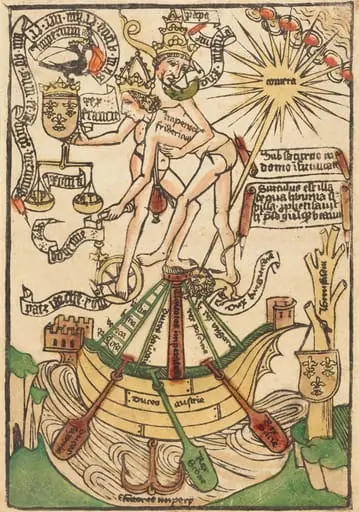 Allegory of the Meeting of Pope Paul II and Emperor Frederick III
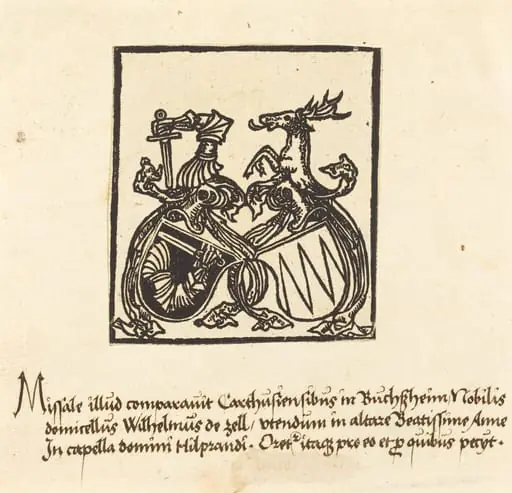 Bookplate of Wilhelm von Zell
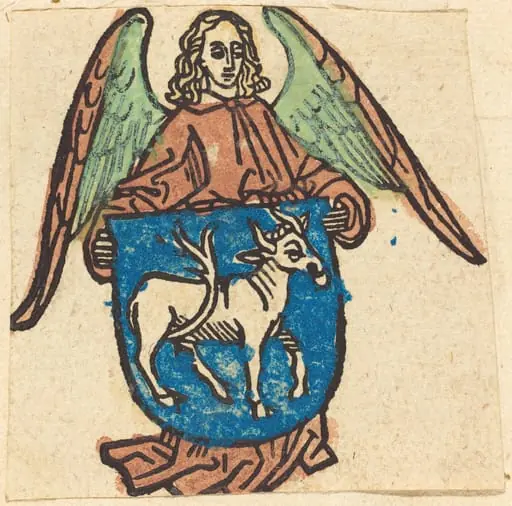 Bookplate of Hilprand Brandenburg of Bibrach
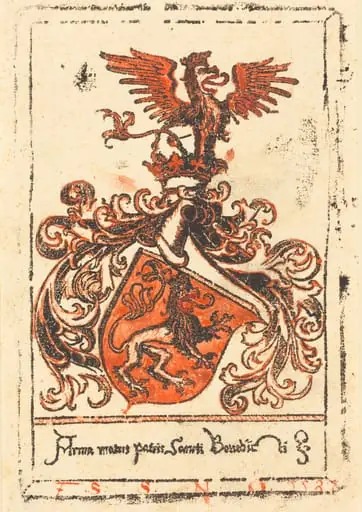 Bookplate of the Abbey of Ottobeuren
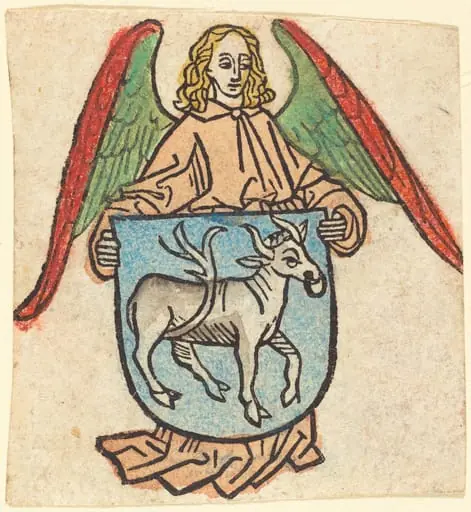 Bookplate of Hilprand Brandenburg of Bibrach
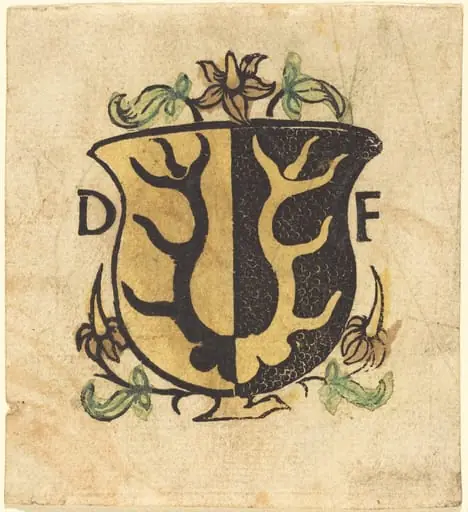 Bookplate of Dominicus Frauenfelder
![Studies for Six Figures (sheet from a model book) [recto], by German 15th Century](https://artifactworldgallery.com/img/german-15th-century--studies-for-six-figures-sheet-from-a-model-book-recto--4837429e0755bc3f-w320.webp) Studies for Six Figures (sheet from a model book) [recto]
Studies for Six Figures (sheet from a model book) [recto]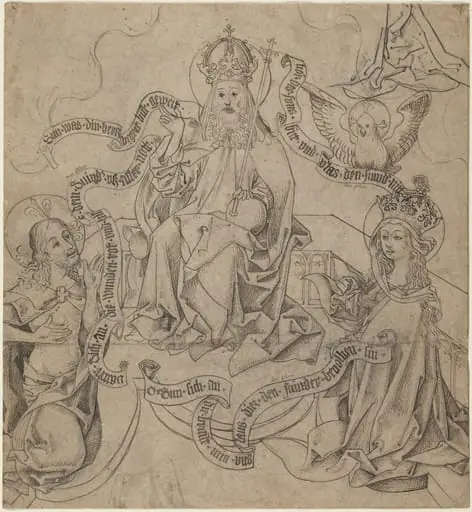 Christ and Mary Interceding with God the Father