Artwork
Dormition of the Virgin
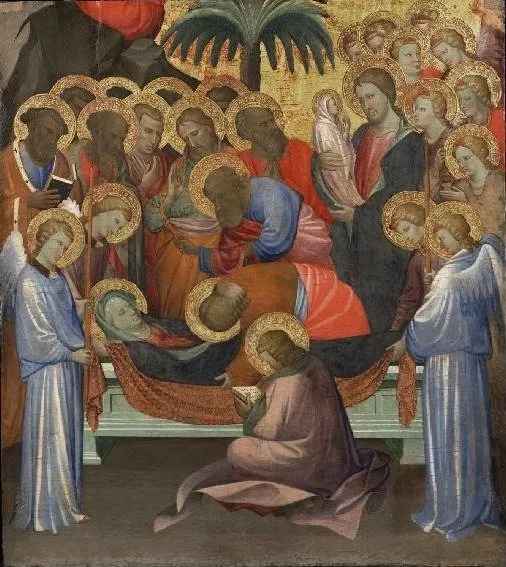
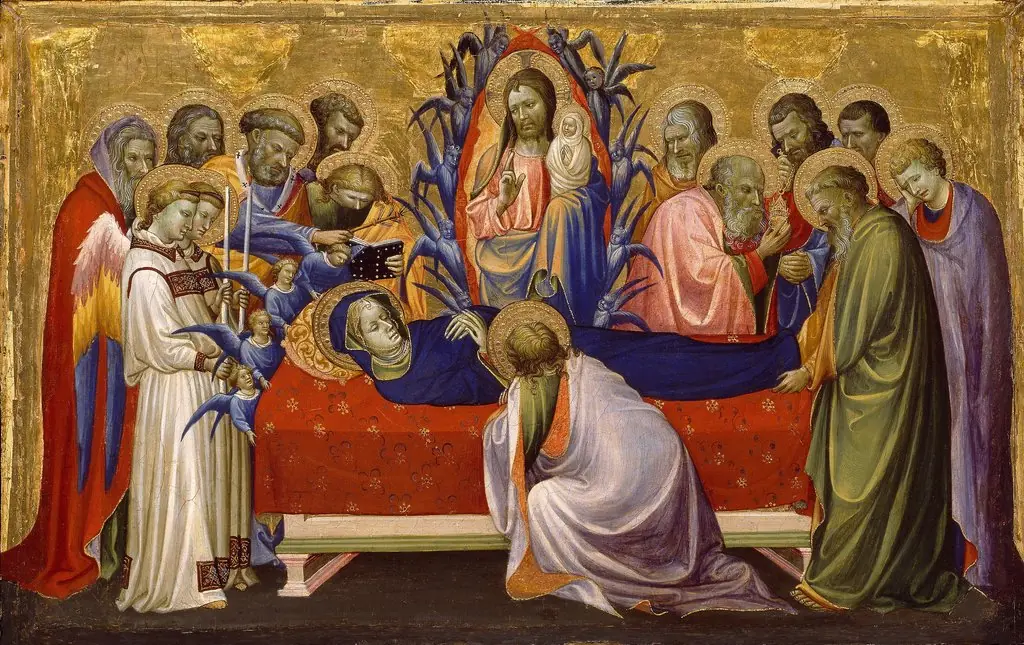
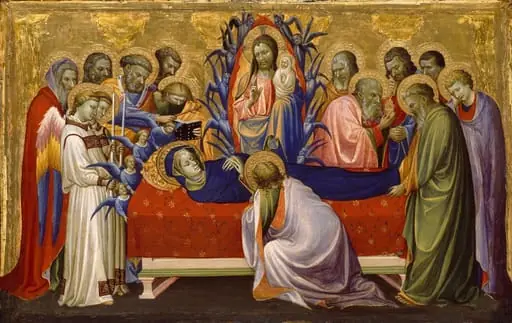
Dormition of the Virgin is an unspecified painting by the Italo Byzantine artist Gherardo Starnina. It dates from 1408 and is held in the collection of the Philadelphia Museum of Art.
About this work
Overview
The painting entered the Philadelphia Museum of Art’s collection and remains a rare surviving example of Starnina’s early work before his relocation to Spain.
Painted in 1408 by the Florentine artist Gherardo Starnina, this work illustrates the Dormition of the Virgin, a subject depicting the Virgin Mary’s peaceful passing. Executed in the Italo-Byzantine tradition, it reflects the devotional aesthetics of late medieval Italy. The painting entered the Philadelphia Museum of Art’s collection and remains a rare surviving example of Starnina’s early work before his relocation to Spain.
Subject & Meaning
The scene portrays the Virgin Mary reclining on a bed, surrounded by apostles and angels in mourning. Her death, known as the Dormition, signifies her transition to eternal life, a central belief in medieval Christian theology. The composition emphasizes solemnity and spiritual transition, with figures arranged in a hierarchical, ceremonial manner to convey reverence and divine order.
Technique & Style
Starnina employed tempera on panel, using fine brushwork to render detailed drapery and luminous halos. The palette features rich reds, deep blues, gold leaf, and white, characteristic of Italo-Byzantine conventions. Visible brushstrokes and flattened spatial depth reflect adherence to medieval pictorial norms, prioritizing symbolic presence over naturalistic perspective.
History & Provenance
Created in Florence during Starnina’s early career, the painting predates his move to Spain around 1410. Its survival is notable, as many works from this period were lost or altered. The painting remained in private or ecclesiastical collections until entering the Philadelphia Museum of Art, where it is now preserved as a key example of early 15th-century Italian devotional art.
Context
This work aligns with a broader tradition of Marian devotion in late medieval Europe, where scenes of the Virgin’s death were common in altarpieces and liturgical settings. Starnina’s training under Antonio Veneziano and Agnolo Gaddi placed him within a Florentine lineage that blended Byzantine iconography with emerging Gothic sensibilities, bridging regional styles before the Renaissance.
Legacy
Though Starnina’s later work in Spain influenced Iberian painting, this early piece remains a testament to his grounding in Florentine traditions. It contributes to the understanding of how Byzantine forms persisted in Italy into the early Renaissance, offering insight into the transition between medieval and early humanist visual languages before the dominance of linear perspective.
Artist & collection

Artist
Gherardo Starnina (c. 1360–1413) was an Italian painter from Florence in the Quattrocento era. According to the biographer Giorgio Vasari, Starnina initially trained with Antonio Veneziano, then with Agnolo Gaddi. He is…