Artwork
Madonna of Humility (Madonna dell'Umiltà)
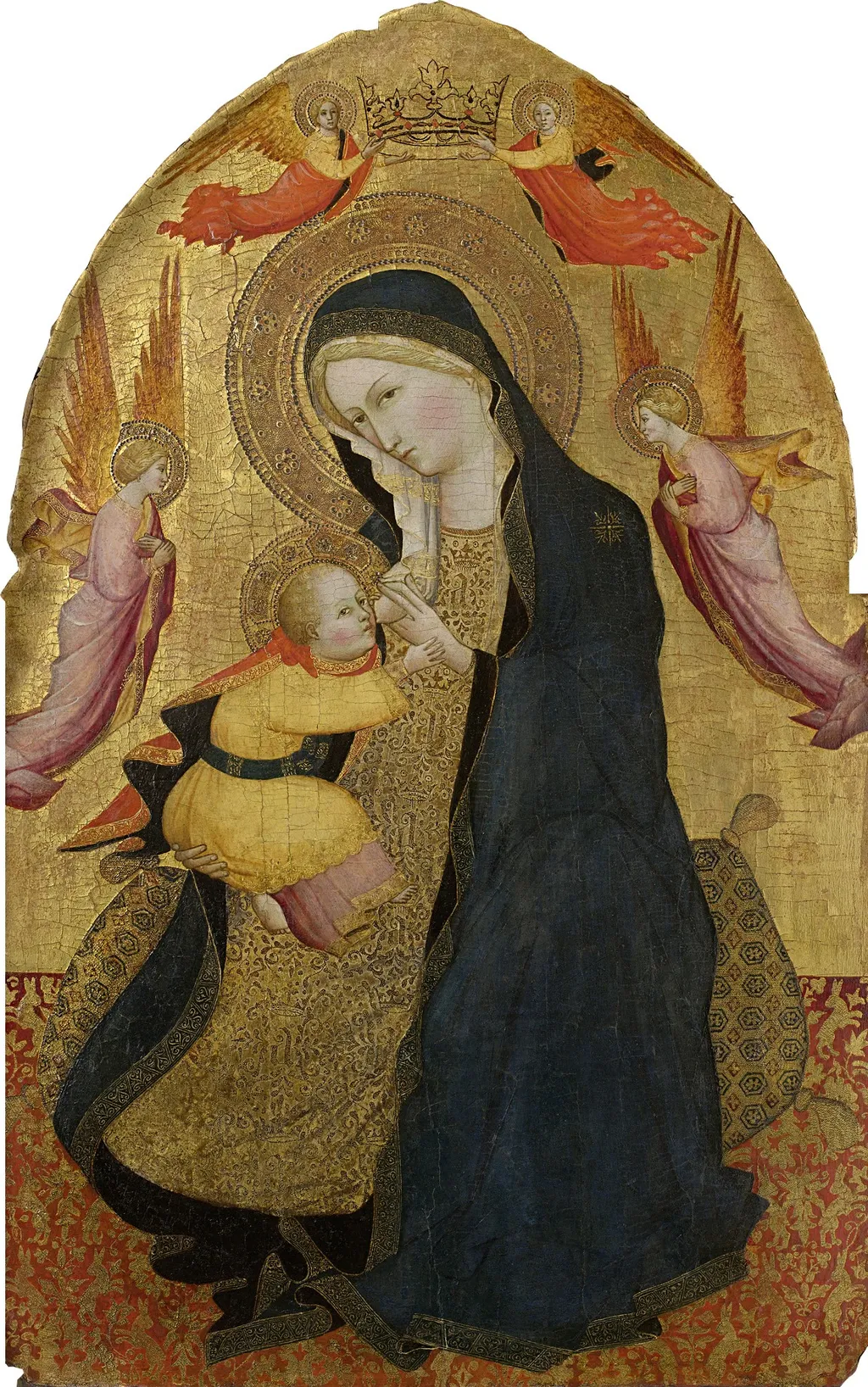
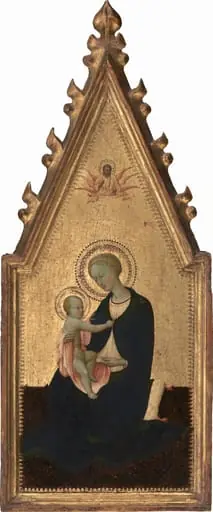
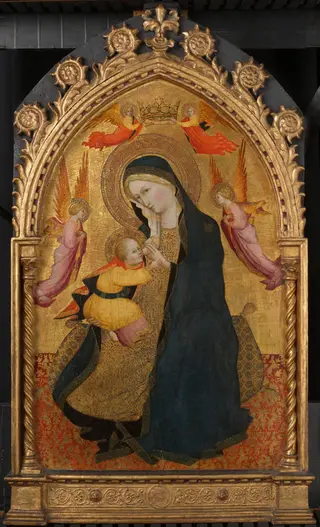
Madonna of Humility (Madonna dell'Umiltà) is a tempera painting by the Italo Byzantine artist Gherardo Starnina. It dates from 1396 and is held in the collection of the Rijksmuseum.
About this work
Painted around 1390 in the circle of Agnolo Gaddi, the tempera work follows the Madonna of Humility type that spread through Tuscany after the Black Death.
A richly decorated cushion supports the Virgin as she nurses the Christ Child in this late-fourteenth-century Florentine panel in the Rijksmuseum. Painted around 1390 in the circle of Agnolo Gaddi, the tempera work follows the Madonna of Humility type that spread through Tuscany after the Black Death. Mary sits on the ground rather than a throne, stressing her human vulnerability, while the gold background keeps the sacred register.
Subject & Meaning
The painting depicts the Madonna of Humility, a late-medieval iconographic type in which the Virgin Mary is shown seated on a cushion on the ground rather than on a throne, emphasizing her humility. Here Mary is portrayed as a Nursing Madonna (Maria lactans), breastfeeding the Christ Child, who is barefoot and held close to her. She wears a veil and dress, with her breast exposed, and is crowned while an angel with a bird's wing observes.
The composition's intimate, grounded pose and maternal nursing symbolize both Christ's incarnation and Mary's role as an approachable, intercessory mother. The gold aureola and crown signal her divine status even in this humble guise, a central paradox of the Madonna of Humility theme.
Technique & Style
The painting is executed in tempera and gold leaf on a wooden panel, measuring 76.5 by 53.5 cm. The support is a single panel, characteristic of late 14th-century Italian altarpieces. Stylistically, it adheres to the Madonna of Humility type, with the Virgin seated on a cushion on the ground, nursing the Christ Child. An angel hovers above, holding a crown, while Mary is depicted bare-chested, with a veil and aureole.
The extensive use of gold highlights halos and background, creating a luminous, otherworldly effect typical of International Gothic. The handling of drapery and facial features reflects the influence of both Starnina and the circle of Angelo di Taddeo Gaddi, blending linear elegance with a tender, intimate portrayal.
Overview
This tempera painting on panel, held by the Rijksmuseum (SK-A-3431), depicts the Madonna of Humility, a popular devotional subject in late medieval Italy. Executed around 1390, the work emerged from the Florentine workshop associated with Agnolo Gaddi. It measures approximately 76.5 by 53.5 centimeters and exemplifies the artistic trends of the late Trecento, blending traditional sacred imagery with an emphasis on the Virgin Mary's human qualities.
Context
The "Madonna of Humility" iconography gained significant traction in Tuscany following the mid-fourteenth century, particularly after the Black Death, as devotional practices shifted towards more intimate expressions of faith. Agnolo Gaddi's prolific workshop produced numerous such images for both ecclesiastical and private patrons, catering to a demand for artworks that encouraged personal and emotional prayer. This work reflects the enduring influence of Giotto's artistic innovations in Florentine painting.
Artist & collection

Artist
Gherardo Starnina (c. 1360–1413) was an Italian painter from Florence in the Quattrocento era. According to the biographer Giorgio Vasari, Starnina initially trained with Antonio Veneziano, then with Agnolo Gaddi. He is…

![Madonna and Child, with the Blessing Christ [middle panel], by Pietro Lorenzetti](https://artifactworldgallery.com/img/pietro-lorenzetti--madonna-and-child-with-the-blessing-christ-middle-panel--02357aa6ff04175b-w320.webp)