Artwork
Death of the Virgin
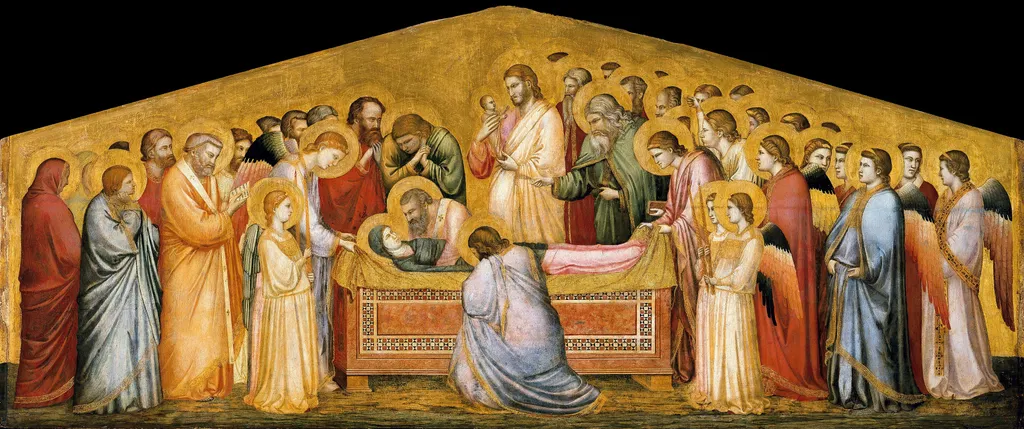
Death of the Virgin is a tempera painting by the Byzantine icon painting artist Giotto. It dates from 1310 and is held in the collection of the Gemäldegalerie Berlin.
About this work
Subject & Meaning
The panel shows the Death (Dormitio) of the Virgin Mary, her body laid on a bier surrounded by apostles, angels and women while Christ holds her soul as a small child. The iconography follows an apocryphal tradition traced through Pseudo‑Melito, Gregor of Tours and Jacobus de Voragine’s Legenda aurea, and Giotto blends the moments of dormitio, exequies, burial and the assumption of the soul into a single scene. Symbolic details include angels offering incense, women identified as Mary’s companions, pairs of angels with twisted candles, and a simple sarcophagus enriched with cosmatesque decoration. The figures are arranged in layered depth that guides the viewer’s eye to the central Christ, reflecting a medieval concept of communal memory (Memoria) and the ritual of burial.
Technique & Style
The arrangement of apostles and angels follows the architectural shape of the panel, guiding the viewer's eye toward Christ holding the Virgin's soul.
Executed in tempera and gold on a poplar panel, this work features a distinctive elongated format with a gabled top known as a flat-gable dossale. The support consists of two horizontally joined boards covered with a linen layer, which has been significantly thinned to approximately 0.53 cm and trimmed on all sides. The painting's condition reflects extensive intervention; the flesh tones, particularly on the faces, appear whitened likely due to aggressive cleaning solvents used in the nineteenth and twentieth centuries. Furthermore, the background gold leaf is a complete later renewal that alters the original visual impact. Overpaints were partially removed during treatments in 1972 and 1976, which also included varnish cleaning and new retouching.
Stylistically, the composition demonstrates a mature command of spatial depth, arranging figures across multiple receding planes where distant forms disappear behind foreground halos. The arrangement of apostles and angels follows the architectural shape of the panel, guiding the viewer's eye toward Christ holding the Virgin's soul. While adhering to traditional iconography, the work breaks frontal rigidity through the slight leftward shift of the sarcophagus and an asymmetrical rising line of figures. The artist employs soft chiaroscuro transitions to enhance pastel drapery colors and delicate skin tones, conveying emotional grief through specific gestures and postures.
History & Provenance
The Death of the Virgin is held in the Gemäldegalerie Berlin, part of the Staatliche Museen zu Berlin collection, with inventory number 1761 (Versteigerung Kardinal Fesch) recorded on a label on the reverse. The panel, measuring 75.8 × 179.7 cm, was acquired in 1914 by the Kaiser Friedrich Museumsverein and entered the museum's holdings that same year. It has been exhibited in the Gemäldegalerie's Paintings collection, specifically in Room 41, and was referenced in 1913 as part of the Kaiser Friedrich Museum's collection before its integration into the State Museums of Berlin. The work was previously owned by Cardinal Fesch, later passing through the collections of Davenport Bromley and Langton Dougless before its acquisition by the museum.
Context
Giotto’s *Death of the Virgin* (c. 1310-1314) is widely recognized as a pivotal work bridging late medieval tradition and early Renaissance innovation. The painting’s composition, with figures arranged in deep spatial tiers and guided by converging gazes toward the central Christ-child, exemplifies Giotto’s mature handling of narrative space, a development also evident in his *Ognissanti Madonna*. Scholarship consistently situates the panel within Giotto’s Florentine period, noting its stylistic proximity to the *Maestà* and situating it alongside contemporary Tuscan altarpieces that transitioned from polyptychs to large-scale dossals. The work’s iconography synthesizes multiple episodes from the *Transitus Mariae*, merging dormition, entombment, and assumption into a singular ritual tableau that reflects communal memoria rather than linear narrative. Restoration histories underscore material losses, including aggressive cleaning and gilding interventions, that complicate efforts to recover its original visual impact.
Legacy
The work's historical reputation was established early, with Lorenzo Ghiberti recording its presence in the church of Ognissanti in Florence and noting Michelangelo's appreciation of the piece. Although the painting disappeared from public view following the Council of Trent due to altar restructuring, it resurfaced in the nineteenth century within the collection of Cardinal Fesch before entering the Kaiser Friedrich Museum in 1913. Modern scholarship regards the panel as an autograph work by Giotto, despite likely contributions from assistants in peripheral areas. Its legacy is further defined by its stylistic maturity, which advanced the use of spatial depth seen in the Ognissanti Maestà. The composition's sophisticated arrangement of figures and emotional expressiveness, particularly in the depiction of grief, reflects techniques also found in Giotto's fresco cycles in Assisi and Padua.
Artist & collection


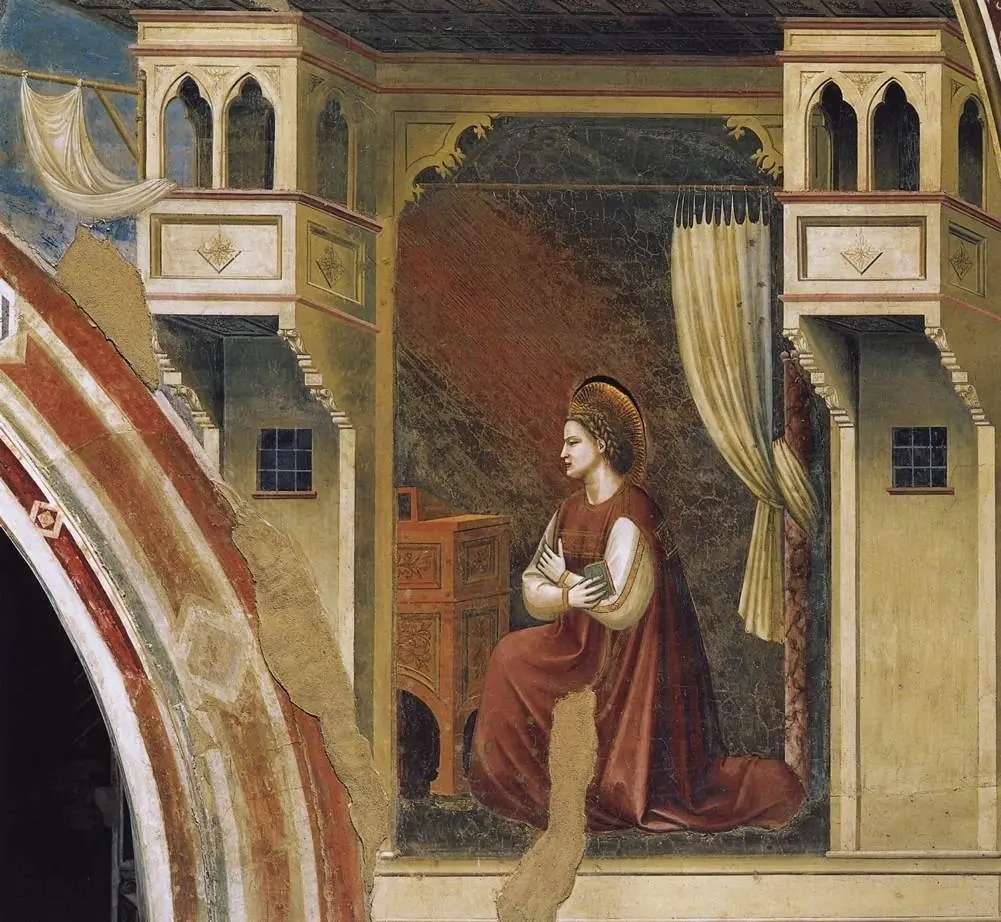
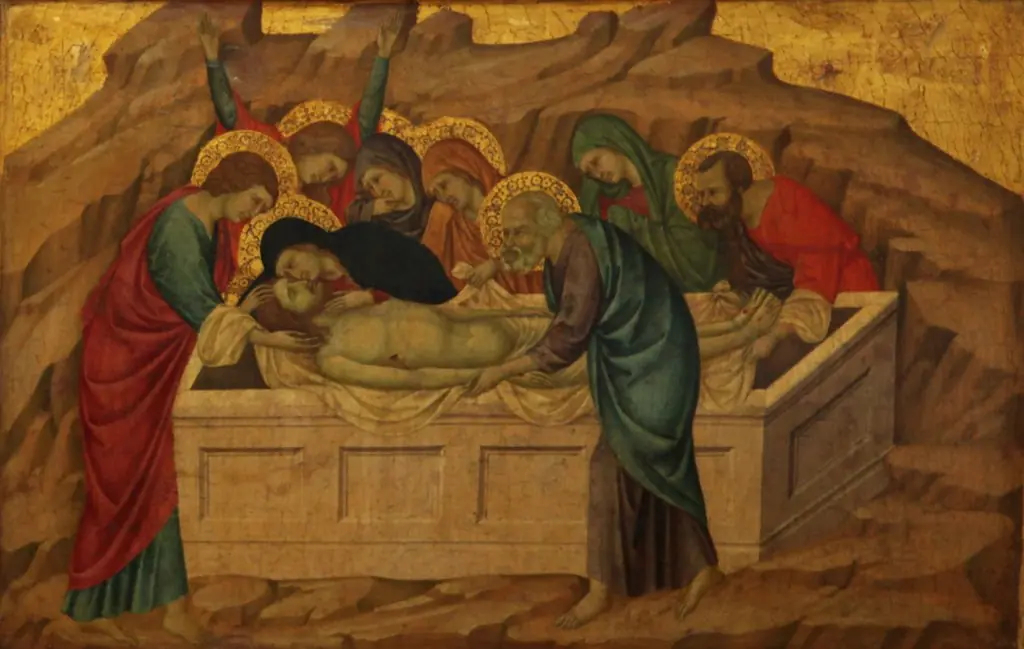
- The Entombment of Christ
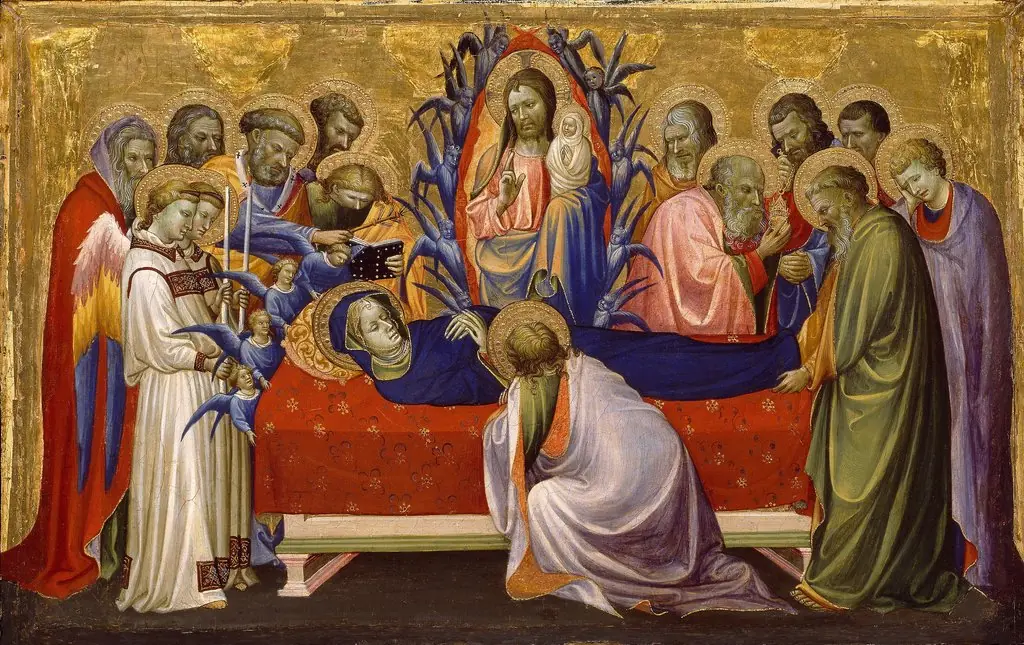 The Dormition of the Virgin
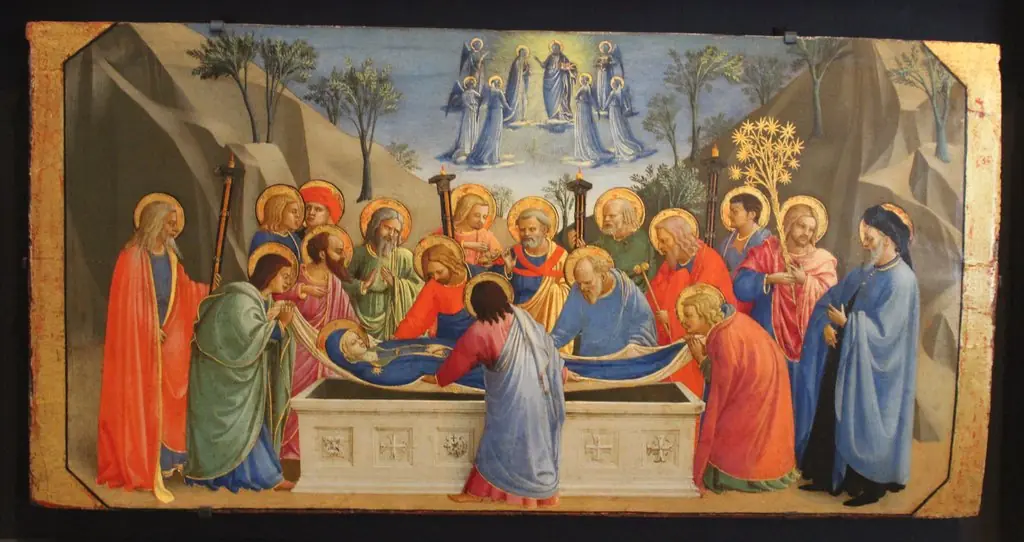 Dormition of the Virgin
 The Death of the Virgin
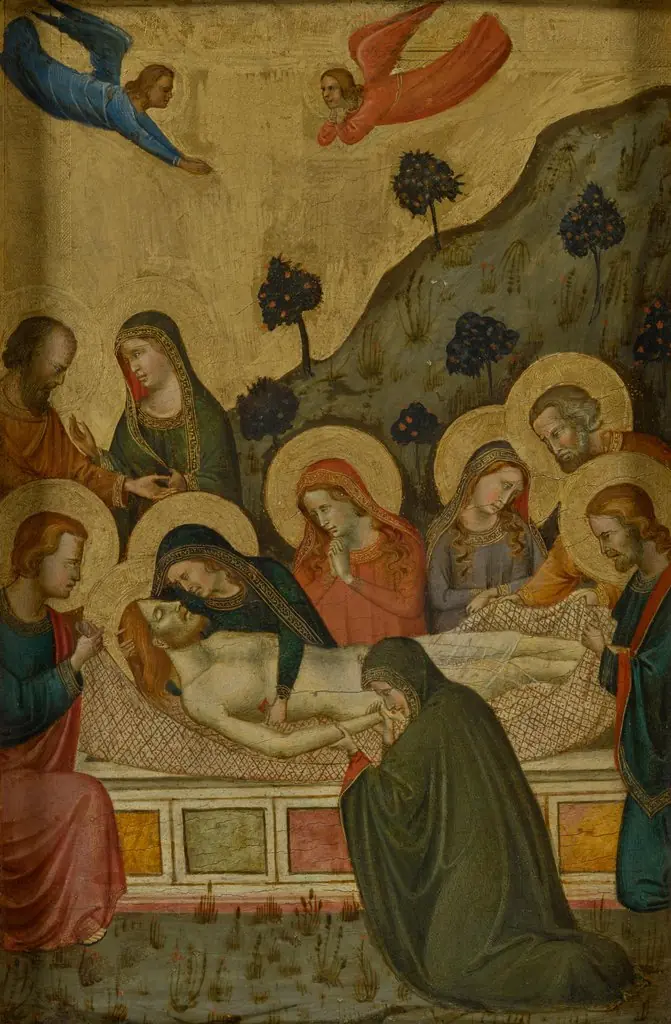 Entombment
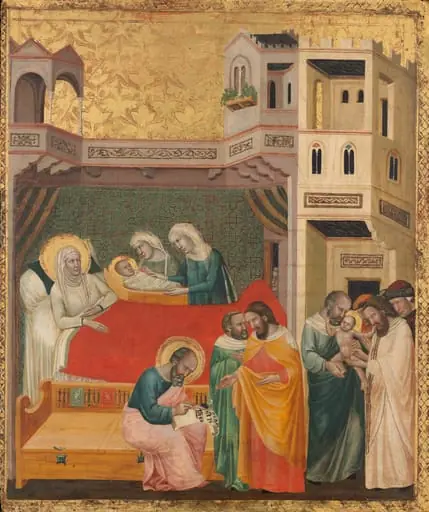 The Birth, Naming, and Circumcision of Saint John the Baptist
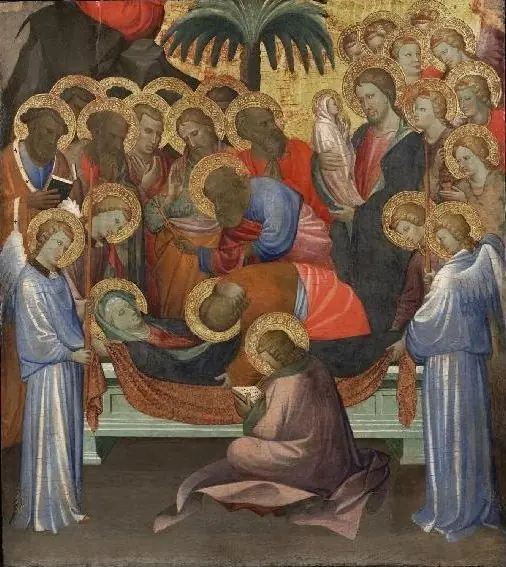 Dormition of the Virgin
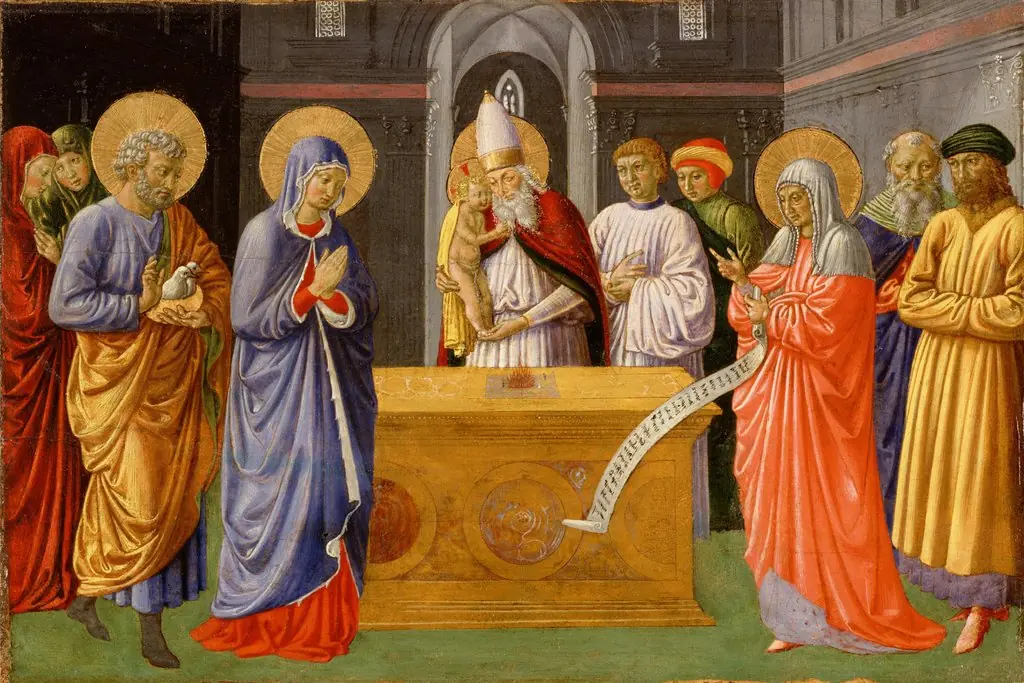 Purification of the Virgin
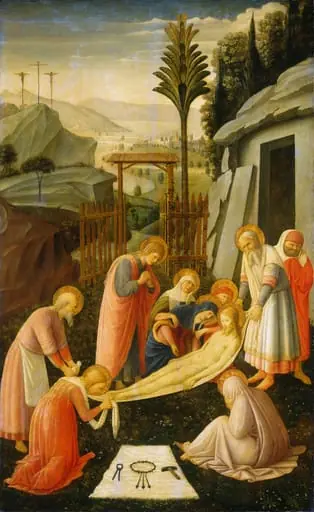 The Entombment of Christ
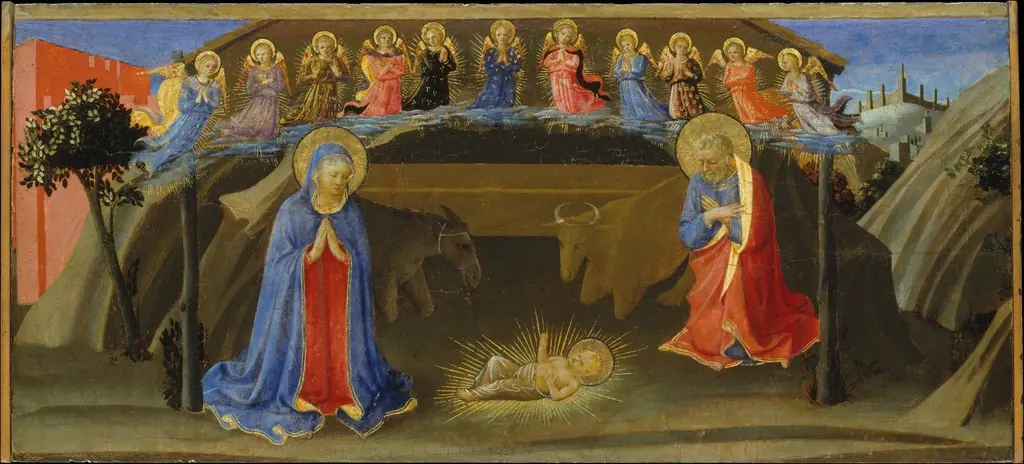 The Nativity
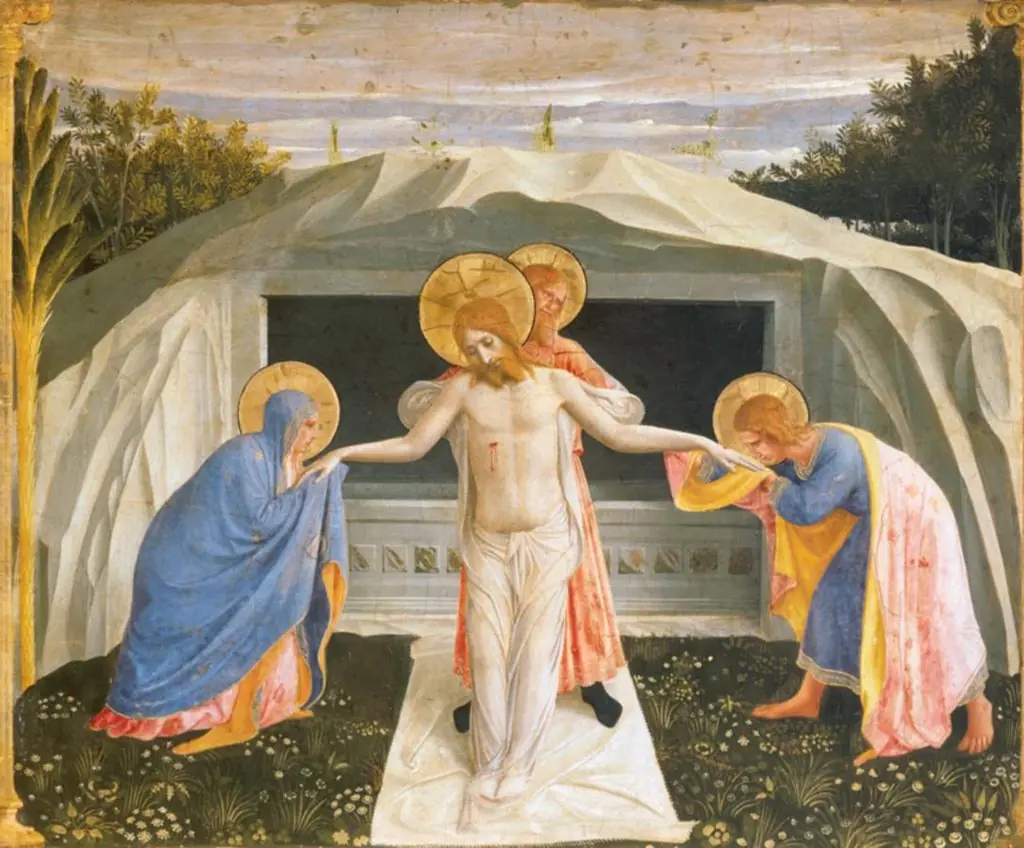 Entombment of Christ
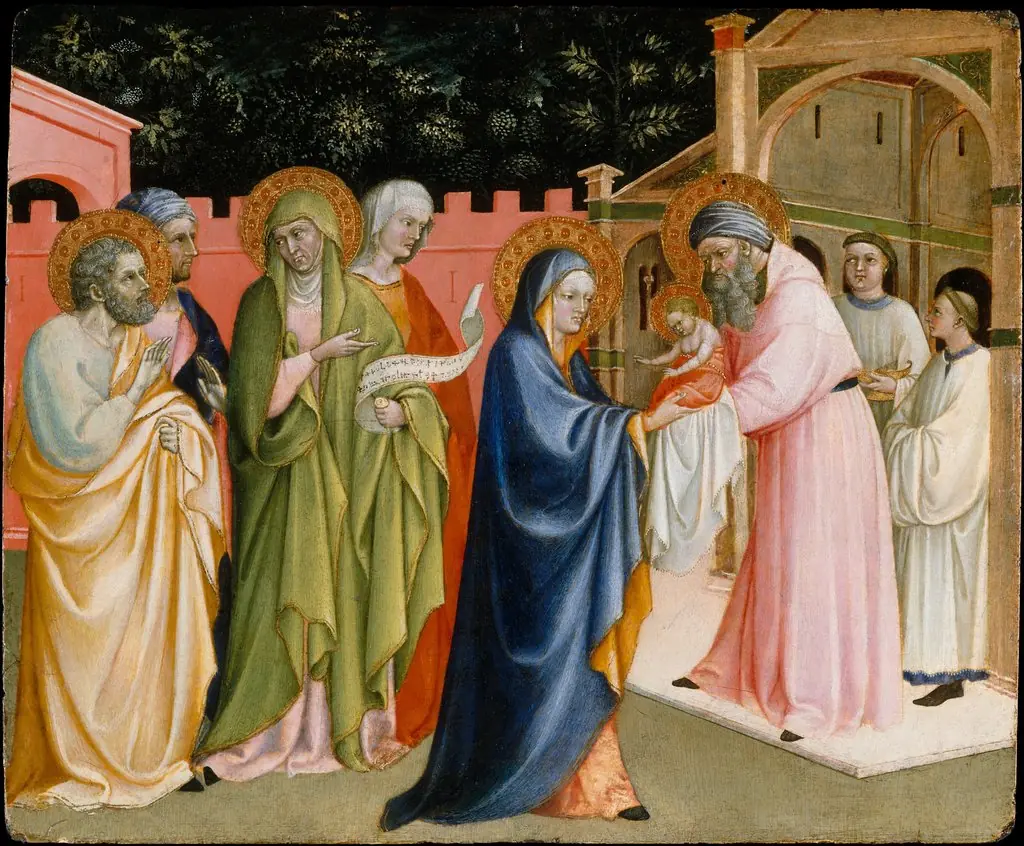 The Presentation in the Temple