Artwork
The Mughal emperor Alamgir
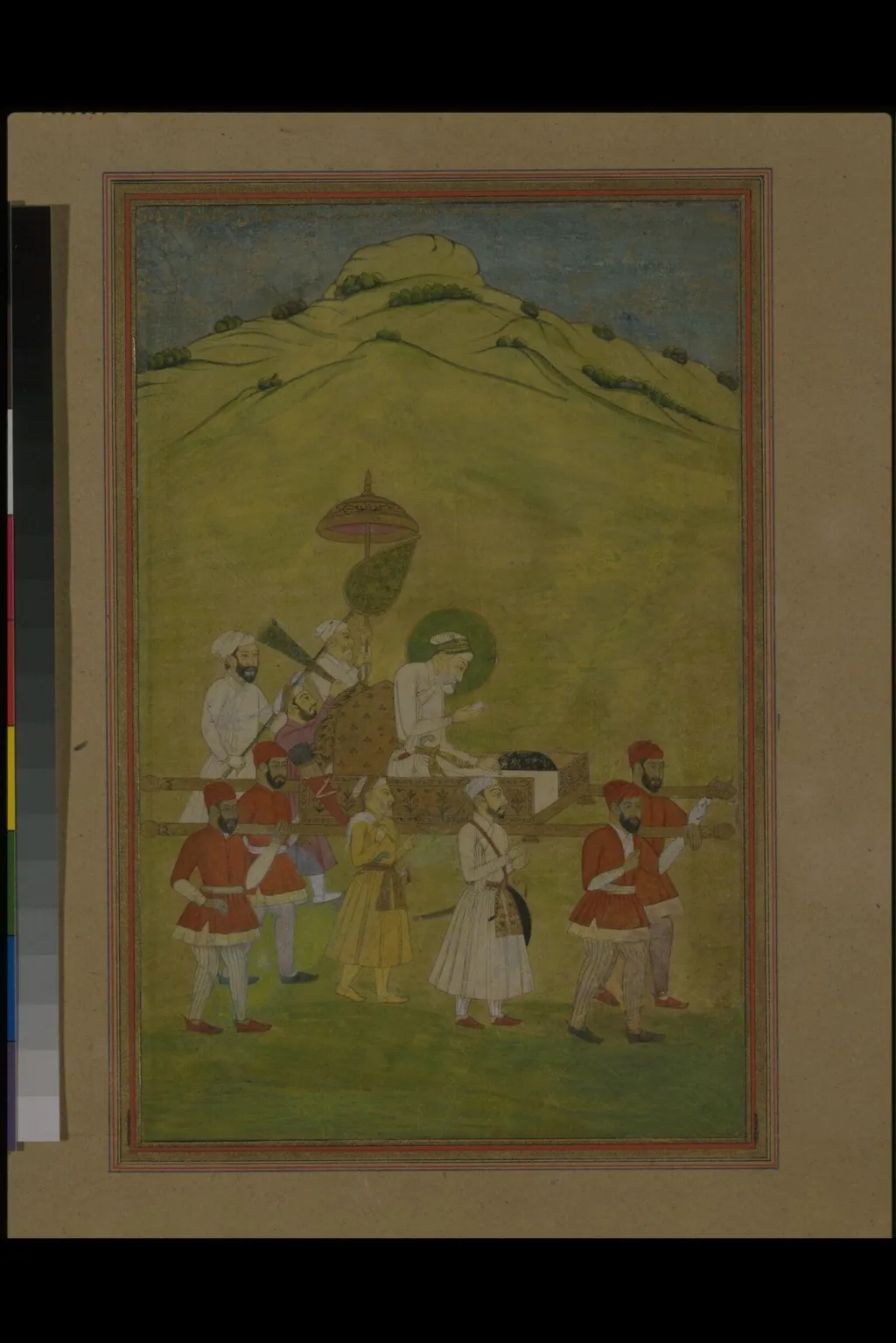
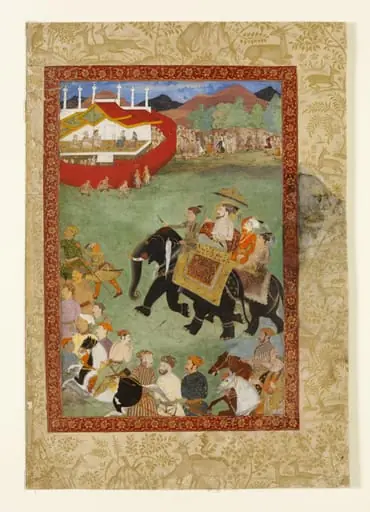
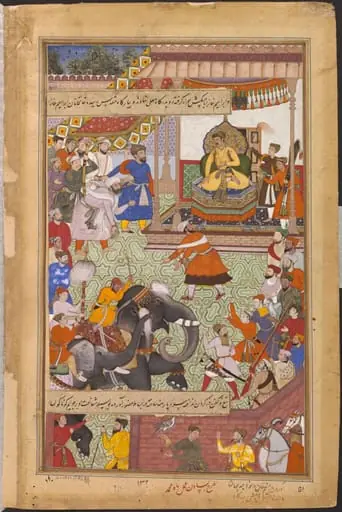
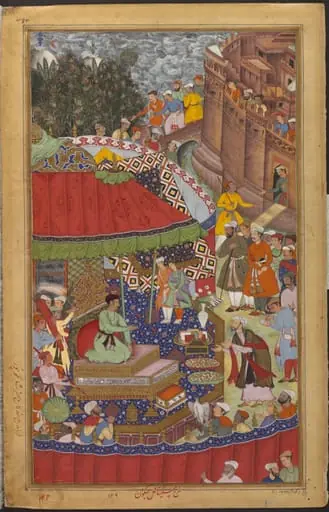
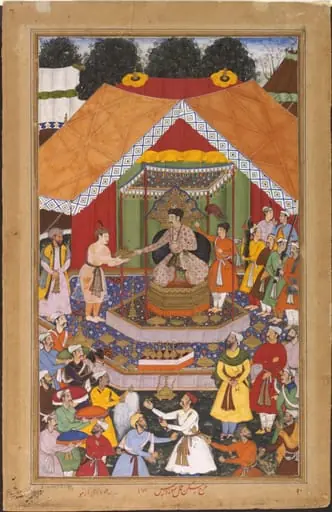
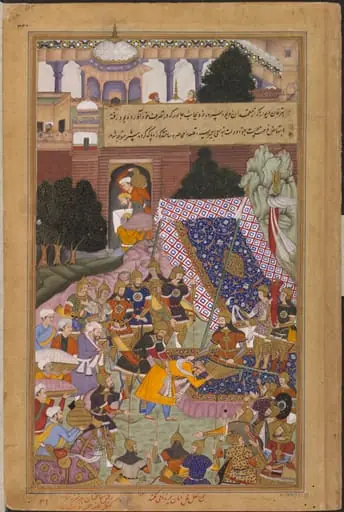
The Mughal emperor Alamgir is a paint painting by the Baroque artist Ghulaman. It dates from 1698 and is held in the collection of the Victoria and Albert Museum.
About this work
Overview
This 1698-99 painting portrays Mughal Emperor Alamgir in his later years, characterized by somber attire and demeanor, reflecting his adopted austerity.
Subject & Meaning
The emperor is depicted in prayer-like pose, dressed in unadorned white, conveying his personal shift towards simplicity. Royal symbols, a parasol and aftabgir (sunshade), are borne by attendants, juxtaposing humility with imperial authority.
Technique & Style
Executed by artist Ghulaman, the work exhibits a style consistent with attributed pieces, notable for its detailed, realistic rendering of the subject and accessories.
History & Provenance
Remaining in royal possession after Alamgir's death, the painting bears a 1719-20 seal of Emperor Muhammad Shah, attesting to its continued imperial ownership.
Context
Created during the late Mughal period, the painting reflects the era's artistic traditions while capturing the emperor's personal transformation towards the end of his reign.
Legacy
While specific influences or direct artistic lineage are not prominently documented, the piece remains a significant example of late Mughal portraiture, offering insight into both the emperor's character and the court's artistic practices.
Own this work as a print
Artist & collection
Artist
This artist painted portraits of Mughal emperors, working in the late 1600s when emperors were often shown in detailed, colorful pictures.