Artwork
Bacchus and Ariadne
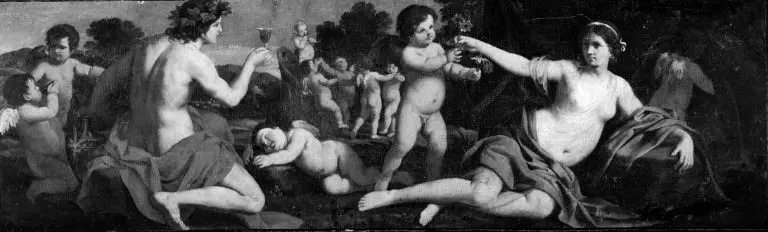
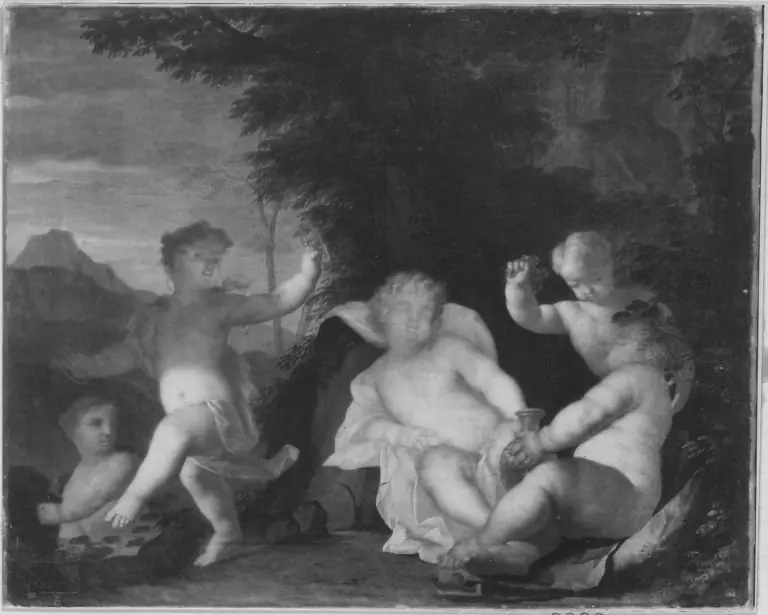
Bacchus and Ariadne is an oil painting by the High Baroque Italian artist Giacinto Gimignani. It dates from 1653 and is held in the collection of the Statens Museum for Kunst.
About this work
Subject & Meaning
The subject matter aligns with traditional mythological themes where Bacchus rescues or claims Ariadne, transforming her fate through his intervention.
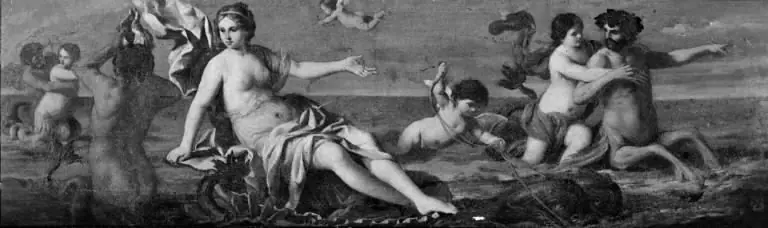
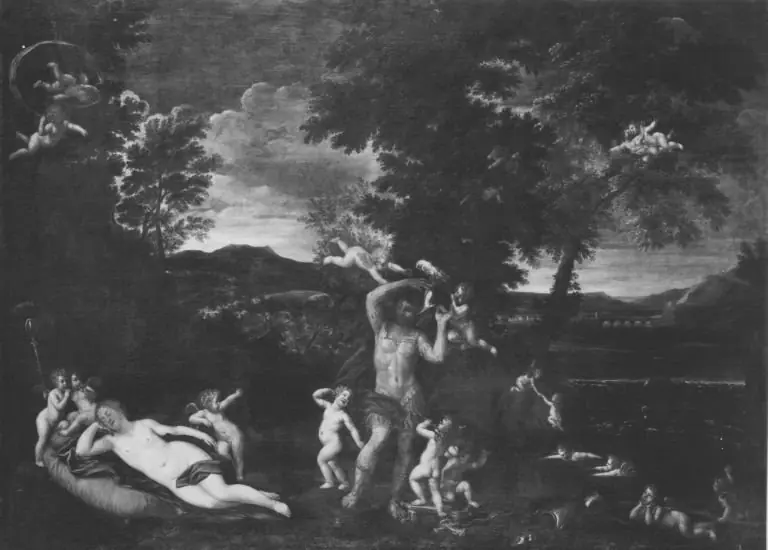
This mythological painting by Giacinto Gimignani, created in 1653, depicts the narrative of Bacchus and Ariadne. The work illustrates the classical story involving the Roman god of wine, Bacchus, and the Cretan princess Ariadne. As a genre piece, the composition focuses on the interaction between these two central figures, capturing the moment of their divine encounter.
The subject matter aligns with traditional mythological themes where Bacchus rescues or claims Ariadne, transforming her fate through his intervention.
Technique & Style
Executed in 1653, this mythological painting by Giacinto Gimignani utilizes oil paint applied to a canvas support. The work presents a substantial horizontal format, measuring 465 cm in height and 1,445 cm in width. As a depiction of the classical figures Bacchus and Ariadne, the piece is classified within the genre of mythological painting. The composition's expansive dimensions suggest a design intended for a significant architectural setting or large-scale display.
History & Provenance
Giacinto Gimignani's 1653 oil painting Bacchus and Ariadne is held in the collection of the Statens Museum for Kunst. The work is located at this institution, which serves as its current repository. The canvas measures 465 cm in height and 1445 cm in width.
No specific inventory or accession number is provided in the available records, nor is there any listed exhibition history for this particular version of the mythological subject.
Context
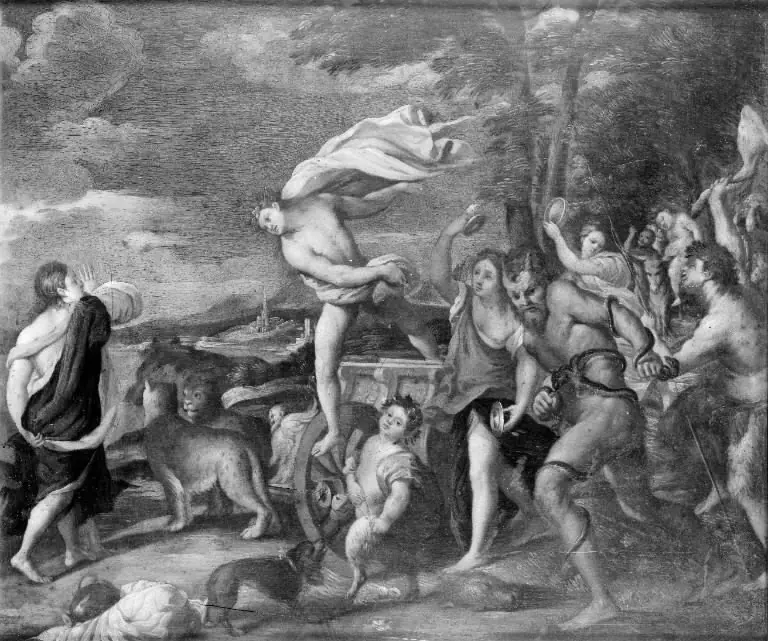
The mythological painting depicts Bacchus arriving on a chariot drawn by leopards to rescue Ariadne, a scene drawn from Ovid's Metamorphoses. Scholars have examined its dynamic composition and use of chiaroscuro as emblematic of 17th-century Bolognese mythological painting, situating it within the broader trajectory of artists like Gimignani who reinterpreted classical narratives in the Baroque era. The work's formal qualities have been discussed in relation to the evolution of mythological subjects in European art, reflecting changing attitudes toward antiquity and sensuality.
It is housed in the Statens Museum for Kunst, where it remains part of their collection of Baroque paintings.
Overview
Created in 1653 by the Roman painter Giacinto Gimignani, this oil on canvas presents a lively mythological tableau. The work is part of the collection of Denmark’s Statens Museum for Kunst and exemplifies the exuberant visual language of the High Baroque period in Italy.
Artist & collection
Artist
Giacinto Gimignani (1606 – 9 December 1681) was an Italian painter, active mainly in Rome, during the Baroque period. He was also an engraver of aquaforte.