Artwork
Juno and Mars
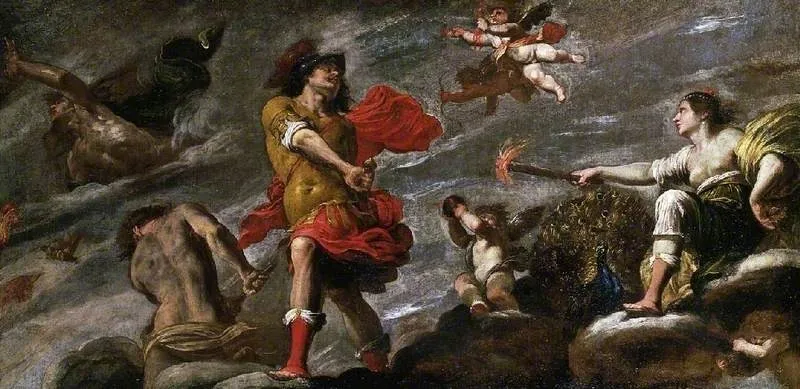
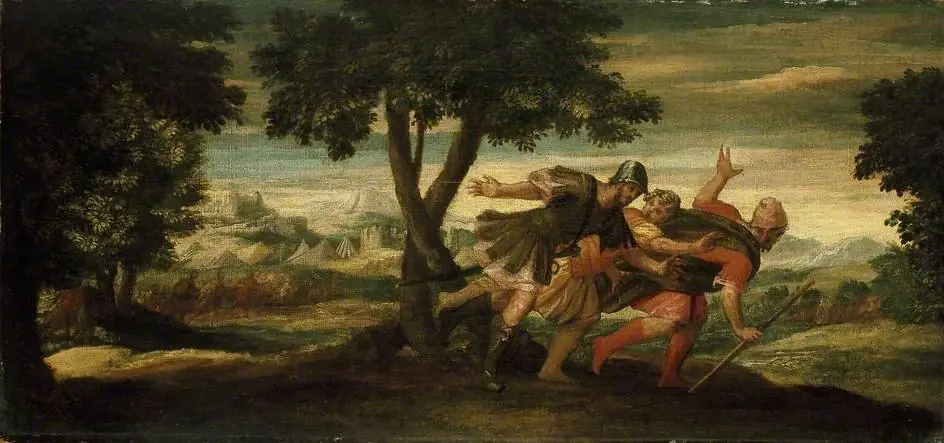
Juno and Mars is an oil painting by the Early Baroque Italian artist Giovanni Battista Carlone. It dates from 1650 and is held in the collection of the Fitzwilliam Museum.
About this work
Overview
The composition centers on the two deities amid a turbulent sky, surrounded by secondary figures that suggest a narrative beyond the immediate moment.
Painted around 1650 by Giovanni Battista Carlone, this oil-on-canvas work portrays a mythological encounter between Juno and Mars. It resides in the Fitzwilliam Museum’s collection. The composition centers on the two deities amid a turbulent sky, surrounded by secondary figures that suggest a narrative beyond the immediate moment. The painting reflects the Baroque interest in dynamic movement and emotional intensity.
Subject & Meaning
Juno, goddess of marriage, holds a torch as she confronts Mars, god of war, who grips a sword. Their positioning implies tension or negotiation, possibly referencing their mythological affair. Surrounding figures, cherubs and a bound man, hint at consequences of their union, perhaps alluding to Vulcan’s imprisonment or the chaos war brings. The scene evokes moral and cosmic imbalance rather than pure celebration.
Technique & Style
Carlone employs chiaroscuro to heighten the drama, using stark contrasts between light and shadow to isolate Juno and Mars. The figures emerge from a dark, swirling sky, their garments rendered with rich textures. Brushwork is fluid yet deliberate, emphasizing movement in fabric and hair.
The background figures are rendered with less detail, guiding focus toward the central pair without resolving their narrative fully.
History & Provenance
The painting entered the Fitzwilliam Museum’s collection in the 19th century, likely through a private acquisition. Its earlier history remains undocumented, though Carlone’s active period in Genoa and northern Italy suggests it may have been commissioned by a local noble or ecclesiastical patron. No records of its exhibition prior to the 1800s survive, leaving its original context speculative.
Context
Created during the height of Baroque painting in northern Italy, the work aligns with contemporaries like Rubens in its theatricality and mythological themes. While Carlone was less renowned than his peers, his use of dramatic lighting and mythic subjects reflects broader trends in post-Tridentine art, where emotional engagement and visual spectacle served religious and moral ends, even in secular myths.
Legacy
Though not widely reproduced or studied, the painting contributes to understanding regional Baroque practices beyond major centers like Rome or Venice. Its presence in the Fitzwilliam Museum allows ongoing scholarly access, offering insight into lesser-known artists who adapted classical themes with local stylistic inflections. It remains a quiet example of 17th-century narrative painting’s complexity.
Artist & collection
Artist
Giovanni Battista Carlone (1642–1721) was an artist, born in Lanzo d'Intelvi.

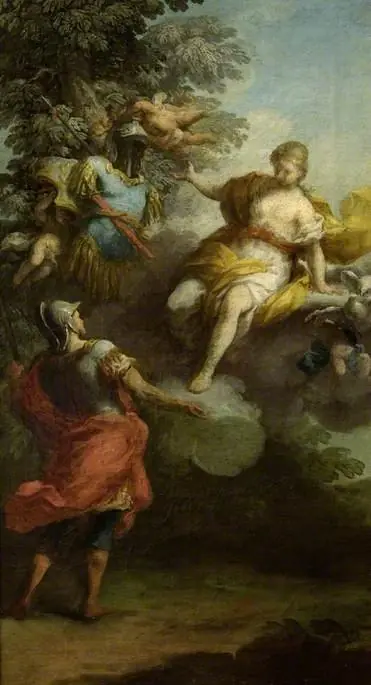
- Venus giving arms to Aeneas
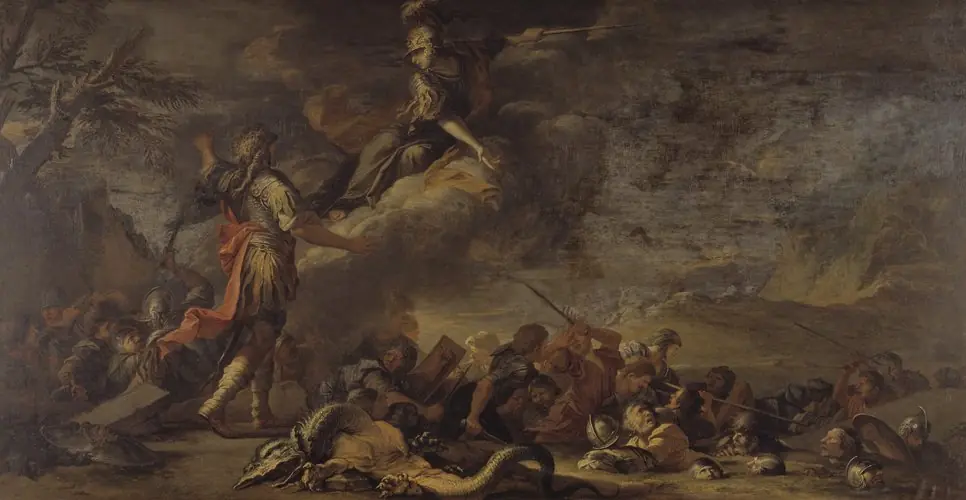 The Founding of Thebes
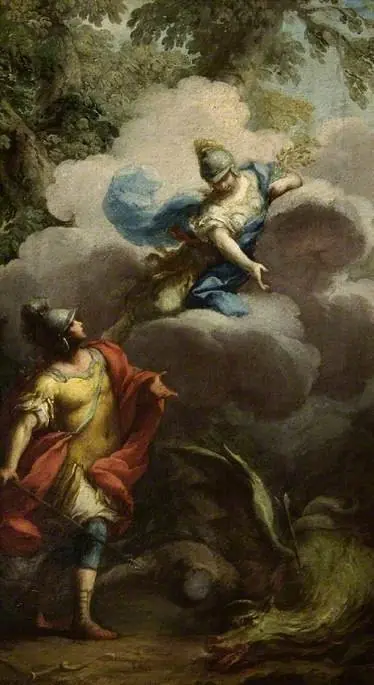 Cadmus and the Dragon
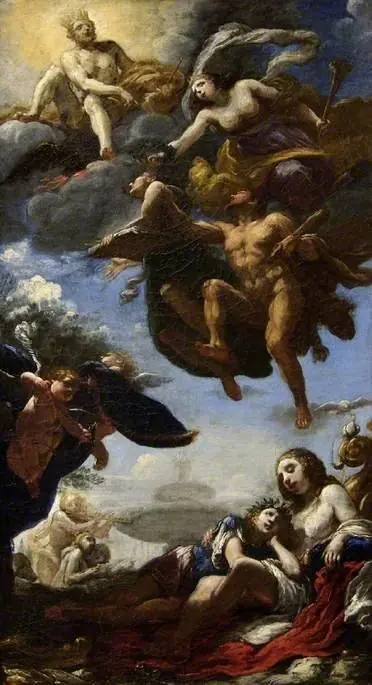 A poet, presented to Jupiter by Hercules, is crowned by Glory, below Venus, Cupid and the poet
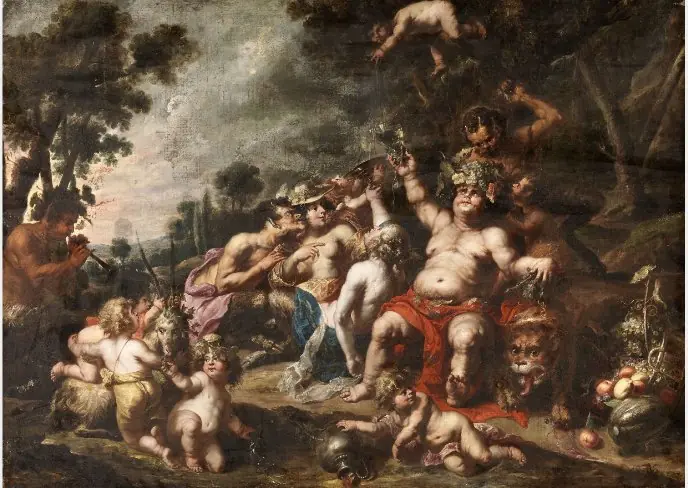 Bacchanal
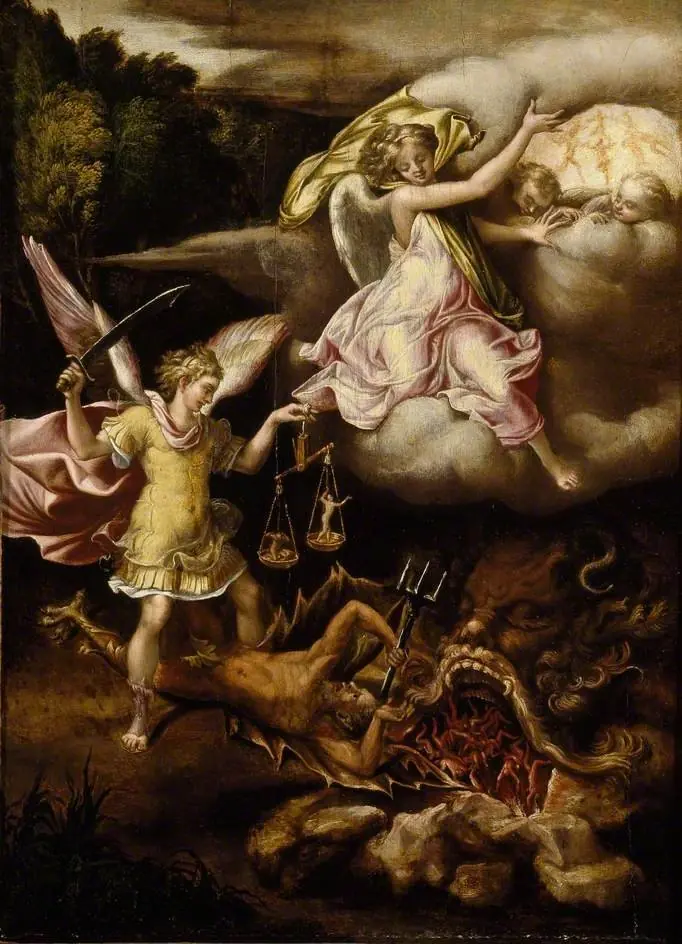 St Michael subduing Satan and weighing the Souls of the Dead
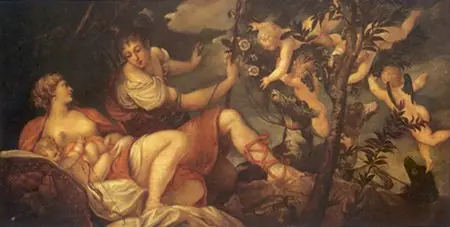 Diana and Endymion or Venus and Adonis
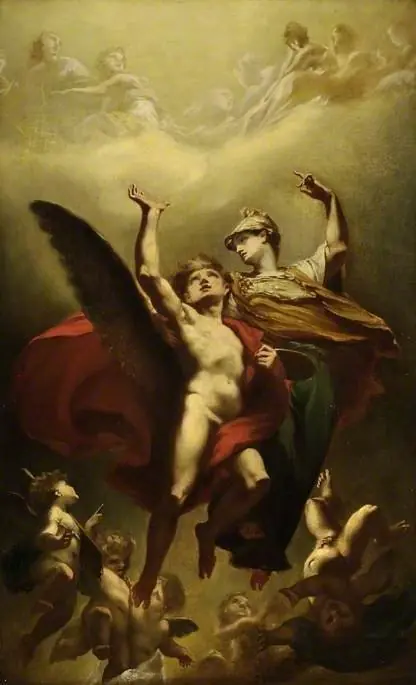 Study for 'Minerva leading the Genius of the Arts into Immortality'
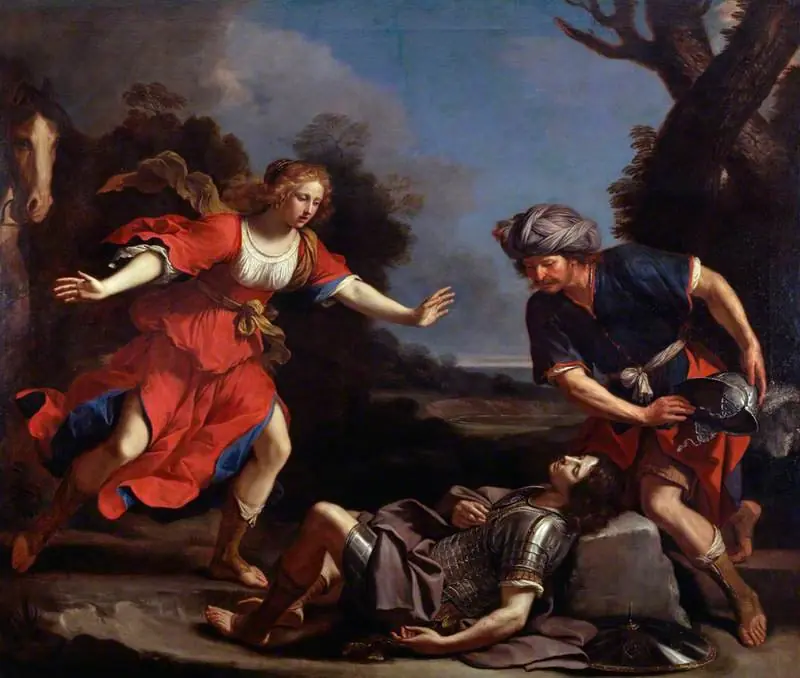 Erminia Finding the Wounded Tancred
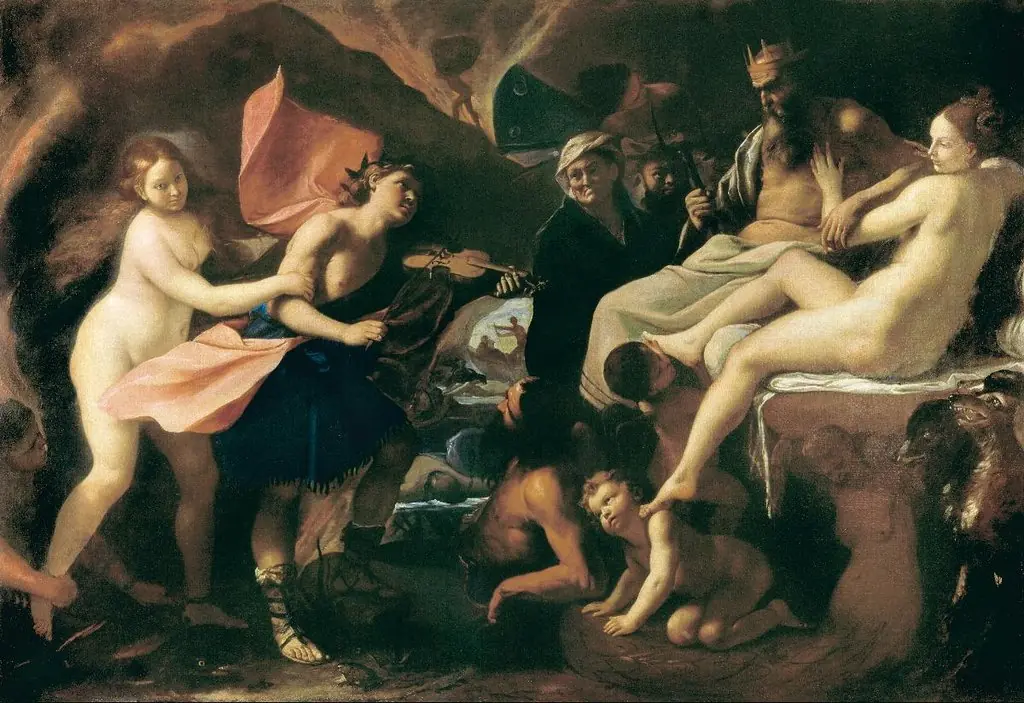 Orfeo nell’ade
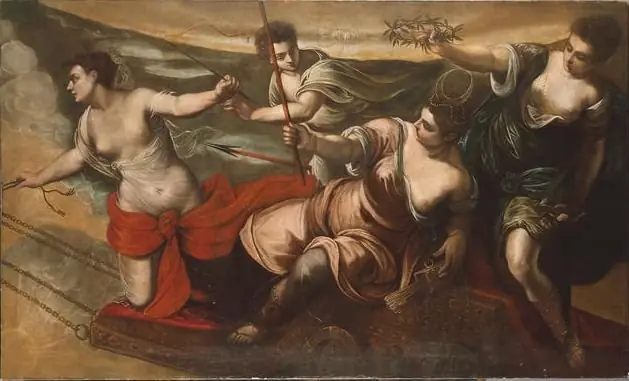 Luna mit den Horen
 The Flight of Achior from the Camp of Holofernes