Artwork
Virgin and Child Enthroned with Saints; Crucifixion; Coronation of the Virgin
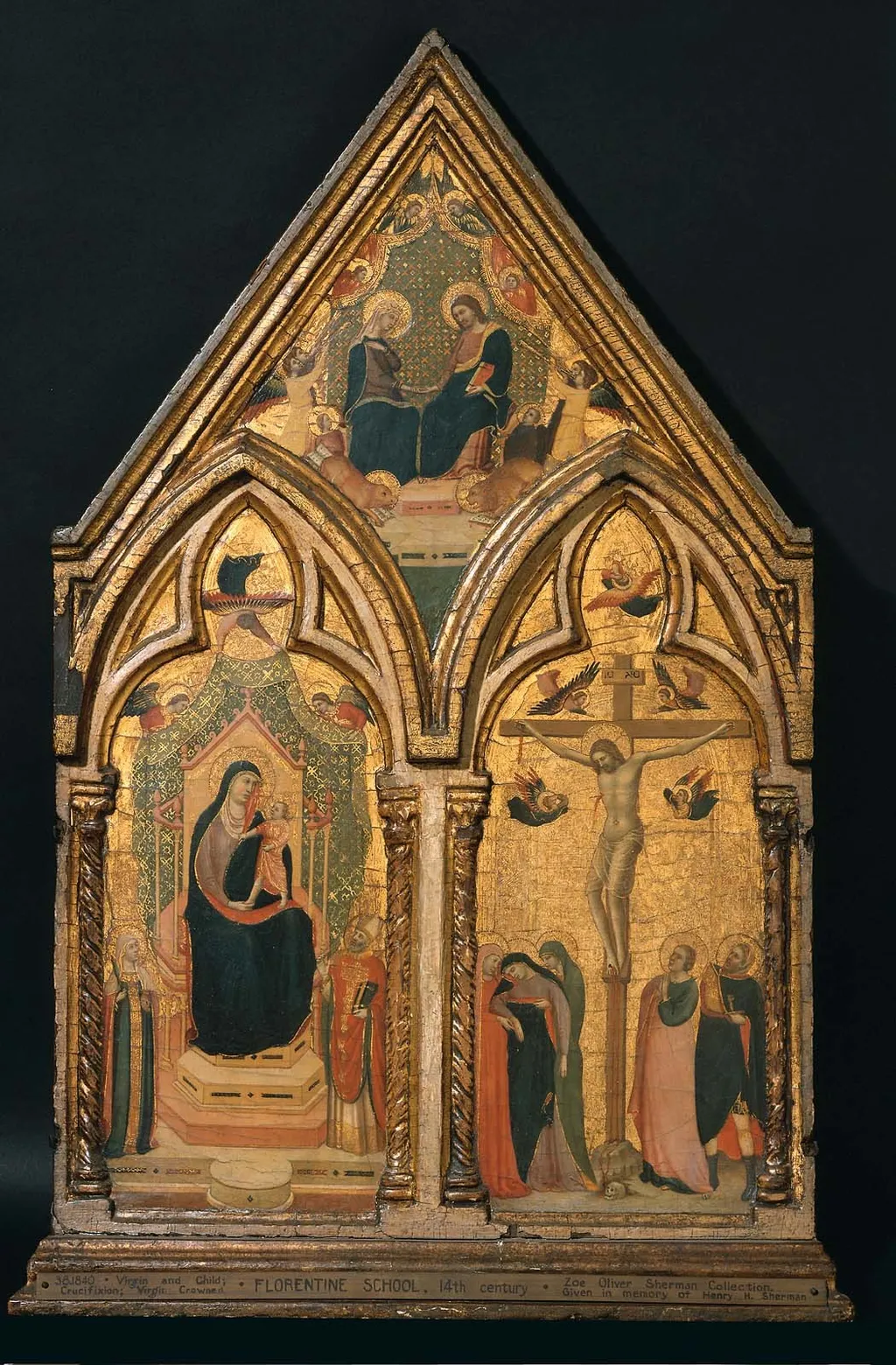
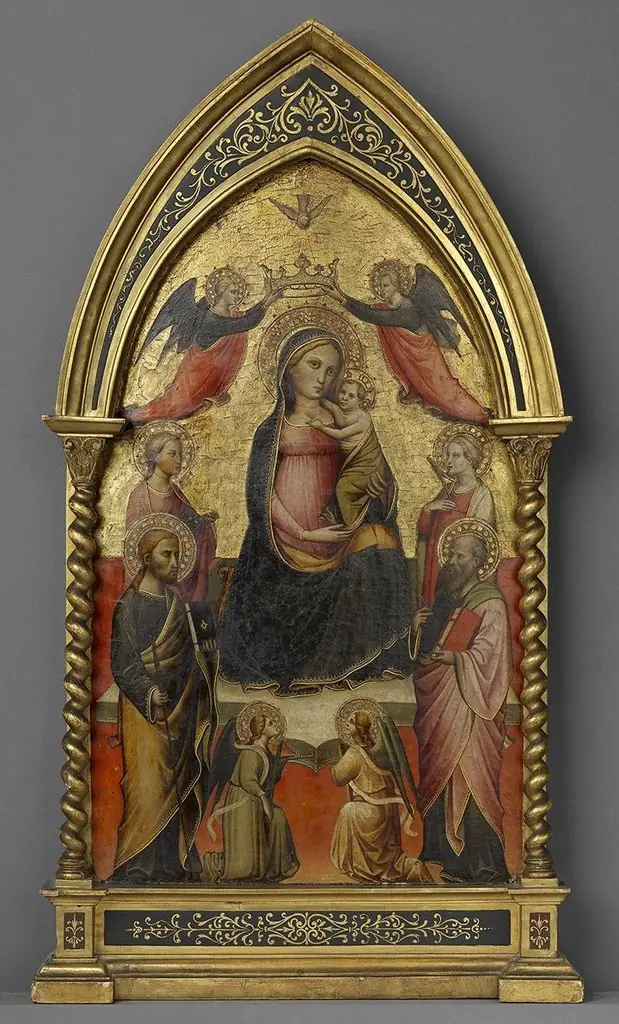
Virgin and Child Enthroned with Saints; Crucifixion; Coronation of the Virgin is an unspecified painting by the Italo Byzantine artist Maestro Daddesco. It dates from 1345 and is held in the collection of the Museum of Fine Arts Boston.
About this work
Overview
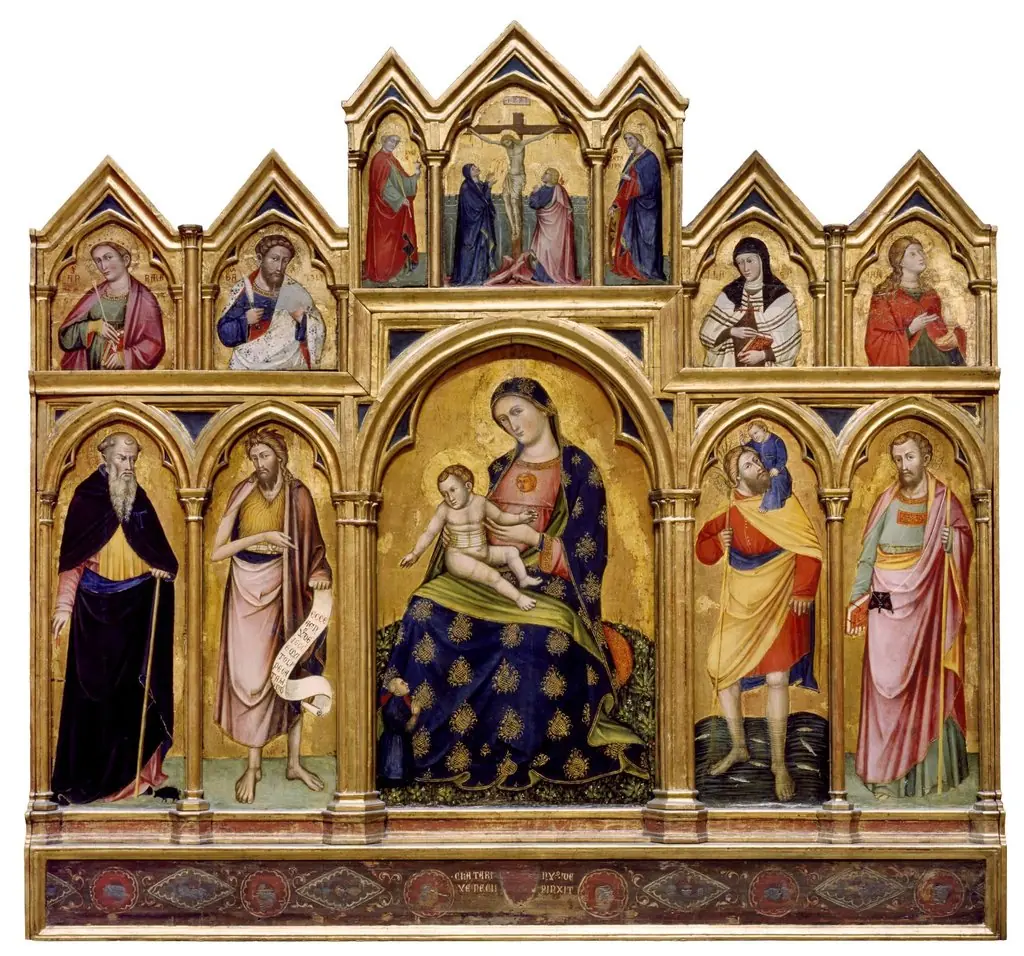
Created in 1345 by the Italian painter known as Maestro Daddesco, this panel combines three distinct biblical episodes within a single gilded frame. The work is part of the collection of the Museum of Fine Arts in Boston and presents a Virgin and Child enthroned, a Crucifixion, and a Coronation of the Virgin, each rendered in bright yet weathered pigments against a gold ground.
Subject & Meaning
Above them, a celestial group gestures in blessing, while the central panel depicts Christ on the cross, observed by three mourners, underscoring sacrifice.
The leftmost scene shows the Virgin Mary seated on a throne, holding the infant Christ, flanked by two saints in red garments, emphasizing intercessory devotion. Above them, a celestial group gestures in blessing, while the central panel depicts Christ on the cross, observed by three mourners, underscoring sacrifice. The rightmost vignette illustrates the Virgin’s coronation, symbolizing her exalted status in medieval theology.
Technique & Style
Maestro Daddesco employs a stiff, hieratic figure treatment typical of mid‑fourteenth‑century Italian painting. Figures are outlined in bold lines, their forms flattened against a shimmering gold background. The palette, once vivid, now appears faded, yet the contrast between bright reds, blues, and the luminous gold remains evident, highlighting the work’s devotional intent.
History & Provenance
The panel was likely commissioned for a private chapel or guild altar in the mid‑1300s, reflecting contemporary devotional practices. It entered the Museum of Fine Arts, Boston, through a 20th‑century acquisition, though earlier ownership records are sparse. Its survival in relatively good condition allows study of Daddesco’s early oeuvre.
Context
The triptych format, uniting the Virgin’s life, the Passion, and her coronation, aligns with the theological emphasis on Mary’s role as intercessor prevalent in 14th‑century Italy. The gilded frame and use of bright pigments echo the International Gothic aesthetic, while the rigid figures point toward the emerging stylistic shift toward greater naturalism that would follow in the Trecento.
Artist & collection
Artist
This miniaturist hid whole stories in the gold-flecked margins of prayer books, turning the space between prayers into tiny dramas.

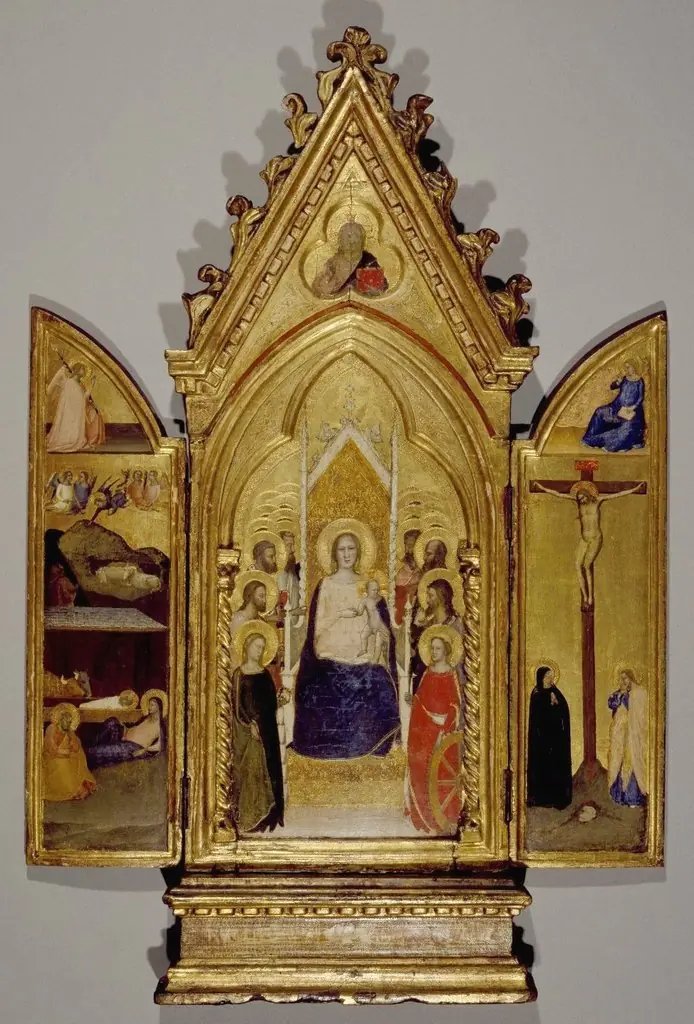 Triptych: Madonna with Saints and Christ Blessing (Center); The Nativity and the Annunciate Angel (Left Wing); Crucifixion and the Virgin Annunciate (Right Wing)
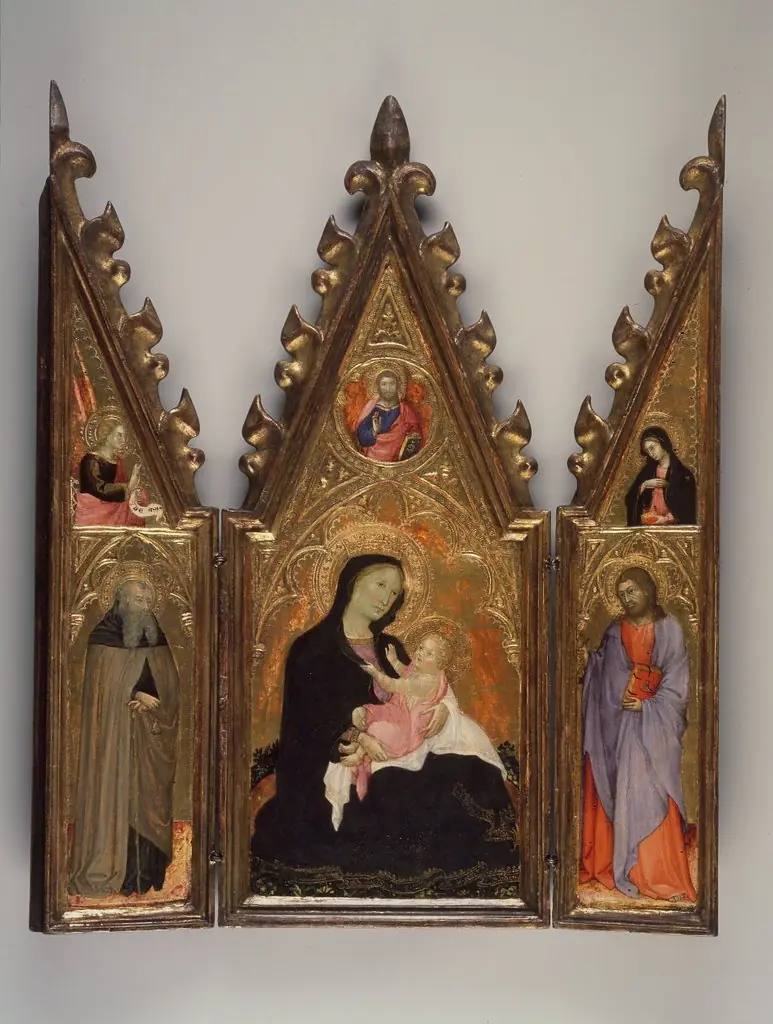 Madonna of Humility, portable altarpiece
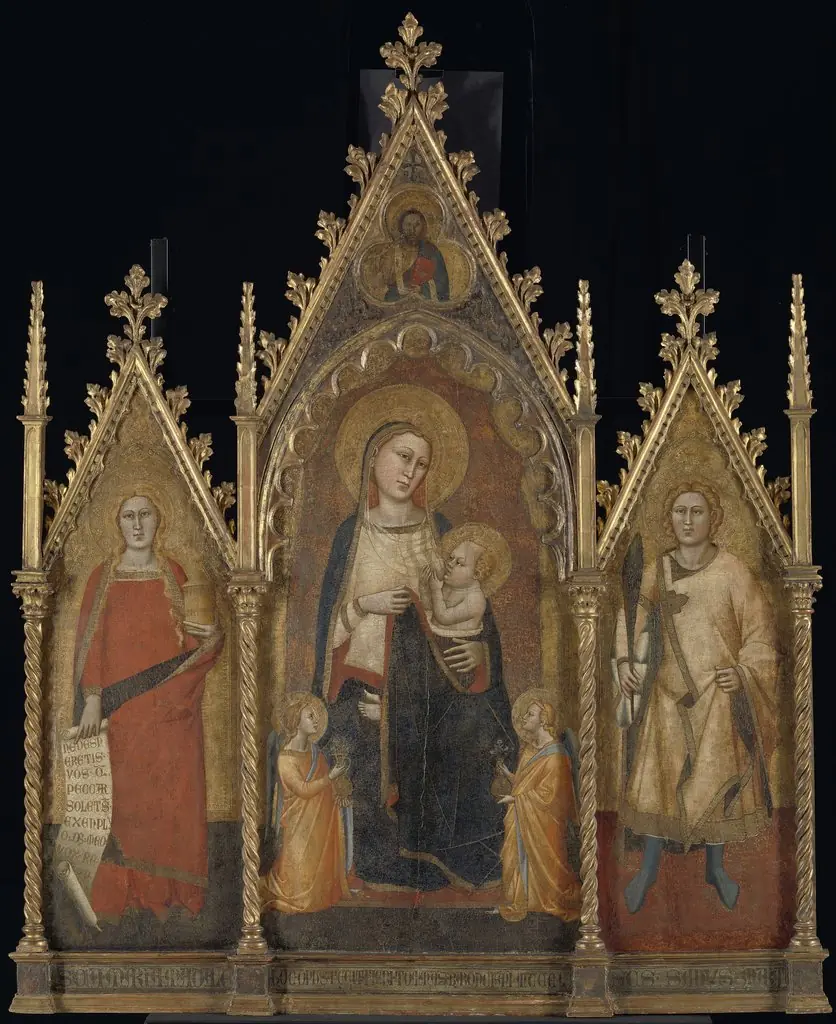 Triptych with the Virgin and Child, and Saints Mary Magdalene and Ansanus
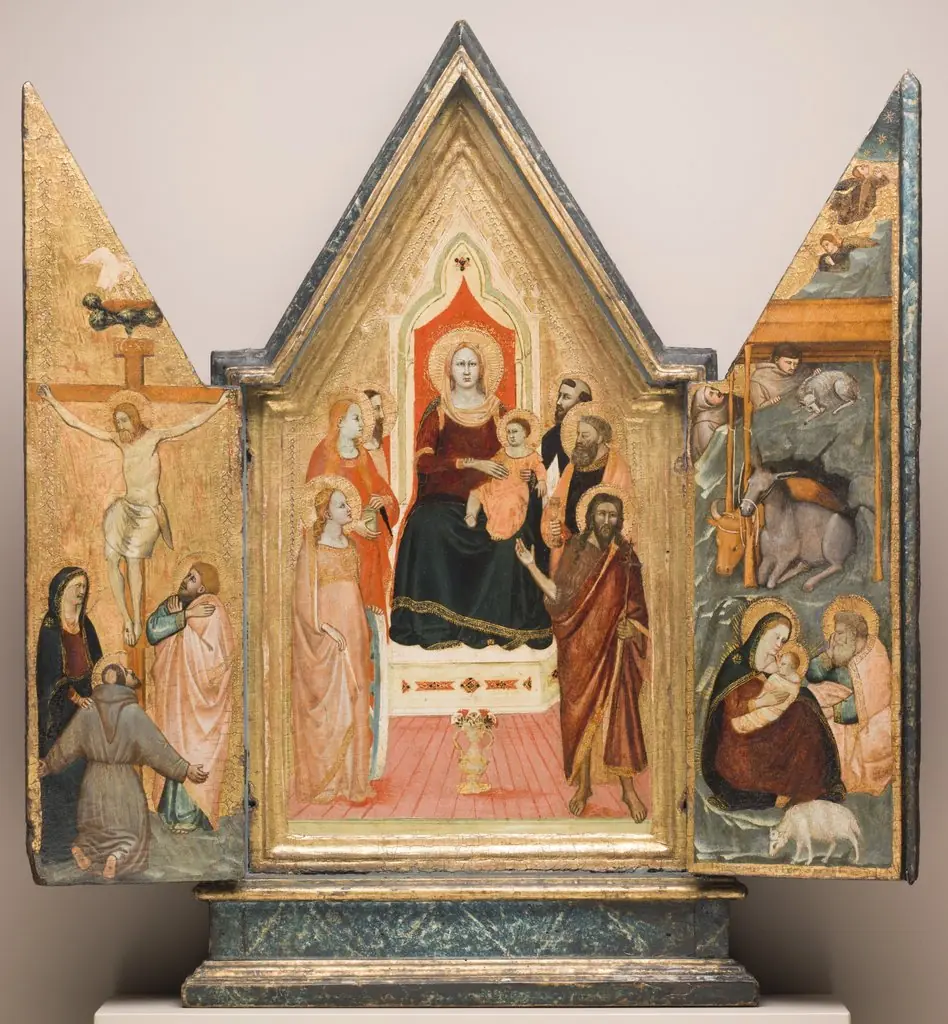
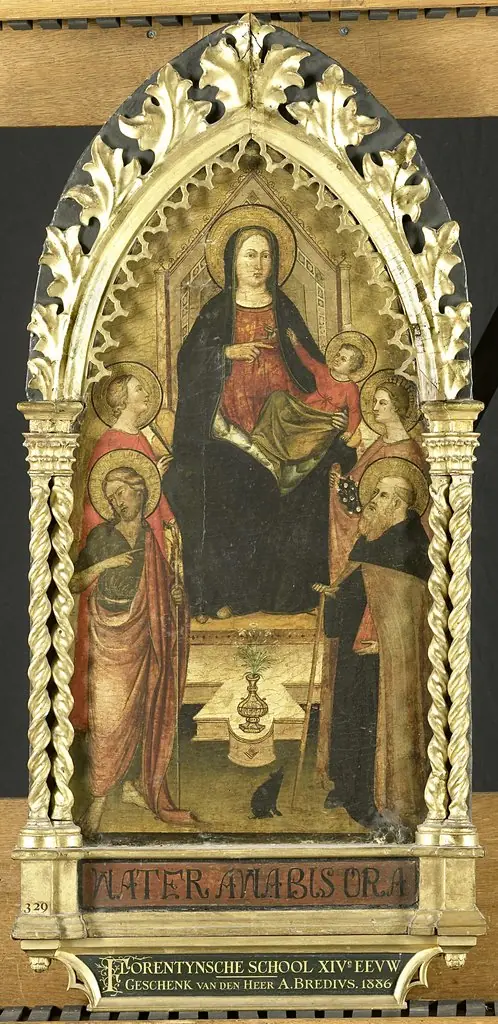 Virgin and Child Enthroned with Four Saints, Saints John the Baptist, Antony Abbot, Elizabeth of Hungary, a female saint
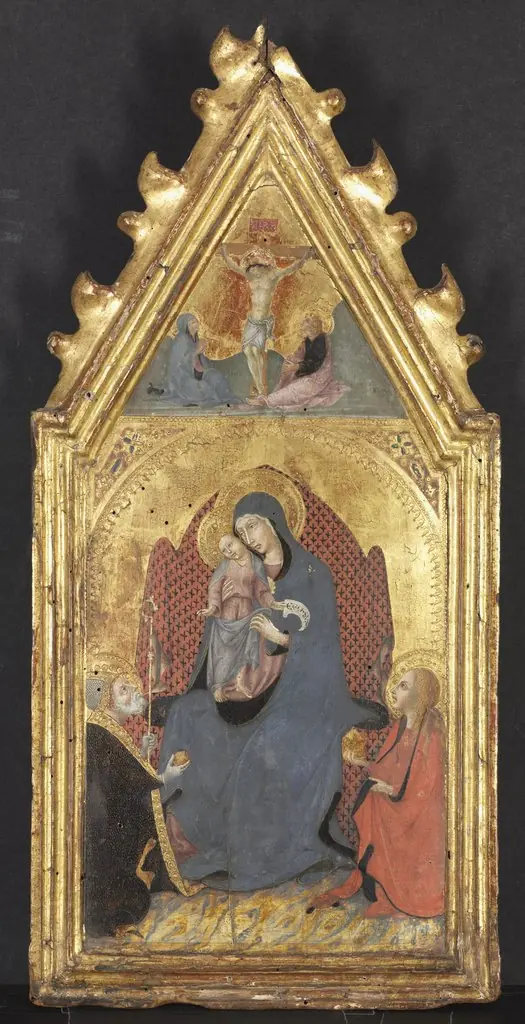 Virgin and Child Adored by Saints Mary Magdalene and Nicolas of Bari; Christ Crucified with the Virgin and Saint John the Evangelist
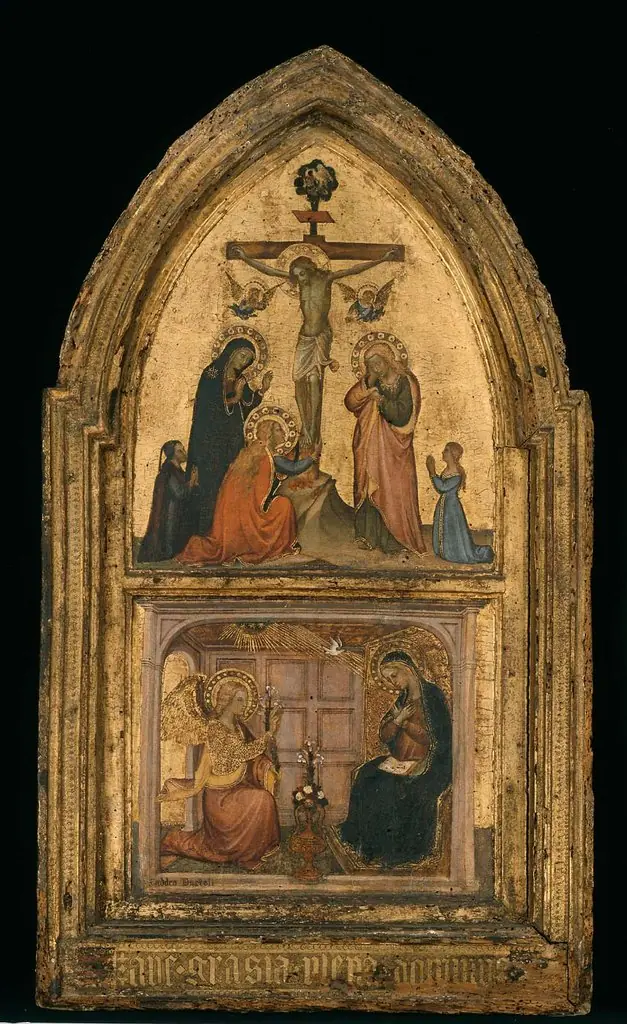 Annunication; Crucifixion
 Madonna mit vier Heiligen und Engeln (?)