Artwork
St. Catherine of Siena and the Beggar
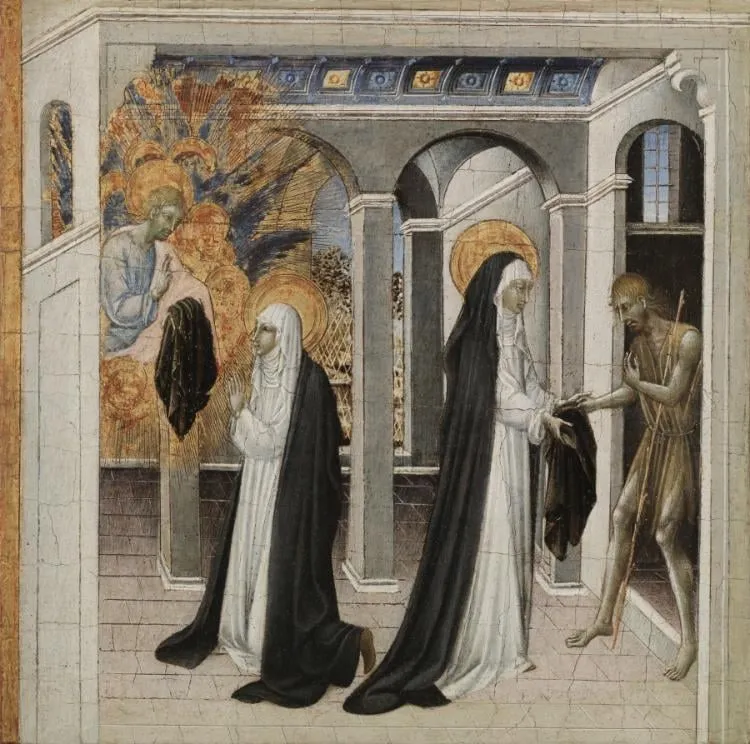
St. Catherine of Siena and the Beggar is an unspecified painting by the Early Renaissance artist Giovanni di Paolo. It dates from 1464 and is held in the collection of the Cleveland Museum of Art. The panel portrays Saint Catherine of Siena kneeling before a beggar, extending a loaf of bread while a group of angels observes from above.
- Accession no.
- 1966.3
About this work
Overview
The composition is rendered in vivid hues typical of Sienese painting, yet the atmosphere remains subdued, suggesting a quiet, miraculous encounter.
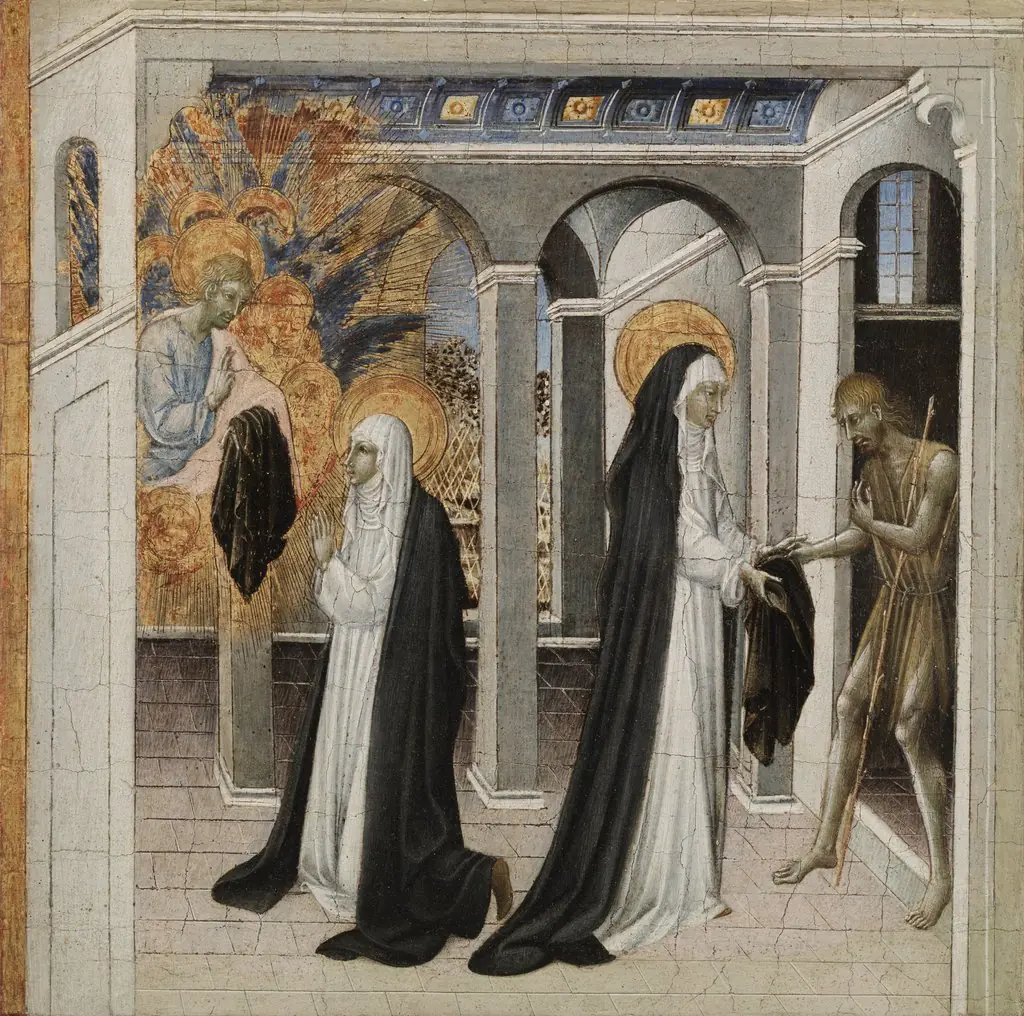
The panel portrays Saint Catherine of Siena kneeling before a beggar, extending a loaf of bread while a group of angels observes from above. The composition is rendered in vivid hues typical of Sienese painting, yet the atmosphere remains subdued, suggesting a quiet, miraculous encounter. The work originally formed part of a predella that supported a larger altarpiece in the Hospital Church of Siena.
Subject & Meaning
In the scene, Catherine selects a monastic habit offered by Saints Dominic, Augustine and Francis, ultimately choosing Dominic’s habit, reflecting her role as founder of the Sisters of Penitence. The adjacent image shows her giving her cloak to a beggar, who is revealed as Christ in disguise; the saint’s charitable act is emphasized by the beggar’s return of the cloak, symbolizing divine protection.
Technique & Style
Executed in tempera on panel, the painting displays the luminous color palette and delicate line work characteristic of mid‑15th‑century Sienese art. Figures are rendered with graceful elongation and expressive faces, while the angels are rendered in airy, translucent drapery, creating a sense of otherworldly presence that complements the narrative’s spiritual tone.
History & Provenance
The predella was added after Catherine’s canonization in 1461 to an altarpiece whose central panel, the Presentation of Christ in the Temple, had been commissioned by the Pizzicaiuoli (Pork Butchers Guild) in 1447. The complete work remained in the Hospital Church of Siena until it was divided; the present panel is catalogued as 1966.2 in the museum’s collection.
Context
The altarpiece served both devotional and charitable functions within a hospital setting, reflecting Siena’s civic devotion to saints who embodied compassion during the Black Death. Catherine’s reputation for caring for the sick made her an appropriate intercessor, and the visual program of the altarpiece reinforced the guild’s patronage and the city’s collective identity.
Artist & collection

Artist
Giovanni di Paolo di Grazia was an Italian painter, working primarily in Siena, becoming a prolific painter and illustrator of manuscripts, including Dante's texts.

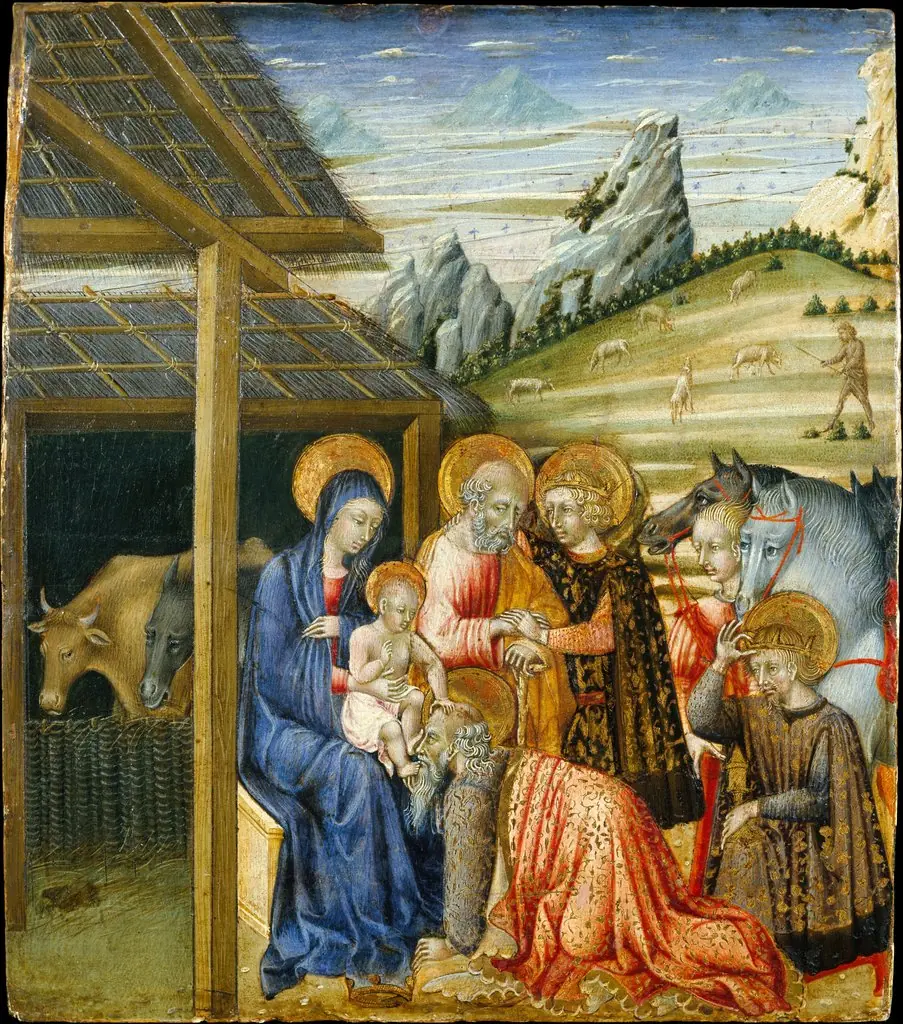 The Adoration of the Magi
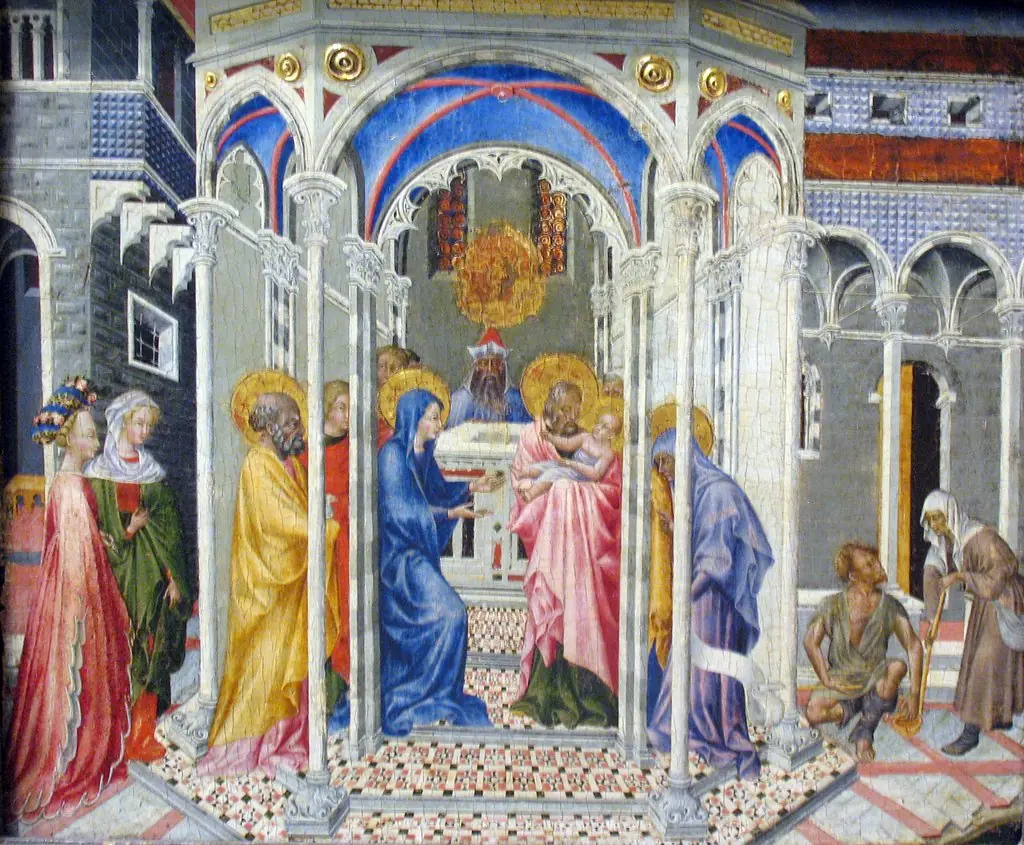 The Presentation of Christ in the Temple
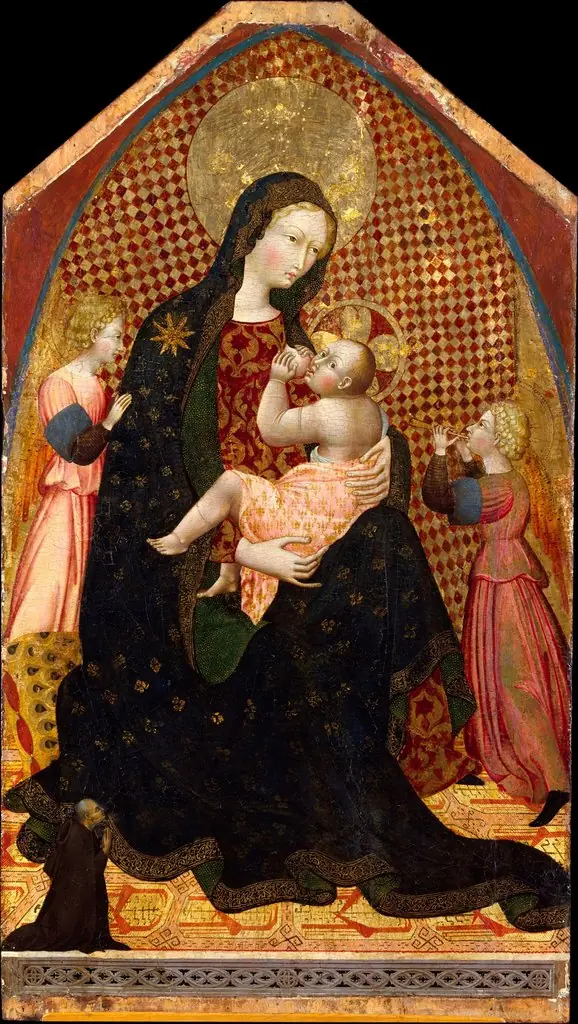 Madonna and Child with Two Angels and a Donor
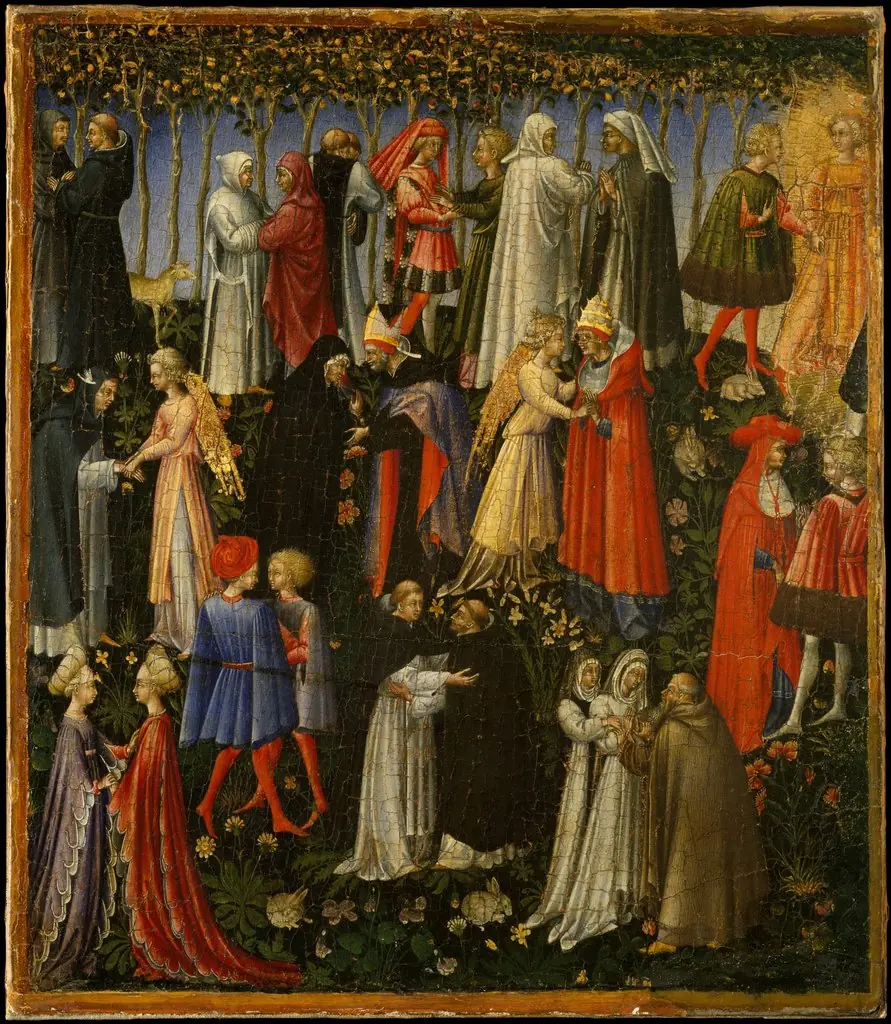 Paradise
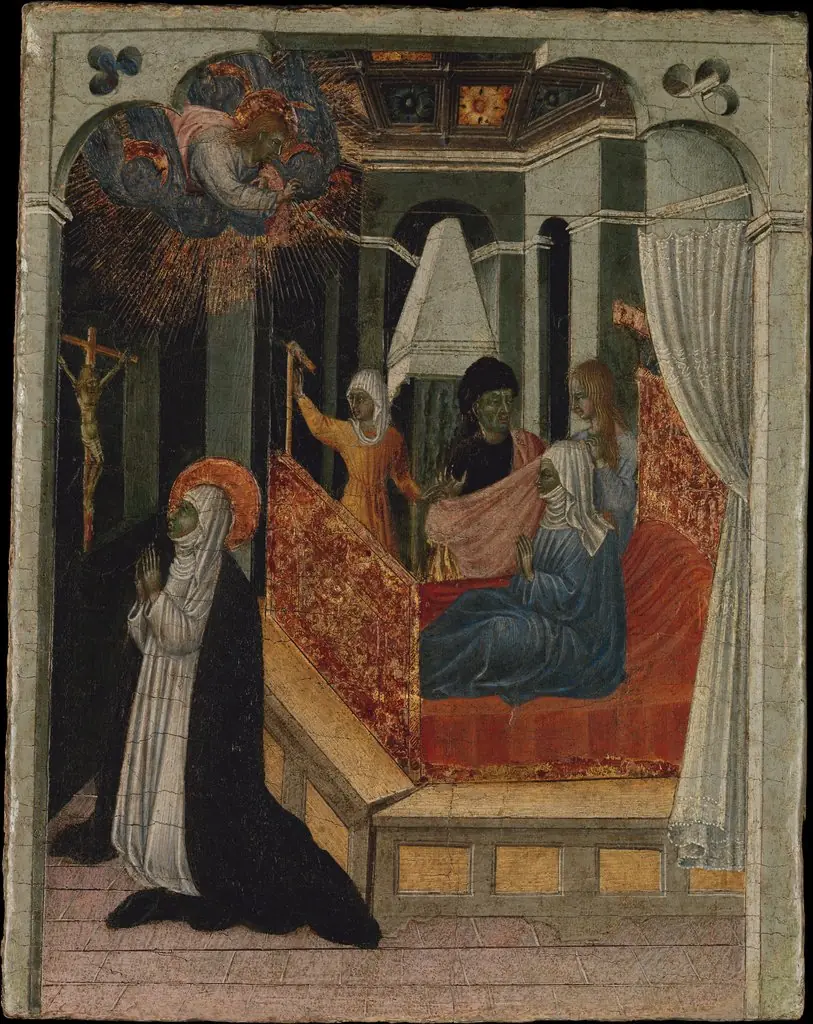 Saint Catherine of Siena Beseeching Christ to Resuscitate Her Mother
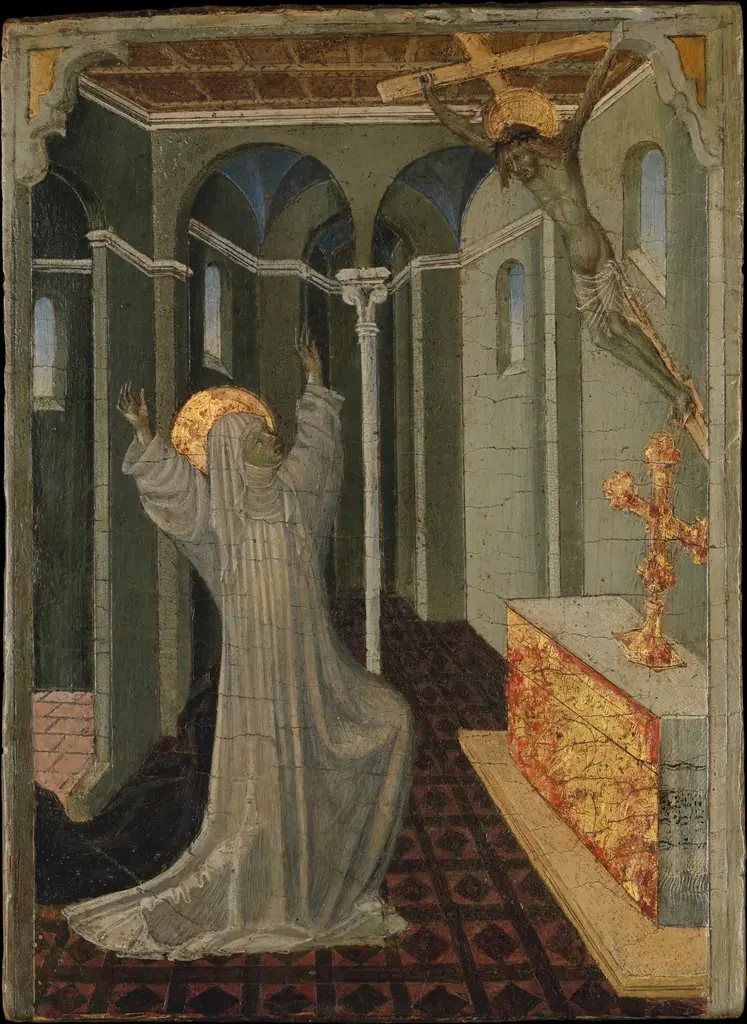 Saint Catherine of Siena Receiving the Stigmata
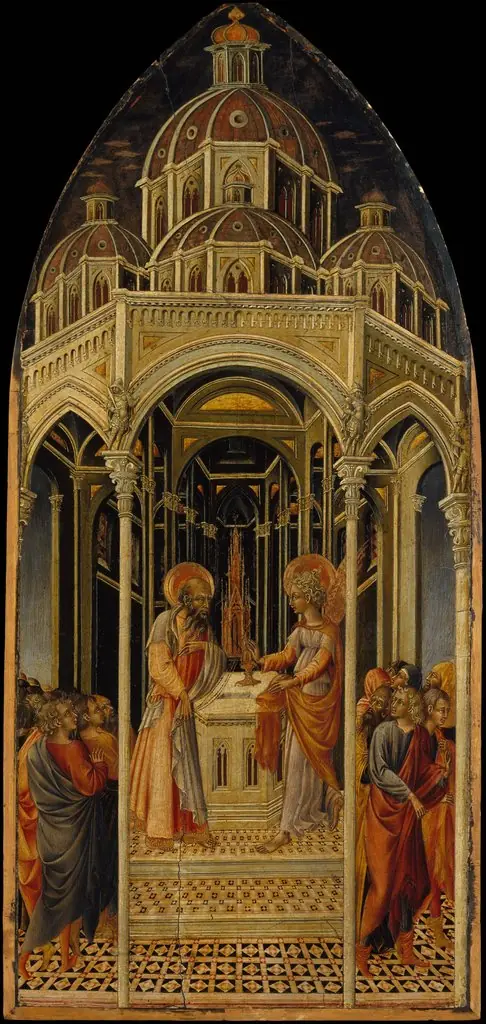 The Annunciation to Zacharias; (verso) The Angel of the Annunciation
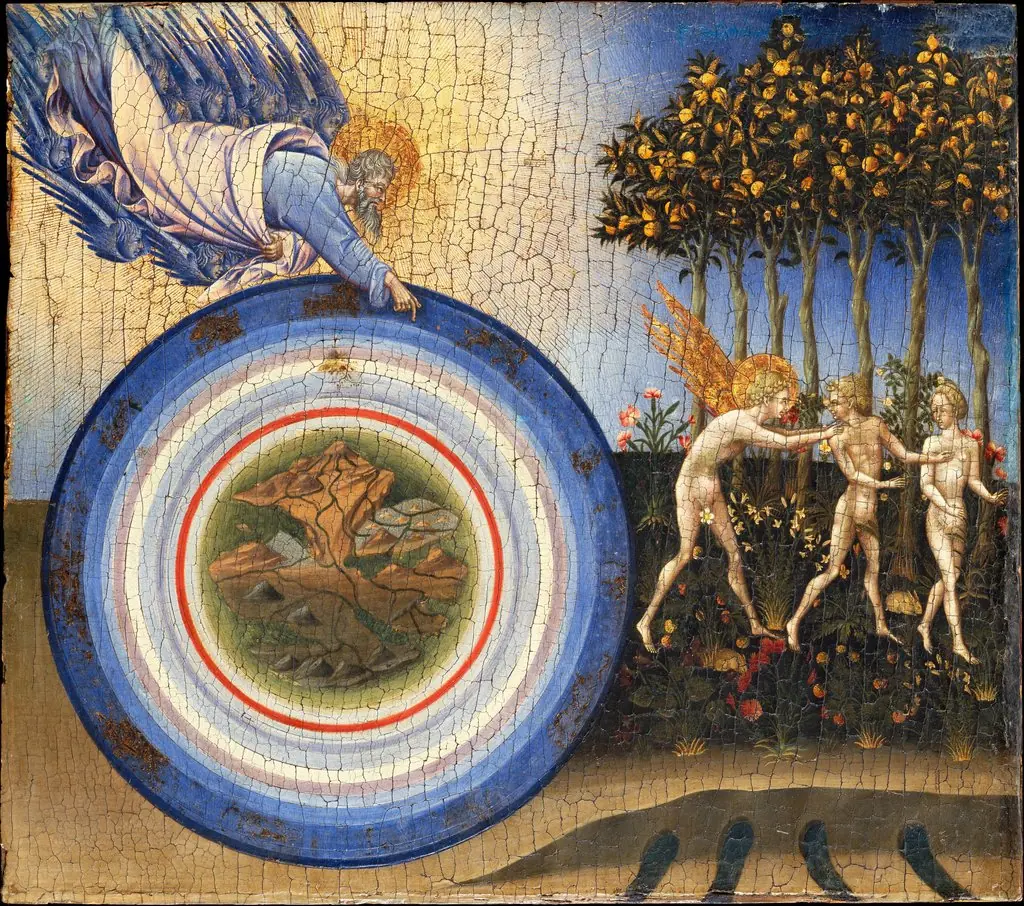 The Creation of the World and the Expulsion from Paradise
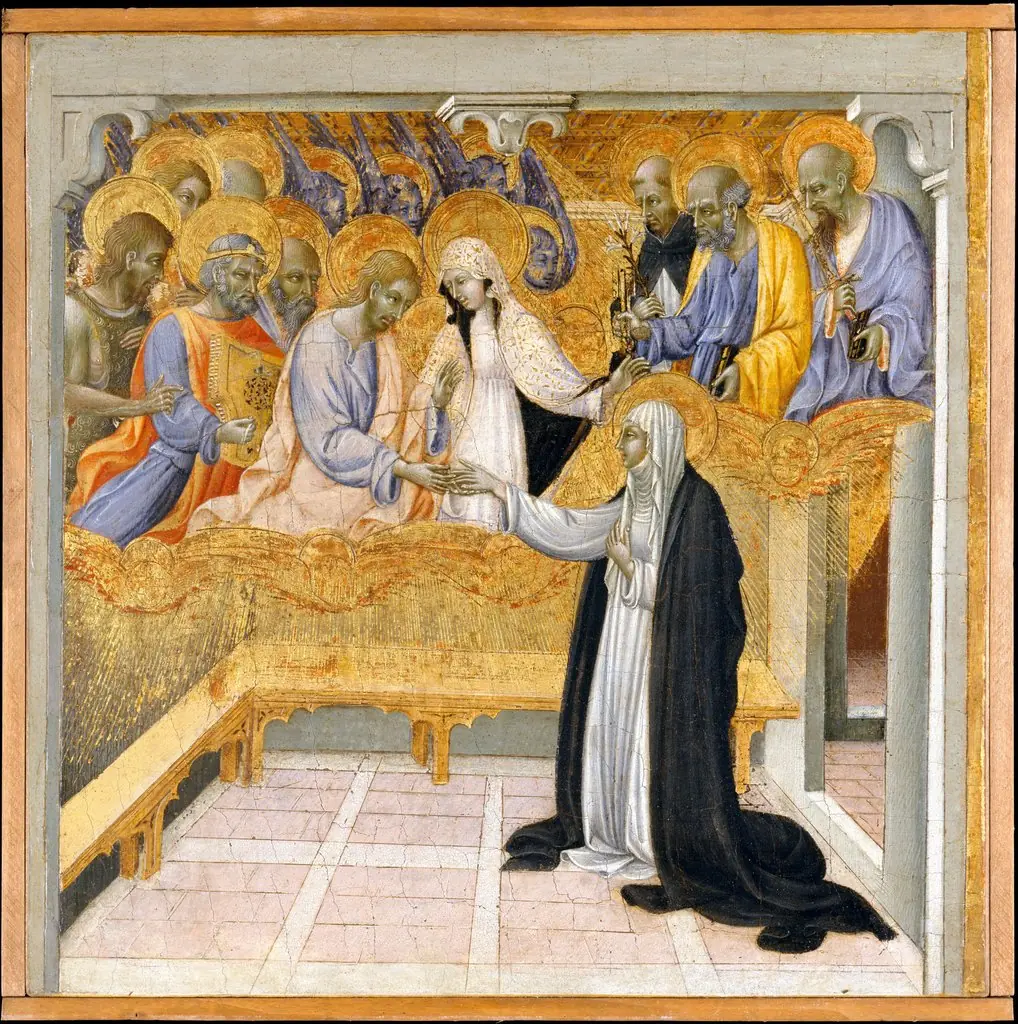 The Mystic Marriage of Saint Catherine of Siena
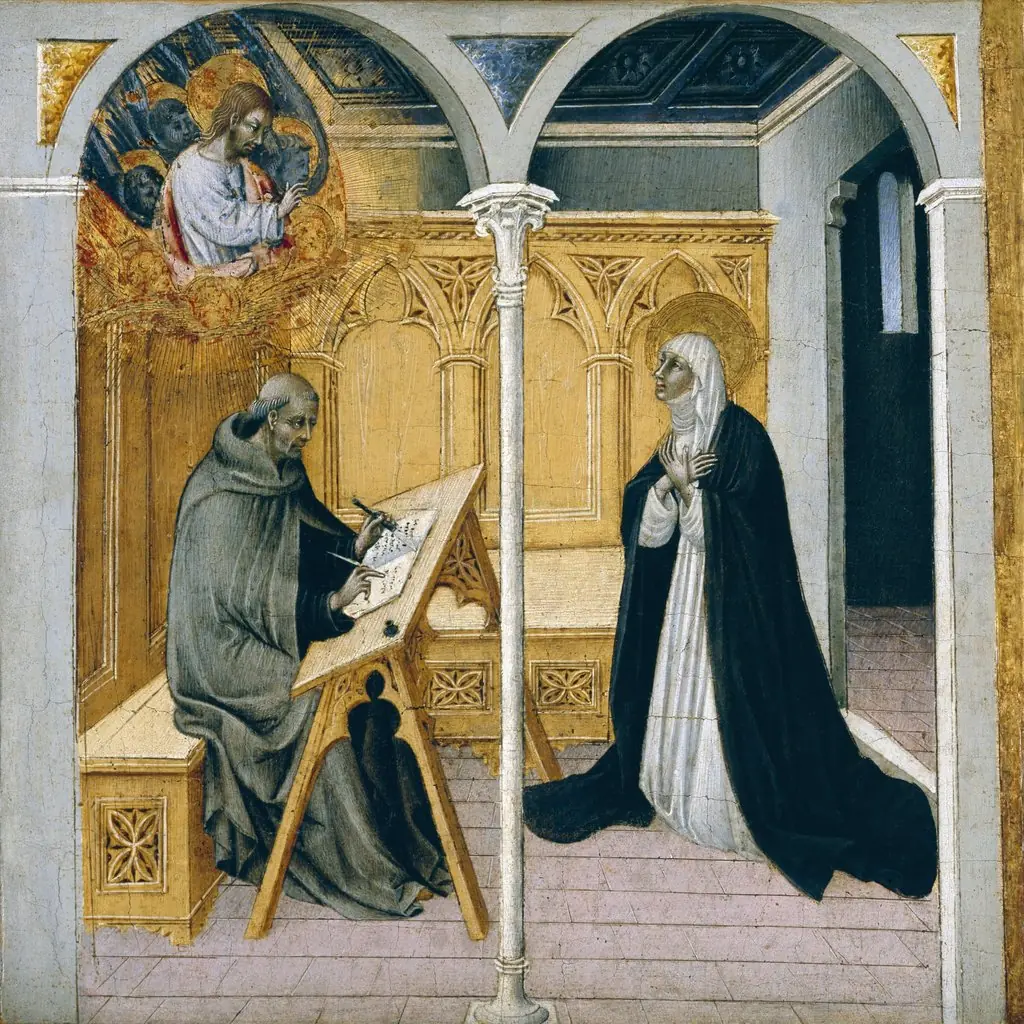 Saint Catherine of Siena Dictating Her Dialogues
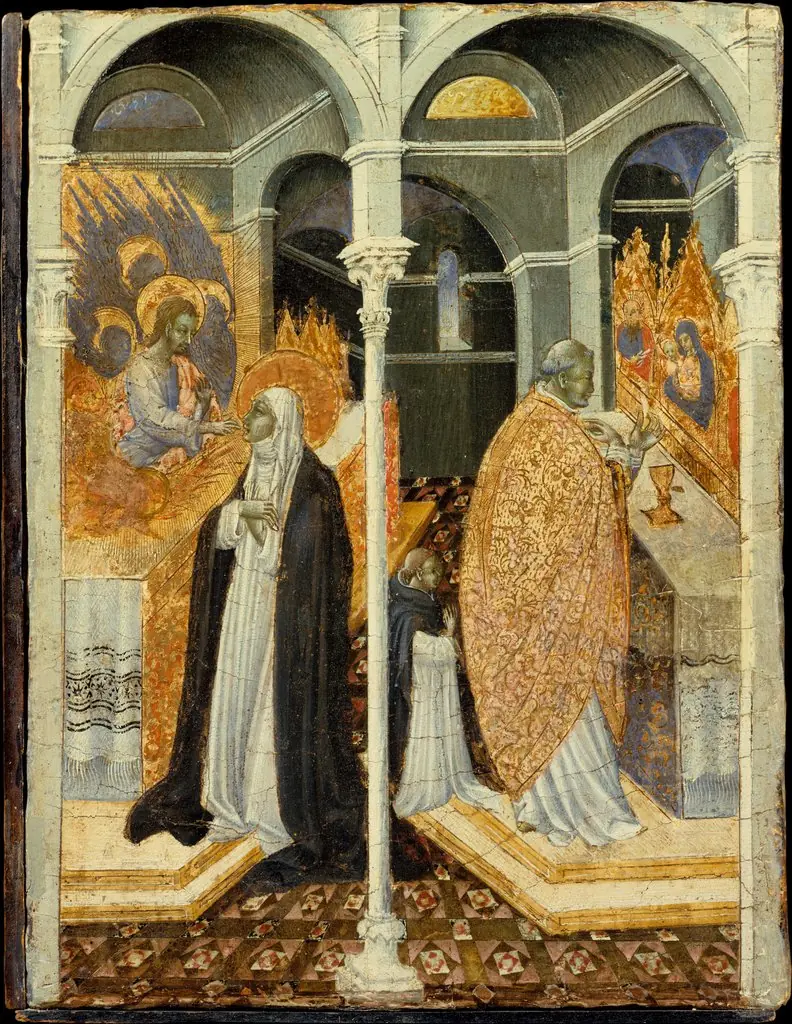 The Miraculous Communion of Saint Catherine of Siena
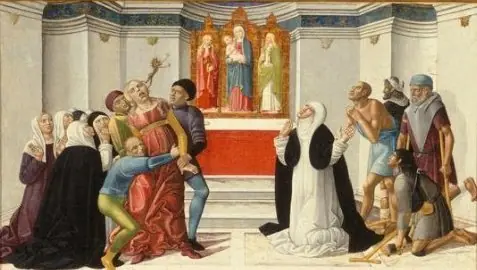 St. Catherine of Siena Exorcising a Possessed Woman
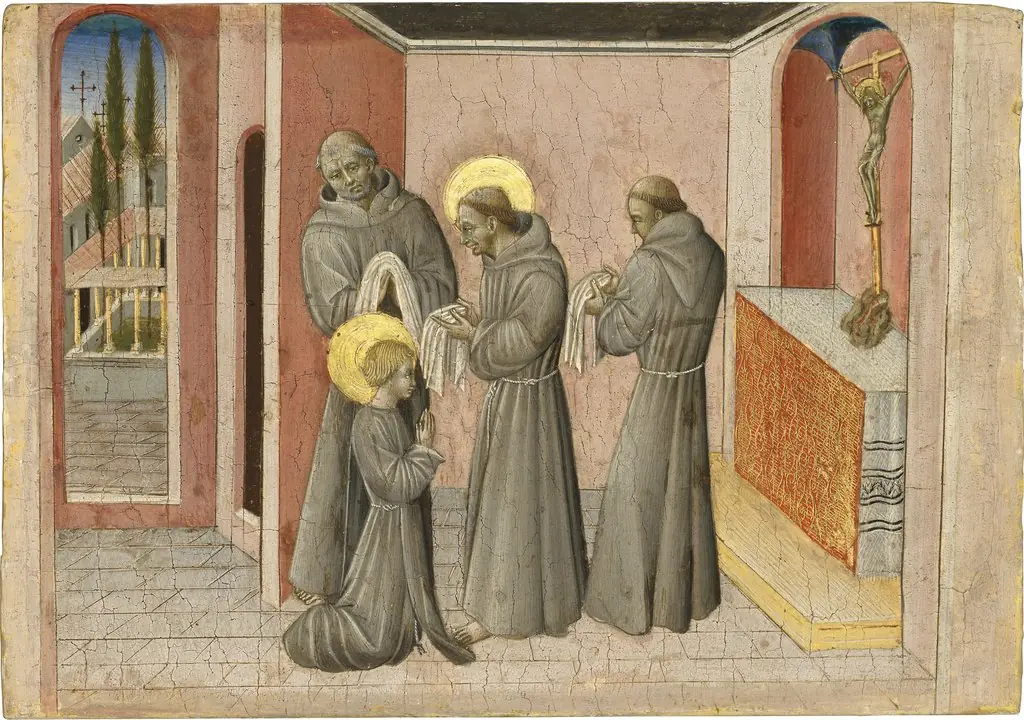 The Investiture of Saint Clare: the Saint receiving the clothes of her Order from Saint Francis
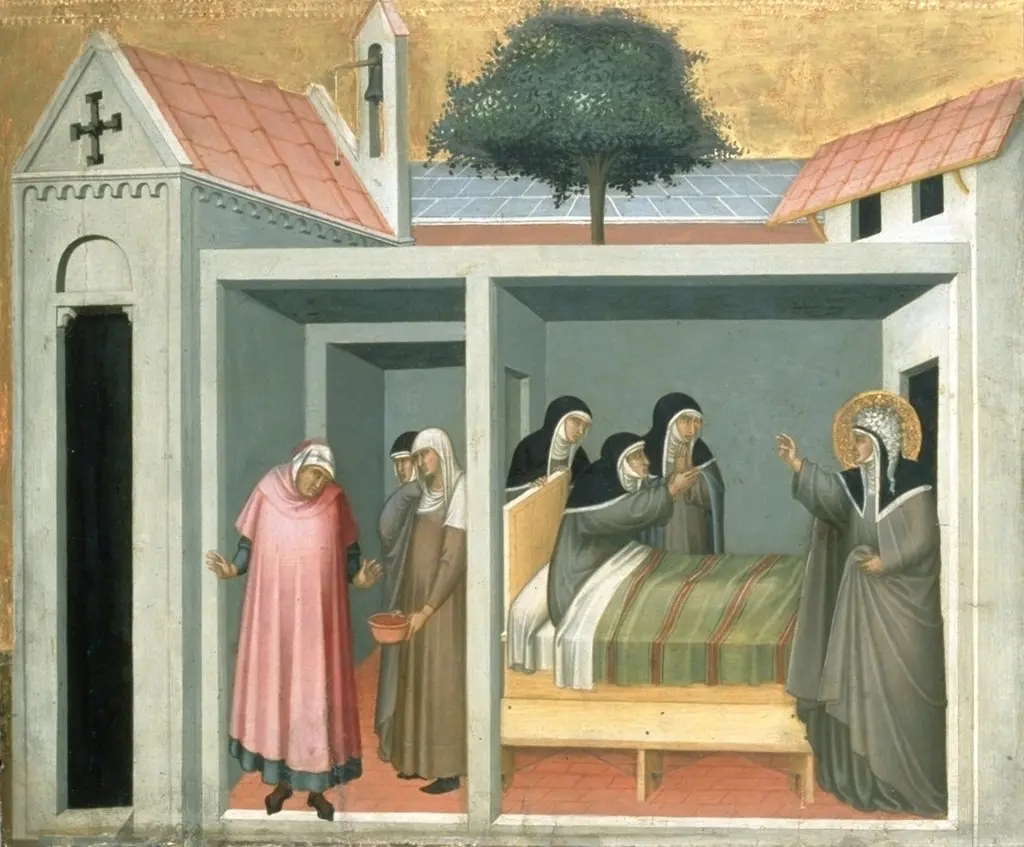 St. Humility heals a sick Nun
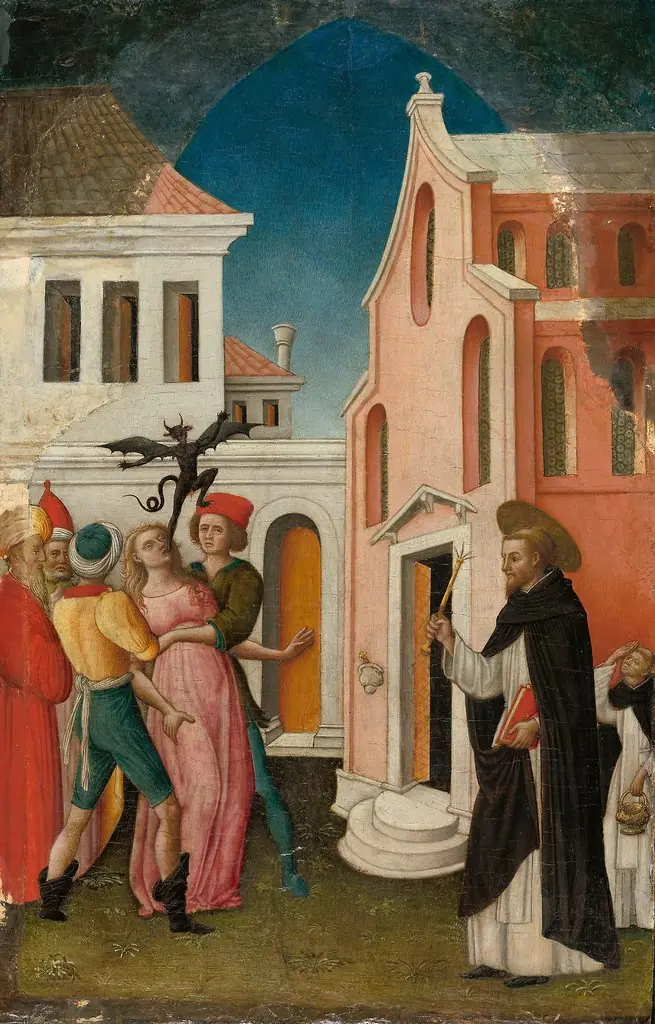 Saint Peter Martyr Exorcizing a Woman Possessed by a Devil