Artwork
The Creation of the World and the Expulsion from Paradise
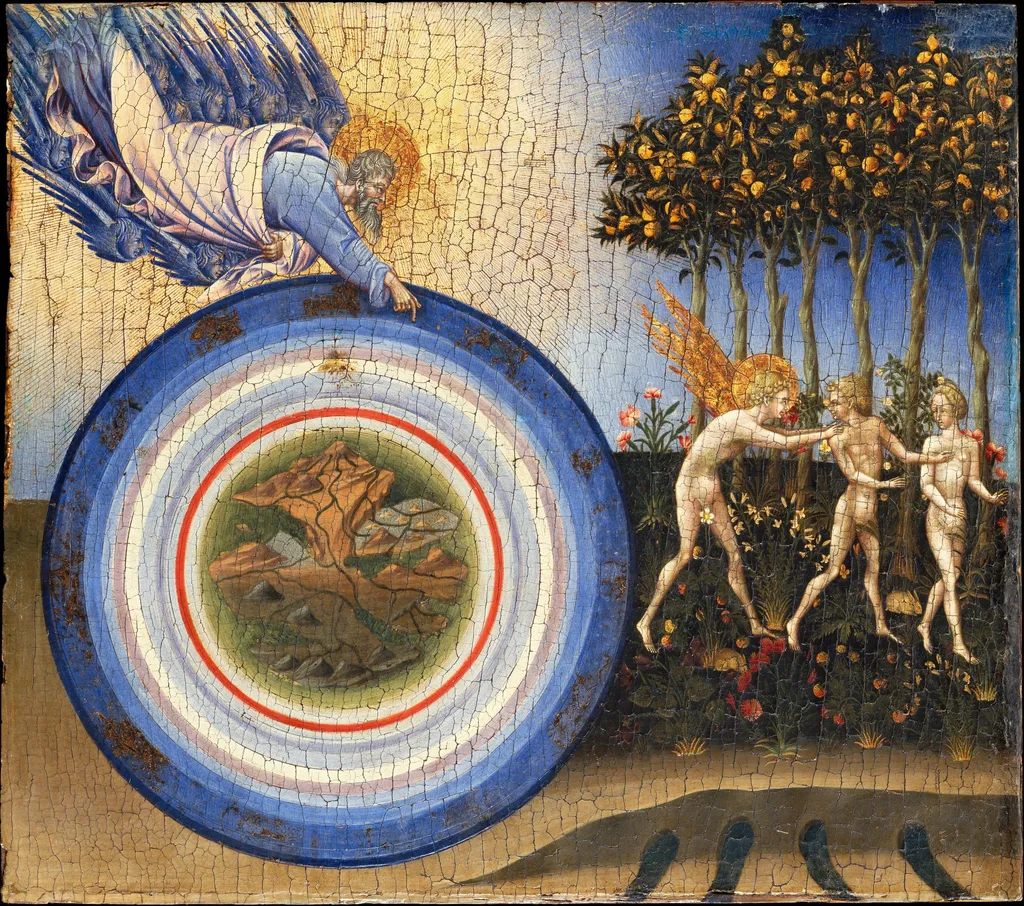
The Creation of the World and the Expulsion from Paradise is an unspecified painting by the Early Renaissance artist Giovanni di Paolo. It dates from 1445 and is held in the collection of the Metropolitan Museum of Art.
About this work
Two scenes sit side by side. On the left a winged figure hovers over a round, layered disk holding a landscape, likely the world being created. On the right three pale, naked figures stand beneath a fruit tree, holding branches and looking down as if about to leave the garden. Gold accents glint against bright blue. Giovanni di Paolo, 1445.
Subject & Meaning
The stylized golden sphere represents the act of creation, while the expulsion scene emphasizes loss of innocence and divine judgment.
The panel depicts two key biblical episodes in a continuous narrative: on the left, God creates the world, shown as a golden orb emerging from a dark void, signifying divine creation ex nihilo; on the right, the Expulsion from Paradise follows the Fall, with an angel wielding a fiery sword driving Adam and Eve from the Garden of Eden. The stylized golden sphere represents the act of creation, while the expulsion scene emphasizes loss of innocence and divine judgment. The presence of an angel with a flaming sword underscores the irreversible separation from Eden, a central theme in Christian theology about original sin and the necessity of redemption.
History & Provenance
The Creation of the World and the Expulsion from Paradise, a religious painting by Giovanni di Paolo, was created in 1445. The work depicts biblical figures including Adam, Eve, an angel, and a deity. Historically, the piece was part of the collection of Robert Lehman before entering the holdings of the Metropolitan Museum of Art, where it is currently located.
While the specific commissioning patron is not detailed in the available records, the work's inception is firmly dated to the mid-15th century. The painting measures 46.4 cm in height and 52.1 cm in width, reflecting the scale typical of the artist's panel paintings from this period.
The painting The Creation of the World and the Expulsion from Paradise, executed by Giovanni di Paolo in 1445, is housed in the Metropolitan Museum of Art in New York. It entered the museum's collection through the acquisition of the Robert Lehman legacy, which formed the core of the Lehman Collection; the work is catalogued within that legacy. The sources do not record any specific exhibition history for the piece beyond its inclusion in the museum's permanent displays.
Overview
Created in 1445, Giovanni di Paolo's The Creation of the World and the Expulsion from Paradise is a tempera on panel painting that visually condenses two pivotal Genesis narratives into a single, unified composition. The work is divided into two distinct zones against a vibrant, unmodulated blue background characteristic of Sienese Gothic tradition. On the left, God the Father, depicted as a winged figure, hovers above a schematic, concentric representation of the cosmos, illustrating the act of creation with a geometric precision that reflects contemporary cosmological theories.
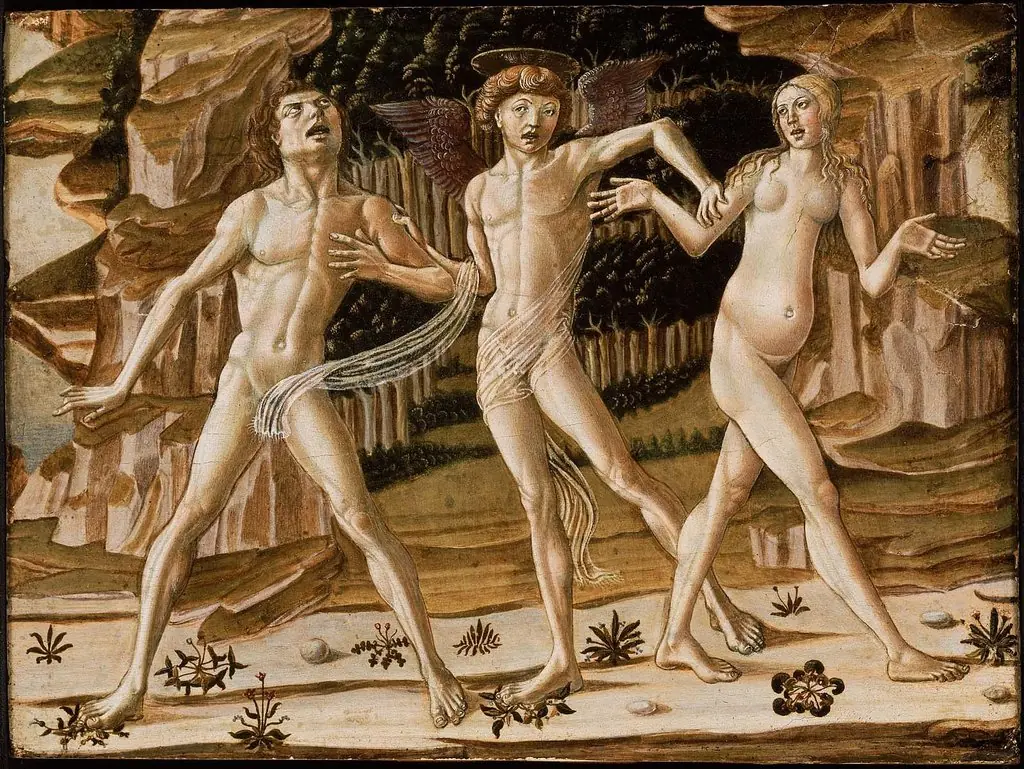
On the right, the scene shifts to the Garden of Eden, where Adam and Eve, stripped of their divine grace, are shown in a state of shame and exile. They are accompanied by the archangel Michael, who drives them out with a flaming sword. The figures are rendered with elongated proportions and pale, sculptural modeling, emphasizing their emotional distress and the spiritual gravity of the moment.
This altarpiece panel demonstrates di Paolo's unique ability to synthesize the mystical intensity of the Sienese school with the emerging spatial concerns of the early Renaissance, serving as a significant example of his mature religious output during the mid-15th century.
Technique & Style
Giovanni di Paolo employs a vivid palette, notably a bright blue background that unifies the composition. The figures, rendered with pale skin tones, are selectively highlighted with gold accents, a characteristic often found in early Renaissance religious art to denote divinity or spiritual significance. This stylistic choice contributes to the painting's ethereal quality and emphasizes the sacred nature of the depicted events.
Context
In the visual traditions of the early Renaissance, the representation of divine and angelic beings often drew upon established iconographic conventions. Giovanni di Paolo's portrayal of the winged figure and the angel aligns with practices of the period, where such figures were frequently depicted with stylized forms and symbolic attributes to convey their celestial nature and authority within sacred narratives.
Own this work as a print
Artist & collection

Artist
Giovanni di Paolo di Grazia was an Italian painter, working primarily in Siena, becoming a prolific painter and illustrator of manuscripts, including Dante's texts.

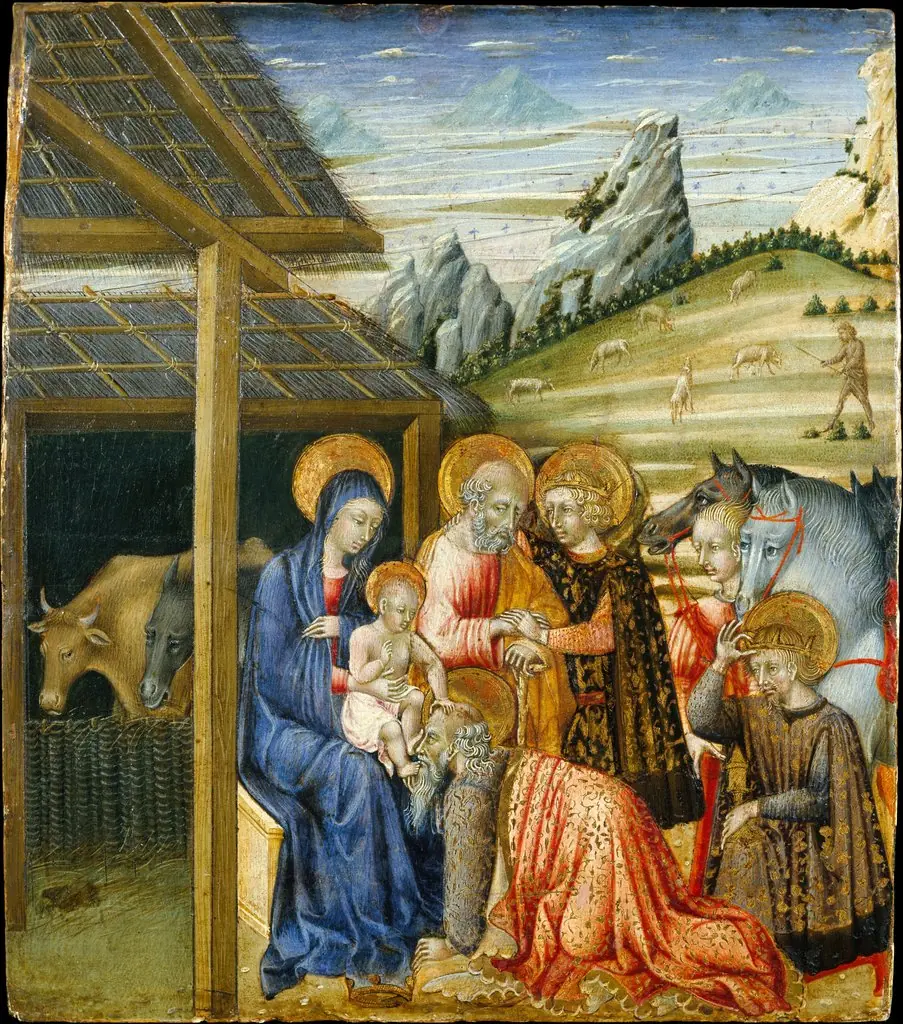 The Adoration of the Magi
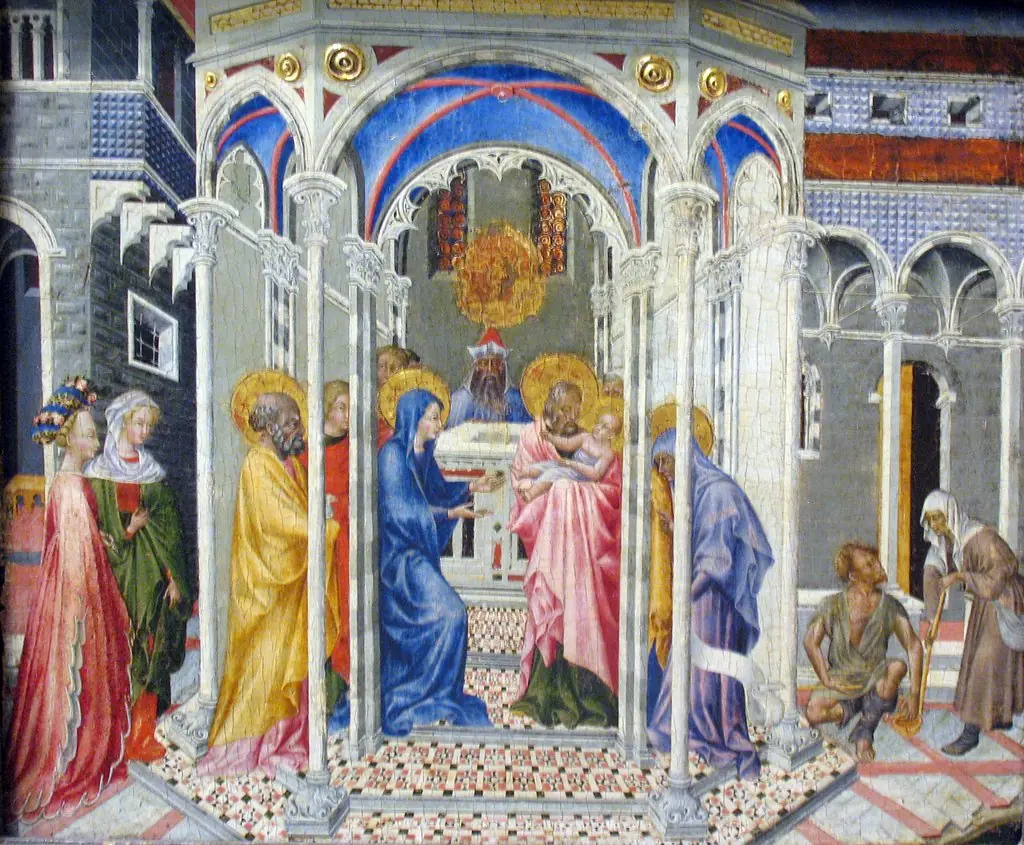 The Presentation of Christ in the Temple
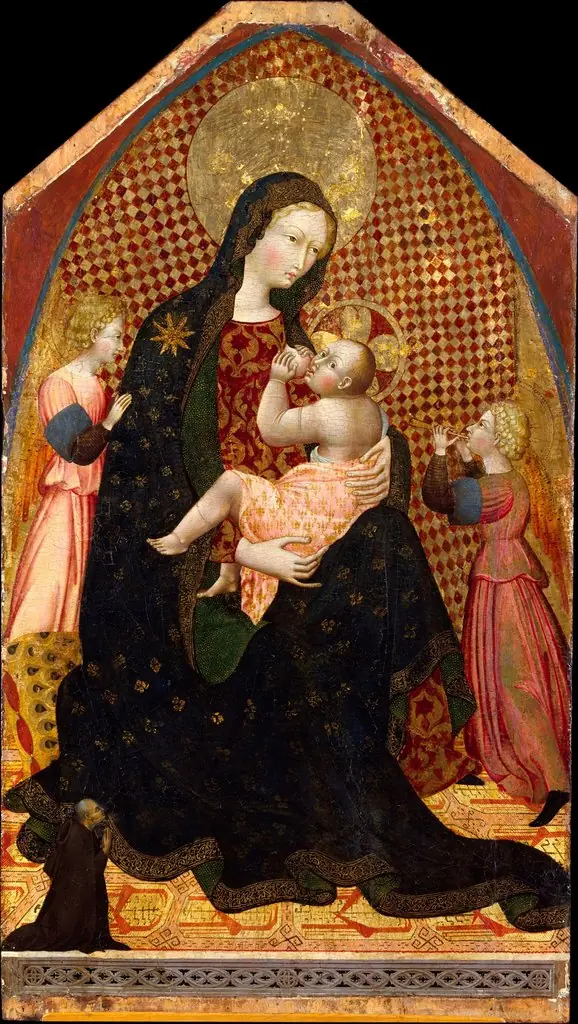 Madonna and Child with Two Angels and a Donor
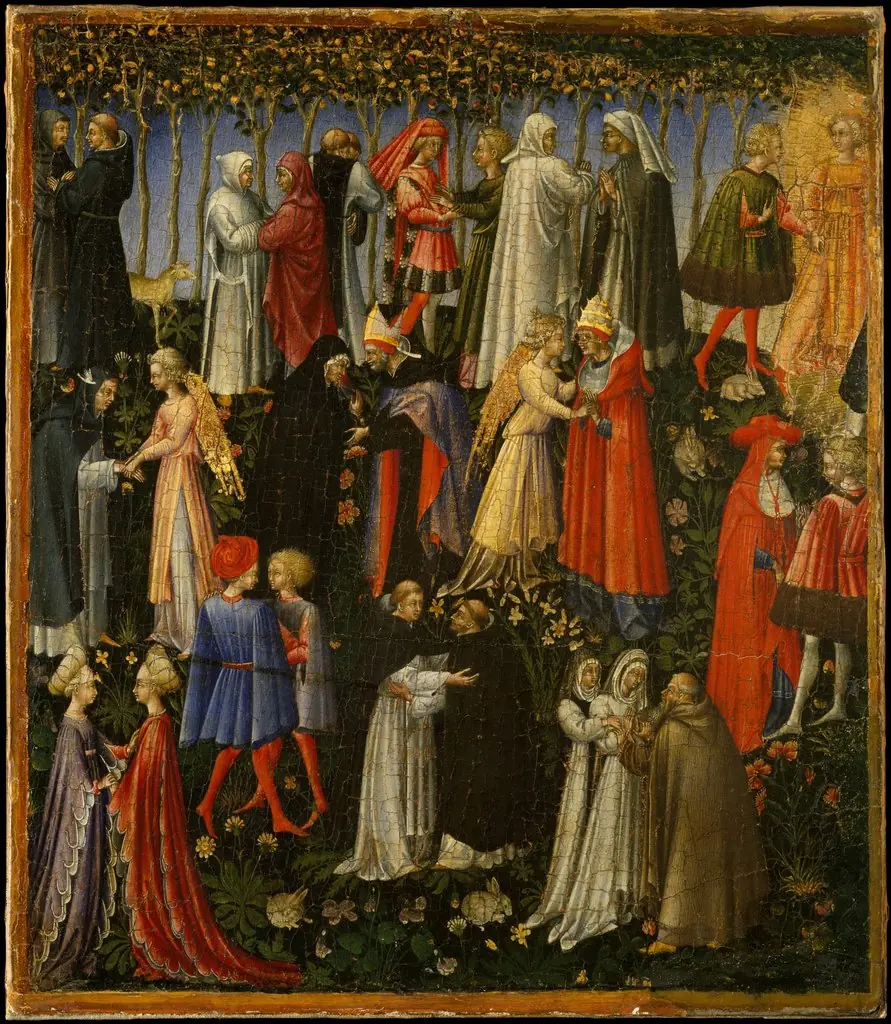 Paradise
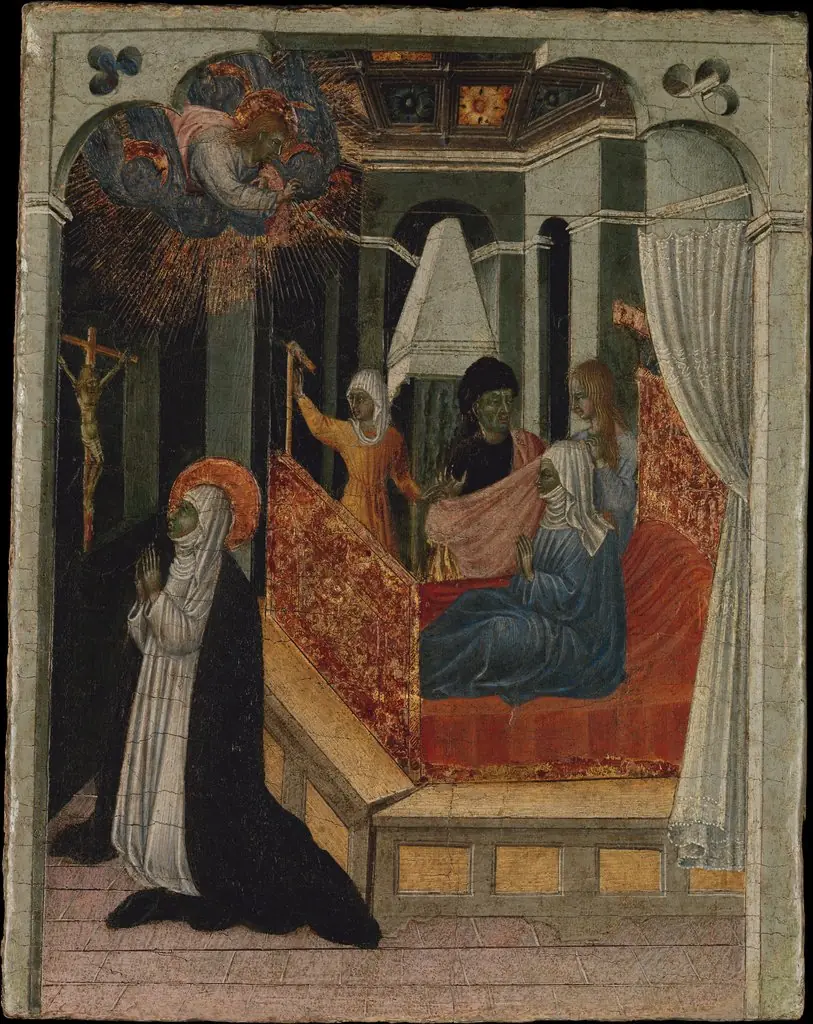 Saint Catherine of Siena Beseeching Christ to Resuscitate Her Mother
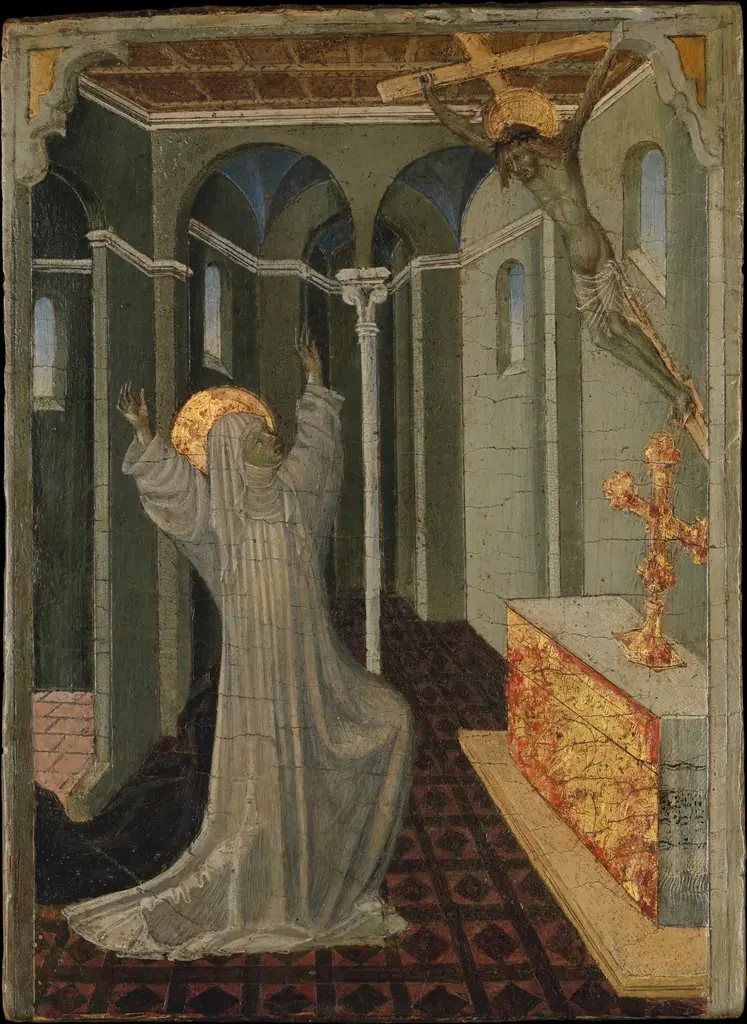 Saint Catherine of Siena Receiving the Stigmata
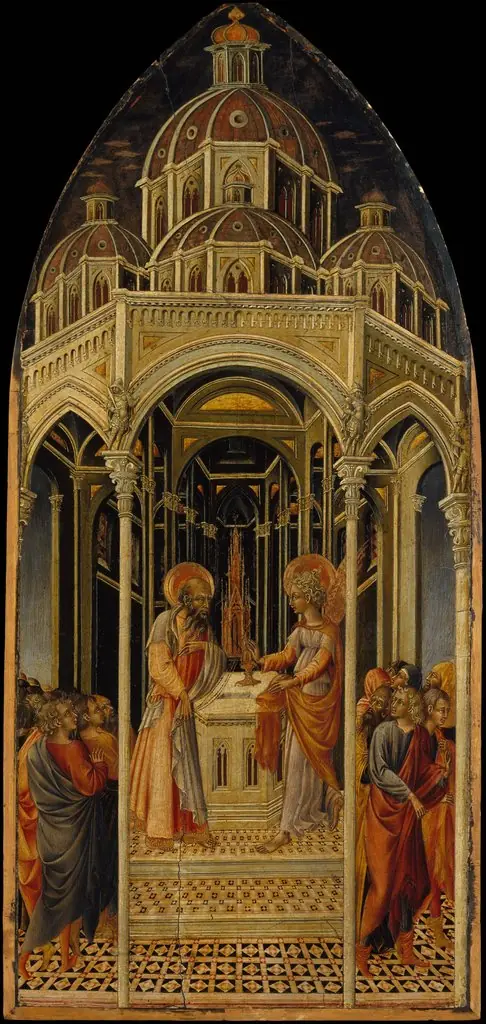 The Annunciation to Zacharias; (verso) The Angel of the Annunciation
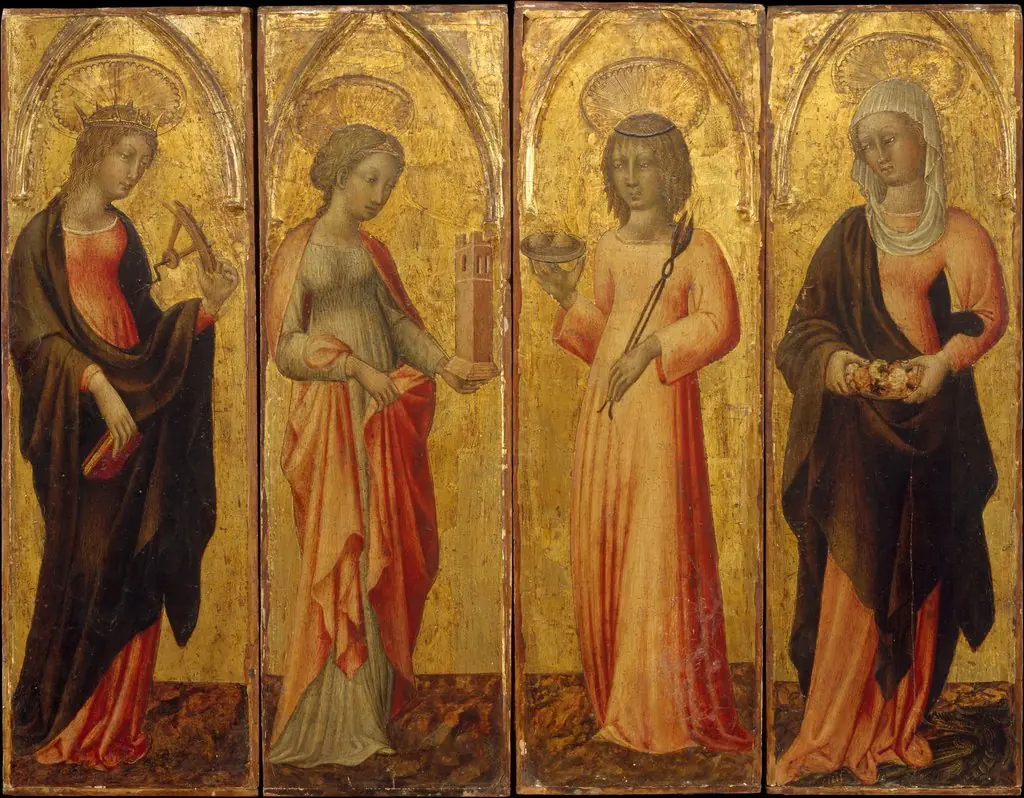 Saints Catherine of Alexandria, Barbara, Agatha, and Margaret