Artwork
Saint Catherine of Siena Receiving the Stigmata
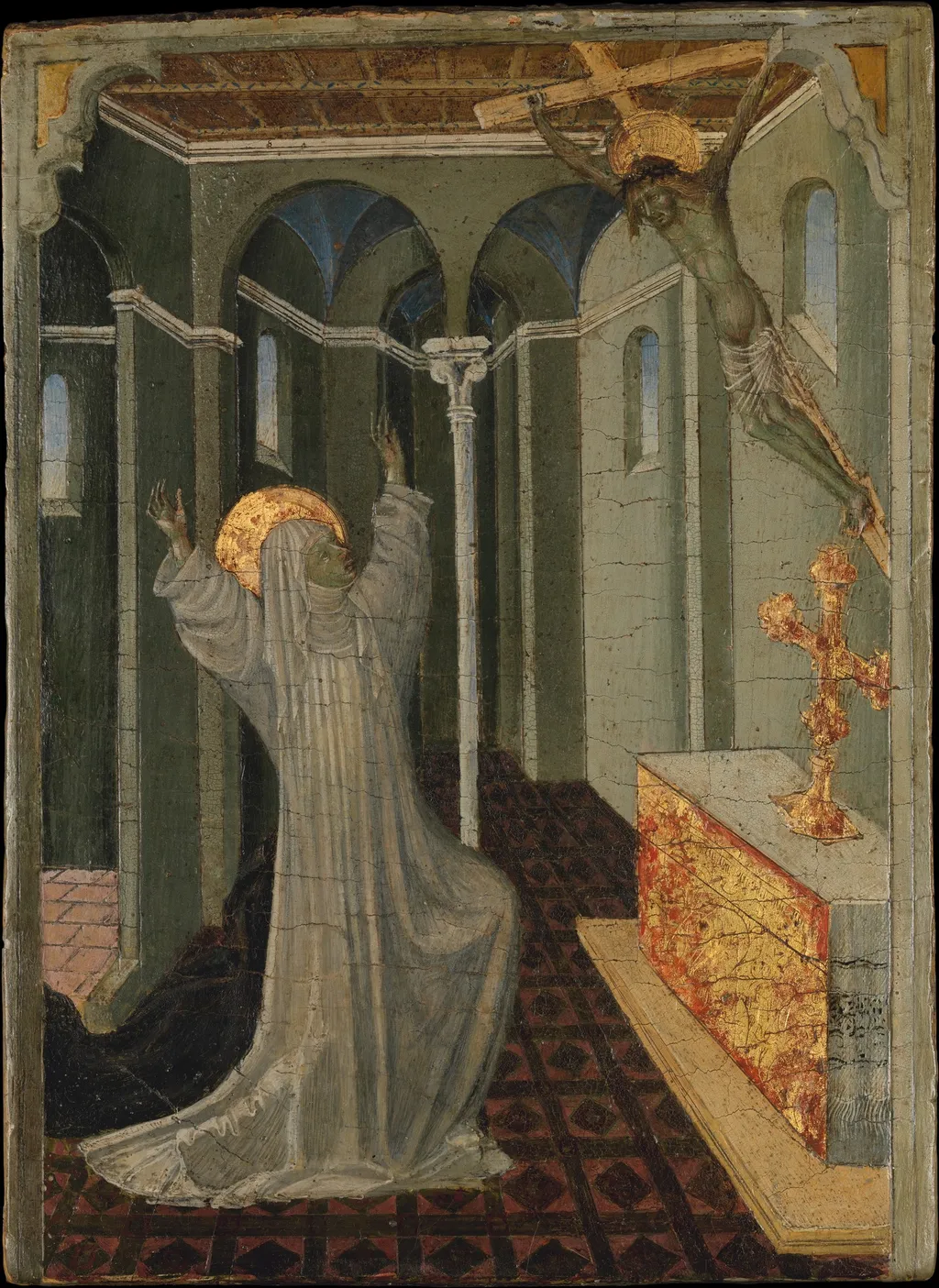
Saint Catherine of Siena Receiving the Stigmata is an unspecified painting by the Sienese School artist Giovanni di Paolo. It dates from 1450 and is held in the collection of the Metropolitan Museum of Art.
About this work
Subject & Meaning
As a religious image housed in the Metropolitan Museum of Art, the piece exemplifies early Renaissance devotional art centered on female mysticism.
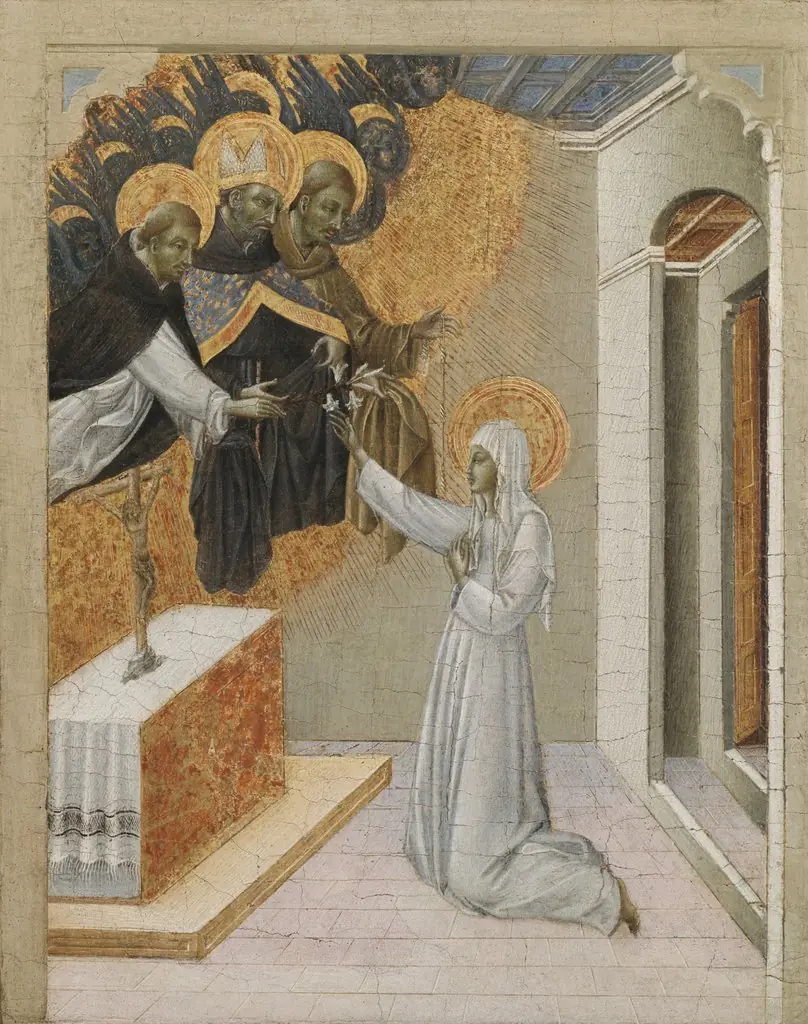
The painting Saint Catherine of Siena Receiving the Stigmata, executed by Giovanni di Paolo around 1450, shows the saint in a state of mystical ecstasy as she receives the wounds of Christ, a visual manifestation of her deep spiritual union. In the composition Christ appears with a crucifix, underscoring the connection between Catherine’s suffering and the Passion. The stigmata function as a symbol of divine love and sacrifice, while the surrounding attributes, such as the crucifix and the cross, reinforce the work’s theological focus on martyrdom and redemption.
As a religious image housed in the Metropolitan Museum of Art, the piece exemplifies early Renaissance devotional art centered on female mysticism.
History & Provenance
Saint Catherine of Siena Receiving the Stigmata is a small religious panel painted by Giovanni di Paolo in 1450. The work, measuring approximately 27.9 by 20 centimeters, was created during the artist's mature Sienese period. It subsequently entered the collection of Robert Lehman, the American financier and collector whose holdings later formed the basis of the Robert Lehman Collection at the Metropolitan Museum of Art.
The painting is now held at the Metropolitan Museum of Art as part of that bequest, where it remains on view within the institution's holdings of Italian devotional panels. The sources do not specify an original commissioner, patron, or earlier owners preceding Robert Lehman's acquisition, nor do they document intermediate provenance between the fifteenth-century creation and his ownership.
Saint Catherine of Siena Receiving the Stigmata is held in the collection of the Metropolitan Museum of Art in New York. The work, created by Giovanni di Paolo around 1450, is part of the museum's holdings derived from the Robert Lehman collection. While specific inventory or accession numbers are not detailed in the provided sources, the painting is identified as a religious artwork depicting Saint Catherine of Siena, Christ, and a crucifix.
The piece measures 27.9 cm in height and 20 cm in width. No exhibition history is recorded in the available documentation, though its inclusion in the Lehman collection suggests prior display within that context before entering the museum's permanent collection.
Context
The painting Saint Catherine of Siena Receiving the Stigmata, created by Giovanni di Paolo in 1450, is documented as a religious work that portrays the saint in the moment of receiving the stigmata alongside Christ and a crucifix. Its iconography reflects the devotional focus on mystical experience within 15th‑century Dominican spirituality. The artwork is part of the Metropolitan Museum of Art’s collection, having been acquired through the Robert Lehman bequest, which underscores its significance within the documented corpus of Giovanni di Paolo’s devotional paintings.
This piece is frequently cited in studies of Italian religious art as an example of the period’s emphasis on personal sanctity and sacred narrative.
Legacy
The painting entered the collection of the Metropolitan Museum of Art via the Robert Lehman bequest, making it continuously accessible to scholars and visitors; its presence in a leading museum has sustained academic interest in early Italian Renaissance art. As a 1450 work classified as religious art, it exemplifies Sienese narrative painting and informs studies of mystic imagery in the period. The attribution to Giovanni di Paolo and its inclusion in major catalogues have reinforced his reputation as a central figure in 15th‑century Sienese art.
Overview
This painting by Giovanni di Paolo, dating to approximately 1450, portrays a pivotal moment in the life of Saint Catherine of Siena. Titled Saint Catherine of Siena Receiving the Stigmata, the work is a significant example of Sienese Renaissance art. It is currently housed in the collection of The Metropolitan Museum of Art, where it offers insight into 15th-century religious devotion and artistic practice.
Technique & Style
Giovanni di Paolo employs a palette of muted yet warm colors, enhancing the spiritual intensity of the scene. Gold accents, visible on the figures' robes and the cross, contribute to the painting's devotional quality and luminosity. The architectural background, featuring a tall, arched building with small windows, provides a structured setting for the miraculous event, characteristic of early Renaissance narrative painting.

Own this work as a print
Artist & collection

Artist
Giovanni di Paolo di Grazia was an Italian painter, working primarily in Siena, becoming a prolific painter and illustrator of manuscripts, including Dante's texts.

 The Adoration of the Magi
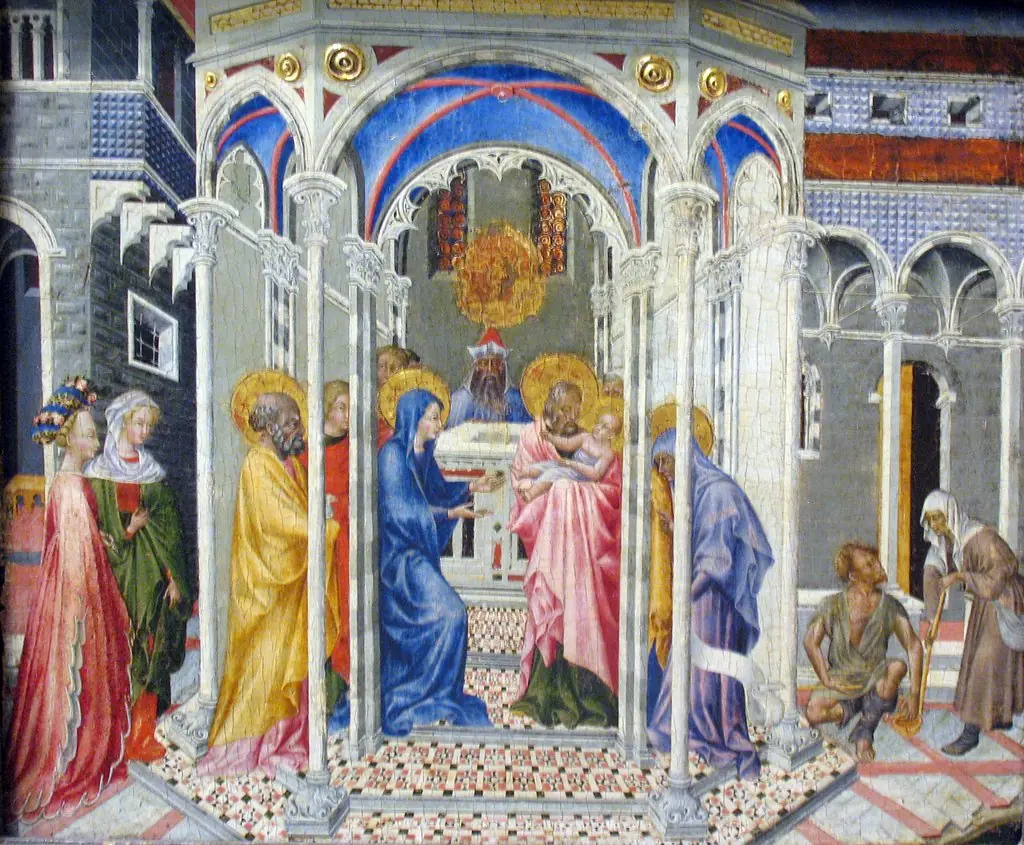 The Presentation of Christ in the Temple
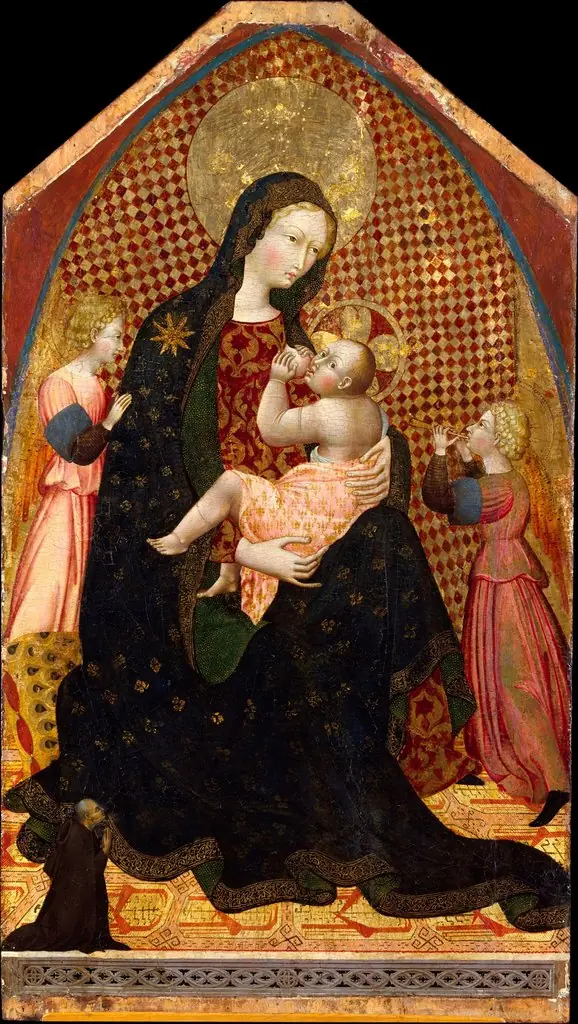 Madonna and Child with Two Angels and a Donor
 Paradise
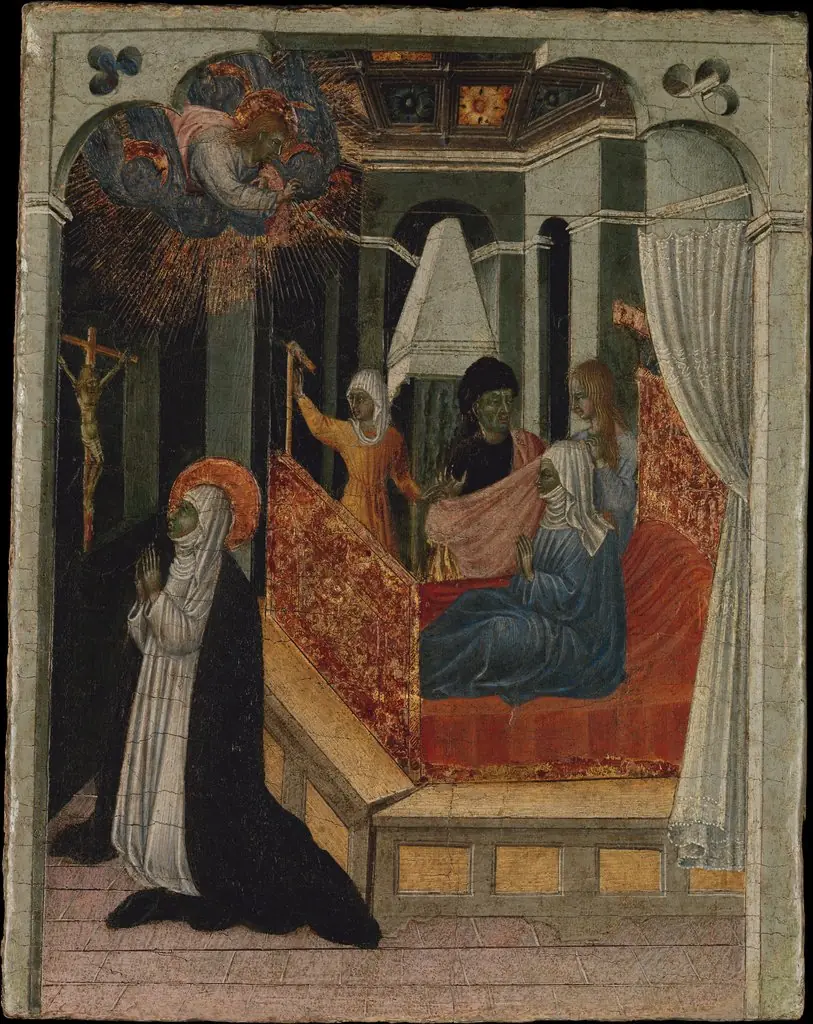 Saint Catherine of Siena Beseeching Christ to Resuscitate Her Mother
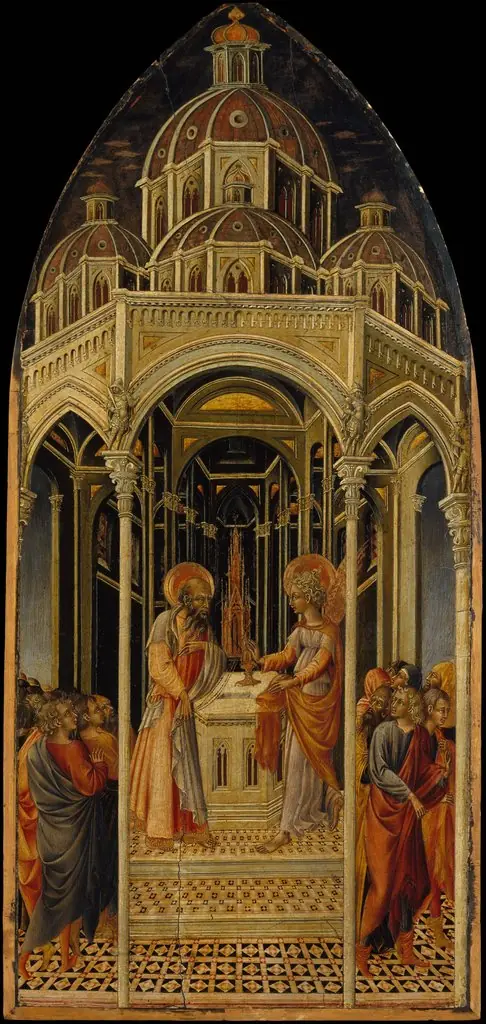 The Annunciation to Zacharias; (verso) The Angel of the Annunciation
 The Creation of the World and the Expulsion from Paradise
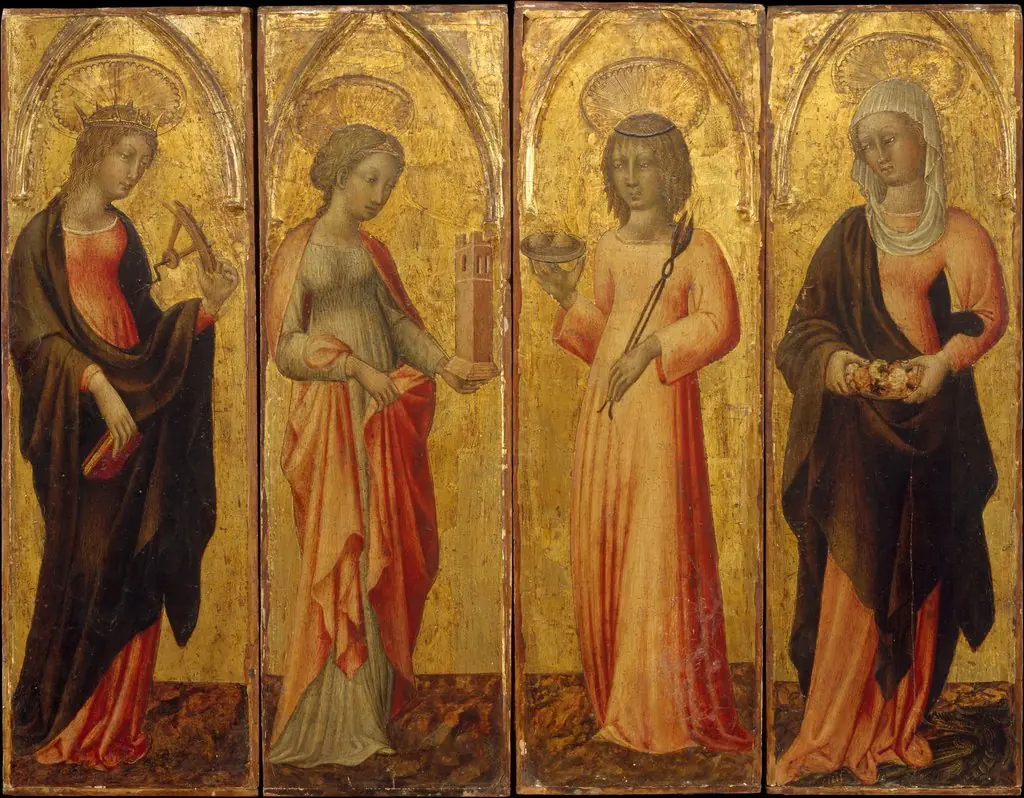 Saints Catherine of Alexandria, Barbara, Agatha, and Margaret
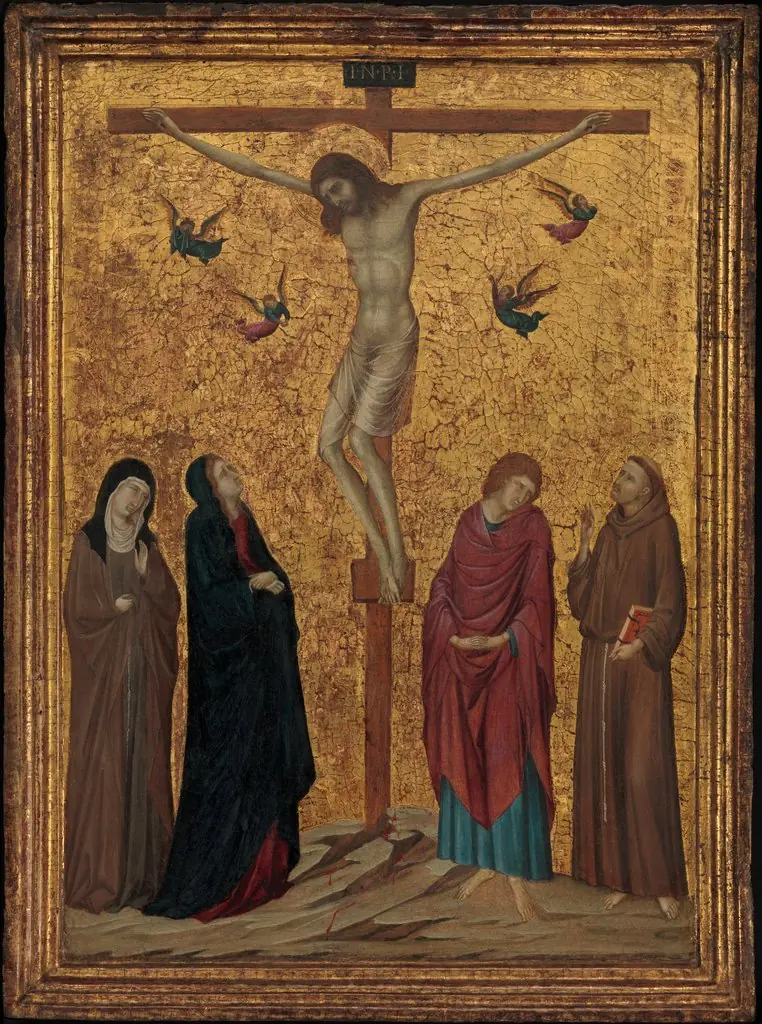
![The Papacy Offered to Saint Gregory the Great [?], by Fra Angelico](https://artifactworldgallery.com/img/fra-angelico--the-papacy-offered-to-saint-gregory-the-great--6c28505dc47c9093-w320.webp)