Artwork
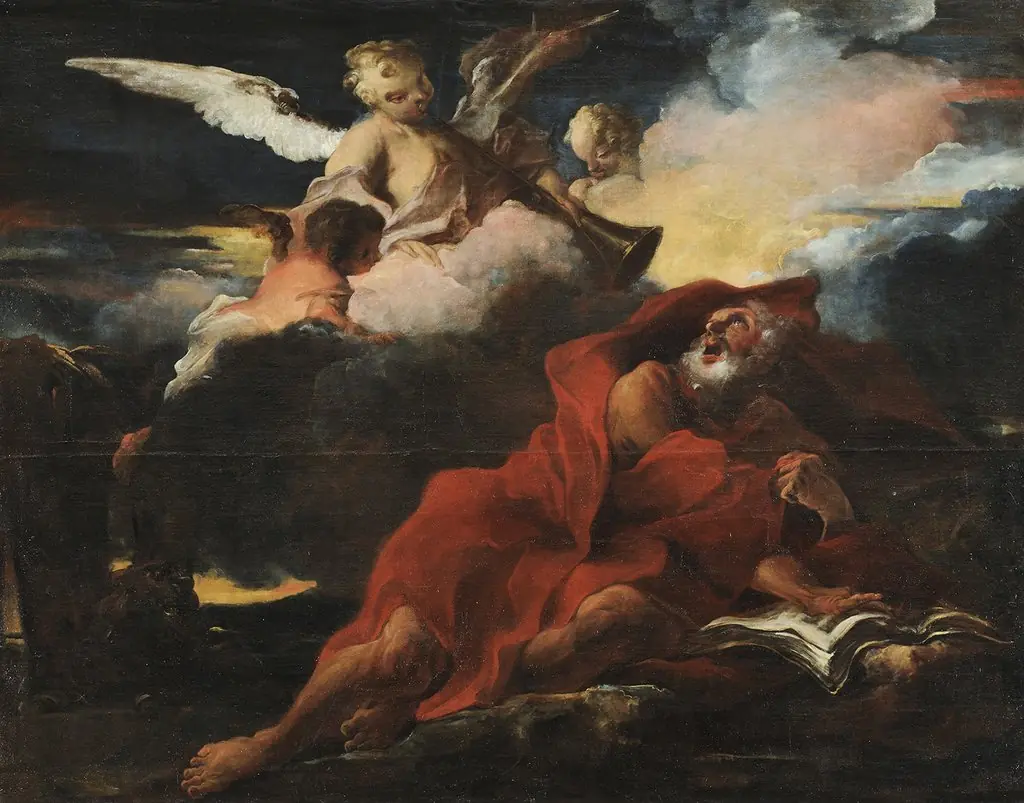
The Prophet Elijah in the Desert Awakened by an Angel
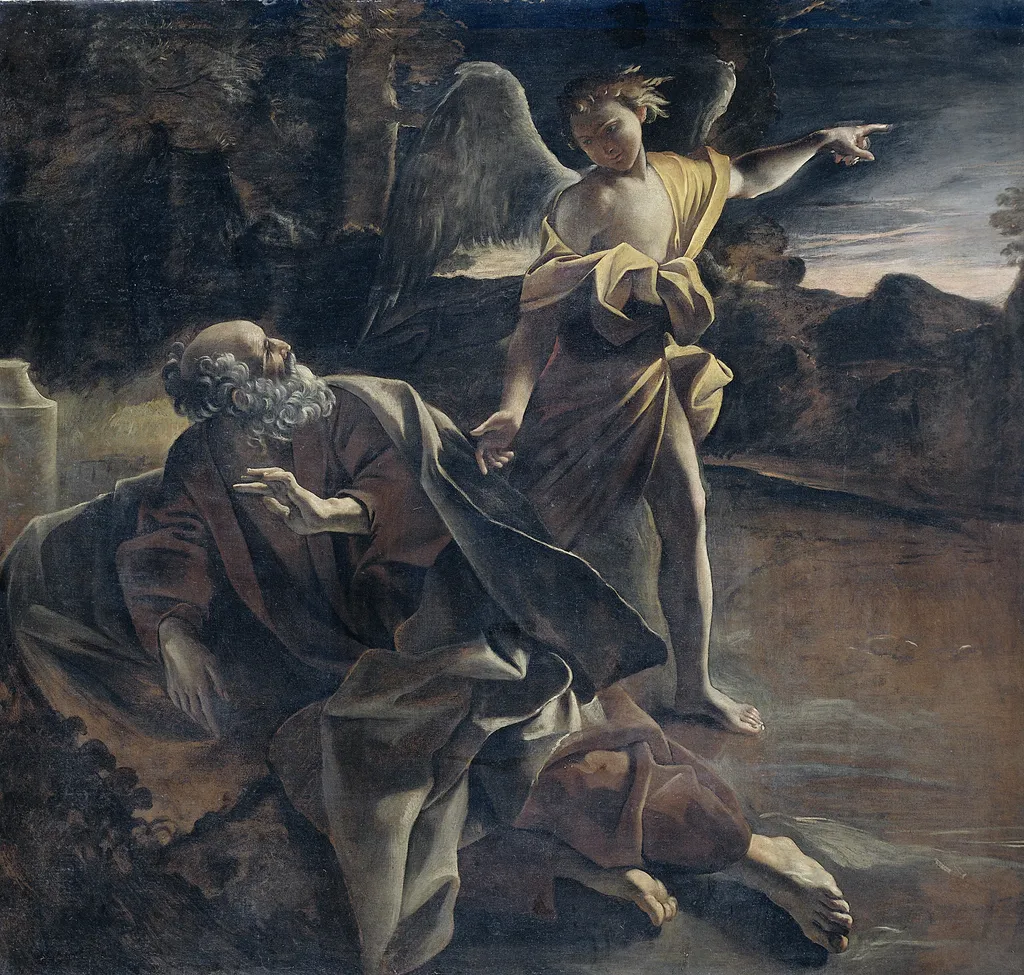
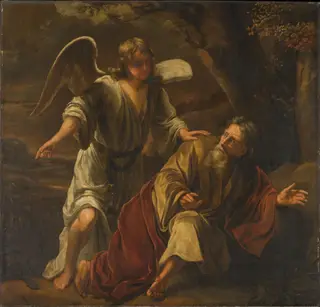
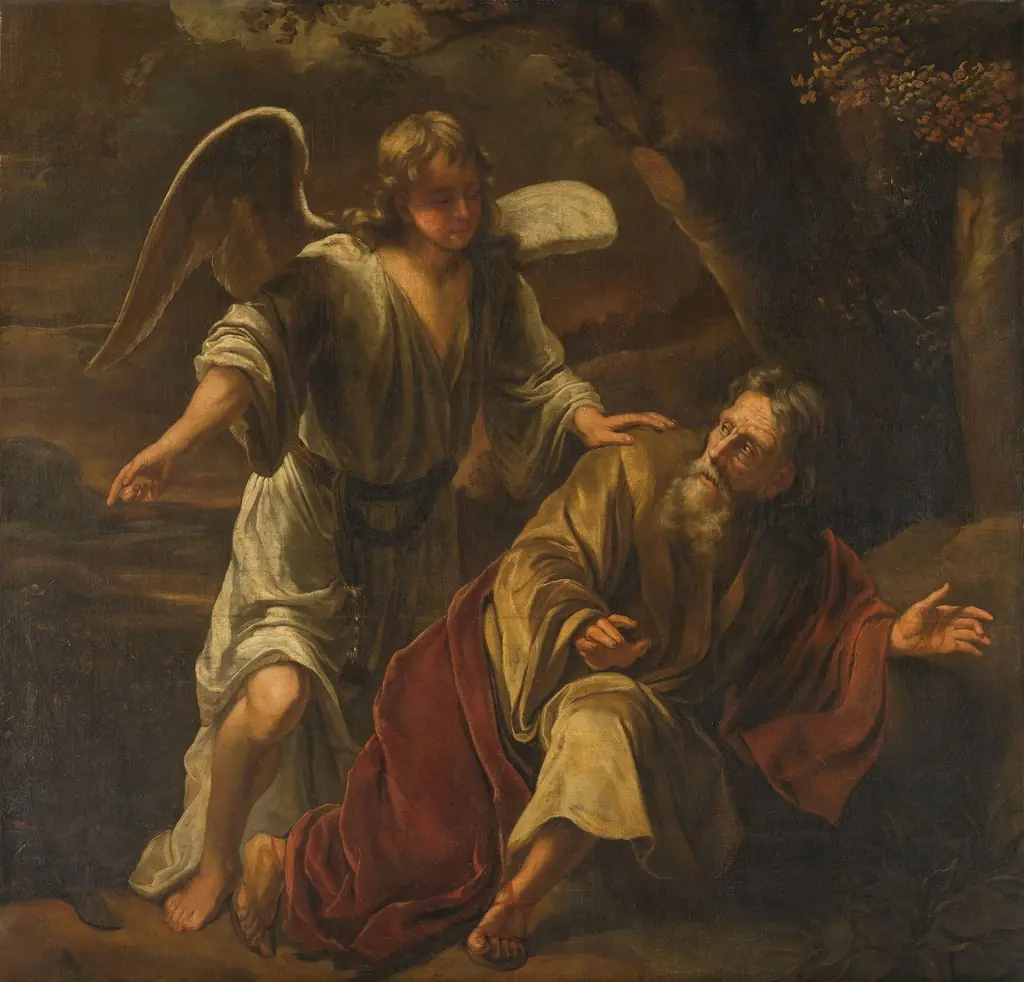
The Prophet Elijah in the Desert Awakened by an Angel is an oil painting by the Early Baroque Italian artist Giovanni Lanfranco. It dates from 1624 and is held in the collection of the Rijksmuseum.
About this work
Subject & Meaning
The composition emphasizes Elijah’s vulnerability and the sudden intrusion of the divine, with the angel’s touch marking a pivotal spiritual encounter.
The painting depicts the biblical prophet Elijah in a moment of divine awakening, shown in a desert landscape as an angel appears to him. Iconographically, Elijah is identified by his ascetic form, wind-swept drapery, and the heavenly gesture of the angel, symbols of prophetic revelation and spiritual transformation. The work embodies Counter-Reformation themes of divine grace intervening in solitary contemplation, reflecting Lanfranco’s role in shaping Baroque religious imagery. Its meaning centers on the moment of prophetic inspiration, where earthly isolation meets celestial revelation.
The composition emphasizes Elijah’s vulnerability and the sudden intrusion of the divine, with the angel’s touch marking a pivotal spiritual encounter. This subject aligns with Counter-Reformation demands for emotive, doctrinally clear religious art that engaged the viewer’s senses and intellect.
Technique & Style
The work is an oil painting executed on canvas, a combination consistent with the large-scale religious commissions Lanfranco undertook in the 1620s. Its dimensions of 212 cm in height by 230 cm in width indicate a sizable support, suited to the dramatic narrative of the prophet being roused by an angel in a wilderness setting.
Stylistically, the painting belongs to the religious genre and reflects the Italian context of its creation in 1624. The canvas format and oil medium allowed for the fluid handling of light, shadow, and atmospheric effects characteristic of the period's devotional imagery.
History & Provenance
The Prophet Elijah in the Desert Awakened by an Angel was created by the Italian painter Giovanni Lanfranco in 1624. Executed in oil on canvas, the work was produced in Italy during the artist’s mature Baroque period. After its completion, the painting entered the collection of the Rijksmuseum in Amsterdam, where it remains today. No earlier owners or commission details are recorded in the available sources. as of the present.
Legacy
Giovanni Lanfranco's 1624 oil painting The Prophet Elijah in the Desert Awakened by an Angel, housed in the Rijksmuseum, is recognized for its dramatic composition and emotional intensity that influenced later Baroque interpretations of biblical narratives. The work's depiction of Elijah's spiritual awakening resonated with 17th-century devotional practices and was frequently referenced in contemporary theological commentaries. Its presence in a major public collection contributed to renewed scholarly attention on Lanfranco's role in shaping Italian religious art.
The painting's legacy is underscored by its inclusion in academic studies of Counter-Reformation visual culture, where it is cited as an example of dynamic movement and divine intervention in art.
Overview
Giovanni Lanfranco’s oil painting The Prophet Elijah in the Desert Awakened by an Angel was completed in 1624. Executed in the early Italian Baroque, the work belongs to the religious genre and is part of the Rijksmuseum’s collection. It presents a quiet desert scene in which the biblical prophet Elijah receives a divine summons from an angel.
Context
Lanfranco’s work belongs to a period when Italian artists were integrating classical compositional balance with the dramatic intensity of the Baroque. The depiction of Elijah, a figure from the Hebrew Bible, aligns with Counter‑Reformation interests in biblical narratives that emphasized divine intervention and the authority of the Church.
Own this work as a print
Artist & collection
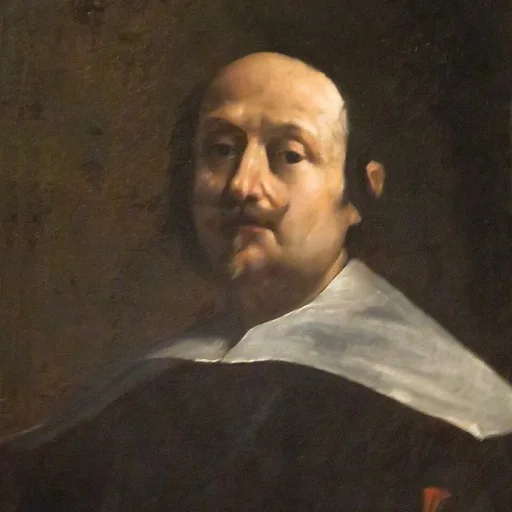
Artist
Giovanni Lanfranco (26 January 1582 – 30 November 1647) was an Italian Baroque painter. He was a distinguished artist of the Bolognese school, deeply influenced by Annibale Carracci's’ classicism.