Artwork
Dye works. Cairo
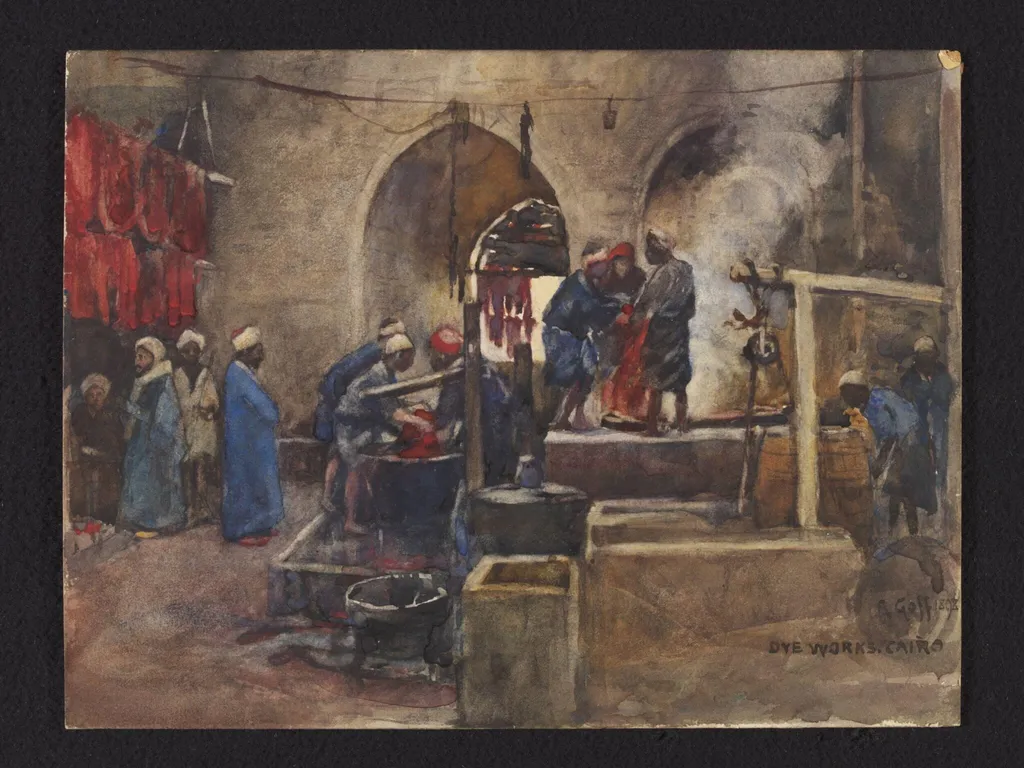
Dye works. Cairo is a watercolor work on paper by the Impressionist artist Goff Robert Charles. It dates from 1898 and is held in the collection of the Victoria and Albert Museum. This watercolour captures a dye workshop in Cairo, portraying laborers engaged in the manual processing of textiles using madder root.
About this work
Overview
This watercolour captures a dye workshop in Cairo, portraying laborers engaged in the manual processing of textiles using madder root.
This watercolour captures a dye workshop in Cairo, portraying laborers engaged in the manual processing of textiles using madder root. Executed with loose, energetic brushwork, the scene emphasizes the physicality of artisanal work rather than idealized spectacle. The palette is restrained, dominated by earth tones and muted reds, reflecting the material reality of the environment. Its modest scale and unadorned subject align with a documentary impulse common in 19th-century travel sketches.
Subject & Meaning
The image centers on the routine labor of dyeing fabrics, a vital craft in Cairo’s textile economy. Figures in traditional dress stir large vats, while drying cloths hang in the background, suggesting a continuous cycle of production. No figures are idealized; their postures and attire convey occupational identity rather than narrative drama.
The scene affirms the dignity of manual labor, presenting it as an unvarnished facet of daily life in the city.
Technique & Style
The artist employs quick, fluid watercolour strokes to suggest movement and atmosphere. Steam or smoke is rendered through diluted washes, softening edges and unifying the space. Details like fabric folds and pottery are suggested rather than meticulously defined, prioritizing overall mood over precision.
The limited palette, ochres, indigo, and madder reds, enhances the sense of heat and humidity, reinforcing the tactile quality of the workshop environment.
History & Provenance
The work was exhibited in Brighton between 1914 and 1915 alongside drawings by Beardsley, Garrido, and Goff, indicating its inclusion in a broader interest in Orientalist and ethnographic subjects. It entered private hands after being acquired at Phillips auction in June 1976 for £28. Its provenance remains otherwise undocumented, suggesting it was likely created during a period of travel in Egypt and retained as a personal record rather than a commercial product.
Context
Produced during a time when European artists and travelers increasingly documented non-Western labor practices, this work reflects a trend toward ethnographic observation over romanticized exoticism. Unlike grand architectural views, it focuses on the intimate, functional spaces of craft. Similar depictions appear in the collections of institutions like the Victoria and Albert Museum, where such studies were valued for their anthropological insight.
Legacy
Though not widely published or celebrated, the drawing contributes to a quiet archive of 19th- and early 20th-century visual ethnography. Its unembellished approach offers a counterpoint to more stylized Orientalist works, preserving a record of artisanal processes now largely obsolete. Its survival in private collections underscores its role as a personal witness to a vanishing mode of production.
Own this work as a print
Artist & collection
Artist
Robert Charles Goff painted scenes of everyday life in the late 1800s, often using watercolor to capture places like Cairo.

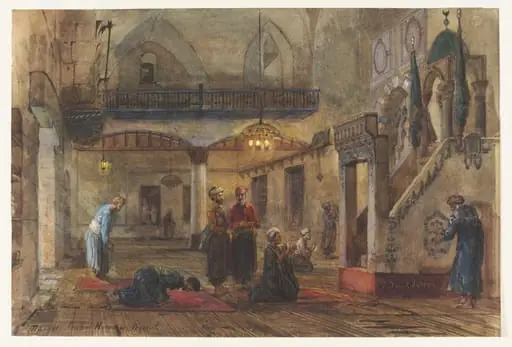 Mosque. Souk el Hommos. Byrout
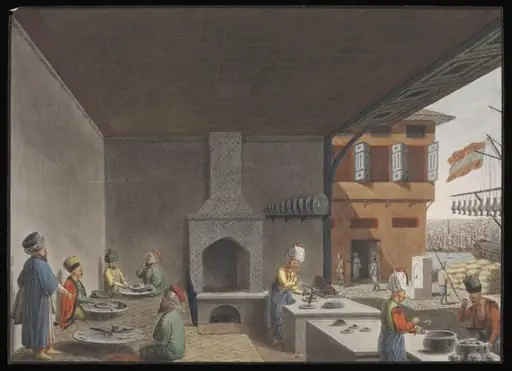 A kebab shop near the Yeni Cami
![Advanced guard & Baggage of the Royal artillery landi[ng] a[t] Alexandria en route for India, by T. B. S.](https://artifactworldgallery.com/img/t-b-s--advanced-guard-baggage-of-the-royal-artillery-landi-ng-a-t-a--605f6f4d9d8dfe93-w320.webp) Advanced guard & Baggage of the Royal artillery landi[ng] a[t] Alexandria en route for India
Advanced guard & Baggage of the Royal artillery landi[ng] a[t] Alexandria en route for India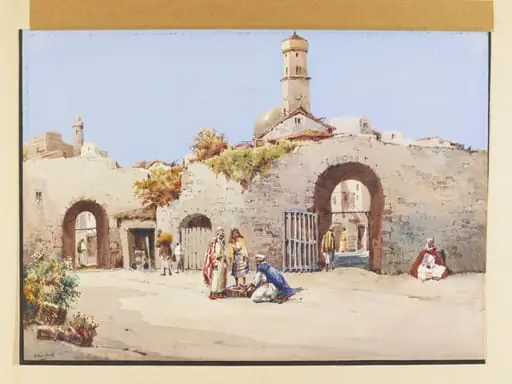 The City Walls, Jaffa, Palestine
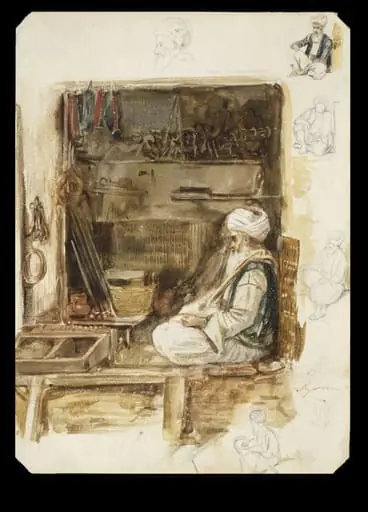 An old merchant in the Souk in Algiers; with figure studies
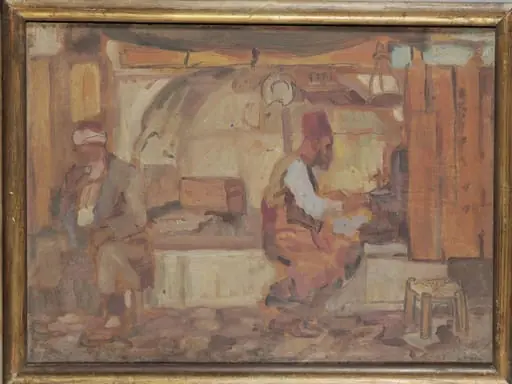 Εσωτερικό καφενείου
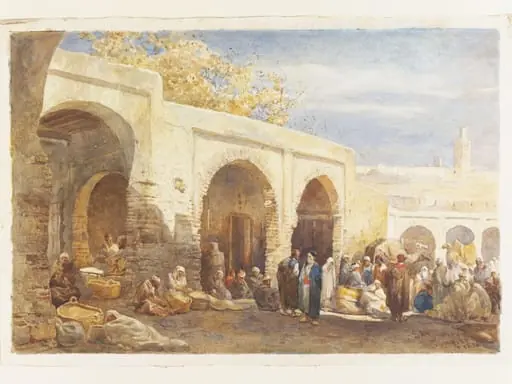 The Corn Market, Tangier
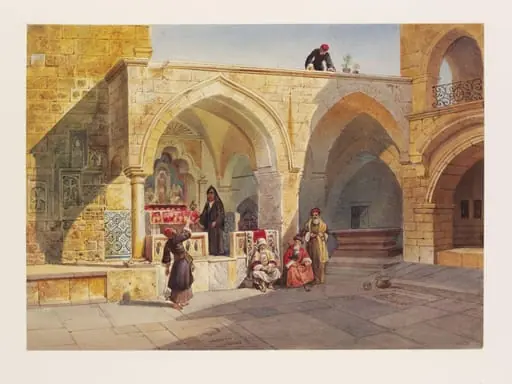 Court of the House of Caiaphus
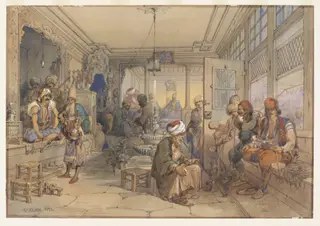 A Turkish Coffee-House, Constantinople
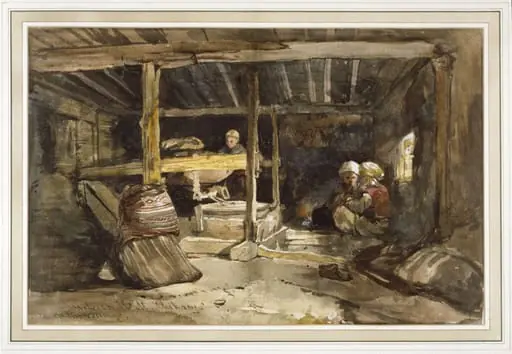 A Turkish Mill, Chikoey, or River Village