Artwork
Nox
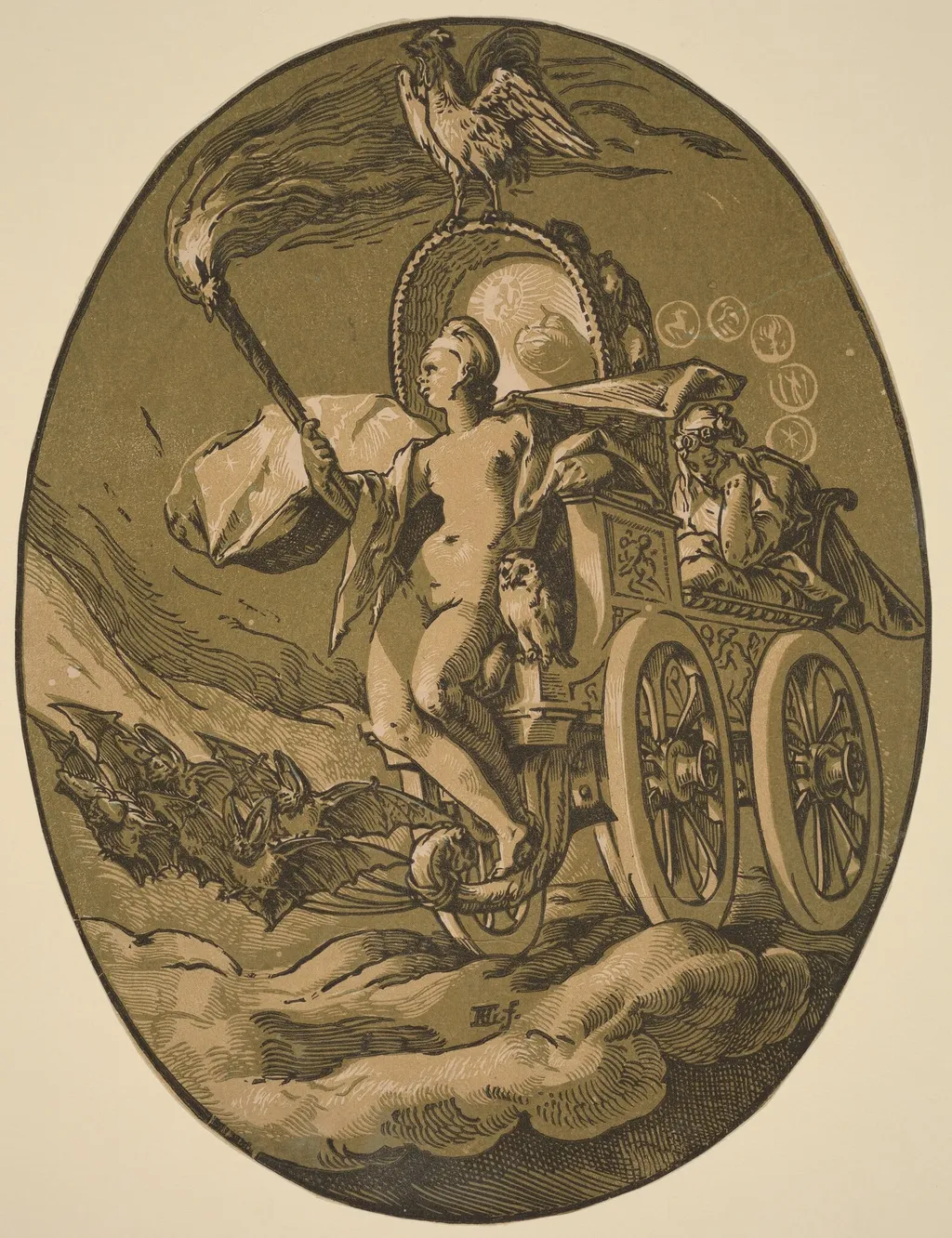
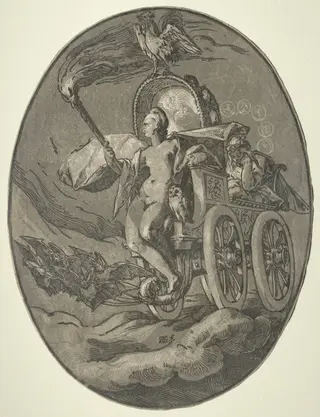
Nox is an ink print by the Renaissance artist Hendrick Goltzius. It dates from 1589 and is held in the collection of the National Gallery of Art.
- Inscription
- Inscribed:recto: in black bloc at lower center: HG.f.; verso: at center in black ink in later hand: F. Rechberger 1802 [Lugt 2133]; at lower left in graphite in later hand: Cas [indecipherable]; at lower center in graphite in later hand: B. 237 / Dut 237 / H. 2?2 / MK 36646; at lower right in graphite in later hand: KK 792
- Markings
- Marked:recto: none; verso: Z stamped in black ink [unidentified, Lugt 2678f], Lessing J. Rosenwald, and National Gallery of Art
About this work
Overview
The composition is compact, its bold outlines defining a scene that is both stark and richly layered despite the limited colors.
Created in 1589, Nox is a chiaroscuro woodcut by Hendrick Goltzius, a Dutch printmaker of German origin. Executed on laid paper, the image employs a restrained palette of ochre‑sepia, dark olive and black inks, producing a somber atmosphere through strong tonal contrasts. The composition is compact, its bold outlines defining a scene that is both stark and richly layered despite the limited colors.
Technique & Style
The work utilizes the chiaroscuro woodcut method, a relatively recent innovation in the late sixteenth century that allowed multiple blocks to be printed with different hues. Goltzius combined three blocks, one for each ink tone, to achieve depth and volume, a practice that highlighted his command of line and shading. The resulting interplay of light and shadow reflects the Northern Mannerist emphasis on intricate detail and dramatic effect.
Subject & Meaning
The title, Latin for "night," suggests a nocturnal or twilight setting, reinforced by the dominance of dark tones and the subdued palette. While the image does not depict a specific narrative, its enveloping darkness and stark contrasts evoke themes of mystery and the passage of time, inviting viewers to contemplate the interplay between illumination and obscurity.
History & Provenance
Nox was produced during Goltzius’s early mature period, when he was establishing his reputation as the preeminent Dutch engraver. The print was likely circulated among collectors of the burgeoning print market in the Low Countries. Surviving copies are held in several European institutions, indicating its continued appreciation and the artist’s wide distribution network.
Context
The late sixteenth century saw a surge of experimentation with multi‑block printing in the Netherlands, driven by demand for richly colored images. Goltzius, trained in the Mannerist tradition, integrated these technical advances with his own elaborate compositional style. Nox exemplifies how Dutch printmakers merged innovative processes with the period’s artistic tastes for complexity and refined craftsmanship.
Own this work as a print
Artist & collection
Artist
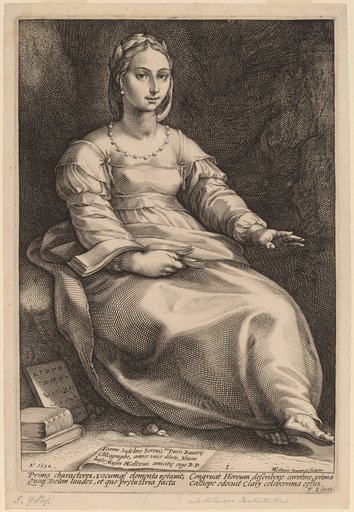
Hendrick Goltzius (German: , Dutch: ; né Goltz; January or February 1558 – 1 January 1617) was a German-born Dutch printmaker, draftsman, and painter.

 Seven Deities: Nox (Night)
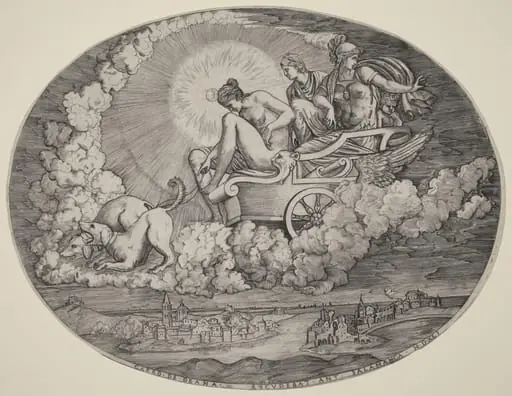 The Chariot of Diana
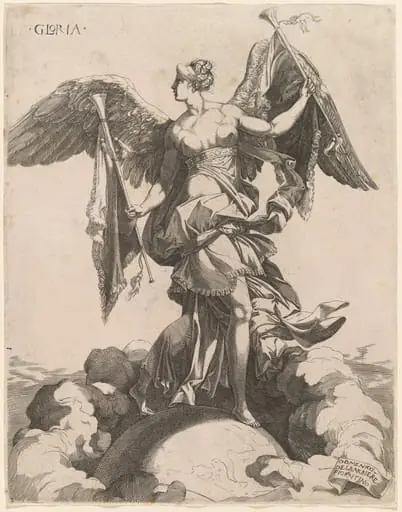 Gloria
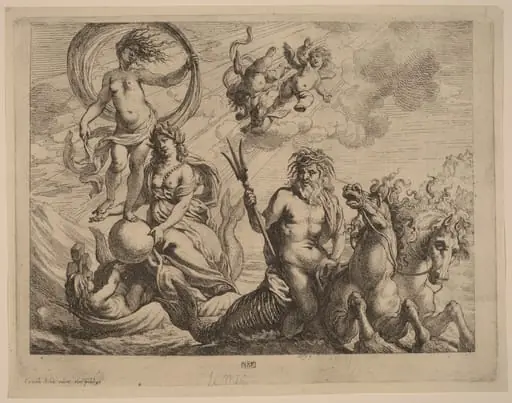 Neptune with Two Horses on the Sea
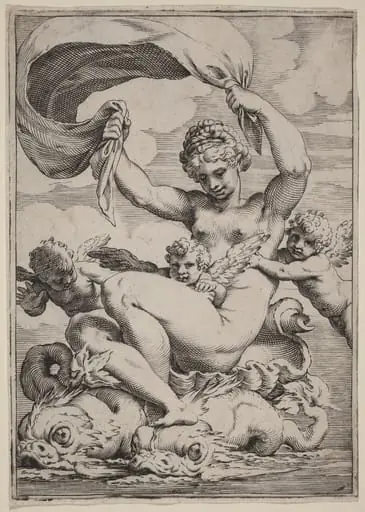 Venus or Galatea Supported by Dolphins
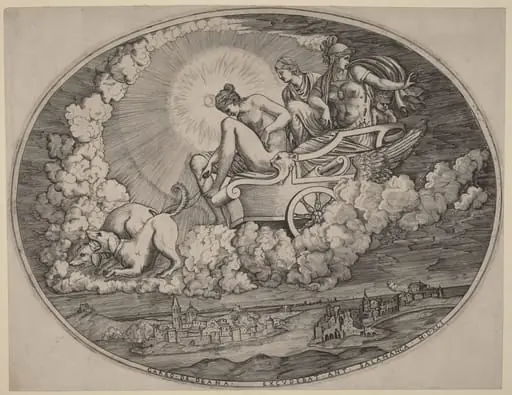 The Chariot of Diana
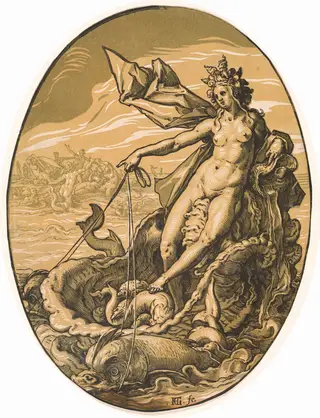 Tethys
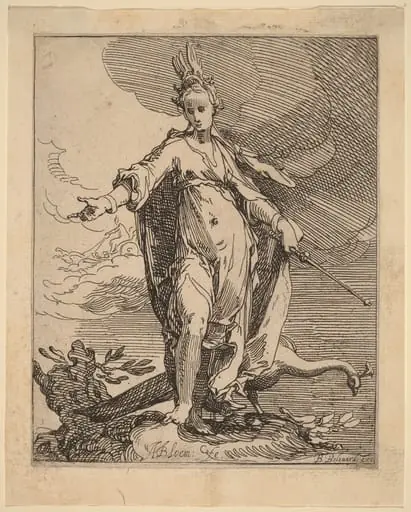 Juno
Juno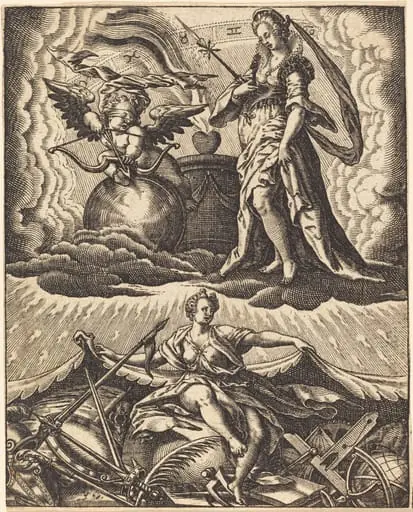 Exempel und Lehr Jetziger Welt Lauf
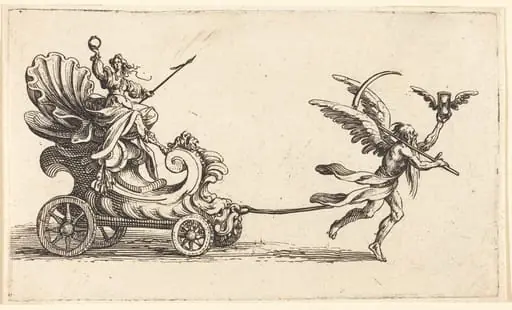 Entry of Monseigneur Henry de Lorraine, Marquis de Moy, under the Name of Pirandre
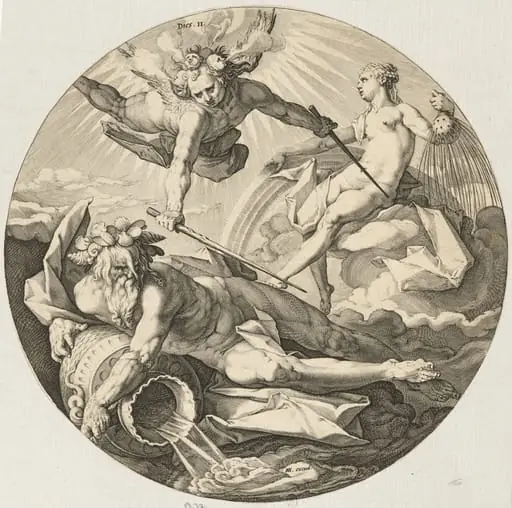 Dies II (Second Day)
- The Deities: Nox