Artwork
Juno
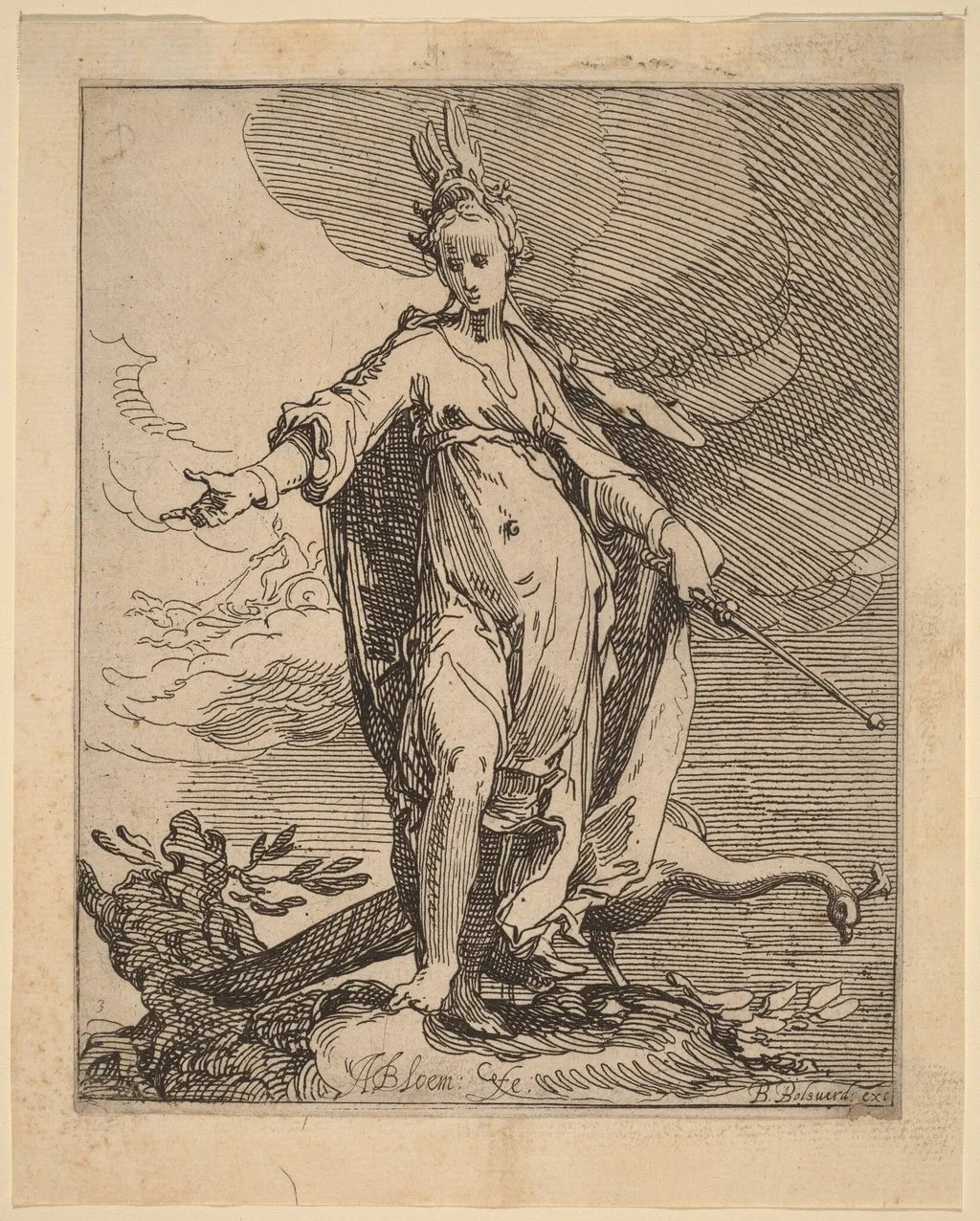
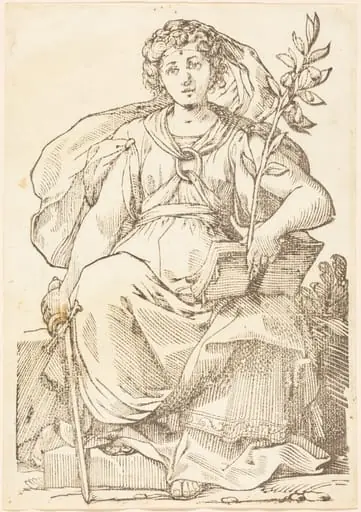
Juno is an ink print by the Baroque artist Abraham Bloemaert. It dates from 1610 and is held in the collection of the National Gallery of Art.
- Inscription
- Inscribed:in image, at bottom centre: ABloem: fe; in image, at bottom right: B. Bolswerd: exc.
About this work
Overview
Abraham Bloemaert's 'Juno' is an etching on laid paper, created around 1610. The work showcases Bloemaert's skill as a Dutch painter and printmaker.
Subject & Meaning
The print depicts Juno, a figure from Roman mythology, in a classical setting. Juno is shown with detailed folds in her clothing and a calm facial expression, embodying a serene representation of the goddess.
Technique & Style
Bloemaert employed etching, a technique involving scratching a design into a metal plate, to create 'Juno'. His work reflects a transition from the 'Haarlem Mannerists' style to the emerging Baroque style of the early 17th century.
History & Provenance
Bloemaert was a significant figure in Dutch art, not only as a printmaker but also as a teacher, notably influencing the Utrecht Caravaggisti. His work primarily focused on history subjects and landscapes.
Own this work as a print
Artist & collection

Artist
Abraham Bloemaert (25 December 1566 – 27 January 1651) was a Dutch painter and printmaker who used etching and engraving.

![Tobias and the Angel [verso], by Hermann Weyer](https://artifactworldgallery.com/img/hermann-weyer--tobias-and-the-angel-verso--e00682edf3b74b17-w320.webp)