Artwork
The Annunciation
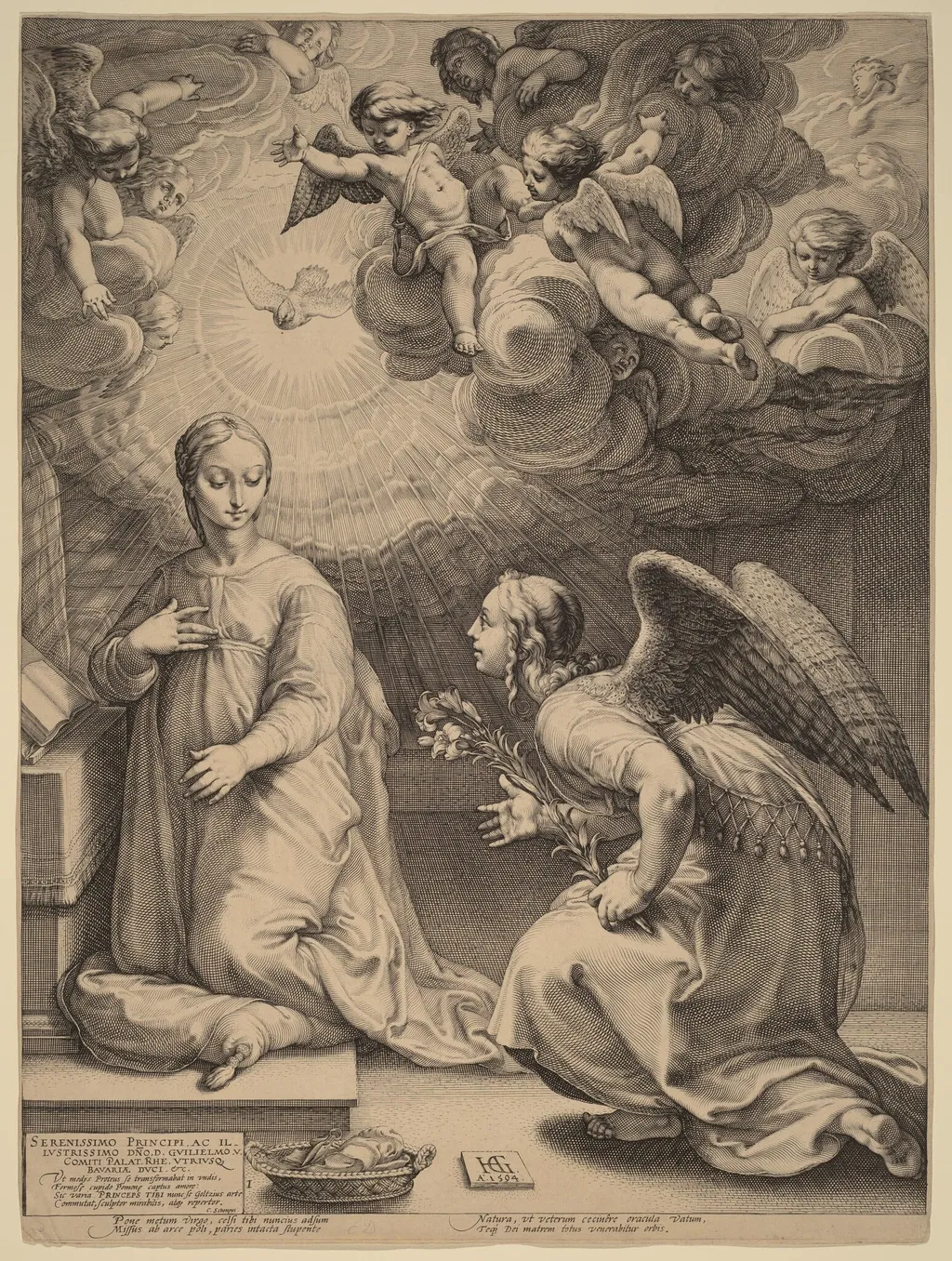
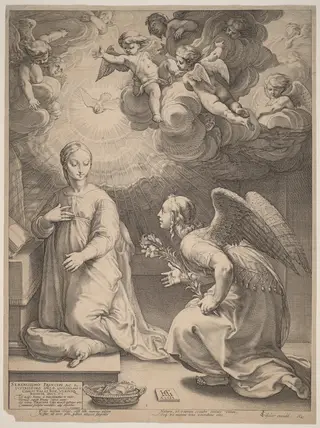
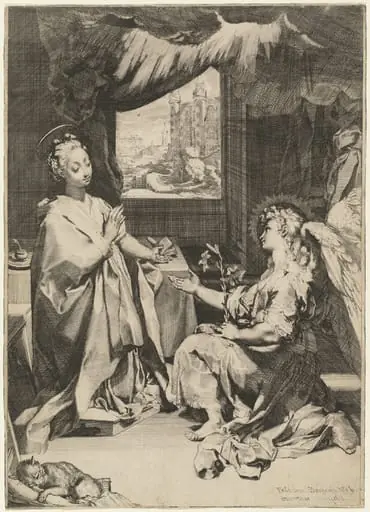
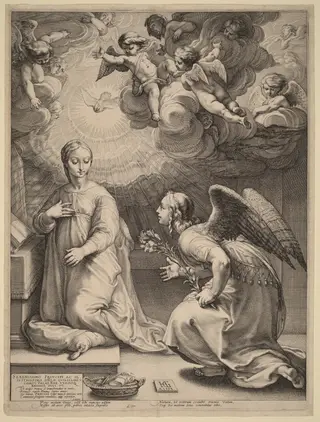
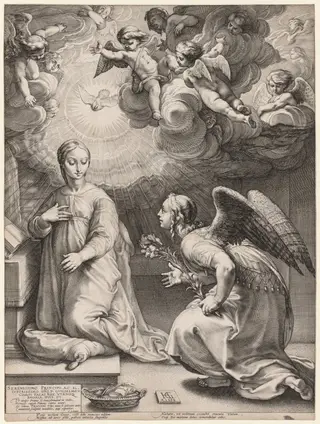
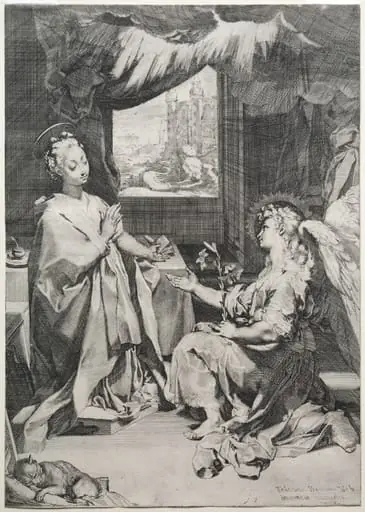
The Annunciation is an ink print by the Renaissance artist Hendrick Goltzius. It dates from 1594 and is held in the collection of the National Gallery of Art.
- Inscription
- Inscribed:in image, on a plaque at bottom centre: HG / Ao. 1594.; in image, on plaque at bottom left: SERENISSIMO PRINCIPI, AC IL- / LVSTRISSIMO DNO, D. GUILIELMO. V. / COMITI PALAT. RHE. UTRIUSQ. / BAVARIAE DUCI, etc. / Ut mediis Proteus se transformabat in undis, / Formosae cupido Pomonae captus amore: / Sic varia PRINCEPS TIBI nunc se Goltzius arte / Commutat, sculptor mirabilis, atque repertor. / C. Schonaeus (To the exalted Prince and August Lord, the lord William V, Count Palatine and Duke of the two Bavarias, etc. As Proteus changed amidst the waves out of burning love for the beautiful Pomona, so does Goltzius, the admirable engraver and inventor, with his varied art, for you, Oh Prince.); below image, in plate: Pone metum virgo, celsi tibi nuncius adsum / Missus ab arce poli, paries intacta stupente / Natura, ut veterum cecinêre oracula Vatum, / Teque Dei matrem totus venerabitur orbis. (Be not afraid, girl, I am here, sent as a messenger from the kingdom of heaven on high; a virgin, you shall bear a child to the astonishment of nature, according to the predictions of the ancient Prophets, and the whole world will worship you as the mother of God.) [Latin translations from Leeflang, Huigen, and Ger Luijten. _Hendrick Goltzius (1558-1617): Drawings, Prints and Paintings._ Amsterdam: Rijksmuseum, 2003, p. 210.]
About this work
Overview
Hendrick Goltzius’s 1594 engraving titled The Annunciation presents a quiet, intimate moment from the biblical narrative in which the Angel Gabriel appears to the Virgin Mary. Rendered entirely in line and shade, the print captures the calm atmosphere of the encounter before the unfolding of the larger story.
Subject & Meaning
The composition focuses on the initial visitation, showing the angel delivering the divine message to Mary. By emphasizing the stillness of the scene, Goltzius highlights the significance of the moment of revelation, inviting contemplation of the forthcoming incarnation without dramatizing the event itself.
Technique & Style
Executed with the precise incising of copper plates, the engraving demonstrates Goltzius’s mastery of line work, intricate hatching, and tonal modulation. The piece reflects the Northern Mannerist aesthetic of the early Baroque, characterized by elaborate detail, sophisticated spatial arrangement, and a refined handling of light and shadow.
History & Provenance
Created by Goltzius, a German‑born artist who established his reputation in the Dutch Republic as the pre‑eminent engraver of his generation, the print was produced during a period of intense demand for religious imagery. It circulated among collectors and patrons of the late sixteenth century, contributing to Goltzius’s standing as a leading figure in Dutch printmaking.
Own this work as a print
Artist & collection
Artist
Hendrick Goltzius (German: , Dutch: ; né Goltz; January or February 1558 – 1 January 1617) was a German-born Dutch printmaker, draftsman, and painter.