Artwork
The Annunciation
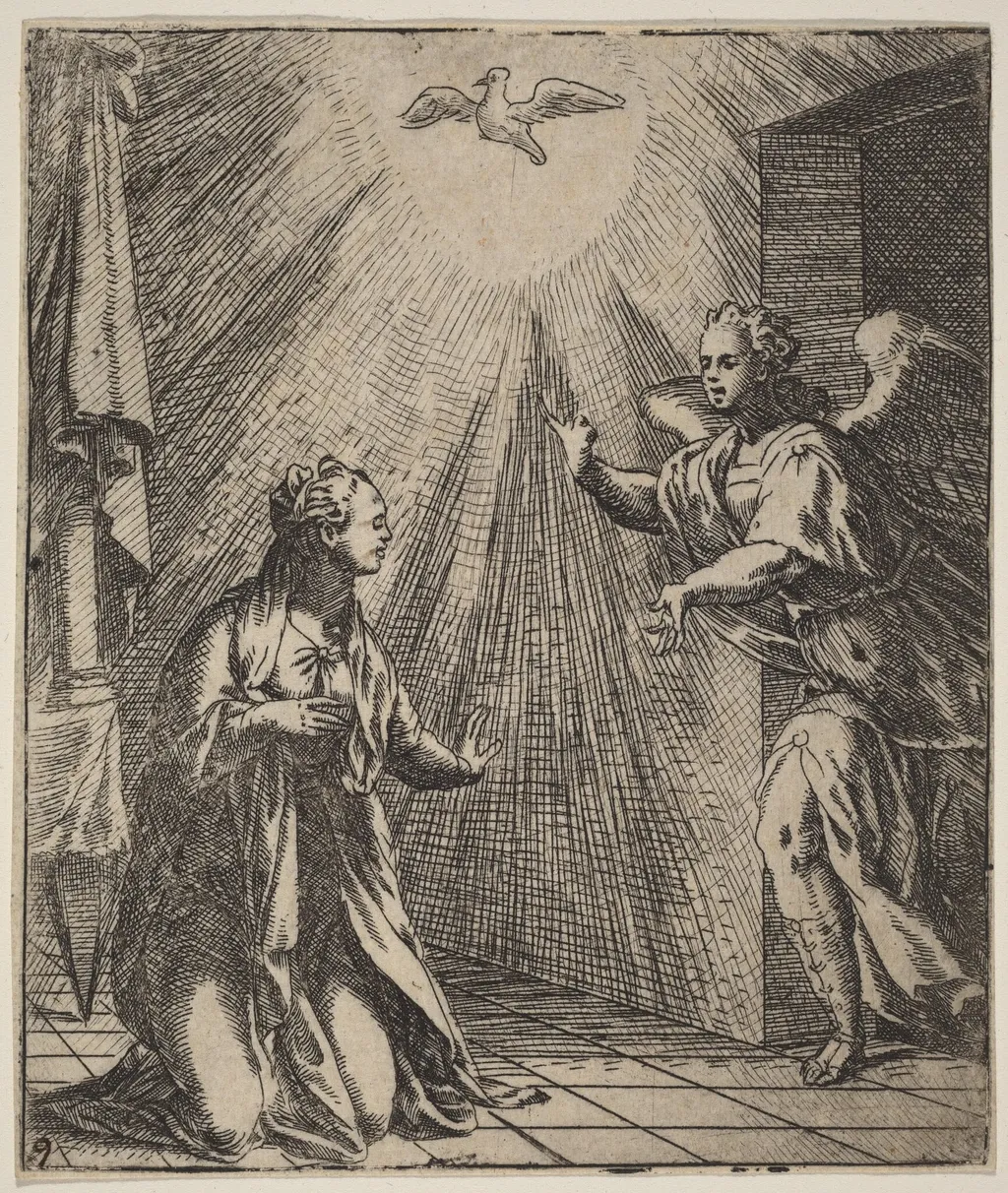
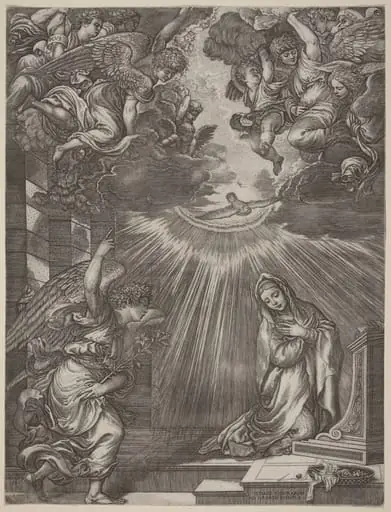
The Annunciation is an ink print by the Renaissance artist Giovanni Battista Fontana. It dates from 1556 and is held in the collection of the National Gallery of Art.
About this work
Overview
Fontana’s training in Northern Italy informed his approach to composition and light, which he later adapted in his mural and altarpiece work in Austria.
Created in 1556, The Annunciation is an etching on laid paper by Giovanni Battista Fontana, an Italian artist active in the mid-16th century. The work belongs to the broader tradition of religious printmaking that flourished during the Renaissance, allowing devotional imagery to circulate beyond painted altarpieces. Fontana’s training in Northern Italy informed his approach to composition and light, which he later adapted in his mural and altarpiece work in Austria.
Subject & Meaning
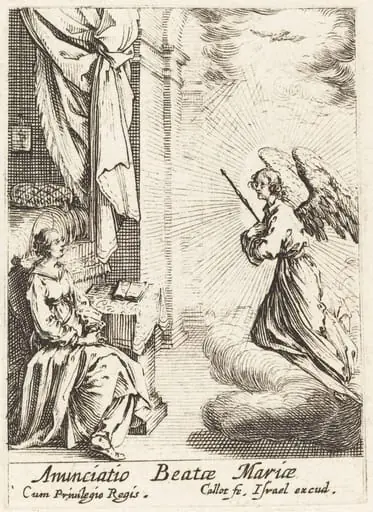
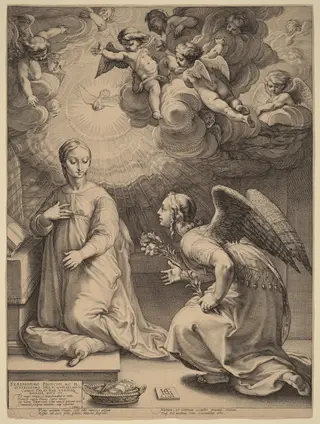
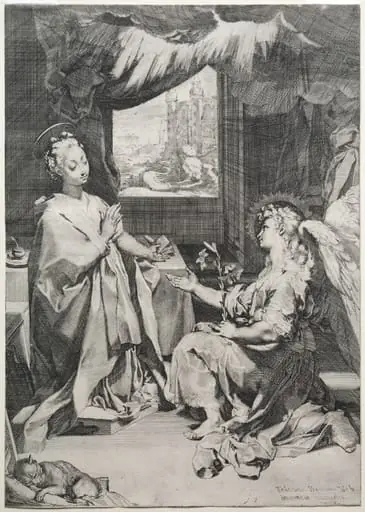
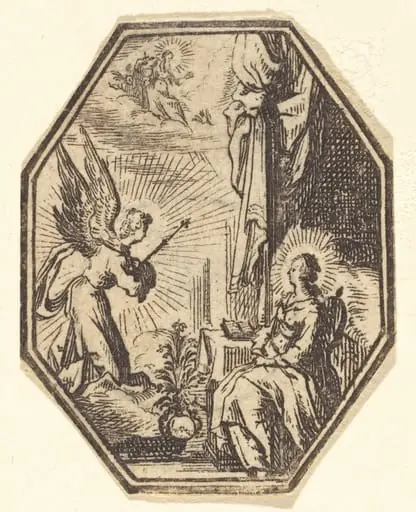
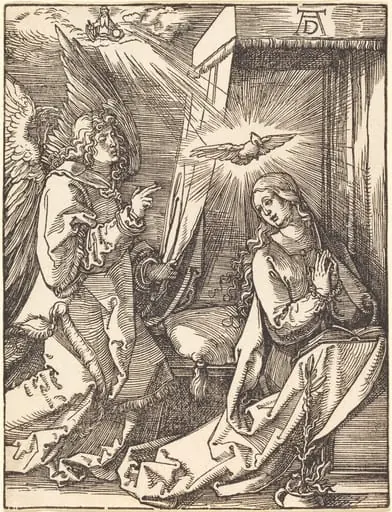
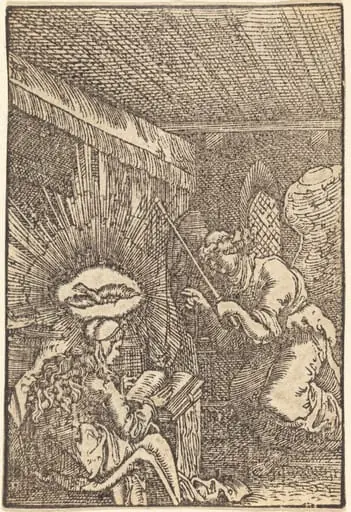
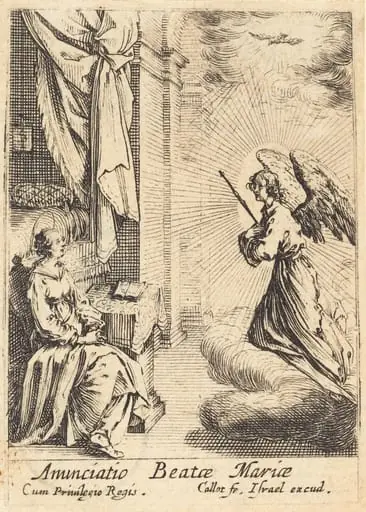
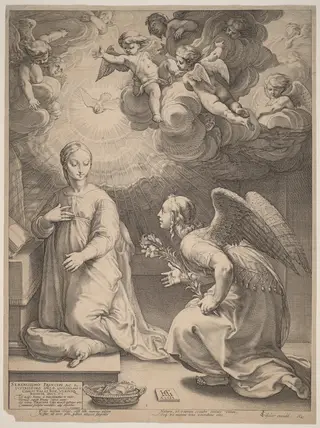
The scene depicts the moment the archangel Gabriel announces to the Virgin Mary that she will bear the Son of God. Mary, dressed in flowing robes, stands with hands clasped in humility, while Gabriel, marked by wings and a halo, gestures toward her with a raised hand. A dove, symbolizing the Holy Spirit, hovers above, completing the Trinity. The intimate setting and quiet intensity reflect a devotional focus on divine revelation rather than grandeur.
Technique & Style
Fontana employed etching to achieve fine linear detail and subtle tonal gradations. He used controlled hatching and cross-hatching to model forms and suggest the directional flow of celestial light descending from above. The contrast between the darkened interior and the luminous beams enhances the spiritual atmosphere.
The use of laid paper, with its visible chain lines, was typical of the period and contributed to the print’s tactile quality.
History & Provenance
Fontana produced this print during his early career in Northern Italy, before relocating to Austria in the 1560s, where he took on larger decorative commissions. While few of his prints survive in large numbers, The Annunciation is documented in several European collections, suggesting its circulation among religious institutions and private collectors interested in devotional imagery. Its date and technique align with mid-century print production in the Venetian sphere.
Context
In the mid-1500s, etching emerged as a preferred medium for religious subjects due to its capacity for fine detail and reproducibility. Artists like Fontana responded to demand for portable devotional images, especially as the Reformation reshaped religious practice. His work bridges the Italian Renaissance emphasis on form and the Northern European tradition of intimate, emotionally resonant scenes.
Legacy
Though Fontana is better known for his frescoes and altarpieces in Austria, The Annunciation remains a significant example of his graphic work. It reflects the broader Renaissance trend of translating sacred narratives into accessible formats. The print’s technical precision and quiet drama influenced later engravers in Central Europe, particularly those working in religious contexts where clarity and reverence were paramount.
Own this work as a print
Artist & collection

Artist
Giovanni Battista Fontana (1524 – 25 September 1587) was an Italian painter and engraver.