Artwork
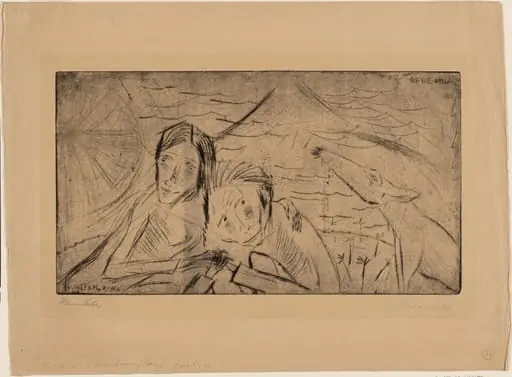
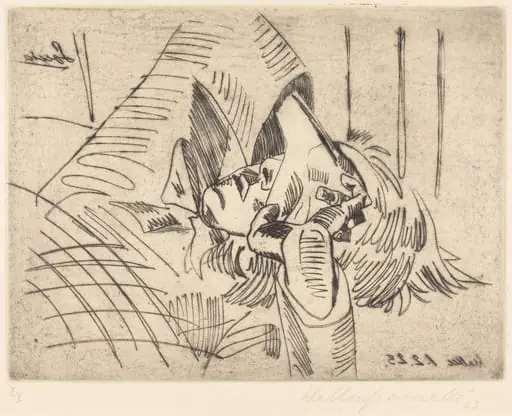
Three People in an Atelier
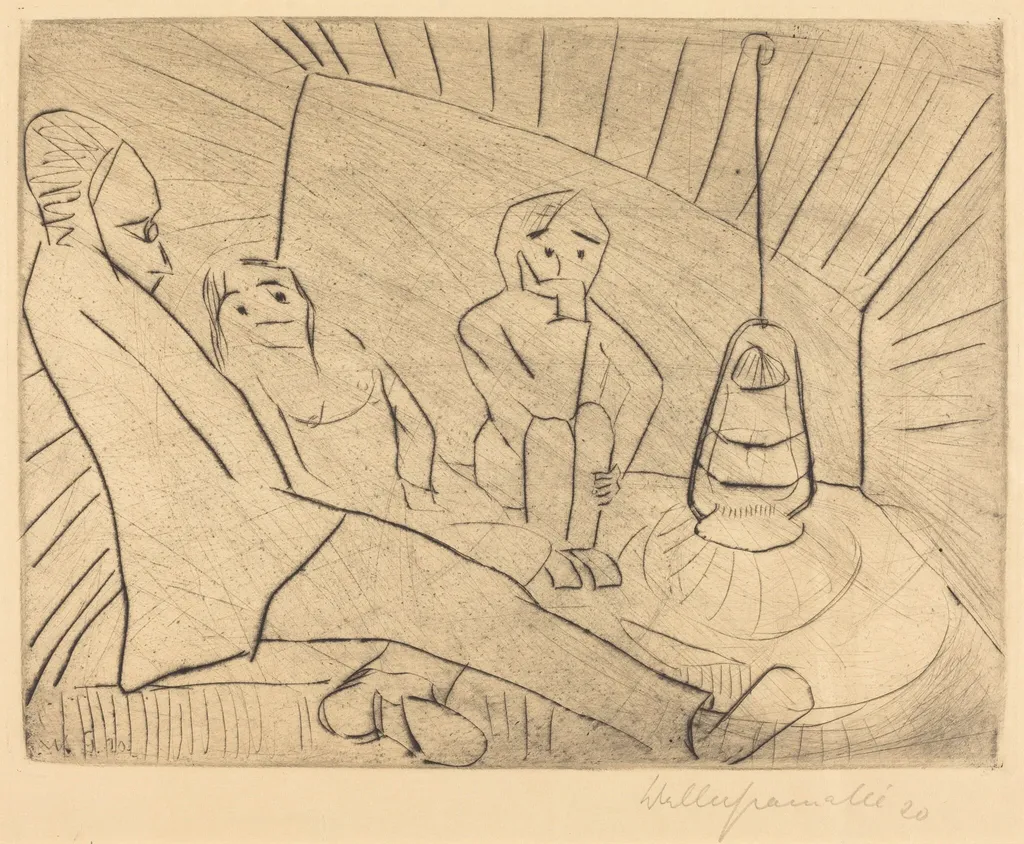
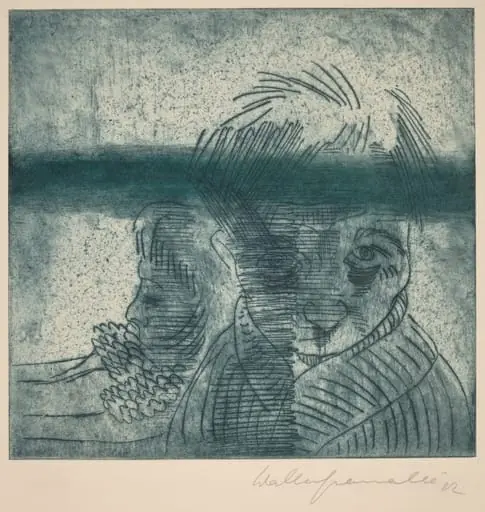
Three People in an Atelier is an ink print by Walter Gramatté. It dates from 1920 and is held in the collection of the National Gallery of Art.
- Inscription
- Inscribed:lower right in graphite: WalterGramatte' 20; lower left in plate: W.G.20; by later hand at bottom edge, lower left in graphite: Walter Gramatte E142 1920 'Drei menchen in Ein er Kajute'; by later hand at bottom edge, lL //in graphite: 191; all inscriptions on verso by later h ands: lLv//in graphite: 31[X]; lRv//in graphite: A522 / [?]200 EL[X] P.T / DM
About this work
Overview
The print captures a quiet moment within a creative space, reflecting the artist’s preoccupation with human presence amid instability.
Created in 1920, Three People in an Atelier is a drypoint print on cream wove paper by German artist Walter Gramatté. The work belongs to a body of prints made during a period of personal and societal upheaval following World War I. Gramatté’s choice of medium, drypoint, emphasizes tactile line quality and subtle tonal variation, aligning with his interest in intimate, psychologically charged scenes. The print captures a quiet moment within a creative space, reflecting the artist’s preoccupation with human presence amid instability.
Subject & Meaning
The composition shows three figures in a studio setting: one seated, one standing, and another on the floor. Their postures suggest contemplation, rest, or quiet labor, evoking the rhythms of artistic life. No clear narrative is given, but the arrangement implies a shared, unspoken atmosphere, perhaps the aftermath of work or a pause between creative acts.
The figures appear isolated within the space, hinting at the solitude often accompanying artistic production, especially in the shadow of war and illness.
Technique & Style
Gramatté employed drypoint, a printmaking method involving incised lines on a metal plate, to achieve rich, velvety blacks and delicate, uneven textures. The cream paper enhances the contrast, allowing the ink to settle into the grooves with a tactile immediacy. Lines are neither rigid nor fluid but deliberately irregular, conveying emotional weight rather than anatomical precision. This approach aligns with Expressionist tendencies, prioritizing inner experience over external realism.
History & Provenance
Gramatté produced this work during a time of frequent relocation, between Berlin, Hamburg, Hiddensee, and Barcelona, each place influencing his thematic focus. His health, compromised by wartime exposure and illness, limited his output but deepened the introspective tone of his prints. Three People in an Atelier emerged from this period of displacement and physical strain, reflecting both his personal resilience and the broader cultural mood of postwar Germany.
Context
In the early 1920s, German artists grappled with the psychological aftermath of war, economic instability, and shifting social roles. Gramatté’s work, though less known than contemporaries like Dix or Beckmann, shares their preoccupation with human vulnerability. His focus on the studio as a site of quiet endurance, rather than grandeur, offers a counterpoint to the era’s more overtly political imagery, grounding expressionism in the domestic and the personal.
Legacy
Though Gramatté’s reputation remained modest during his lifetime, his prints are now recognized for their emotional subtlety and technical sensitivity. Three People in an Atelier exemplifies how drypoint could convey psychological depth without overt drama. The work contributes to broader understandings of postwar German printmaking, illustrating how intimate scenes could carry the weight of collective trauma through restrained, thoughtful execution.
Own this work as a print
Artist & collection

Artist
Walter Gramatté (8 January 1897 in Berlin – 9 February 1929 in Hamburg) was a German expressionist painter who specialized in magic realism.

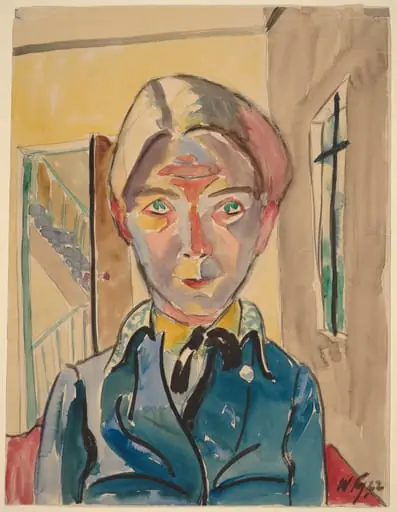 Self-Portrait in Front of Stairs (Selbst vor Treppe)
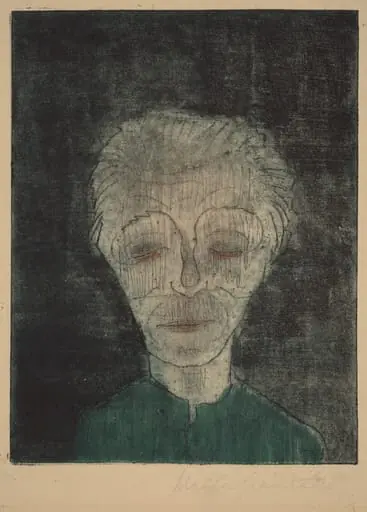 Tired Man (Self-Portrait)
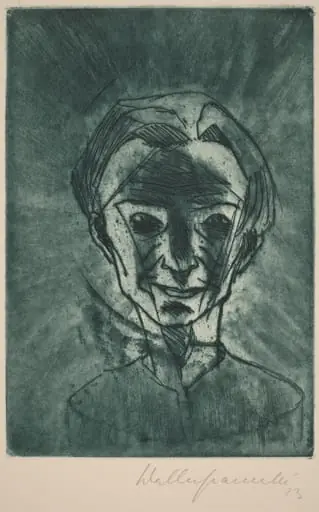 Smiling Head, Self-portrait (Lächelnder Kopf, Selbstporträt)
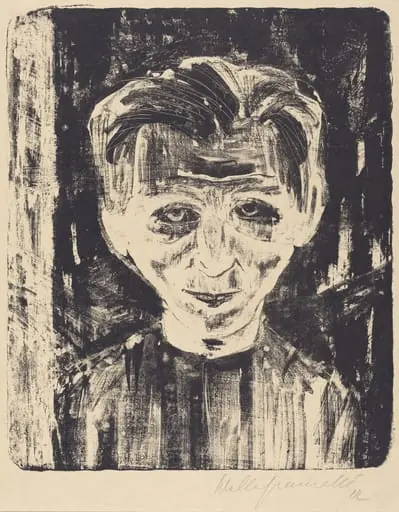 Self-Portrait
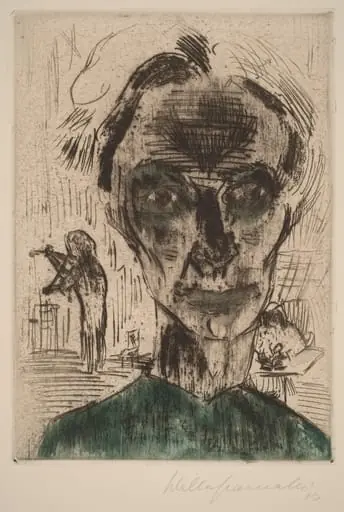 Man in a Room, Self-portrait
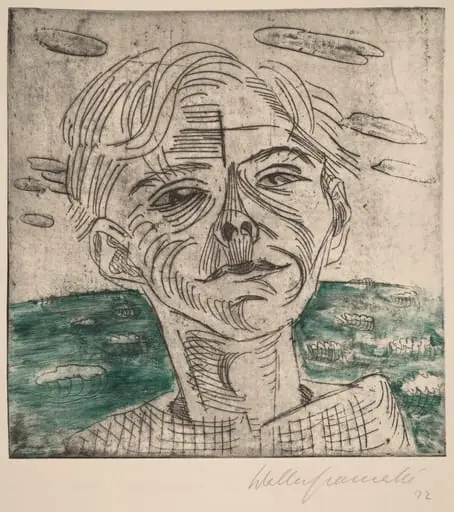 Man at the Sea, Self-portrait (Mann am Meer, Selbstporträt)
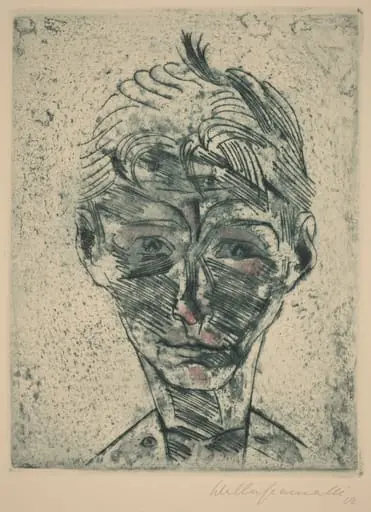 Bust of a Young Man, Self-portrait (Knabenkopf, Selbstporträt)
 The Couple, Self-Portrait with Wife (Das Paar, Selbstporträt mit Frau)