Artwork
The Judgement of Paris
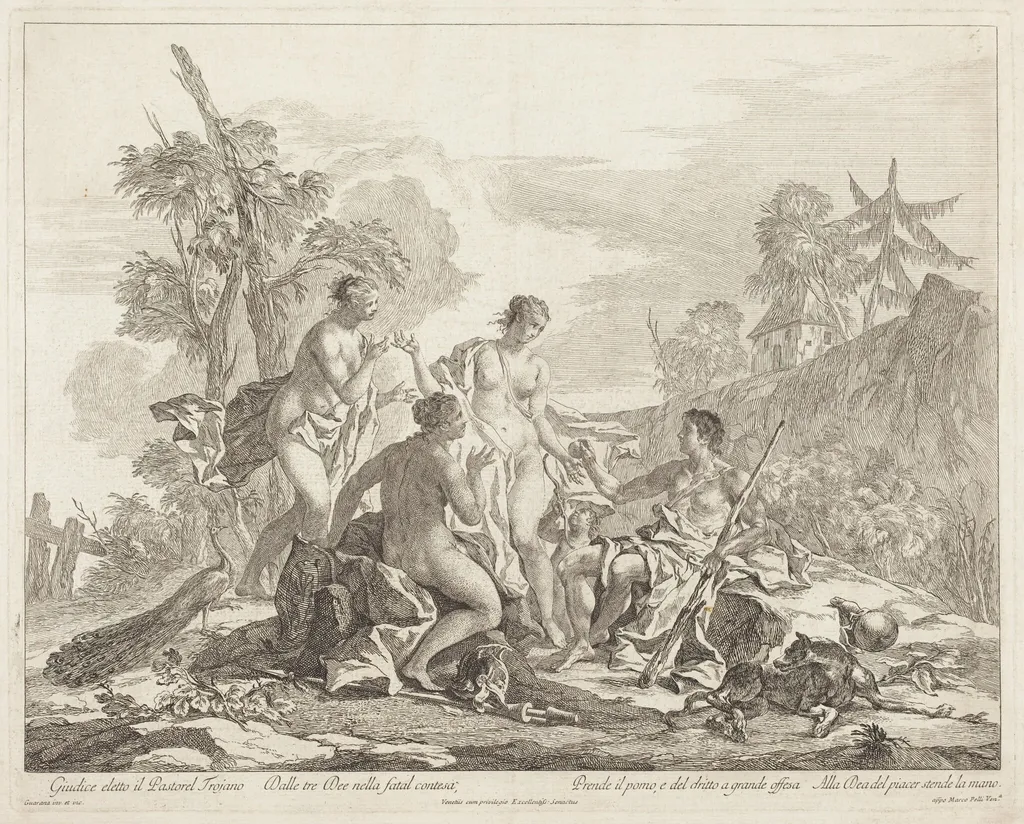
The Judgement of Paris is an ink print by the Baroque artist Jacopo Guarana. It dates from 1764 and is held in the collection of the National Gallery of Art.
- Inscription
- Inscribed:lower left in plate: Guarana inv et inc.; lower right in plate: appo Marco Pelli Ven. a; lower center in plate: Giudice eletto il Pastorel Troijano Dalle tre Dee nella fatal contesa, Prendi il pomo, e del dritto a grande offesa Alla Dea del piacer stendi la mano. / Venetiis cum privilegio Excellentiss Senactus; by later hand, lower right verso in graphite: K 1256
About this work
Overview
Paris is depicted seated on the ground to the right, while a fourth figure, likely Mercury, kneels behind him to present the apple or observe the decision.
Jacopo Guarana's 1764 etching, The Judgement of Paris, interprets the classical myth in which Paris, a Trojan prince, must award a golden apple to the most beautiful goddess. The composition features five figures arranged within a lush, wooded landscape characteristic of Guarana's Venetian style. In the central grouping, the three goddesses, Hera, Athena, and Aphrodite, stand in varied poses, with the central figure gesturing expansively.
Paris is depicted seated on the ground to the right, while a fourth figure, likely Mercury, kneels behind him to present the apple or observe the decision. Executed on laid paper, the work utilizes the etching medium to render delicate textures in the foliage and drapery, capturing the soft light and atmospheric depth typical of mid-18th-century Italian printmaking. Created during Guarana's mature period, this piece reflects his sustained engagement with mythological subjects and his ability to translate the grandeur of history painting into the graphic arts.
The work serves as a testament to the continued popularity of classical narratives in Venetian art during the Enlightenment era, showcasing Guarana's skill in balancing complex figure arrangements with a serene natural setting.
Subject & Meaning
The scene illustrates the moment from Greek legend when Paris must choose the most beautiful goddess, a decision that precipitates the Trojan War. The central woman, likely the goddess Aphrodite, is emphasized by her gesture, while the surrounding figures embody the competing deities and the mortal observer, creating a narrative tension that underscores the gravity of the choice.
Technique & Style
Guarana employs fine etching lines to model forms, using cross‑hatching and varied tonal washes to suggest depth and atmospheric perspective. The texture of foliage and distant architecture is achieved through delicate stippling, while the figures’ musculature and drapery are rendered with precise incisions, producing a clear contrast between illuminated surfaces and shadowed planes.
History & Provenance
Created in the mid‑eighteenth century, the print reflects Guarana’s engagement with classical themes popular among Venetian academies. Though specific ownership records are sparse, the work has been catalogued in several European print collections, indicating its circulation among connoisseurs of mythological subjects during the period following its production.
Own this work as a print
Artist & collection


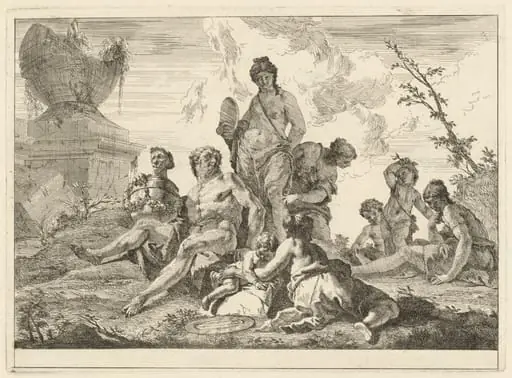 Venus and Vulcan with Three Nymphs and Three Cupids
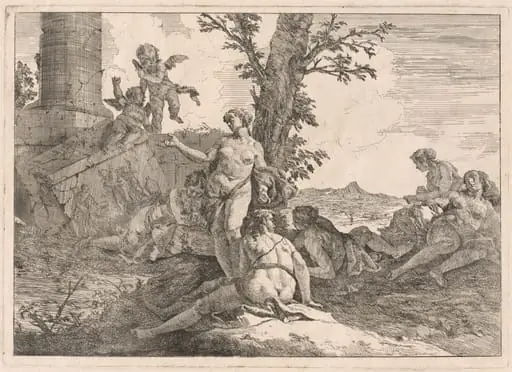 Six Nymphs and Two Cupids in a Landscape
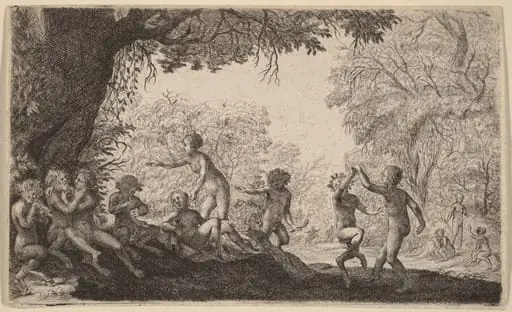 Bacchanal with a Dancing Couple on the Right
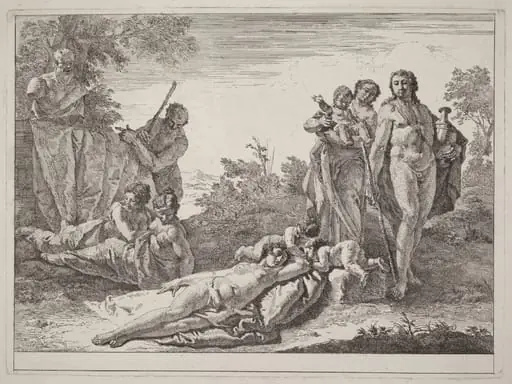 Apollo and Nymphs in a Landscape with a Bust of Pan
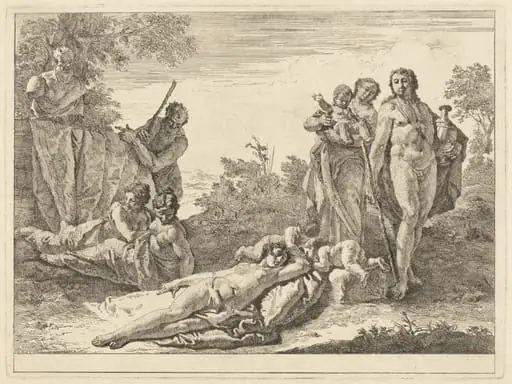 Nine Figures around a Herm of Pan
![Omnia Vincit Amor [Apollo and Daphne], by Robert van Audenaerd](https://artifactworldgallery.com/img/robert-van-audenaerd--omnia-vincit-amor-apollo-and-daphne--7af37b2f424f6e58-w320.webp) Omnia Vincit Amor [Apollo and Daphne]
Omnia Vincit Amor [Apollo and Daphne]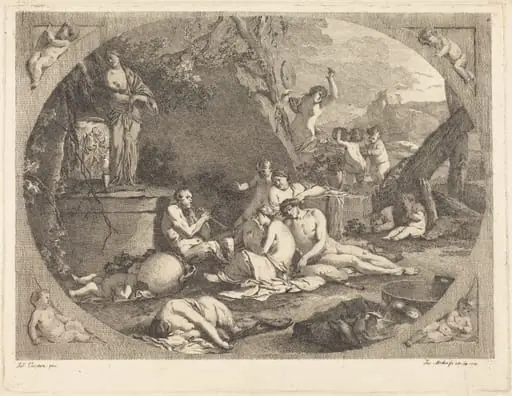 Bacchanal
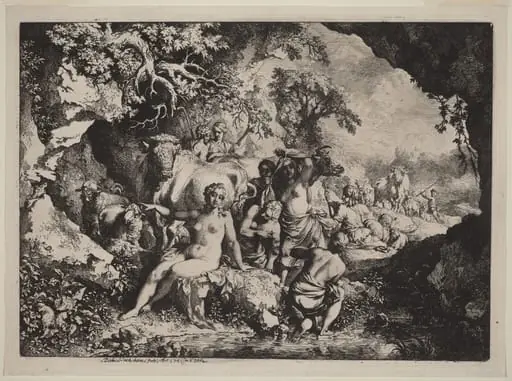 Nymphs Bathing in a Cave
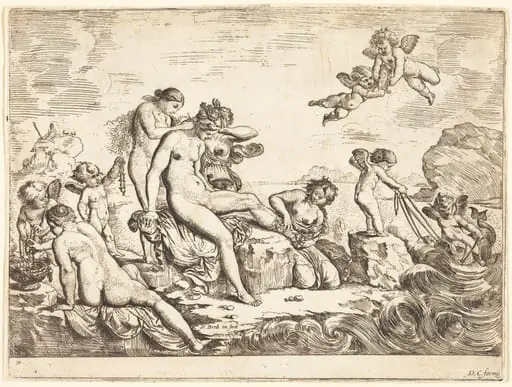 The Toilet of Thetis
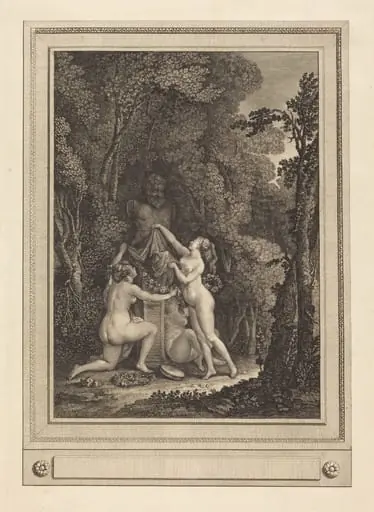 Les nymphes scrupuleuses
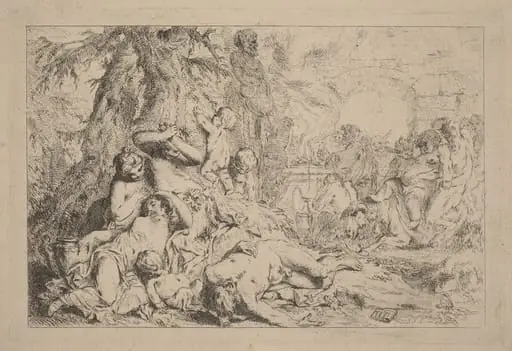 The March of Silenus
- The Judgment of Paris