Artwork
Prizonierii
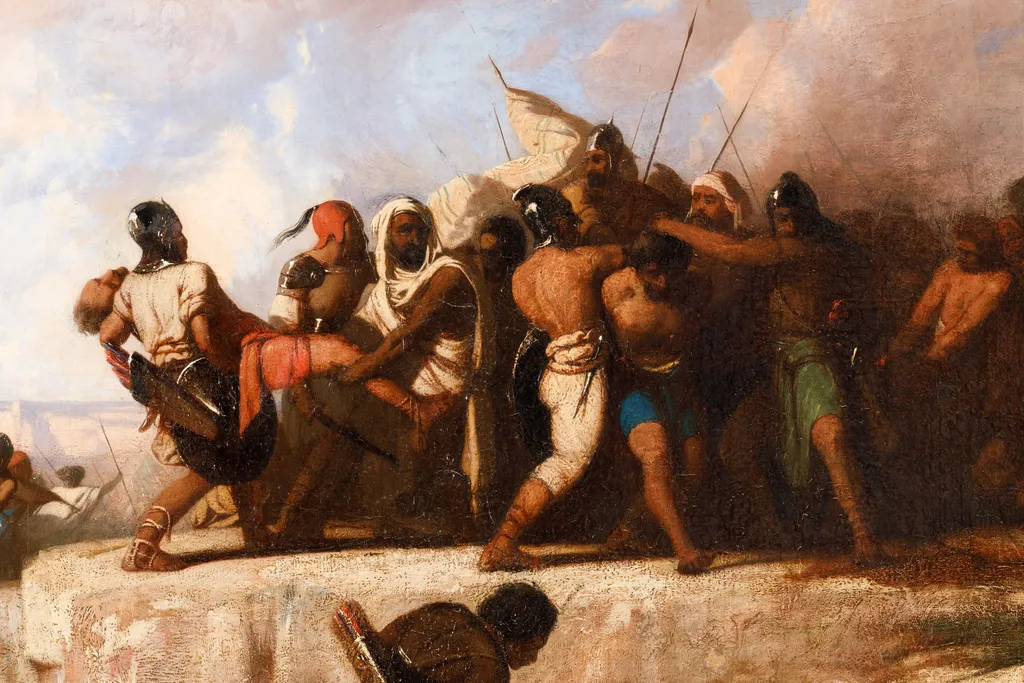
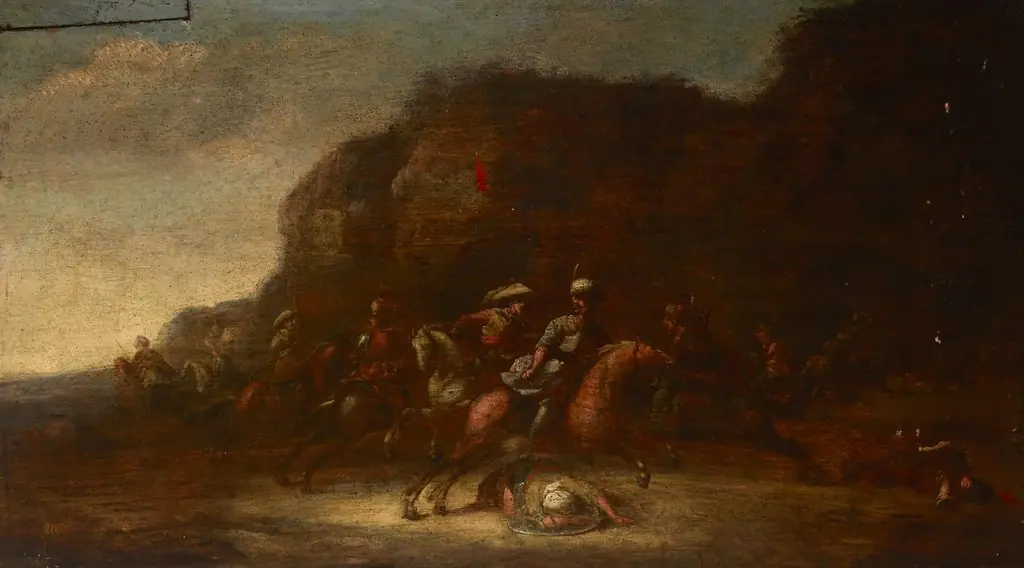
Prizonierii is a print by Adrien Guignet. It dates from 1850 and is held in the collection of the National Museum of Art of Romania.
About this work
Overview
It depicts a group of male figures positioned on a elevated, ambiguous structure, possibly a ship’s deck or a fortified ledge.
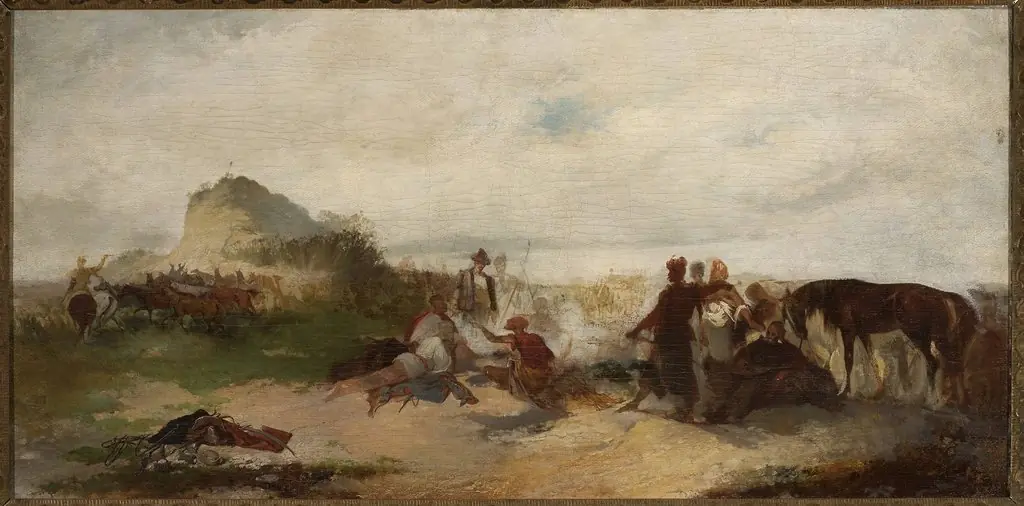
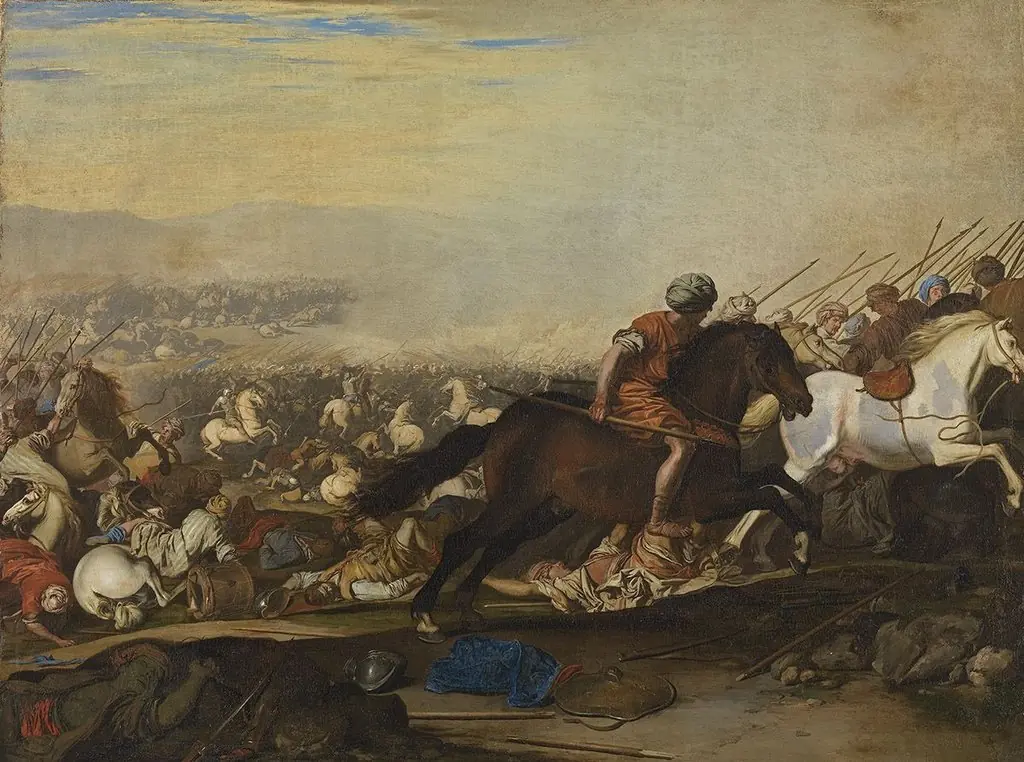
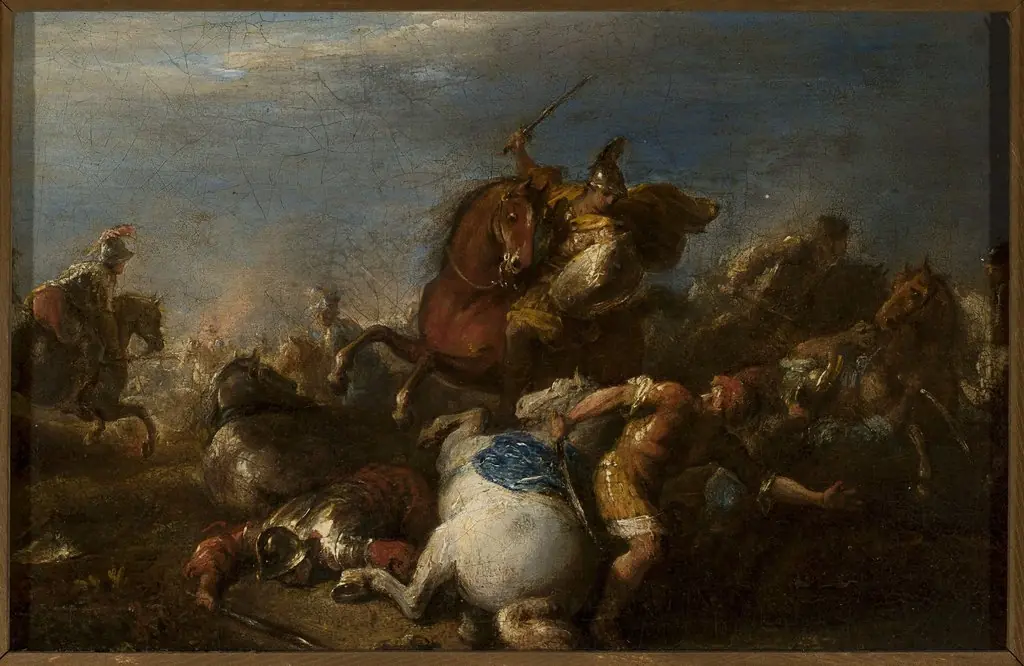
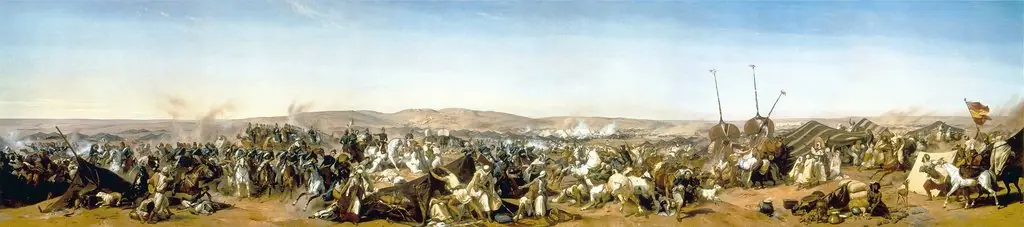
Prizonierii, dated around 1850, is a painting by French artist Adrien Guignet. It depicts a group of male figures positioned on a elevated, ambiguous structure, possibly a ship’s deck or a fortified ledge. The scene is tense and static, with figures arranged in a loose, horizontal formation. The setting lacks clear architectural detail, emphasizing the human forms and their interactions under dramatic lighting.
Subject & Meaning
The figures appear to represent captives or prisoners of diverse origins, distinguished by their attire: some wear flowing robes and turbans, others are bare-chested, suggesting differing cultural or social statuses. Their postures, some tensed, others resigned, hint at captivity, resistance, or exhaustion. The lone figure leaning on a spear gazes downward, possibly conveying surveillance, defeat, or contemplation. The flag in the distance adds a hint of authority or distant conflict.
Technique & Style
Guignet employs strong chiaroscuro to define the figures against a hazy, smoky sky. Deep shadows carve out muscular forms and fabric folds, while patches of light highlight torsos, weapons, and faces. The contrast enhances the three-dimensionality of the bodies and draws focus to their physical presence.
Brushwork is firm but not overly detailed, favoring emotional impact over realism. The background remains indistinct, isolating the figures in a psychological space.
History & Provenance
The painting’s early history is undocumented, and no public records confirm its exhibition or ownership prior to the 20th century. It is not listed in major 19th-century French salon catalogs, suggesting it may have been a private or lesser-known commission. Guignet, primarily recognized for genre scenes and Orientalist themes, likely created this work during his explorations of exoticized subjects common in mid-century European art.
Context
Created during a period of heightened European interest in North African and Middle Eastern cultures, Prizonierii reflects the Orientalist trend in 19th-century painting. While not overtly propagandistic, it aligns with contemporary depictions of the 'exotic other', often portraying non-European subjects in states of vulnerability or stoicism. The ambiguity of the setting and the figures’ identities allows for multiple interpretations, rooted in colonial-era fantasies rather than documented reality.
Legacy
Prizonierii remains a relatively obscure work within Guignet’s oeuvre and has not been widely studied or reproduced. Its significance lies in its quiet intensity and technical precision, offering a restrained example of Orientalist imagery that avoids melodrama. It contributes to broader discussions on how European artists visualized power, captivity, and cultural difference during the height of imperial expansion.
Own this work as a print
Artist & collection
Artist
This Parisian artist had a habit of lurking around the Louvre at closing time, sketching the last patches of light on the marble floors.