Artwork
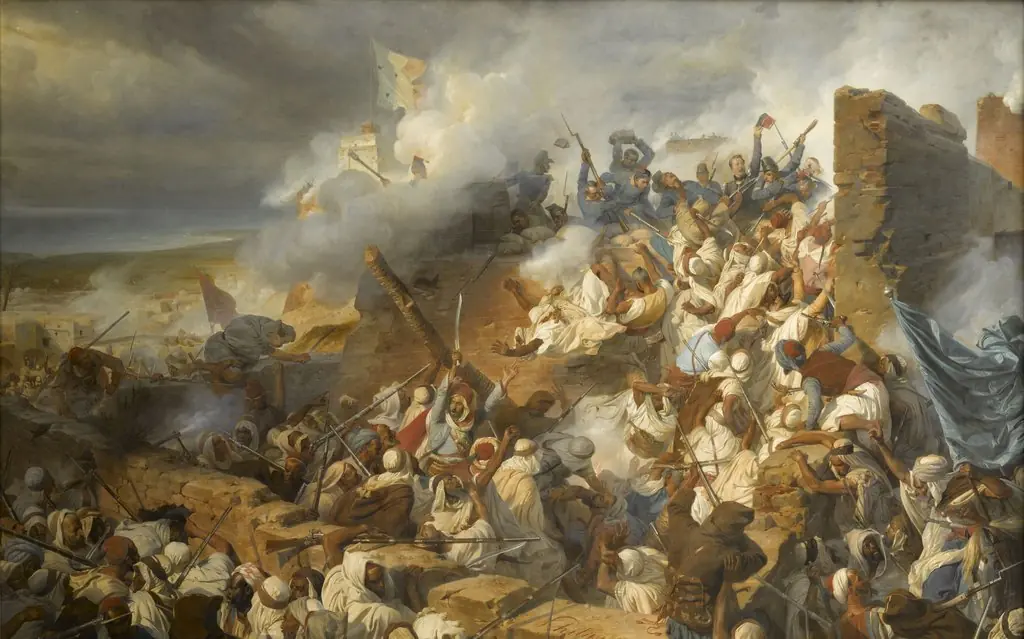
The seizure of Abd-el-Kader's camp in 1843
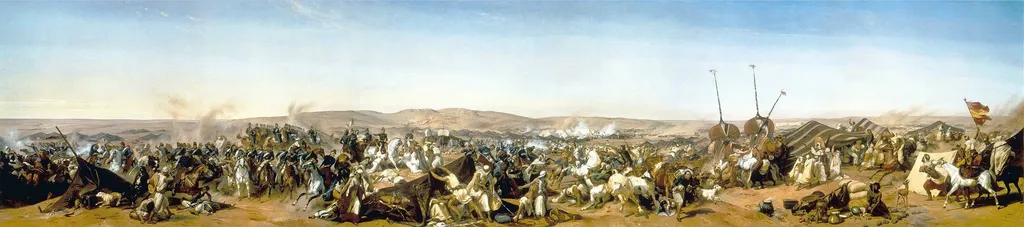
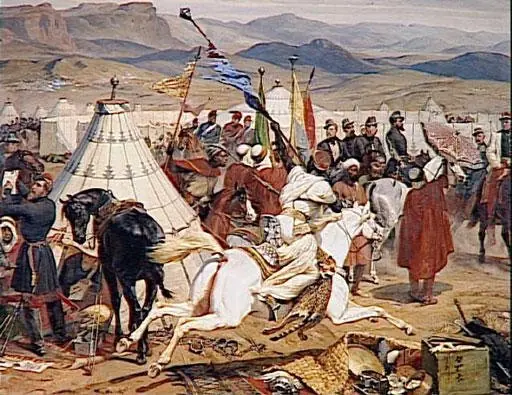
The seizure of Abd-el-Kader's camp in 1843 is an oil painting by the French Romanticist artist Horace Vernet. It dates from 1844 and is held in the collection of the Palace of Versailles.
About this work
Subject & Meaning
The work combines topographic detail with symbolic references to military glory, serving as propaganda that elevates the duke and legitimizes colonial conquest.
The canvas illustrates the 16 May 1843 French capture of Abd‑el‑Kader’s encampment at Taguin, a moment presented as a decisive triumph of the Orléans dynasty. Central to the composition the Duc d’Aumale rides a white horse that echoes Napoleon’s pose at Eylau, while a panoramic vista reveals the fortified town of Taguin, the tented ‘smala’ of the Emir and the distinguished family of Mohamed‑el‑Karoubi, who was absent from the battle. The work combines topographic detail with symbolic references to military glory, serving as propaganda that elevates the duke and legitimizes colonial conquest. Its vast scale, over 105 m², marks it as the largest painting of the century.
Technique & Style
The work is an oil on canvas painting, executed in 1844 by Horace Vernet with assistance from his pupils to meet a tight commission. Its monumental scale, 4.89 m high and 21.39 m wide, makes it the largest painting of the 19th century, with a surface exceeding 105 square metres. The composition unfolds as a panoramic view developing from left to right, presenting multiple moments of the battle across more than a hundred figures, including French cavalry and infantry and the encircling tents of the smala.
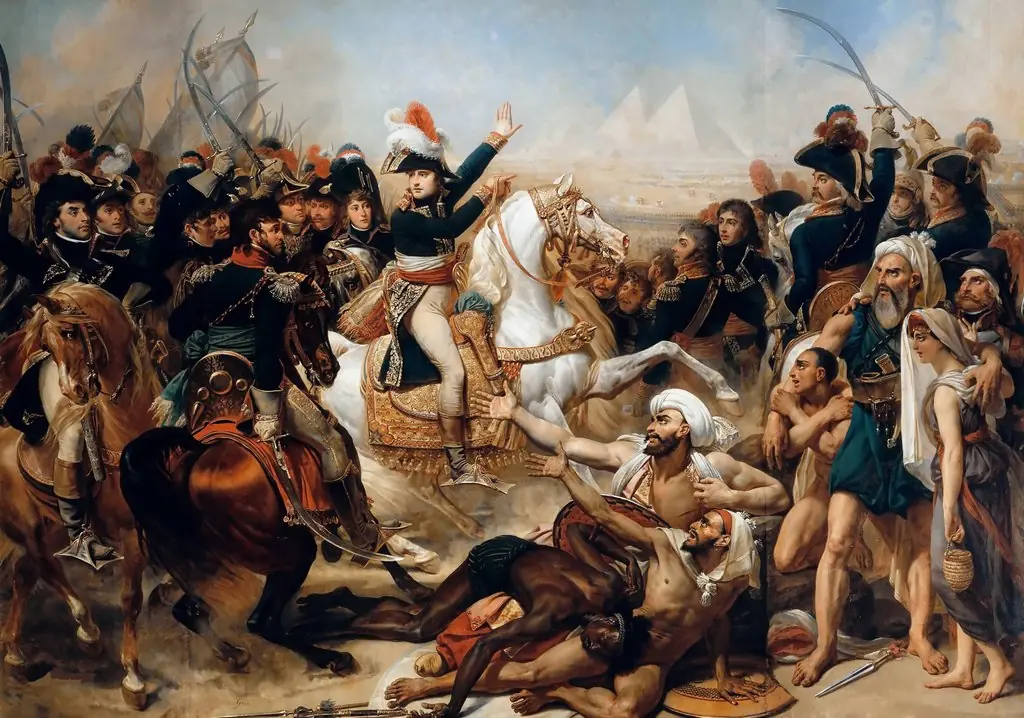
Vernet aimed for an exact account of events, with many individual figures rendered recognisably. In the foreground, the Duc d'Aumale is shown mounted on a white horse in a pose recalling Napoleon I at the Battle of Eylau, while the old fort of Taguin recedes into the distance in the third section of the canvas.
History & Provenance
Commissioned by King Louis-Philippe I shortly after the battle of May 16, 1843, this monumental work was intended to glorify the military achievements of his son, the Duc d'Aumale, and restore the monarchy's contested power. Horace Vernet executed the painting in 1844, completing the massive canvas in less than two years with assistance from his pupils.
The artwork was first presented at the Paris Salon of 1845 and exhibited again in 1855. It currently resides in the Museum of the History of France at the Palace of Versailles, where it serves as the centerpiece of the Salle de la Smalah. A reduced copy measuring 1.4 by 4.5 meters was produced by Alfred Decaen in 1856 and is held at the Musée Condé in Chantilly.
The painting is permanently held at the Palace of Versailles, specifically within the Museum of the History of France. Its inventory records include the numbers MV 2027, INV 8388, and LP 6223. The work was first exhibited at the Paris Salon of 1845, where it was presented to the public shortly after its completion.
It returned to the Salon for a second showing in 1855. Following these exhibitions, the canvas was installed in the Salle de la Smalah at Versailles, where it remains a central piece illustrating the French conquest of Algeria.
Context
Painted by Horace Vernet in 1844, the work commemorates the 16 May 1843 French victory over Emir Abdelkader’s encampment at Taguin. Commissioned by Louis‑Philippe I immediately after the battle, it was executed in under two years, reportedly with assistance from the artist’s pupils, and first shown at the Salon of 1845 before a second showing in 1855. The canvas, measuring 21.39 m in width and 4.89 m in height, became the largest painting of the nineteenth century and was installed in the Salle de la Smalah at the Musée de l’histoire de France in Versailles, where it served as a propagandistic illustration of the duke’s triumph.
Contemporary reception highlighted its monumental scale and narrative detail, while later scholarship has positioned it as a key example of history painting’s role in French imperial ideology.
Overview
This oil painting, titled The Seizure of Abd-el-Kader's Camp in 1843, depicts a pivotal moment in the French conquest of Algeria. It commemorates the decisive victory of the Duc d'Aumale's forces over Emir Abdelkader's mobile encampment, known as the 'smala,' at Taguin on May 16, 1843. The work captures the intense drama and chaos of the battle, serving as a visual record of a significant military triumph for the French monarchy.
Artist & collection
Artist
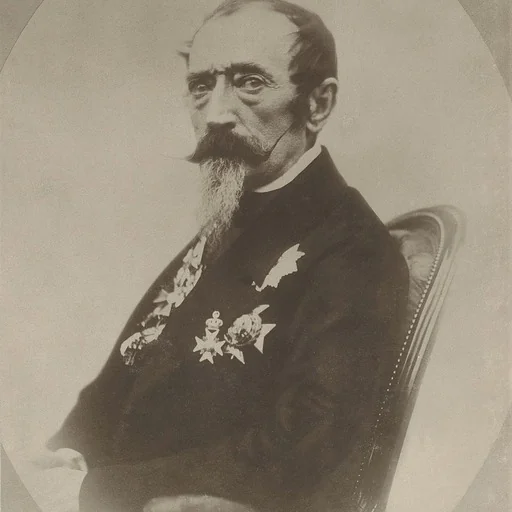
Émile Jean-Horace Vernet (French pronunciation:; 30 June 1789 – 17 January 1863), better known as Horace Vernet, was a French painter of battles, portraits, and Orientalist subjects.

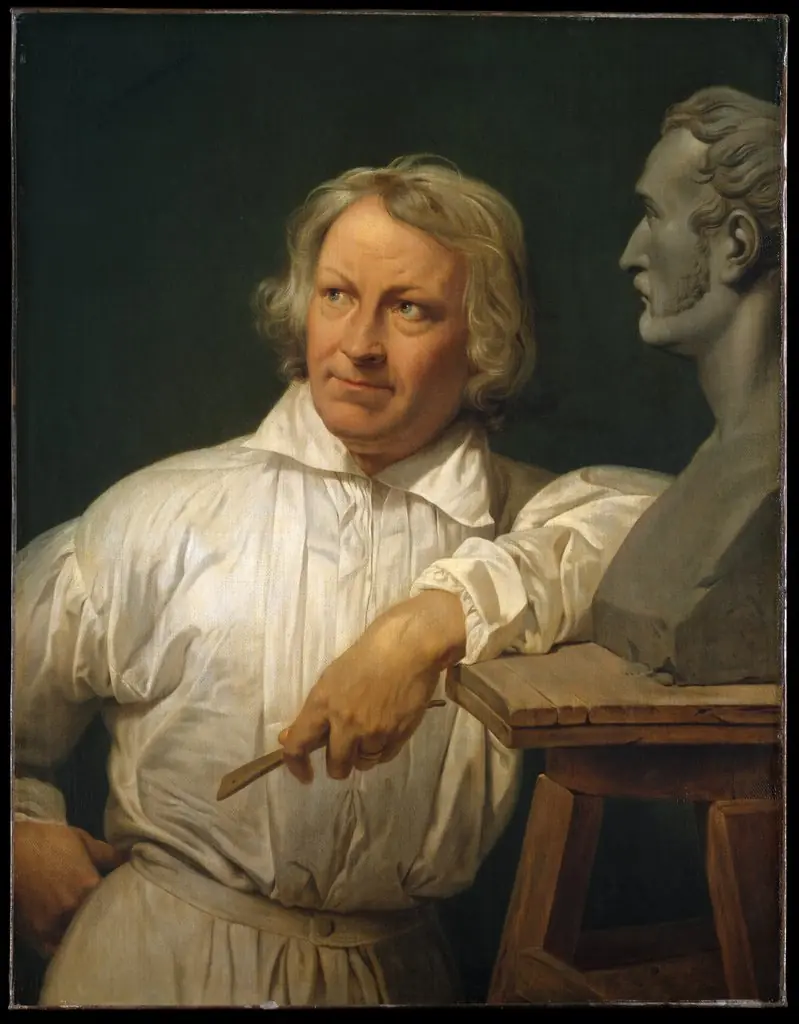 Bertel Thorvaldsen (1768–1844) with the Bust of Horace Vernet
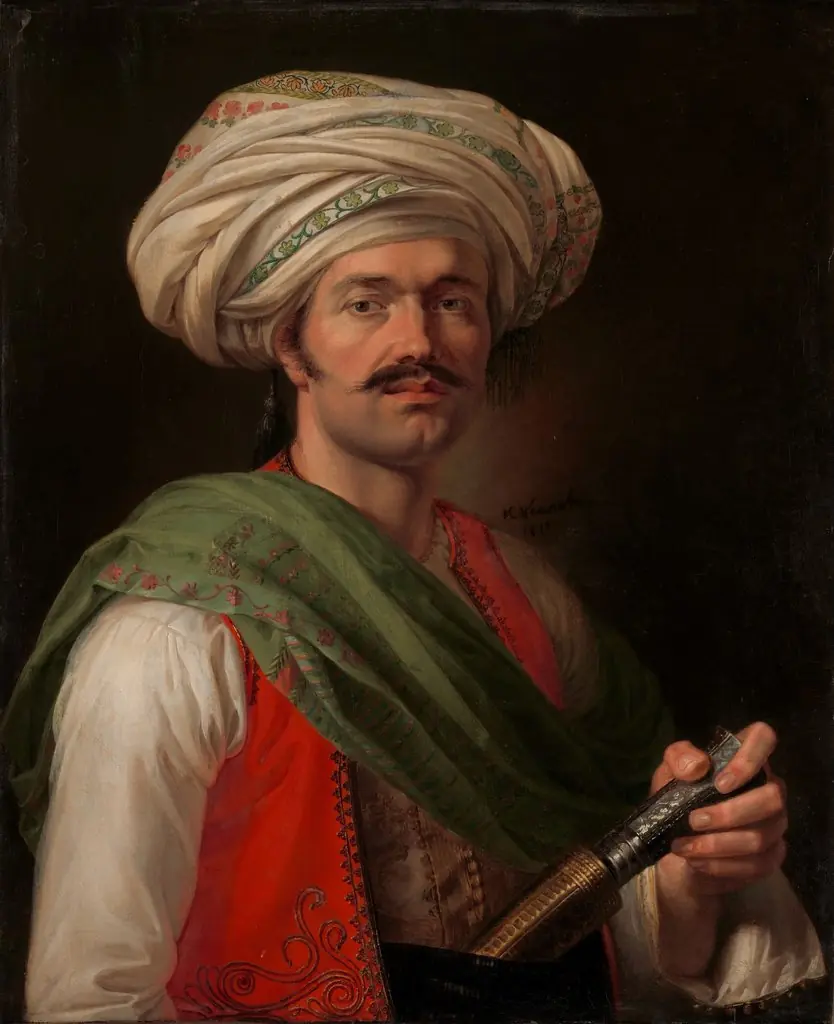 Portrait of a Mameluke, said to be Roustam Raza
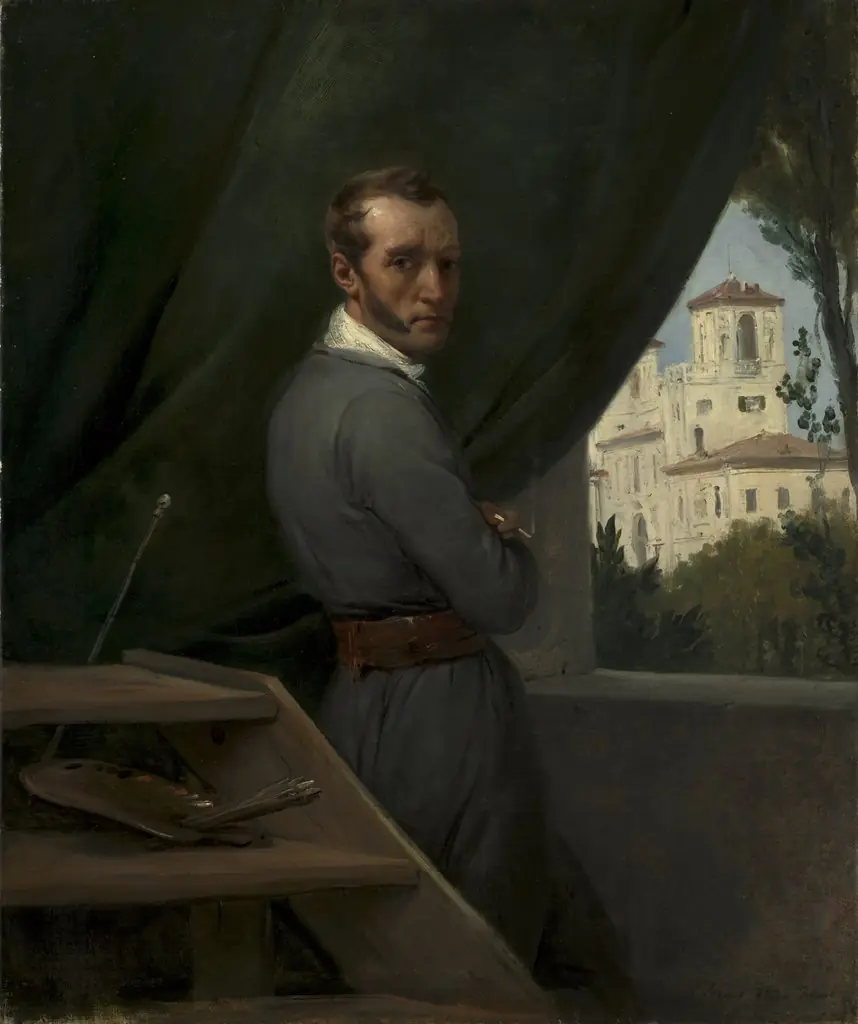 Self-Portrait in Rome
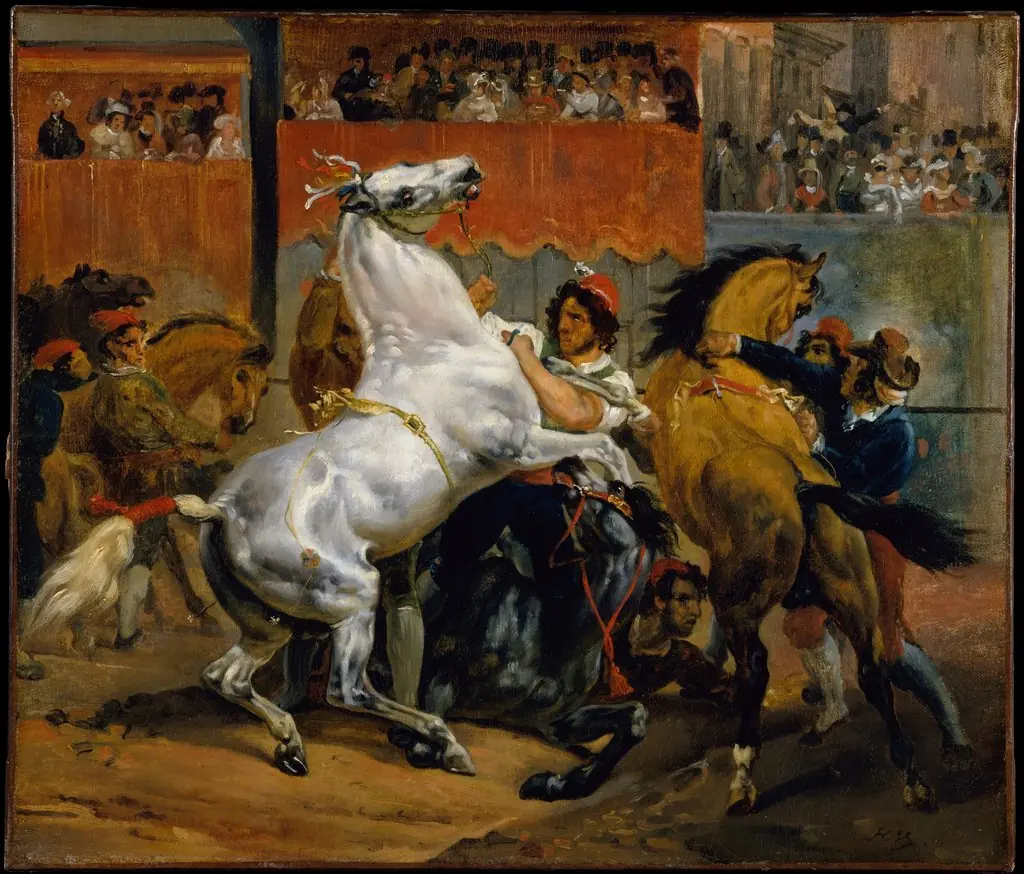 The Start of the Race of the Riderless Horses
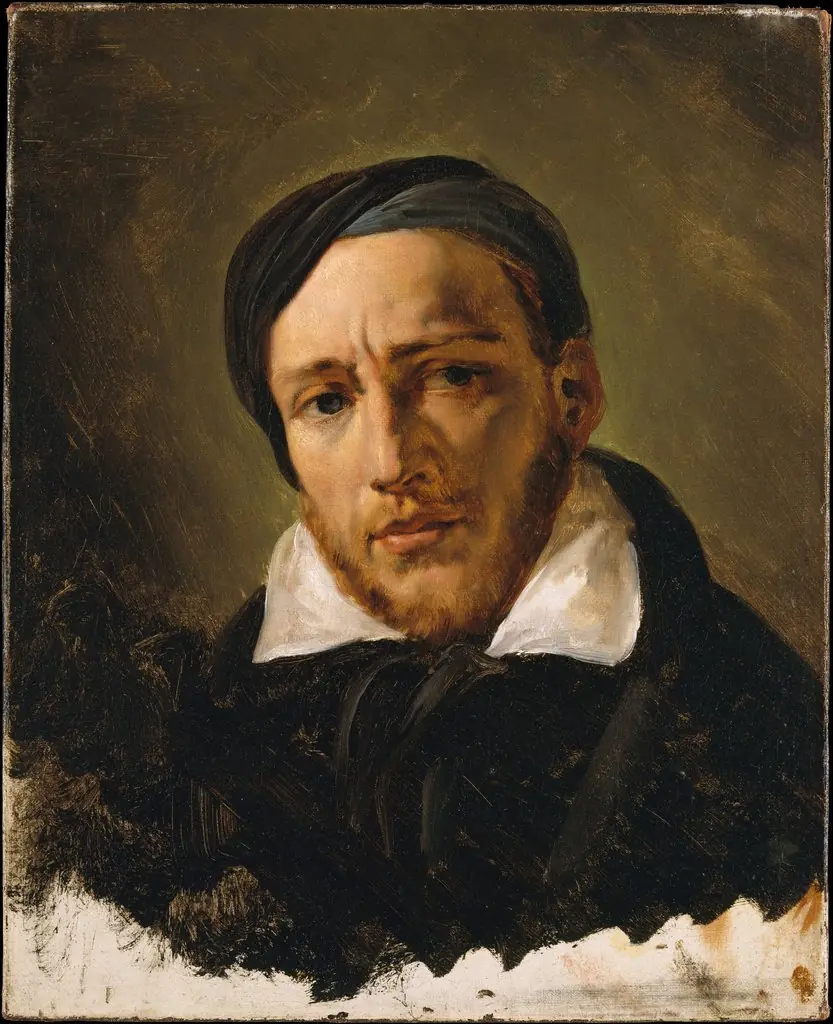 Jean-Louis-André-Théodore Gericault (1791–1824)
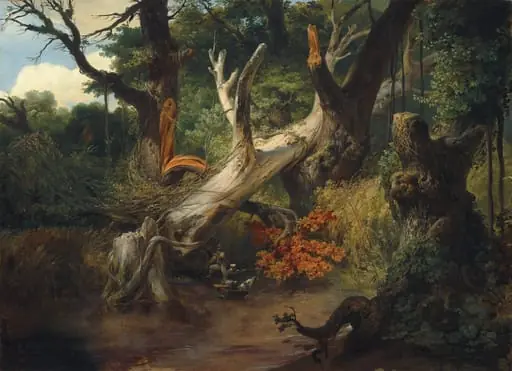 Hunting in the Pontine Marshes
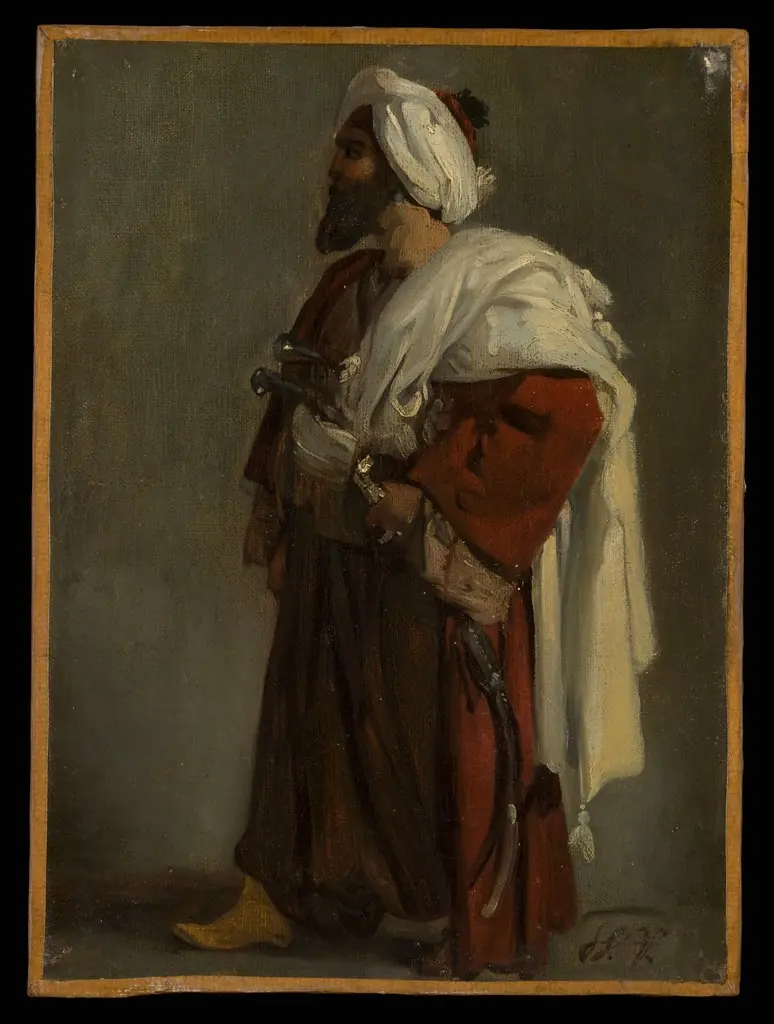 Arab Warrior
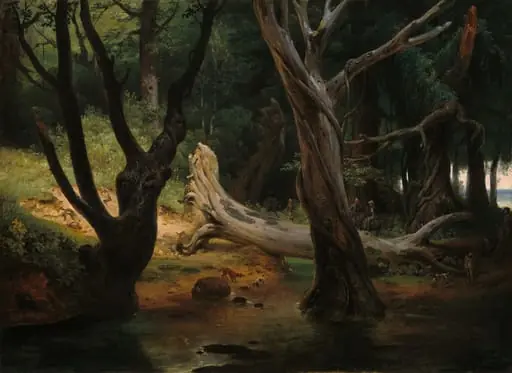 Departure for the Hunt in the Pontine Marshes