Artwork
Plucked Clean
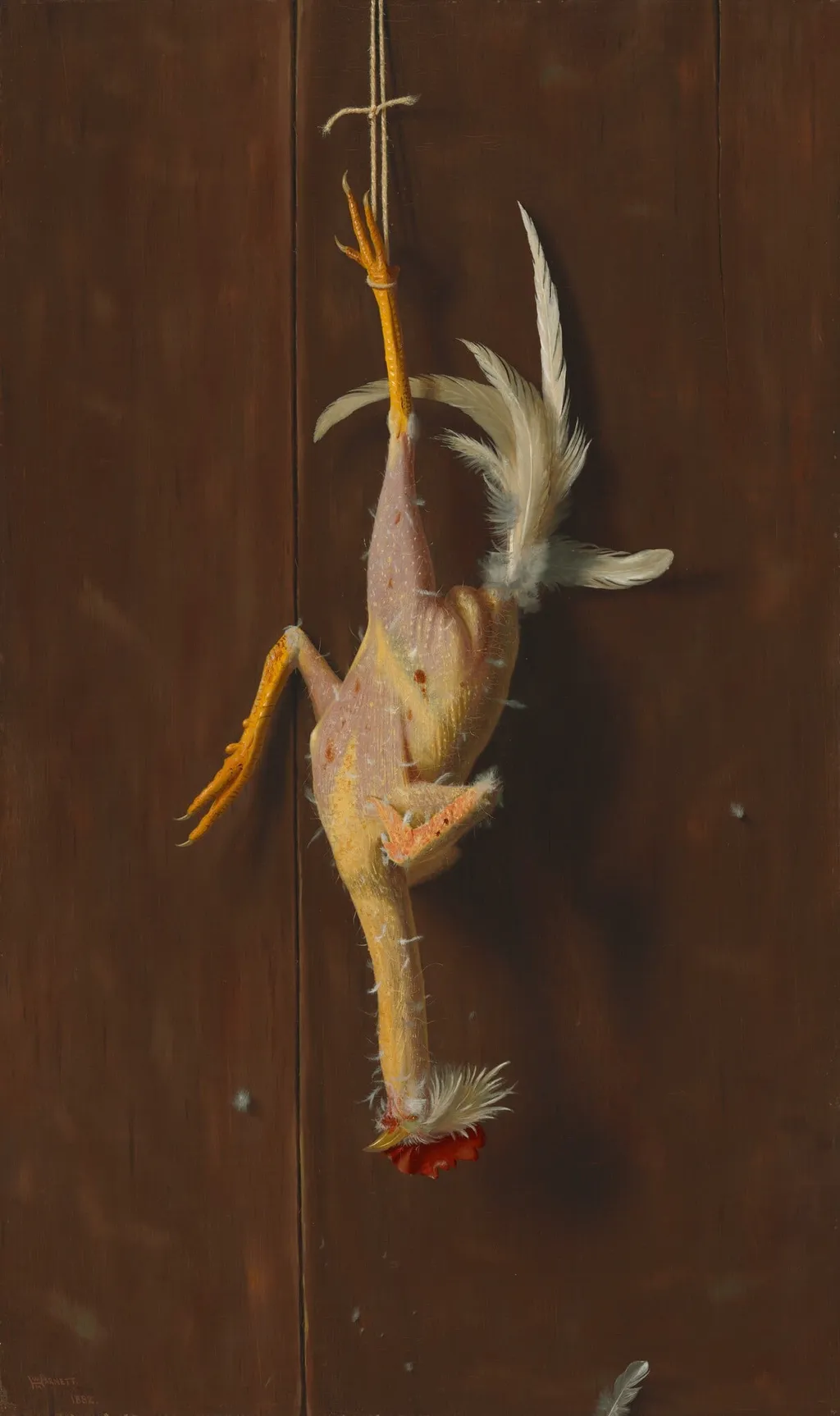
Plucked Clean is an oil painting by the American Impressionist artist William Harnett. It dates from 1882 and is held in the collection of the National Gallery of Art.
- Inscription
- Inscribed:lower left, WMH in monogram: WMHARNETT. / 1882 [1]
About this work
Technique & Style
The surface exhibits careful handling typical of 19th-century studio practice, with fine brushwork defining the textures of the depicted objects.
Plucked Clean is an oil painting executed on canvas in 1882. The work measures 86.84 centimeters in height and 51.75 centimeters in width. It is rendered with oil paint applied to a stretched canvas support, reflecting the academic realist technique characteristic of William Michael Harnett's trompe l'oeil still lifes.
The surface exhibits careful handling typical of 19th-century studio practice, with fine brushwork defining the textures of the depicted objects. The painting has been part of the National Gallery of Art's collection in Washington, D.C. since its acquisition in 2014.
History & Provenance
Plucked Clean was painted by William Michael Harnett in 1882 in oil on canvas. Its documented ownership history begins in late 1942, when Alfred Frankenstein found the work in a second-hand shop on Sutter Street in San Francisco, as he recounted in letters. Frankenstein sold the painting in 1943 to the New York firm Arnold Seligman & Rey.
It later passed through a Parke-Bernet Galleries sale in New York on 23–24 May 1951 (lot 593), after which it was acquired by H. Turner, George Morris, and Edwin Weldon of Weston, Connecticut. The painting was consigned to Hirschl & Adler Galleries in New York in 1970, returned to Morris and Weldon, and consigned again to the same gallery in May 1975. In 1977 the Corcoran Gallery of Art in Washington purchased the work, and in 2014 it was acquired by the National Gallery of Art, where it remains.
Context
William Harnett's 1882 painting Plucked Clean exemplifies his mature trompe l'oeil style developed during his New York period after study in Munich and at the Pennsylvania Academy of the Fine Arts. The work emerged within American still life's growing prominence in the late 19th century, a genre Harnett helped elevate through precise realism that challenged European traditions. Scholarship on Plucked Clean highlights its significance in Harnett's oeuvre and American art history; Alfred Frankenstein documented its discovery in a San Francisco second-hand shop in 1942, a provenance traced through multiple owners before the Corcoran Gallery acquired it in 1977 and the National Gallery of Art in 2014.
Overview
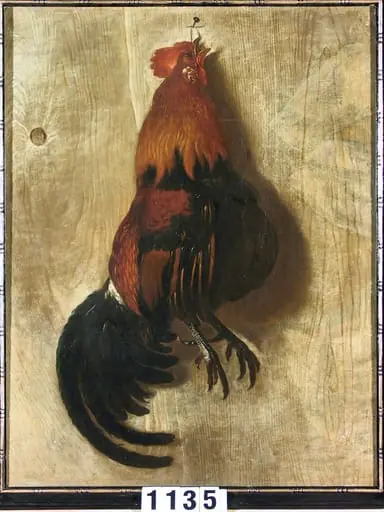
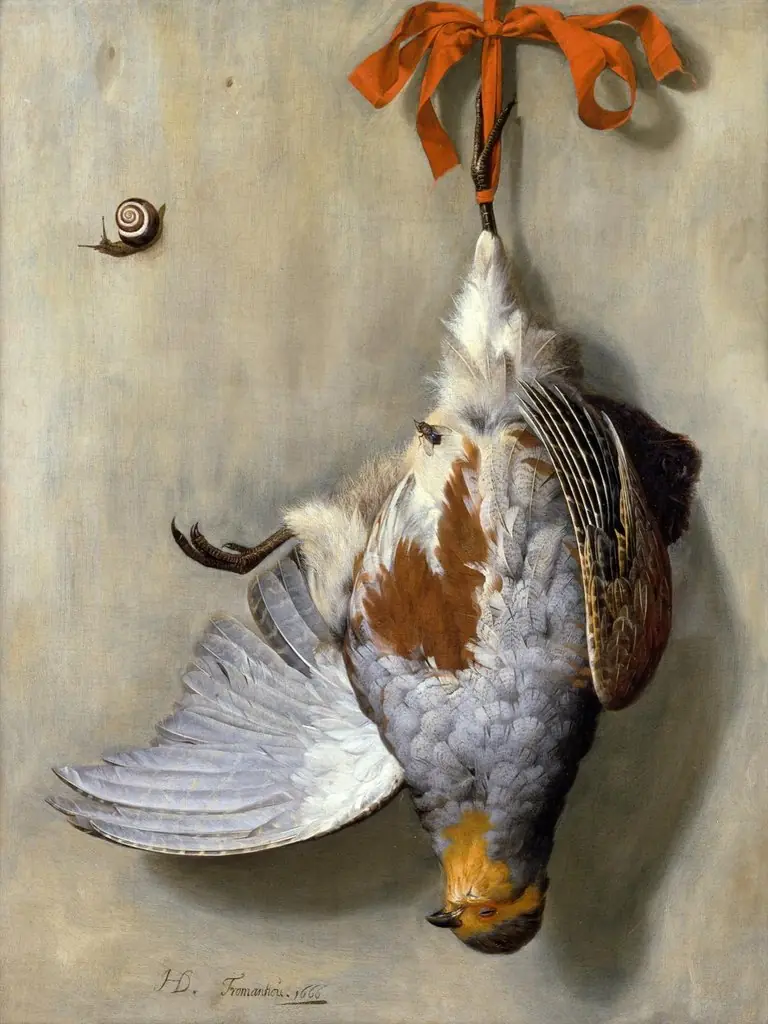
William Michael Harnett’s 1882 oil on canvas, titled Plucked Clean, depicts a dead chicken suspended upside‑down by a rope against a muted wooden backdrop. The bird’s yellow legs and pink flesh are rendered alongside its white and light‑brown plumage, creating a stark, quiet composition that foregrounds the materiality of the subject.
Subject & Meaning
The work presents a straightforward still‑life of a freshly slaughtered fowl, a motif that aligns with the Realist interest in everyday, unidealized objects. By isolating the chicken in a simple setting, Harnett invites contemplation of the physical reality of food preparation and the transient nature of life, without overt moralizing.
Own this work as a print
Artist & collection

Artist
William Michael Harnett (August 10, 1848 – October 29, 1892) was an American painter known for his trompe-l'œil still lifes of ordinary objects.