Artwork
Still Life
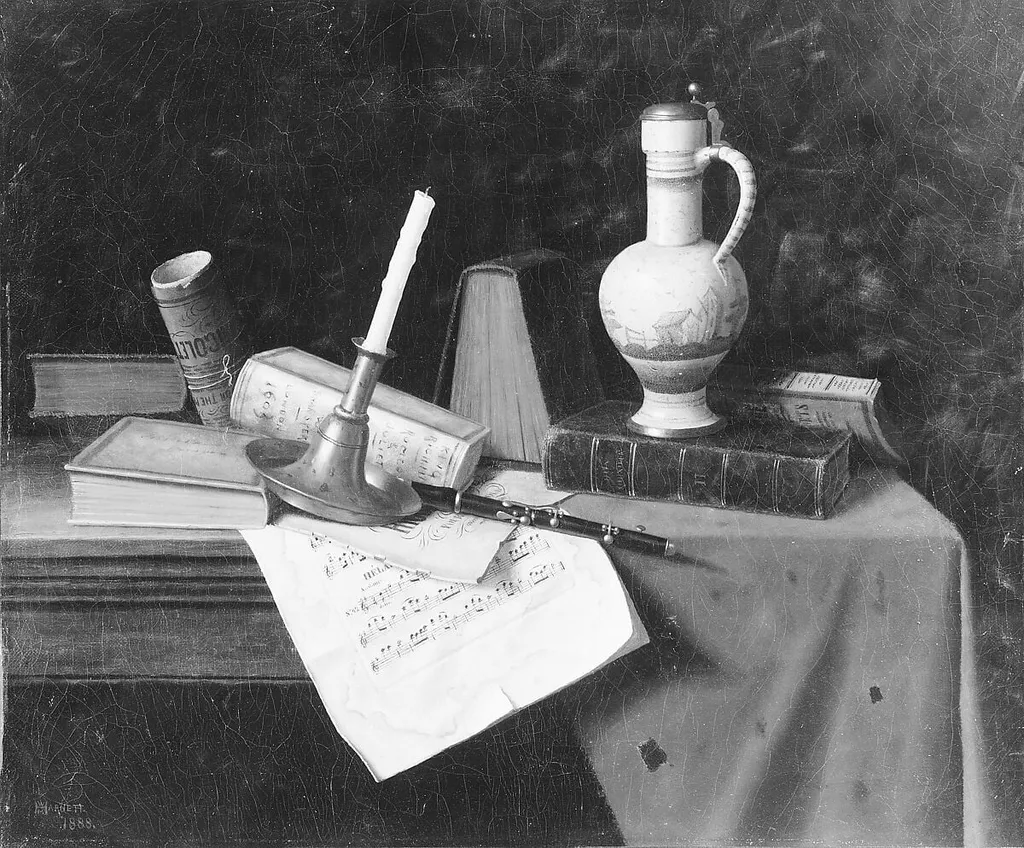
Still Life is an oil painting by the Impressionist artist William Harnett. It dates from 1888 and is held in the collection of the Metropolitan Museum of Art.
About this work
Subject & Meaning
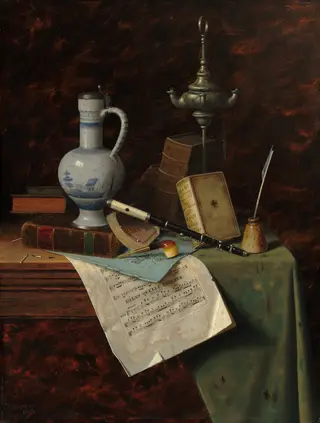
The painting presents a carefully arranged still life featuring an open book, sheets of music, and a musical instrument, likely a violin or similar, resting on a draped surface. By placing these objects together, Harnett highlights the interplay between literary knowledge and musical expression, suggesting a meditation on cultivated leisure and the refined pursuits of the educated gentleman. The quiet composition invites contemplation of the harmony between word and sound, while the meticulous rendering of textures underscores the artist’s virtuosity in capturing everyday objects with almost tactile realism.
History & Provenance
5 centimeters, depicts books, musical instruments, and sheet music arranged in the artist's characteristic trompe-l'œil style.
William Michael Harnett created the oil-on-canvas painting Still Life in 1888. The work, measuring 35.6 by 43.5 centimeters, depicts books, musical instruments, and sheet music arranged in the artist's characteristic trompe-l'œil style. Currently held in the collection of the Metropolitan Museum of Art in New York, where it is classified within the American Wing, the piece has been attributed to Harnett since its inception.
The specific commission details and the complete chain of ownership prior to its acquisition by the museum are not detailed in the available records, though its creation date and physical attributes are well-documented.
Overview
Painted in 1888, William Michael Harnett's Still Life exemplifies the American trompe-l'œil tradition, a genre in which the artist achieved international acclaim. The composition features a carefully arranged assemblage of books and musical instruments resting on a wooden surface, likely a table or ledge. Harnett renders these objects with hyper-realistic precision, capturing the texture of worn leather bindings, the grain of the wood, and the metallic sheen of instrument hardware.
The arrangement is designed to create a convincing illusion of three-dimensional space, inviting the viewer to question the boundary between the painted image and physical reality. This work, created during the height of Harnett's career shortly before his death, demonstrates his mastery of light and shadow to achieve a deceptive sense of depth. The intricate details, from the titles on the book spines to the specific wear patterns on the instruments, reflect the artist's dedication to observational accuracy.
As a prominent figure in late 19th-century American art, Harnett used such still lifes to elevate the genre through technical virtuosity, challenging contemporary perceptions of artistic value by focusing on everyday objects with monumental seriousness.
Technique & Style
The artist demonstrates a keen eye for detail, evident in the intricate designs visible on the bindings of the books and the surfaces of the musical instruments. The objects are positioned to achieve both depth and balance within the pictorial space. This precise rendering and careful composition are hallmarks of a style focused on realistic representation and thoughtful arrangement, emphasizing textural and material qualities.
Context
The artistic approach seen in this Still Life, particularly its meticulous detail and the thoughtful arrangement of objects, aligns with the traditions of American still life painting. Viewers interested in understanding this style further may find parallels in the works of artists such as William Michael Harnett, known for his trompe l'oeil and highly realistic still life compositions that often feature similar scholarly or domestic items.
Artist & collection

Artist
William Michael Harnett (August 10, 1848 – October 29, 1892) was an American painter known for his trompe-l'œil still lifes of ordinary objects.

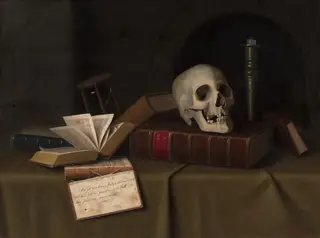
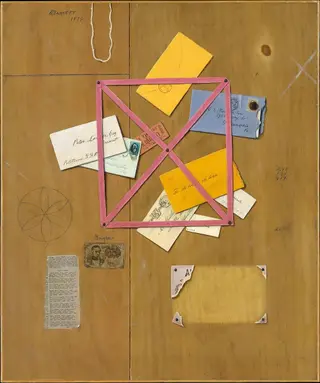
- Still Life with Books and Musical Instruments
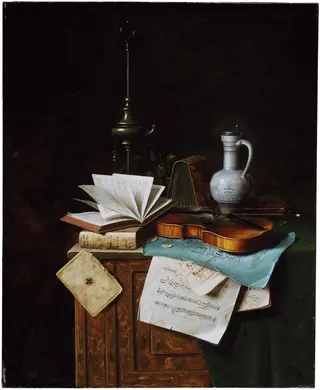 Still Life with Violin
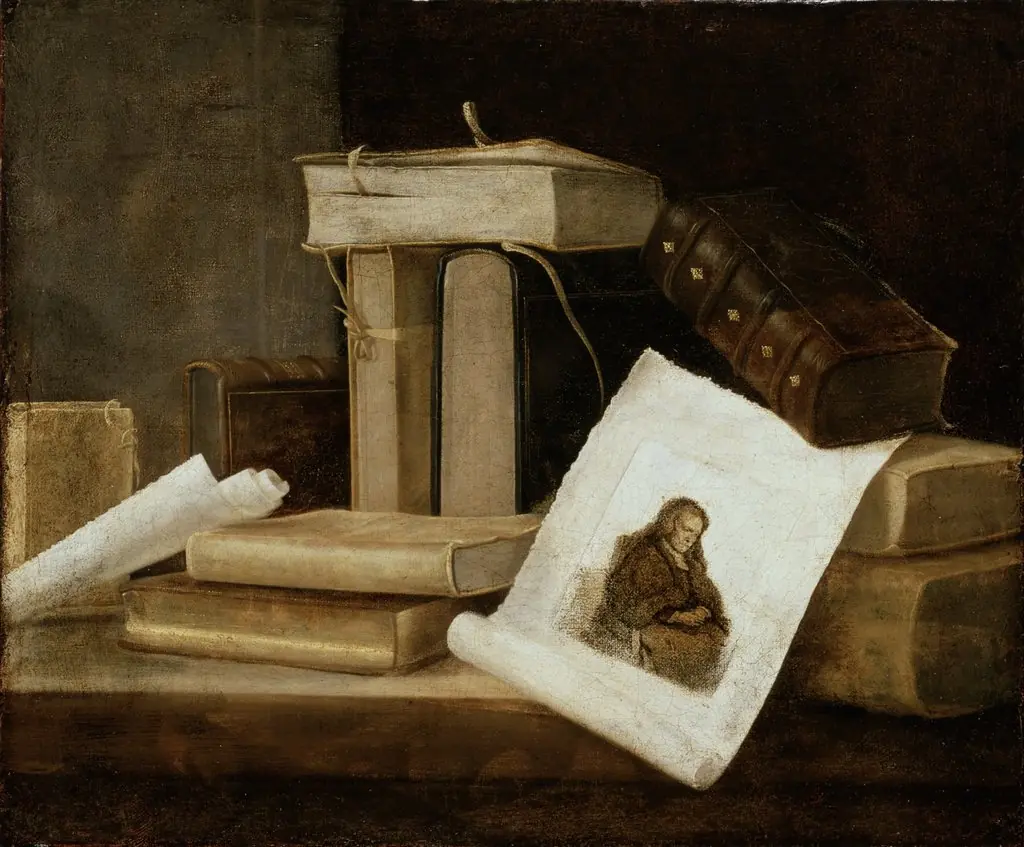 Still Life of Books and a Rembrandt Engraving
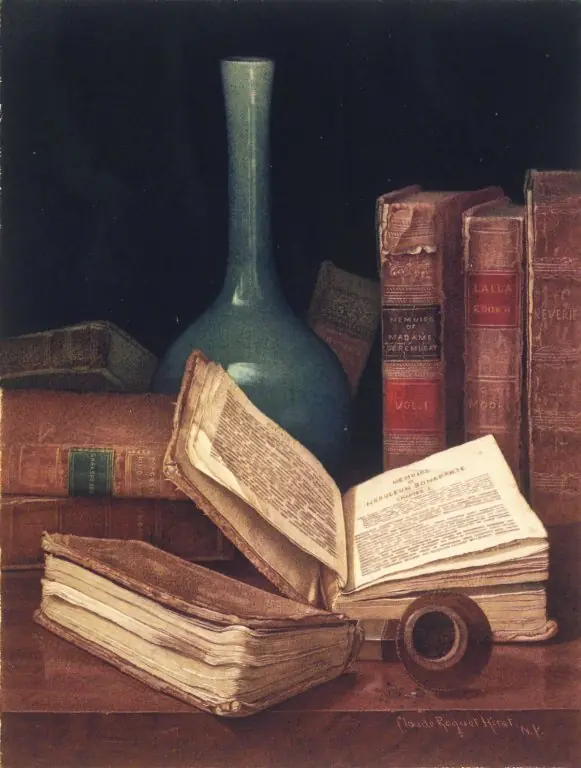 The Bookworm's Table
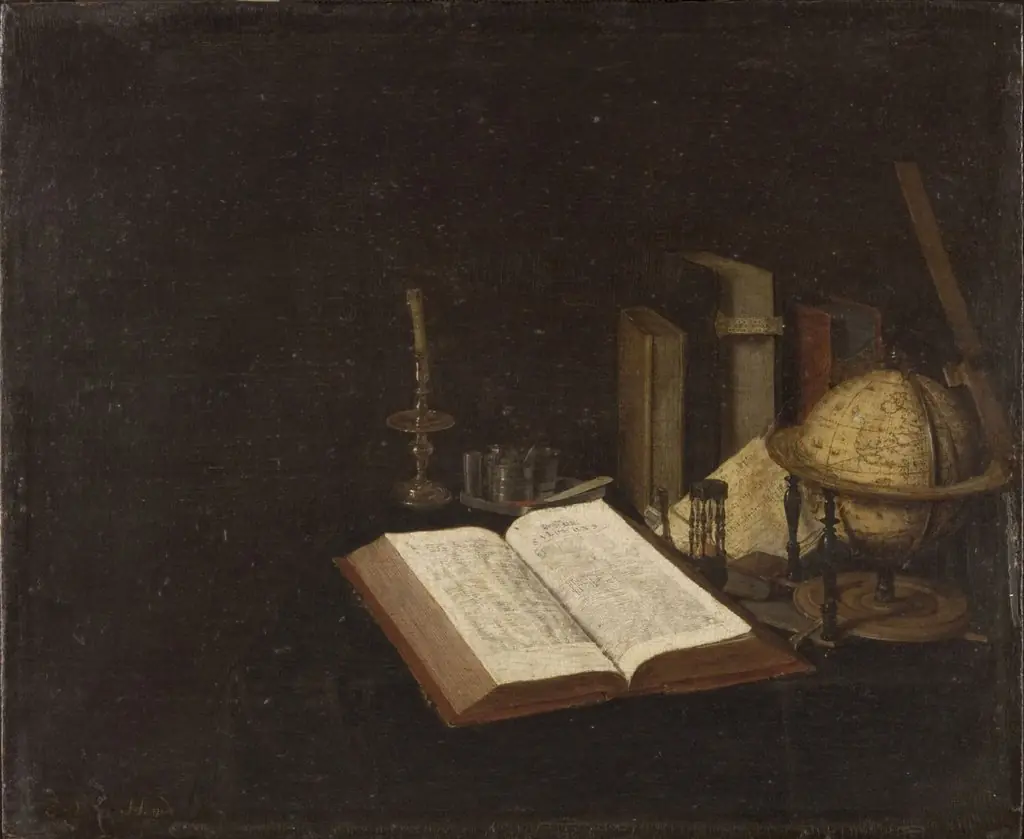 Still Life with Books and a Globe
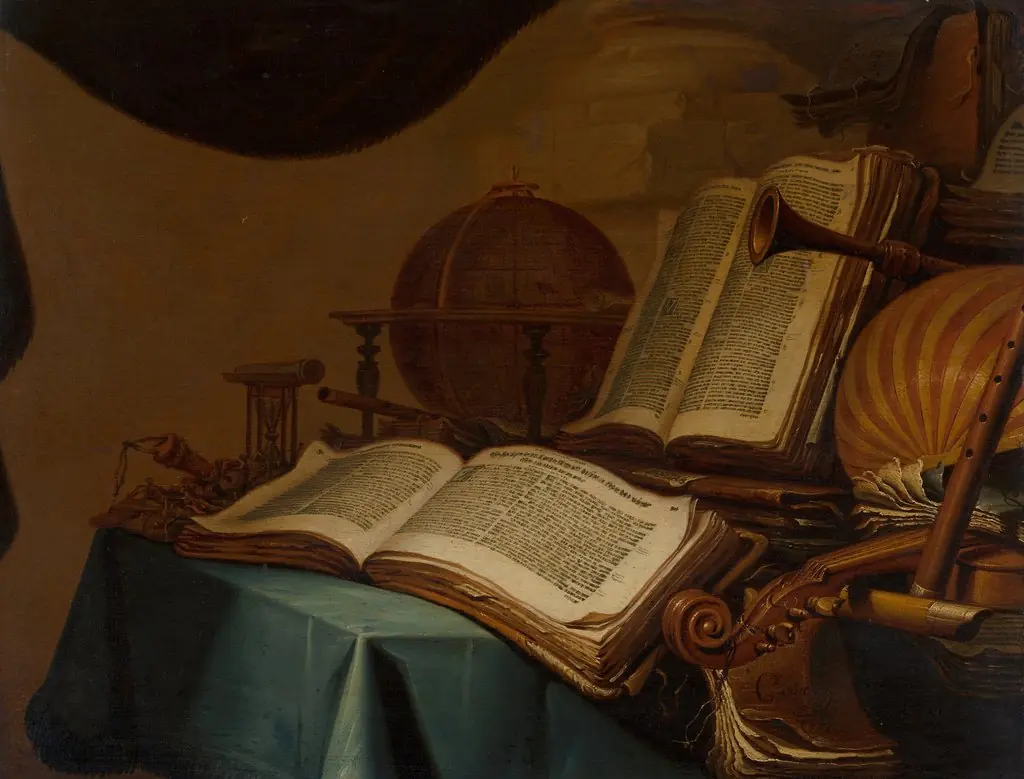 Still Life with Books, a Globe and Musical Instruments
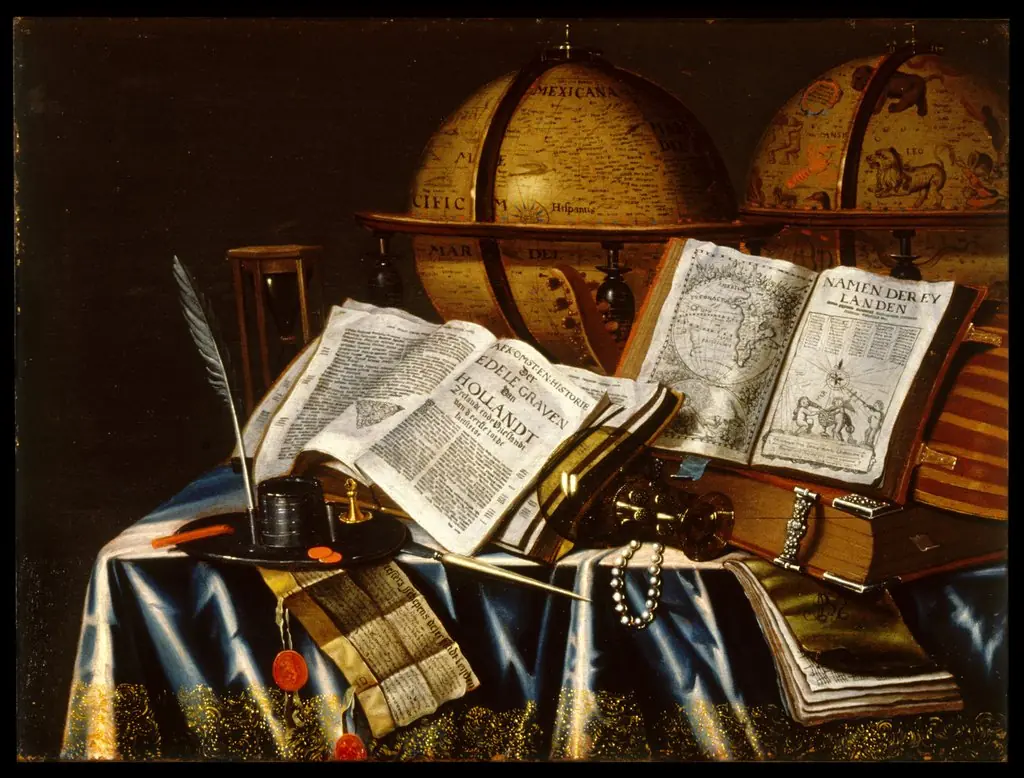 "Vanitas" Still Life
 An Architect's Table
 Still-Life of Books
 Vanitas, Still Life with Books and Manuscripts and a Skull