Artwork
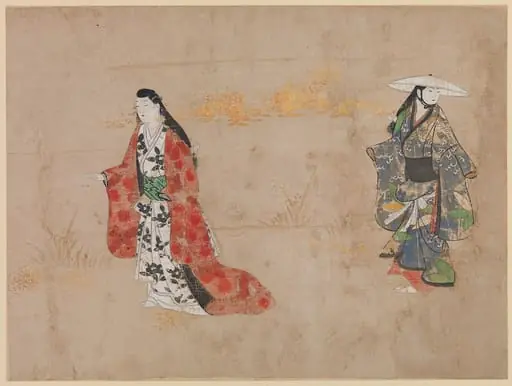
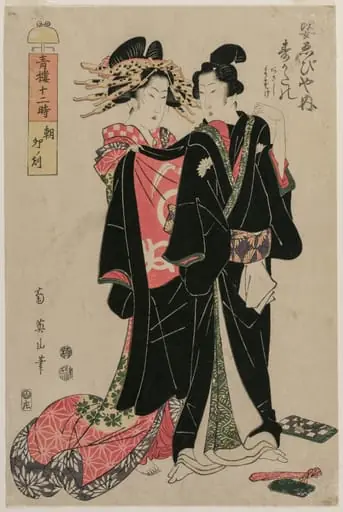
A Couple
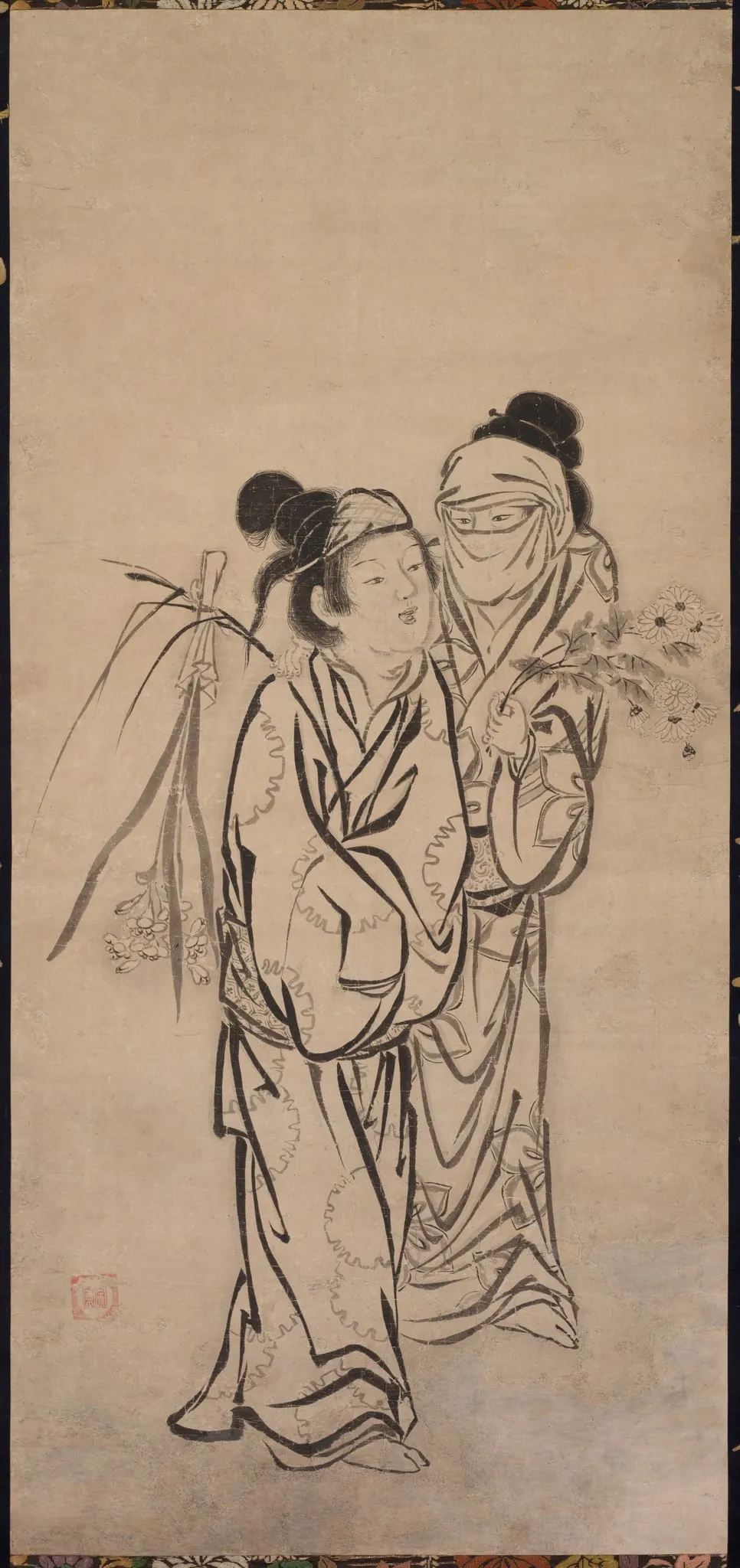
A Couple is an unspecified painting by the Joseon dynasty painting artist Hasegawa Sōen. It dates from 1504 and is held in the collection of the Cleveland Museum of Art.
- Accession no.
- 1985.133
- Credit line
- John L. Severance Fund
About this work
Overview
The work is part of the collection at The Cleveland Museum of Art, where it is recognized as a rare surviving example of early Momoyama-period portraiture.
A Couple is a late 15th- or early 16th-century Japanese ink painting attributed to Hasegawa Sōen. Executed on paper, it depicts two figures in close proximity, rendered with restrained elegance. The composition emphasizes stillness and subtle connection, avoiding dramatic gesture.
The work is part of the collection at The Cleveland Museum of Art, where it is recognized as a rare surviving example of early Momoyama-period portraiture.
Subject & Meaning
The two figures, likely a man and woman, are dressed in formal attire of the period, suggesting social standing. Their proximity and matching postures imply a domestic or marital bond. The objects they hold, bundles of stems and flowers, may reference seasonal rituals or symbolic offerings, hinting at themes of harmony, transience, or shared ritual. The absence of narrative context invites contemplation rather than storytelling.
Technique & Style
Sōen employs ink wash and fine brushwork to define forms with clarity and economy. Outlines are deliberate but not rigid, allowing soft transitions between figure and ground. Colors are minimal, muted ochres, grays, and browns, enhancing the quiet tone.
The creamy background, left largely unworked, focuses attention on the figures and their delicate gestures, reflecting the aesthetic of yūgen: profound grace and understated depth.
History & Provenance
The painting’s early history is undocumented, but its style aligns with works produced in Kyoto’s artistic circles around 1504. It entered the Cleveland Museum of Art’s collection in the 20th century, likely through a private acquisition from Japan. Its preservation in good condition suggests it was carefully maintained, possibly within a scholarly or aristocratic household before its migration to the West.
Context
Created during the transition from Muromachi to Momoyama period, the work reflects a shift toward personal expression in portraiture. While religious and landscape themes dominated, intimate human subjects like this one reveal growing interest in individual relationships. Sōen’s approach aligns with literati traditions, valuing restraint and emotional nuance over ornamental detail, distinguishing it from more decorative courtly styles.
Legacy
A Couple remains a significant example of early Japanese secular portraiture. It illustrates how ink painting could convey psychological presence without embellishment. Though Sōen’s oeuvre is limited, this work contributes to understanding the evolution of personal expression in Japanese art, influencing later generations who sought quiet dignity in everyday subjects.
Artist & collection

- Untitled
 Untitled
 Untitled
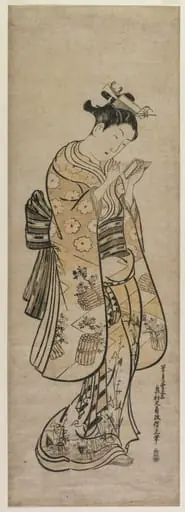 A Beauty with a Mirror
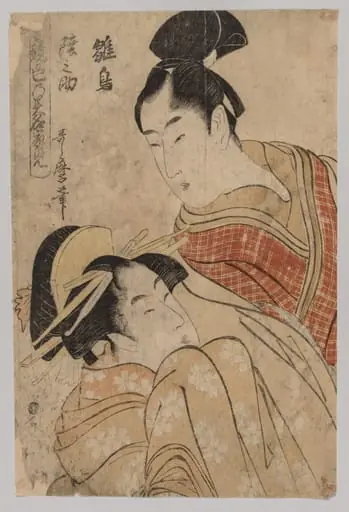 Making Love
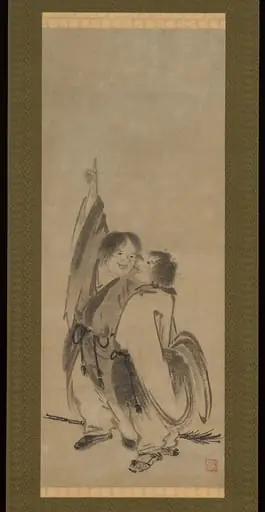 寒山拾得図 (Kanzan Jittoku zu)|Hanshan and Shide
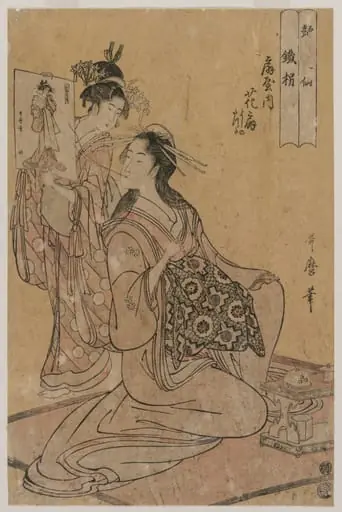 The Courtesan Hana-ogi of Ogiya as the Sennin Tekkai (from the series Eight Immortals of Sensuality)
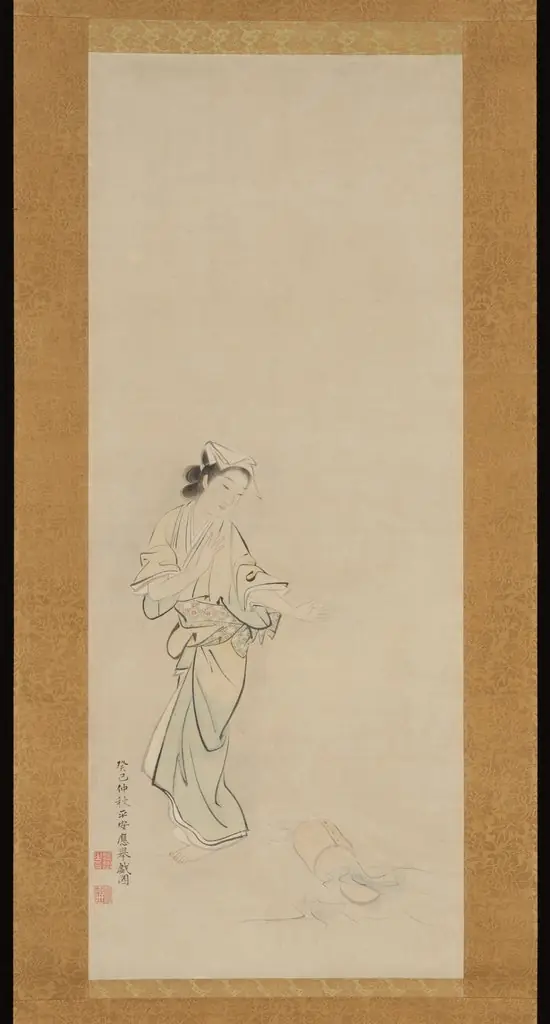 Lady Chiyono
 Untitled
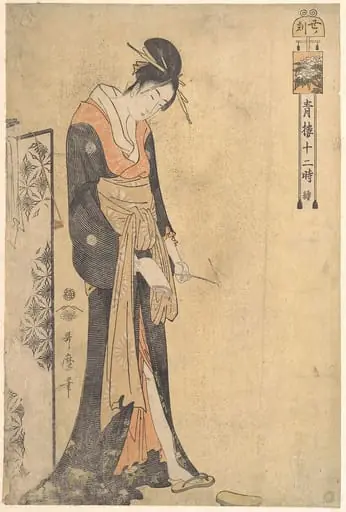 Ushi no Koku|青楼十二時 続 丑の刻|The Hour of the Ox (1 A.M.–3 A.M.)
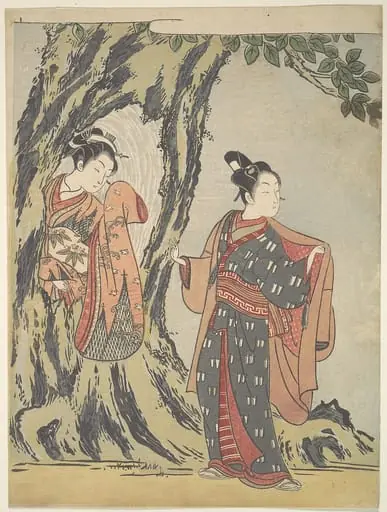 Untitled
 Sugatano of Sugata Ebisuya in the Morning, Hour of the Rabbit, from the series The Twelve Hours in the Pleasure Quarters