Artwork
Dutch ships ramming Spanish galleys off the English coast, 3 October 1602
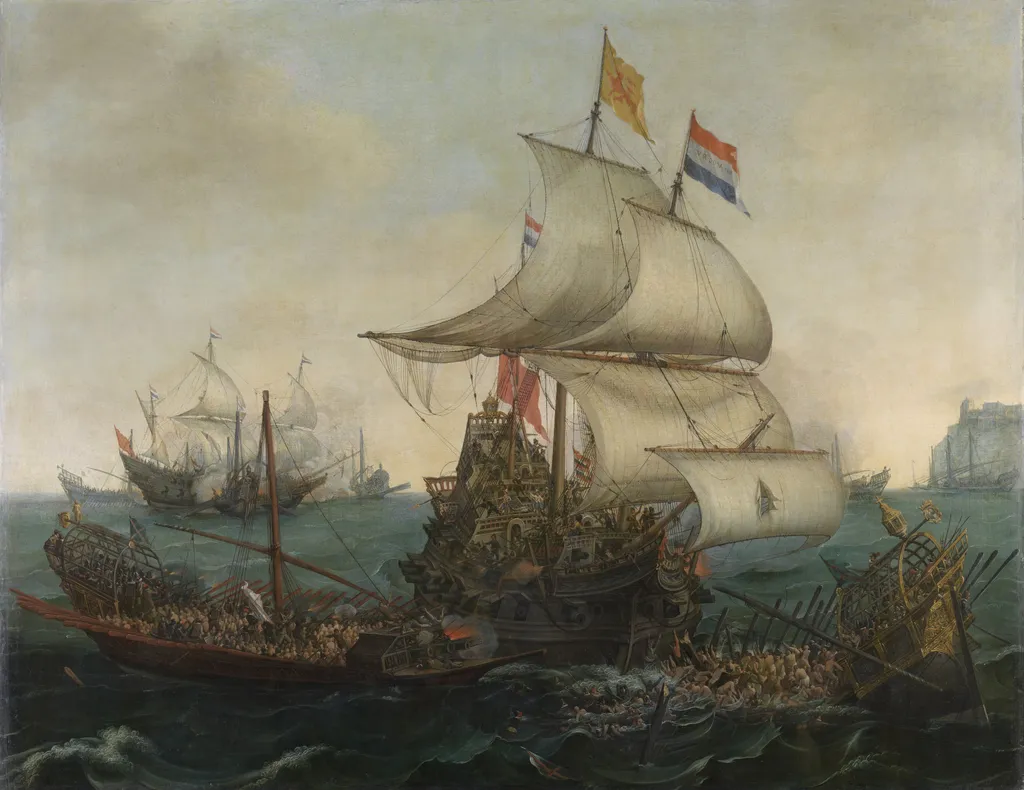
Dutch ships ramming Spanish galleys off the English coast, 3 October 1602 is an oil painting by the Dutch Golden Age artist Hendrick Cornelisz Vroom. It dates from 1617 and is held in the collection of the Rijksmuseum.
About this work
Subject & Meaning
Central to the iconography is the Dutch flag of the United Provinces flying above a captured Spanish Habsburg standard, symbolizing triumph over a rival power.
The painting portrays a dramatic naval clash in which Dutch warships aggressively ram Spanish galleons along the English coast on 3 October 1602. Central to the iconography is the Dutch flag of the United Provinces flying above a captured Spanish Habsburg standard, symbolizing triumph over a rival power. The composition emphasizes speed and aggression: a three‑mast Dutch vessel advances without its main sail, its billowing sails and forward momentum underscoring a calculated tactical maneuver.
Captured Spanish galley slaves are shown struggling in dark waters, while trumpeters play a hymn associated with the House of Orange, reinforcing the narrative of national glory. The foreground displays a sinking galley with chained rowers disappearing beneath the waves, and distant cliffs and Dover Castle anchor the scene geographically. By focusing on a specific historical episode rather than a generic battle, the work serves as a visual celebration of a decisive Anglo‑Dutch victory and reflects the broader cultural fascination with maritime triumphs during the early Dutch Golden Age.
Technique & Style
The painting is an oil on canvas work measuring 118 × 151 cm. It depicts a three-masted Dutch ship advancing under full sails, without a mainsail to maximize speed, creating a dynamic composition that emphasizes forward motion. The deck is detailed, featuring a captain on the aft deck, a trumpeter encouraging soldiers, and men positioned to fire at the enemy. Spanish galleys appear in the foreground, some sinking or capsizing, with chained rowers disappearing beneath dark waters; one galley’s Habsburg flag contrasts with the Dutch flag flying from the mast, symbolizing victory.
Additional ships engage in close combat to the left and right, while the cliffs and Dover Castle are visible in the distance. The work stands out for its focus on a specific moment of the Battle of the Narrow Seas and its rare portrayal of a vessel moving directly toward the viewer. The formal qualities include dramatic contrasts between dark water and a misty sky, enhancing the scene’s intensity.
History & Provenance
The painting is dated to 1617 and is attributed to Hendrick Cornelisz Vroom, with possible collaboration by his son Cornelis Vroom.
First recorded in modern collections at the Rijksmuseum, Amsterdam, it has remained in that institution since at least the early twentieth century. Its creation followed renewed hostilities between the Dutch Republic and Spain after the Twelve Years' Truce; contemporary demand for celebratory naval battle scenes shaped its commission. The work may have been ordered by the States General, a municipal council, or an Admiralty board, as no directly involved naval commander was available in 1617.
An alternative tradition suggests it was acquired or gifted to Maurice of Nassau, stadtholder and a known patron of marine painting, in recognition of Dutch naval successes.
The painting is held in the collection of the Rijksmuseum in Amsterdam, also known as the National Art Gallery of the Netherlands. Created in 1617 by Hendrick Cornelisz Vroom, potentially with contributions from his son Cornelis Vroom, the oil on canvas work measures 118 by 151 cm. While the artwork depicts a naval engagement from 1602, it was executed fifteen years later during a period of renewed conflict with Spain. Historical analysis suggests the piece may have been commissioned by the States General, a municipal council, or the Admiralty, though it is also possible that Stadtholder Maurice of Nassau acquired it directly to celebrate Dutch naval successes. The work remains a significant holding within the museum's marine art archives.
Context
Critical reception of the painting has been limited by its historical obscurity, yet it is regarded as a rare example of early Dutch marine battle painting that deliberately stages a specific moment of naval combat. Scholars note that Vroom’s composition, showing a Dutch ship driving directly toward the viewer, was virtually unprecedented in its time, emphasizing dramatic immediacy over generic sea scenes. The work’s focus on the 1602 clash off the English coast, rendered with vivid detail such as the trumpeter playing the Wilhelmus hymn and the chained Spanish galley oarsmen, has been cited as evidence of the artist’s engagement with contemporary historiography of the Dutch Golden Age maritime victories.
Within Vroom’s broader oeuvre, the canvas fits a pattern of commemorative naval artworks produced after the Twelve Years’ Truce, a period when demand for visual celebrations of seafaring triumphs surged among civic and aristocratic patrons. Its placement in the Rijksmuseum collection underscores its recognized importance as a historical record rather than a mere decorative marine genre piece.
Legacy
The painting is held in the collection of the Rijksmuseum in Amsterdam, where it remains accessible to the public as part of the museum's holdings of marine art. Its subject matter, the Battle of the Narrow Seas, situates the work within the broader tradition of Dutch marine painting and the visual commemoration of naval victories from the Eighty Years' War. The composition's distinctive device of depicting a ship sailing directly toward the viewer is described as practically unique for its period, giving the canvas a notable place among seventeenth-century battle paintings.
The work has been the subject of scholarly attention, including an article by J. P. Sigmond published in The Rijksmuseum Bulletin in 2010 and a study by Everhard Korthals Altes for the Rijksmuseum in 2007.
Overview
Hendrick Cornelisz Vroom’s 1617 oil painting records a naval clash that occurred on 3 October 1602 off England’s coast. The canvas captures a tumultuous sea where Dutch warships ram into Spanish galleys, their masts and flags stark against a churning horizon. Vroom’s composition places the viewer at water level, emphasizing the immediacy of combat and the spray of battle.
Own this work as a print
Artist & collection

Artist
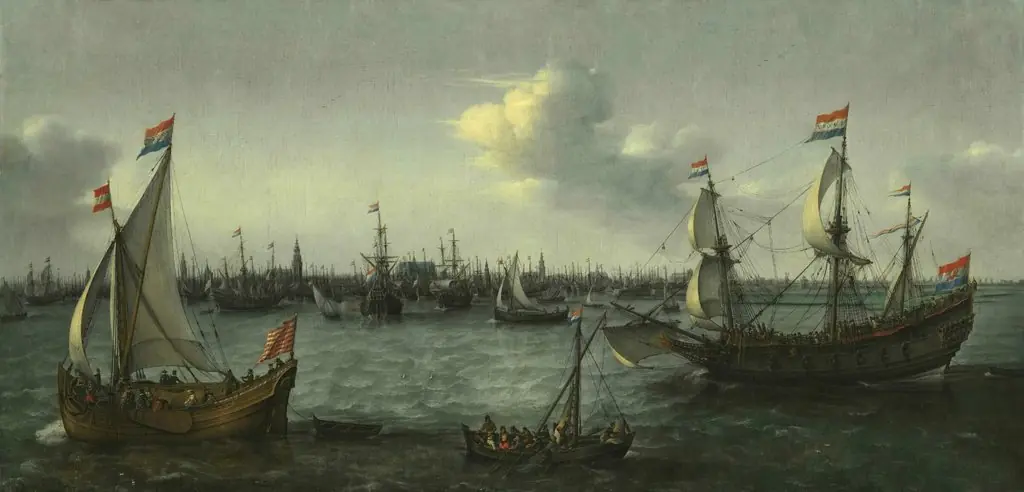
Hendrik Cornelisz Vroom (c.1562 – February 4, 1640 (buried)) was a Dutch Golden Age painter credited with being the founder of Dutch marine art or seascape painting.

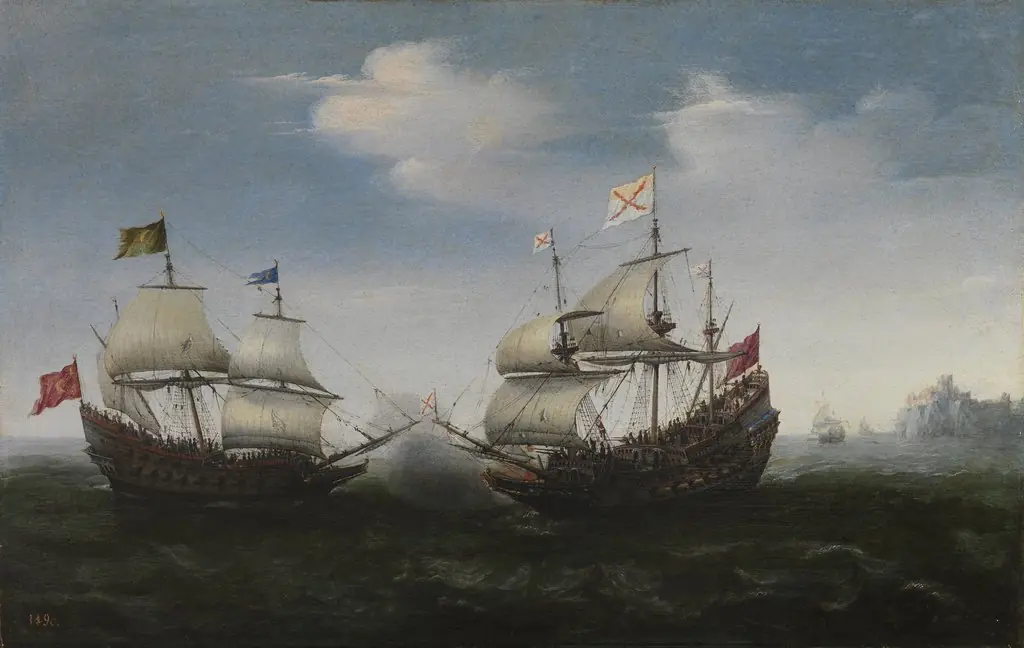
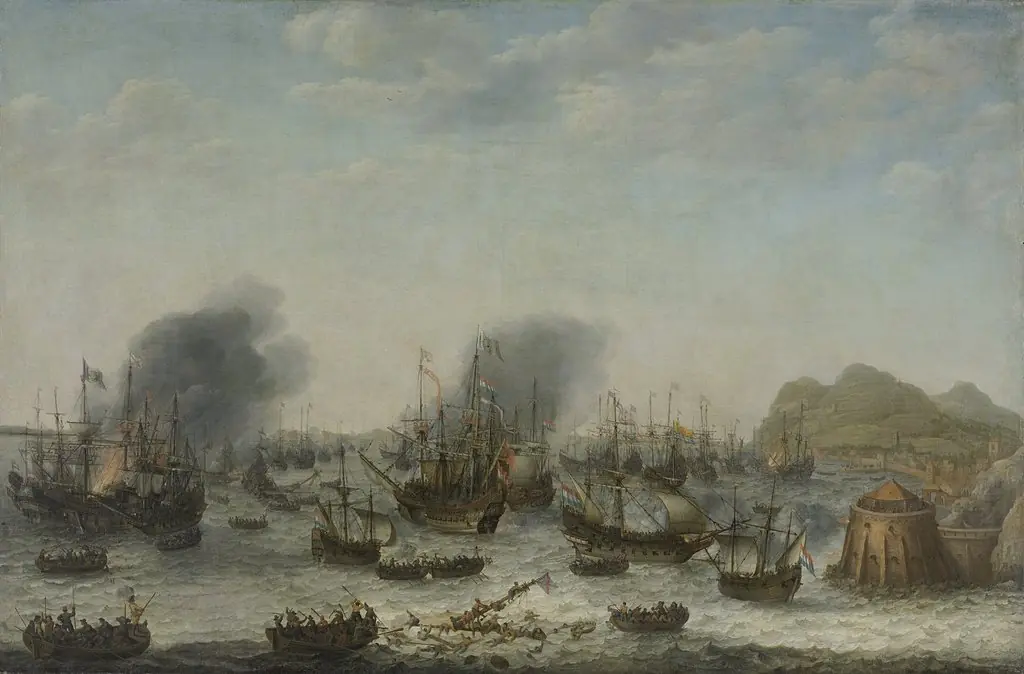
- The defeat of the Spanish at Gibraltar by a Dutch fleet under the command of Admiral Jacob van Heemskerck, 25 April 1607
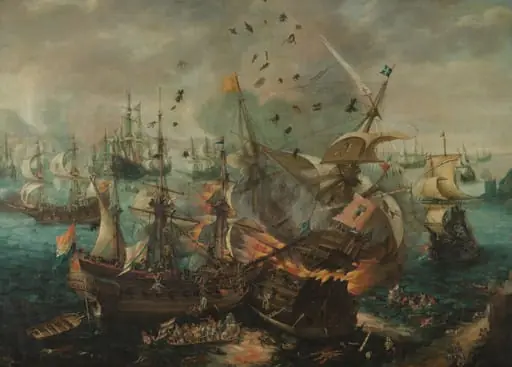 Battle of Gibraltar in 1607
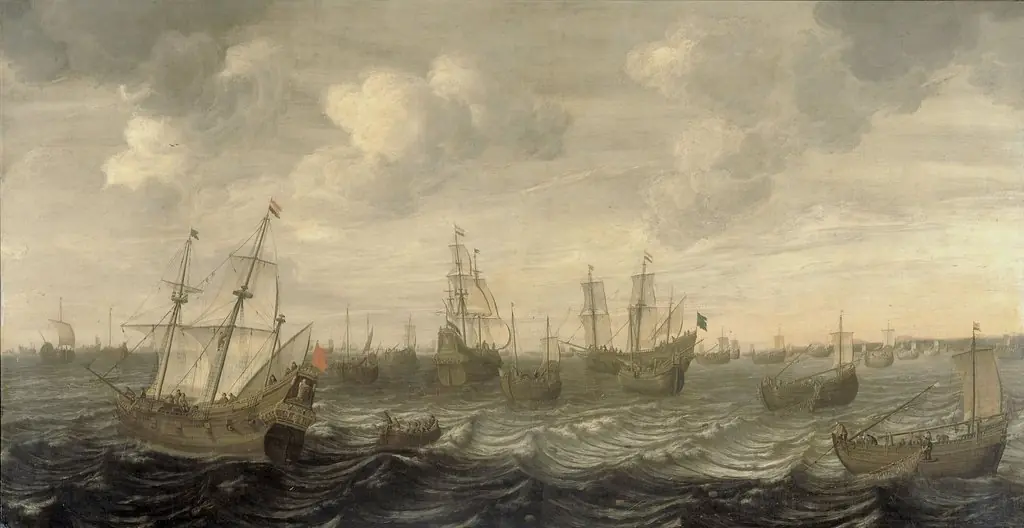 The Dutch herring fleet under sail
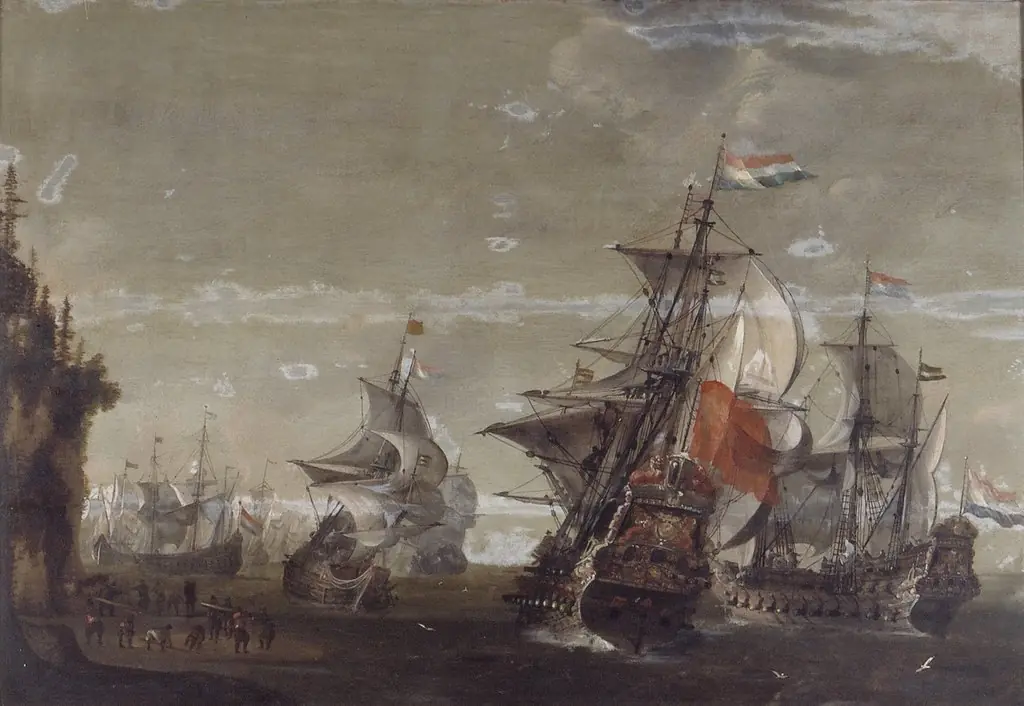 Dutch Ships off a Northern Coast
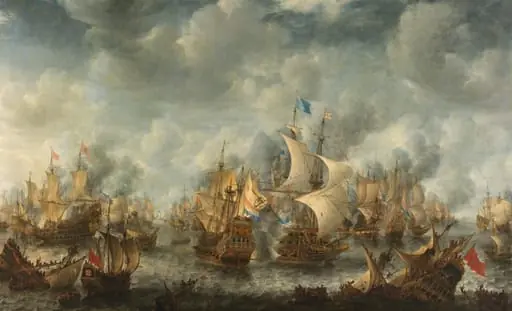 Slag bij Terheide
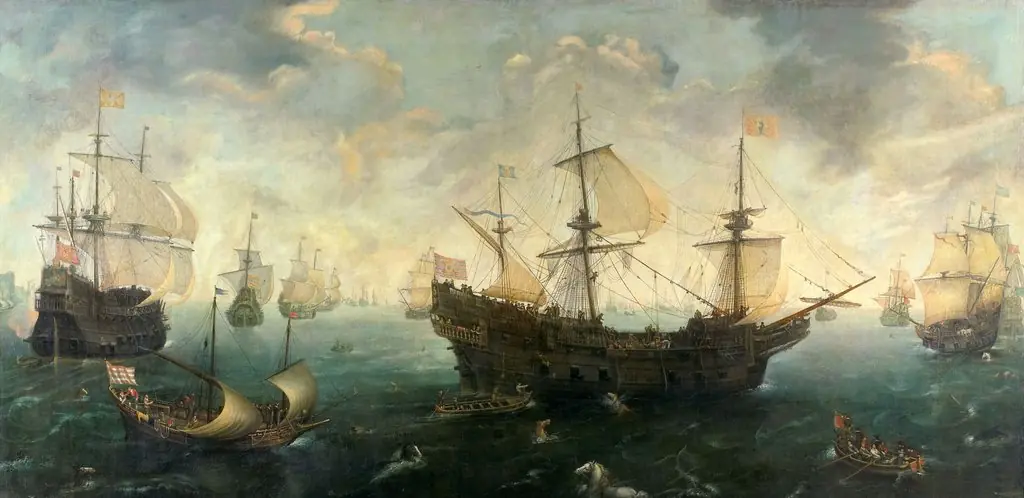 The Spanish Armada off the English coast
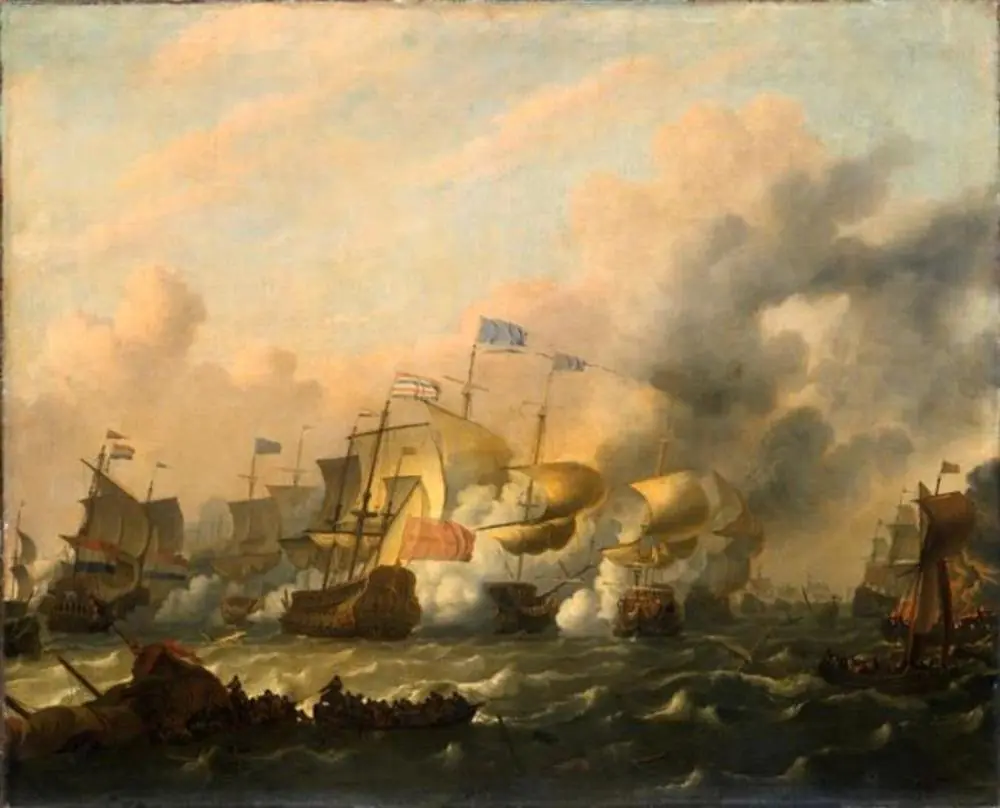 Engagement between British and Dutch Ships, after 1673