Artwork
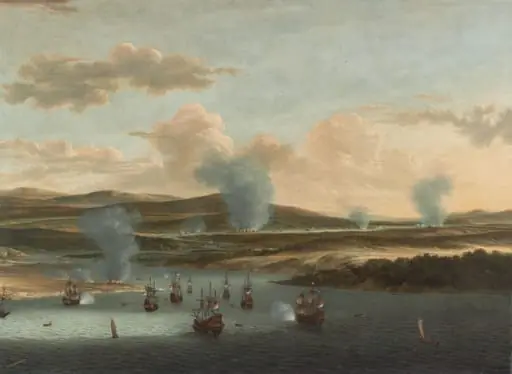
Surprise attack on three Portugese galleons in the Bay of Goa, 30 September 1639
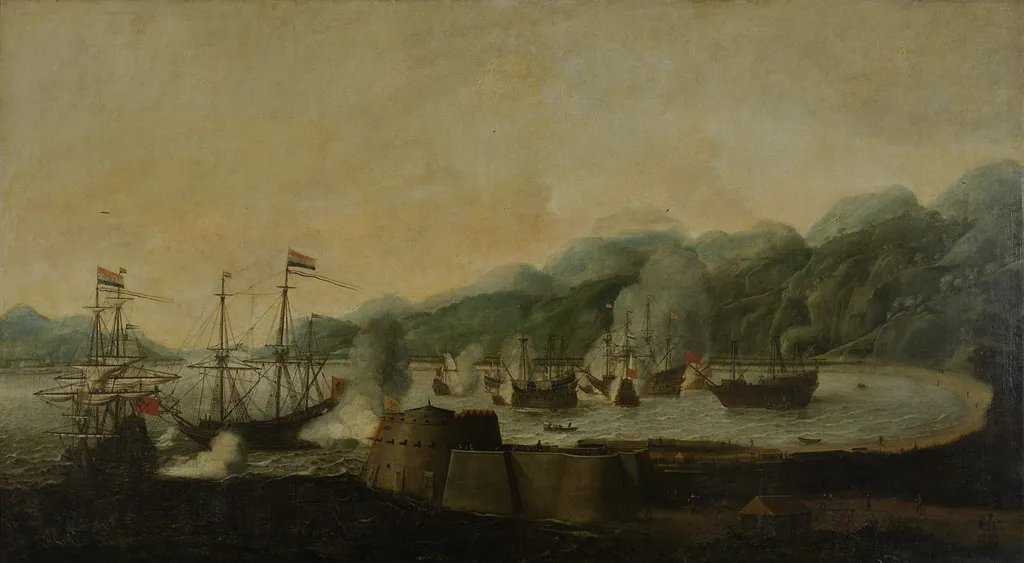
Surprise attack on three Portugese galleons in the Bay of Goa, 30 September 1639 is an oil painting by the Dutch Golden Age artist Hendrick van Anthonissen. It dates from 1653 and is held in the collection of the Rijksmuseum.
About this work
Technique & Style
The work presents a large-scale composition, measuring 152 cm in height and 275 cm in width, which allows for an expansive depiction of the naval engagement.
Executed in 1653, this marine painting by Hendrick van Anthonissen utilizes oil paint applied to a canvas support. The work presents a large-scale composition, measuring 152 cm in height and 275 cm in width, which allows for an expansive depiction of the naval engagement. As a piece of marine art, the medium and substantial dimensions facilitate a detailed rendering of the ships and the bay setting characteristic of the genre.
History & Provenance
The marine painting depicting the surprise attack on three Portuguese galleons in the Bay of Goa was created by Hendrick van Anthonissen in 1653. Executed in oil paint on canvas, the work measures 152 cm in height and 275 cm in width. It is currently held in the collection of the Rijksmuseum.
The painting is part of the Rijksmuseum collection and is housed in Amsterdam. It was accessioned under the inventory number SK-A-2193. The work was displayed in the Rijksmuseum's 'Dutch Golden Age' exhibition in 1999 and featured in the 2005 exhibition 'Dutch Maritime Painting' at the same institution.
Context
The painting Surprise attack on three Portuguese galleons in the Bay of Goa, 30 September 1639 was created by Hendrick van Anthonissen in 1653. It is housed in the Rijksmuseum's collection and is classified as a marine artwork executed in oil on canvas. The work depicts a naval engagement involving Portuguese vessels in the Bay of Goa and measures 152 cm in height by 275 cm in width.
It is recognized as an example of 17th-century Dutch marine painting and reflects the broader tradition of documenting maritime activity in colonial contexts.
Scholarship on this work has focused on its historical significance within Dutch colonial art and its technical execution as a marine genre painting. It is studied as part of van Anthonissen's broader contribution to maritime art, though specific critical reception details are not extensively documented in available sources.
The painting's placement in art history reflects its role in representing European engagement with Asian maritime zones during the 17th century, particularly through the lens of Dutch mercantile and naval influence.
Overview
Hendrick van Anthonissen’s 1653 oil on canvas, titled Surprise attack on three Portuguese galleons in the Bay of Goa, 30 September 1639, portrays a naval confrontation in the Indian Ocean. The work is part of the Rijksmuseum’s collection and exemplifies the Dutch marine tradition of the mid‑seventeenth century, focusing on a historic encounter between European vessels and hostile forces.
Subject & Meaning
The scene captures a sudden assault on three Portuguese galleons anchored near Goa’s shoreline, a moment recorded in contemporary reports of the 1639 conflict. By emphasizing the chaos of smoke, splintered masts, and turbulent waters, the painting reflects the perilous nature of overseas trade routes and the broader geopolitical tensions between European powers in the Indian Ocean.
Artist & collection
Artist
Hendrick van Anthonissen (1605–1656) was an artist, born in Amsterdam.

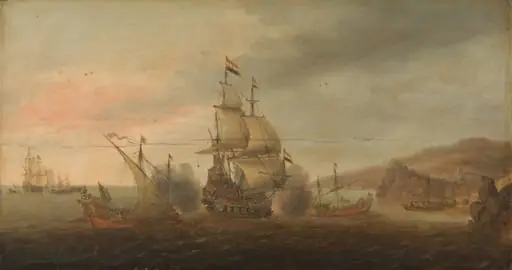 Untitled
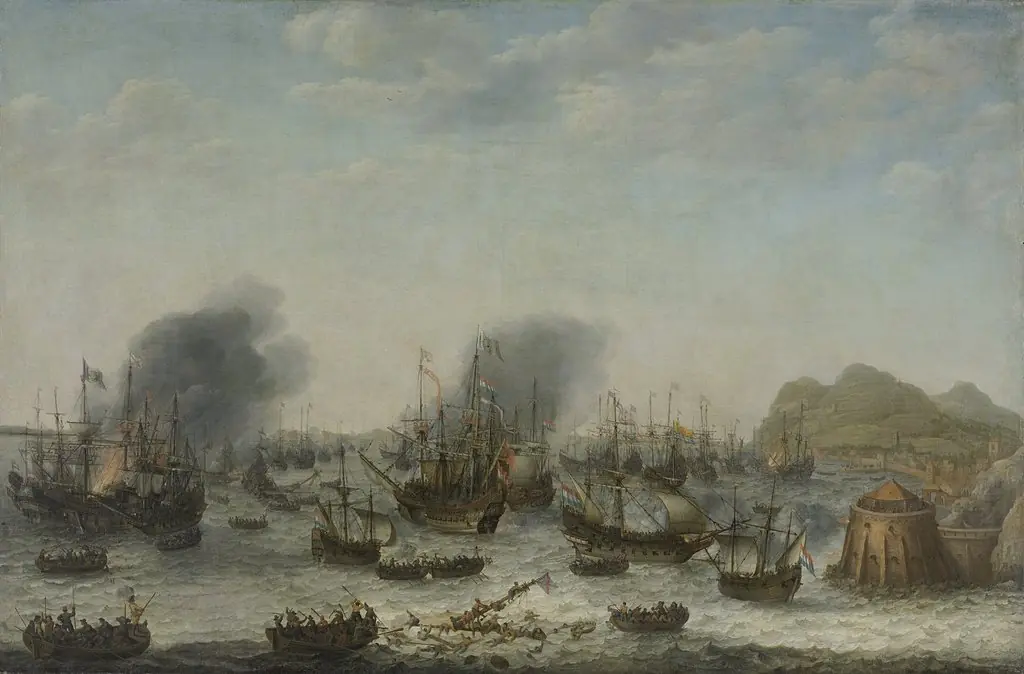 The defeat of the Spanish at Gibraltar by a Dutch fleet under the command of Admiral Jacob van Heemskerck, 25 April 1607
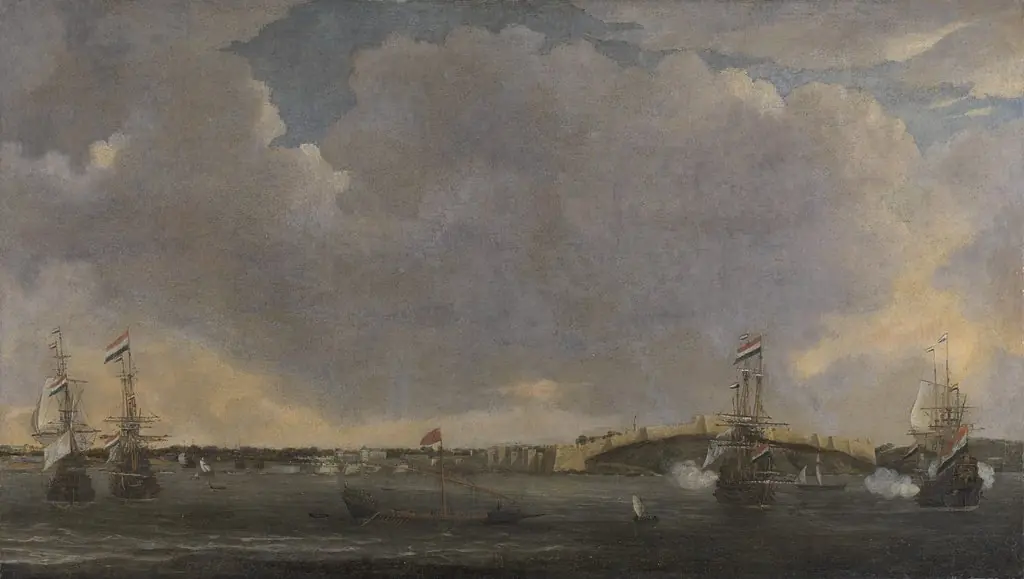 View of Tripoli
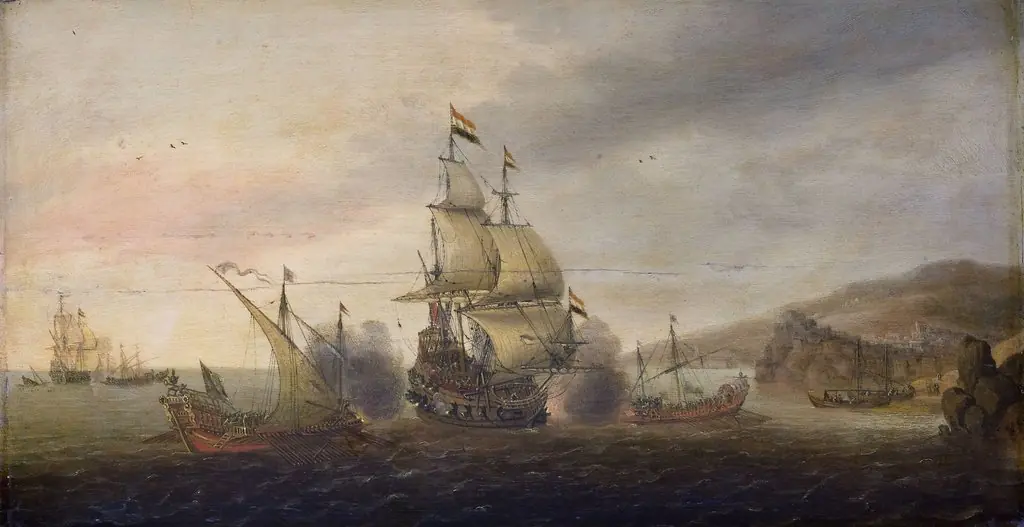 Naval battle between Dutch men-of-war and Spanish galleys
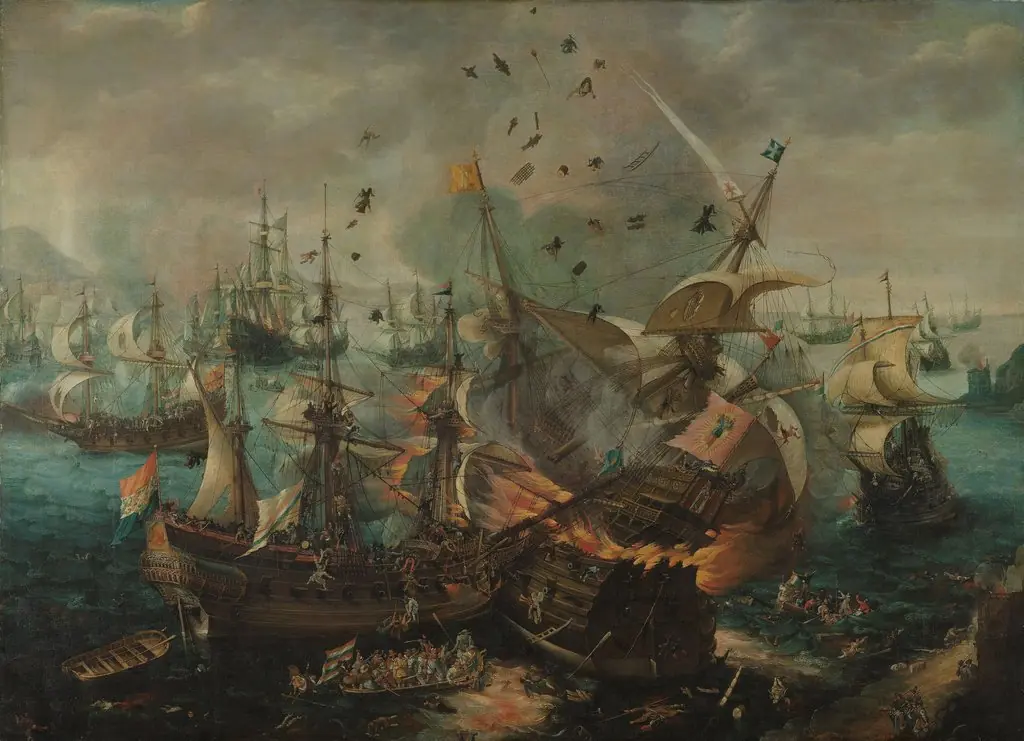 The Explosion of the Spanish Flagship during the Battle of Gibraltar
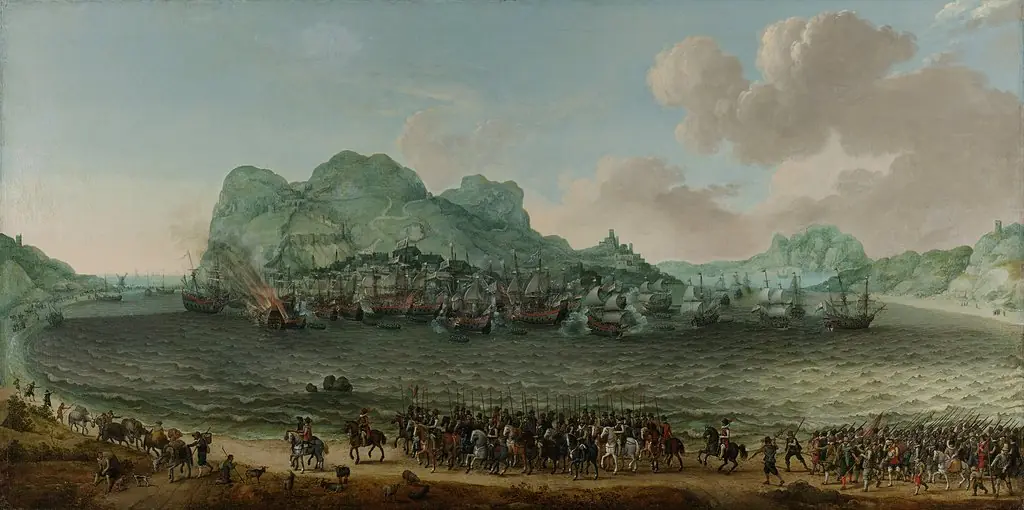 The defeat of the Spanish at Gibraltar by a Dutch fleet under command of Admiral Jacob van Heemskerck, 25 April 1607
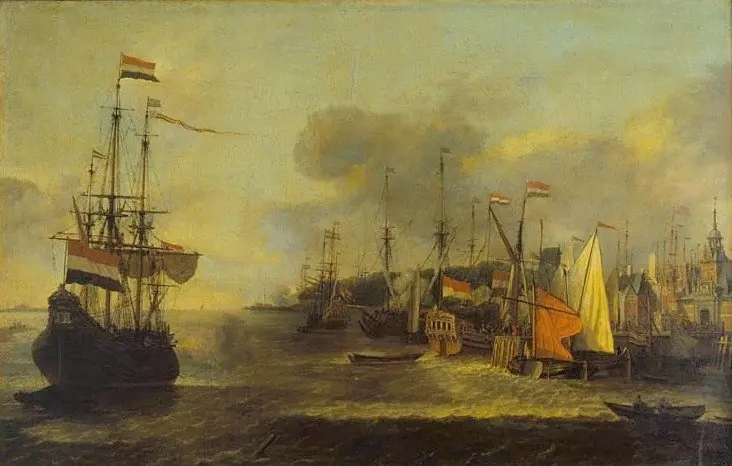 Harbour of Rotterdam
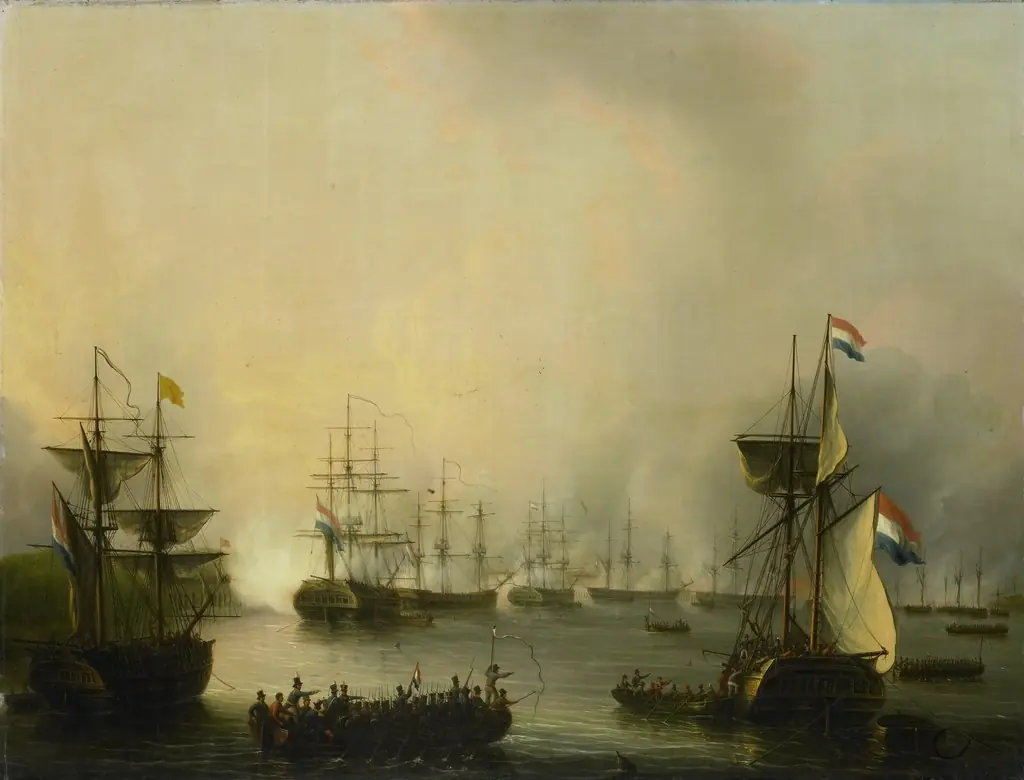 Bombardment of Palembang, Sumatra, by the Dutch Fleet, 24 June 1821
 Battle of Medway