Artwork
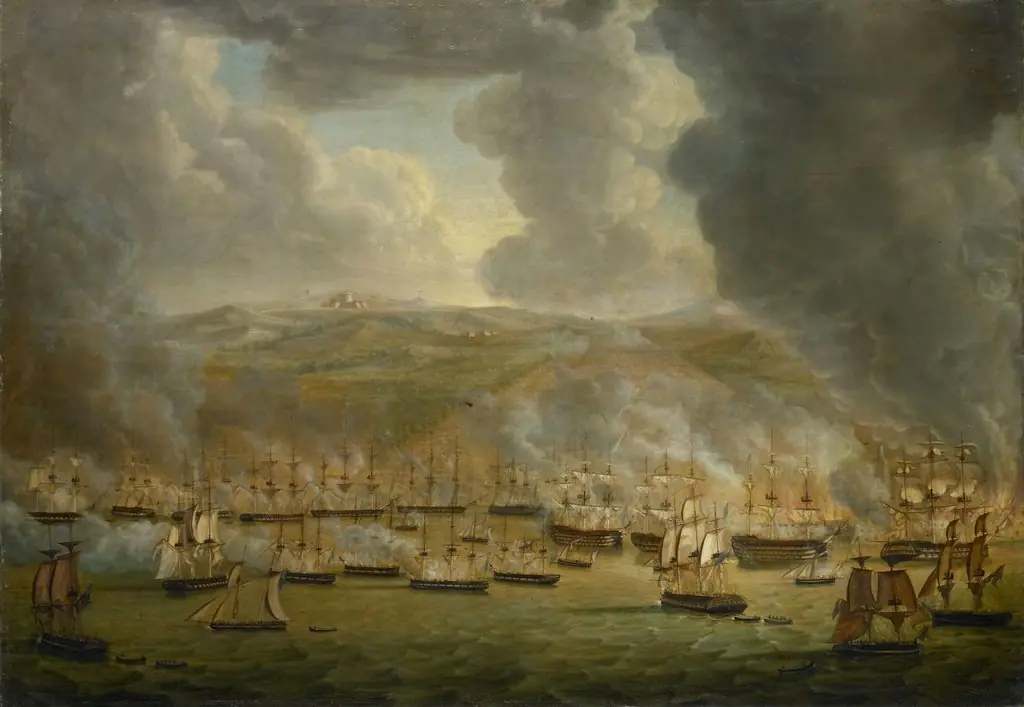
Naval Battle of Vigo Bay, 23 October 1702. Episode from the War of the Spanish Succession
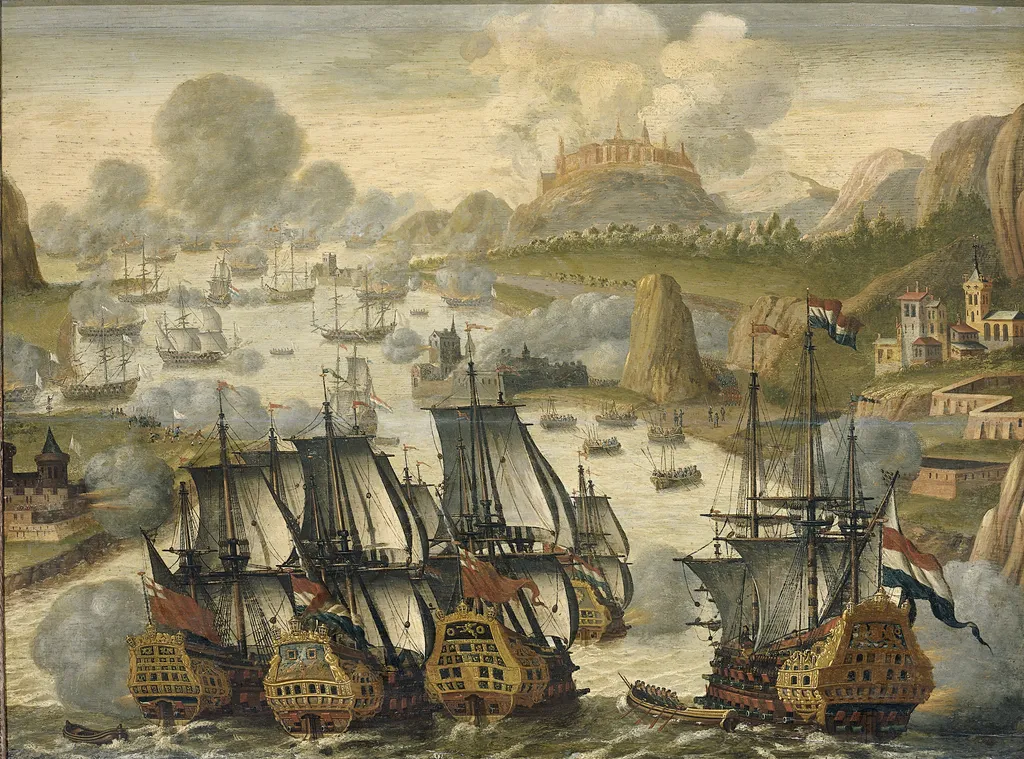
Naval Battle of Vigo Bay, 23 October 1702. Episode from the War of the Spanish Succession is an oil painting. It dates from 1705 and is held in the collection of the Rijksmuseum. The canvas captures the naval clash of 23 October 1702, a decisive encounter of the War of the Spanish Succession.
About this work
Subject & Meaning
The painting portrays a maritime engagement during the War of the Spanish Succession, showing ships locked in combat and a burning vessel amid turbulent seas.
The painting portrays a maritime engagement during the War of the Spanish Succession, showing ships locked in combat and a burning vessel amid turbulent seas. Symbolic of the Dutch Republic's naval prowess, it reflects the strategic importance of controlling sea routes in the early 18th century. The depiction of a house and boat alongside warships situates the conflict within a broader domestic and commercial context, emphasizing the intersection of military action and maritime trade.
Executed in oil on panel, the work exemplifies marine art of the Northern Low Countries, capturing both the dynamism of naval warfare and the era's geopolitical tensions.
Technique & Style
Oil paint applied to a wooden panel creates the historical painting's surface. The work measures 62 cm in height by 82.5 cm in width. Brushwork renders ships and boats with characteristic marine art detail, while the depiction of a house and surrounding vessels follows the genre's conventions.
Contemporary handling appears consistent with early 18th-century Northern Low Countries practice, though the painting's condition remains unassessed in available records.
History & Provenance
The painting was created in 1705, as indicated by its documented inception date and the artist’s activity during the War of the Spanish Succession period. It is attributed to an anonymous hand within the Northern Low Countries, aligning with the maritime traditions of Dutch and Flemish painting of the early 18th century.
The work entered the collection of Gijsbert de Clercq, a figure associated with the provenance of Dutch marine art in this era. By the 20th century, it formed part of the holdings of the Rijksmuseum, where it remains located.
Overview
The canvas captures the naval clash of 23 October 1702, a decisive encounter of the War of the Spanish Succession. A crowded sea teems with vessels of differing dimensions, their rigging and flags interwoven in a tumultuous tableau. Smoke billows from cannon fire, while a rugged shoreline with a fortified structure looms in the distance, framing the chaotic action.
Context
The battle formed part of broader European struggles over the Spanish throne, with allied forces seeking to disrupt French and Spanish naval power. The painting reflects contemporary interests in documenting military successes and serves as visual evidence of the strategic importance of controlling Atlantic ports during the war.
Artist & collection

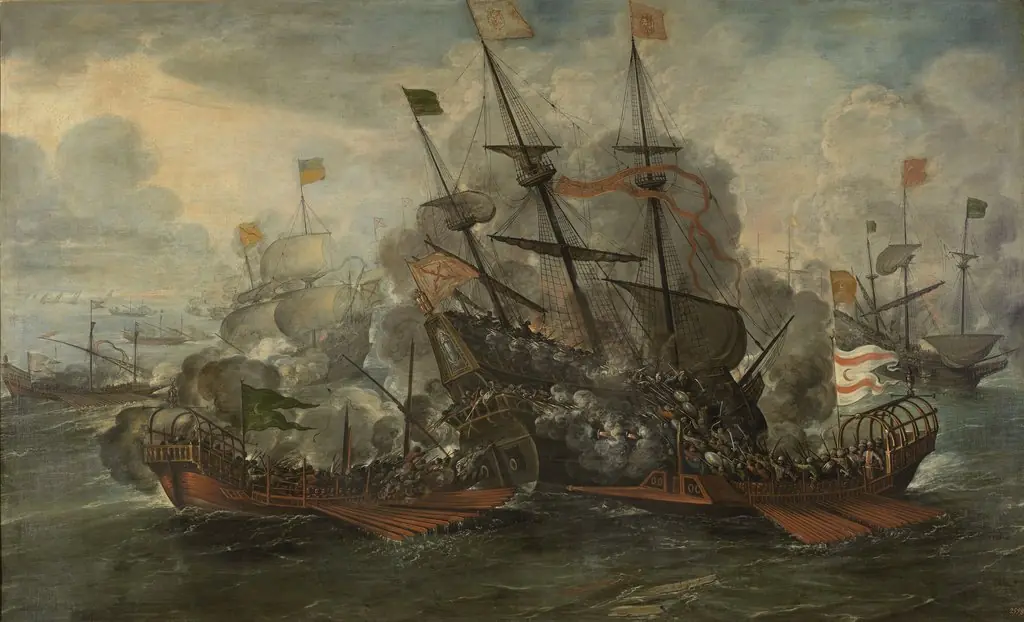
- A naval battle scene between the Spaniards and Turks.
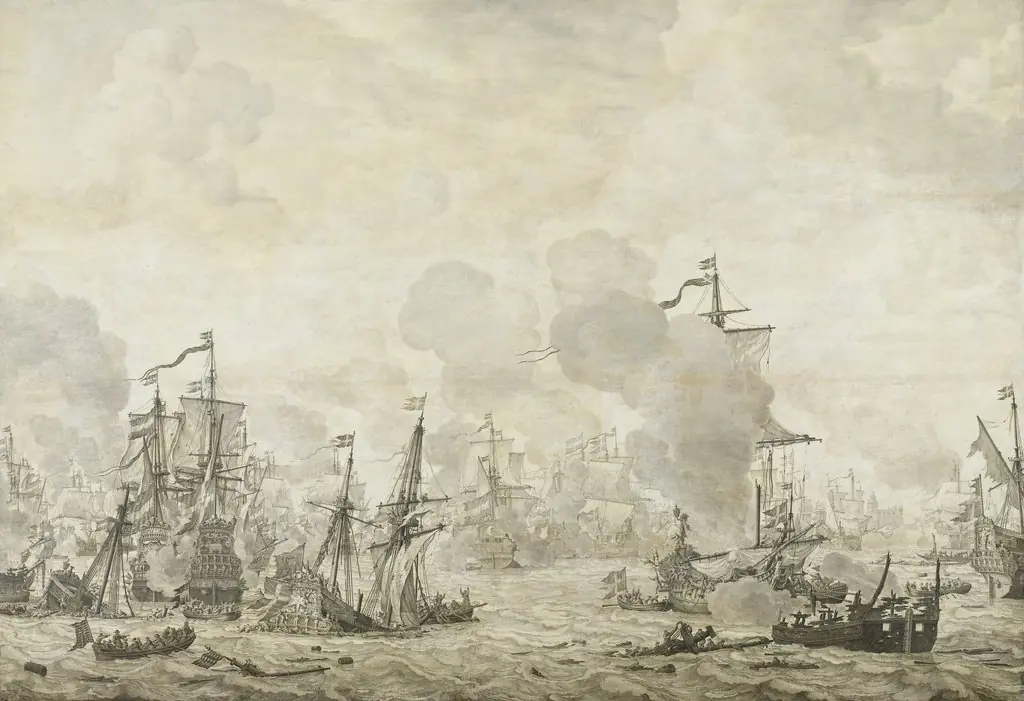 Episode from the Battle of the Sound between the Dutch and Swedish fleets, 8 November 1658
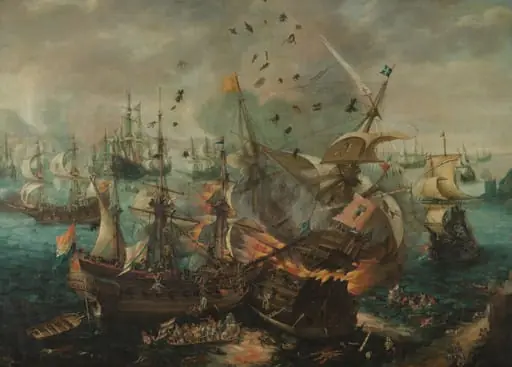 Battle of Gibraltar in 1607
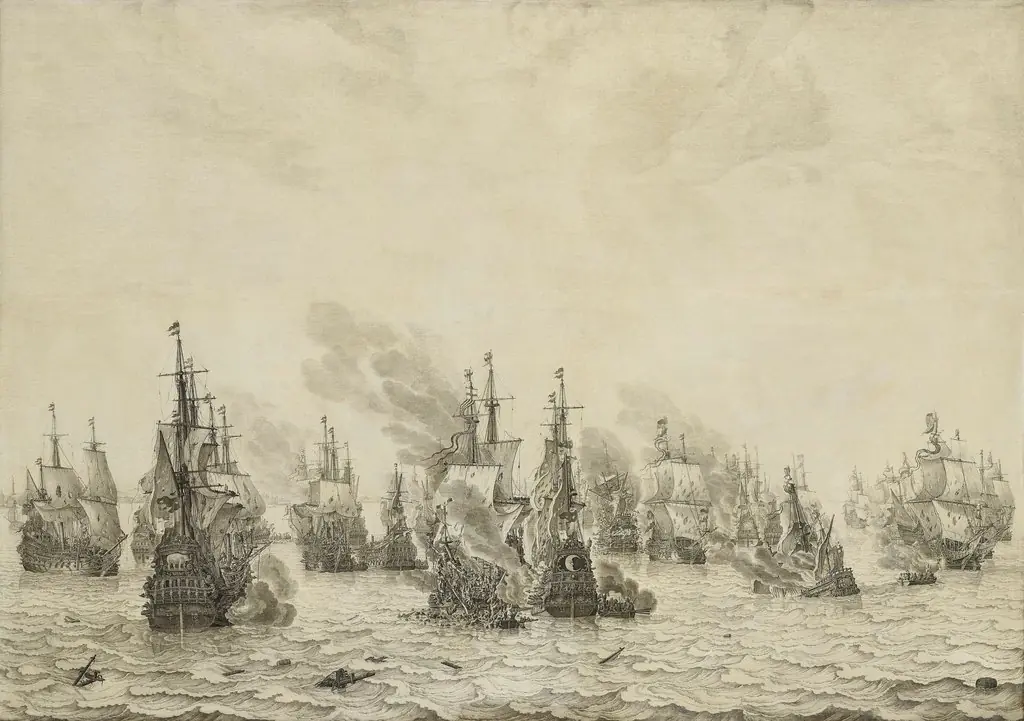 The Batlle of Livorno, 14 March 1653: episode from the First Anglo-Dutch War (1652-54)
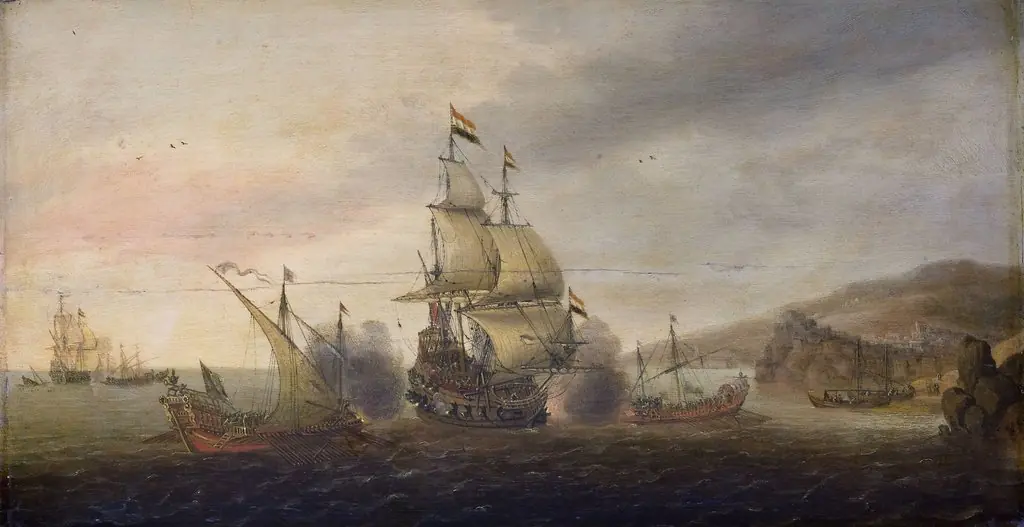 Naval battle between Dutch men-of-war and Spanish galleys
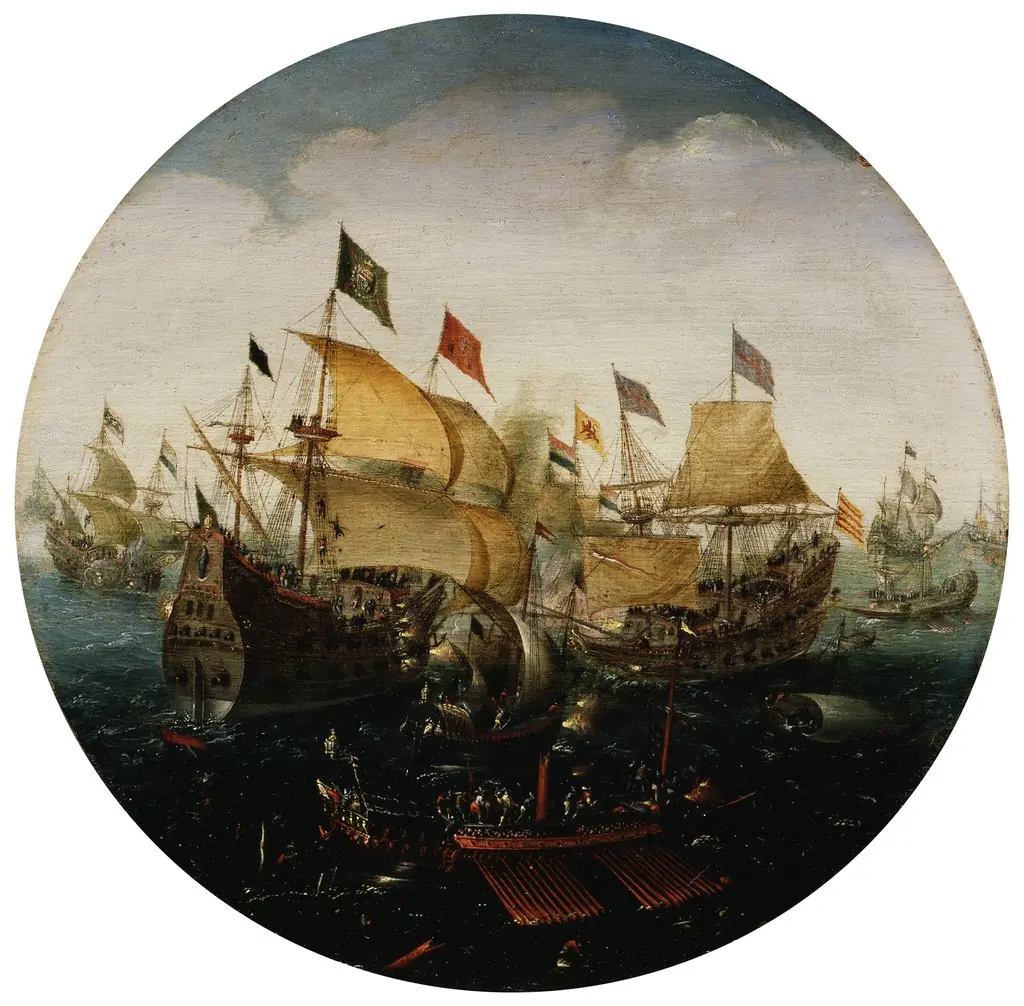 Sea Battle between Dutch and Spanish Ships
 A Battle near a Coast between Spaniards and Disembarking Dutchmen
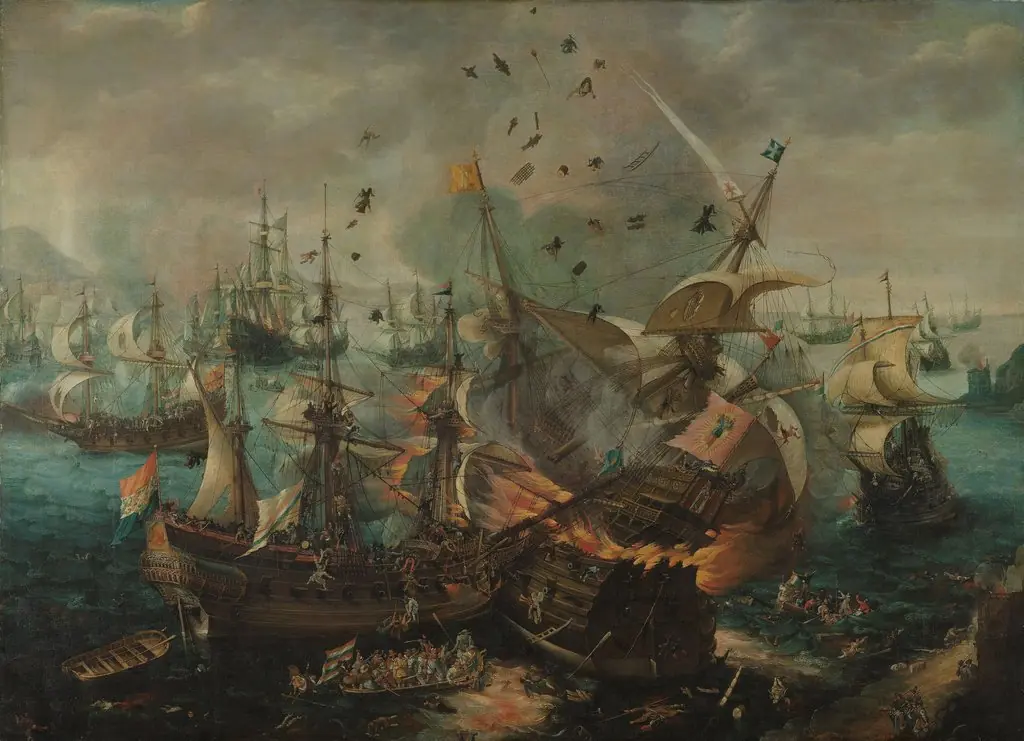 The Explosion of the Spanish Flagship during the Battle of Gibraltar
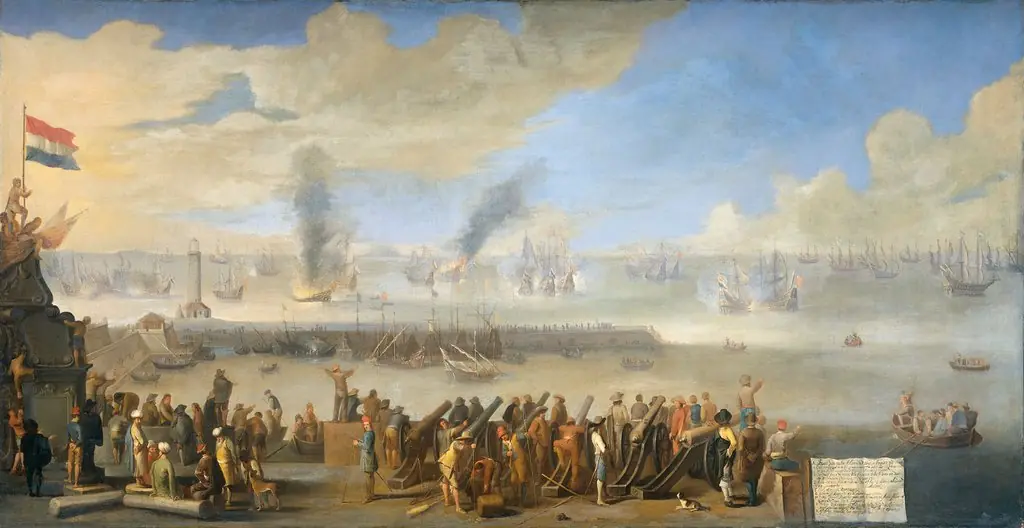 The naval battle near Livorno, 14 March 1653: incident of the first Anglo-Dutch War
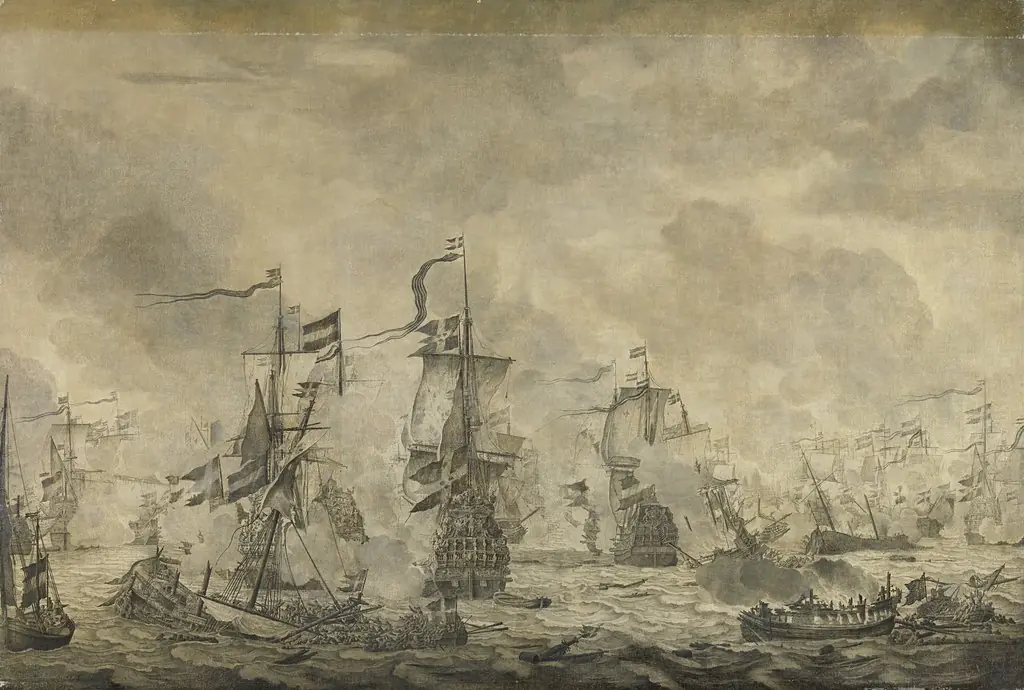 Episode from the Battle of the Sound between the Dutch and the Swedish fleets, 8 November 1658
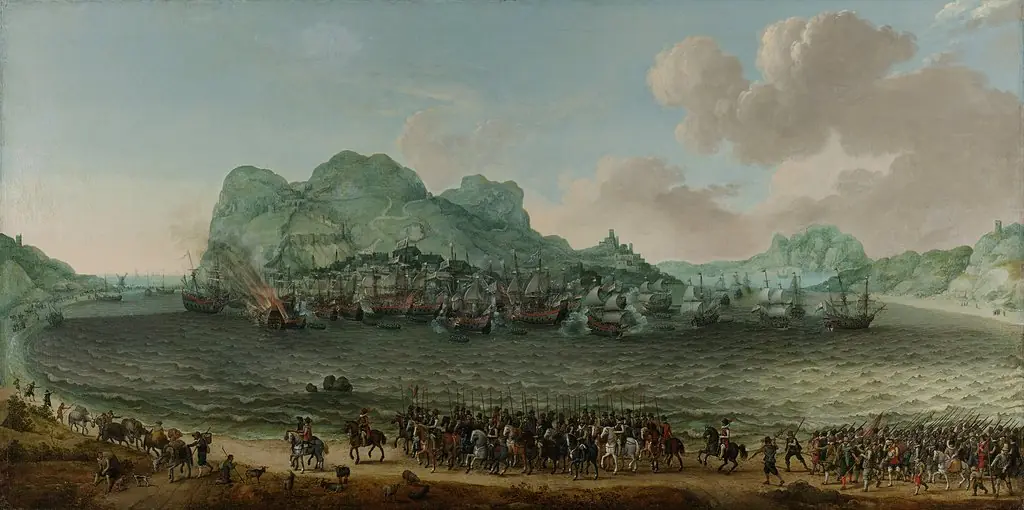 The defeat of the Spanish at Gibraltar by a Dutch fleet under command of Admiral Jacob van Heemskerck, 25 April 1607
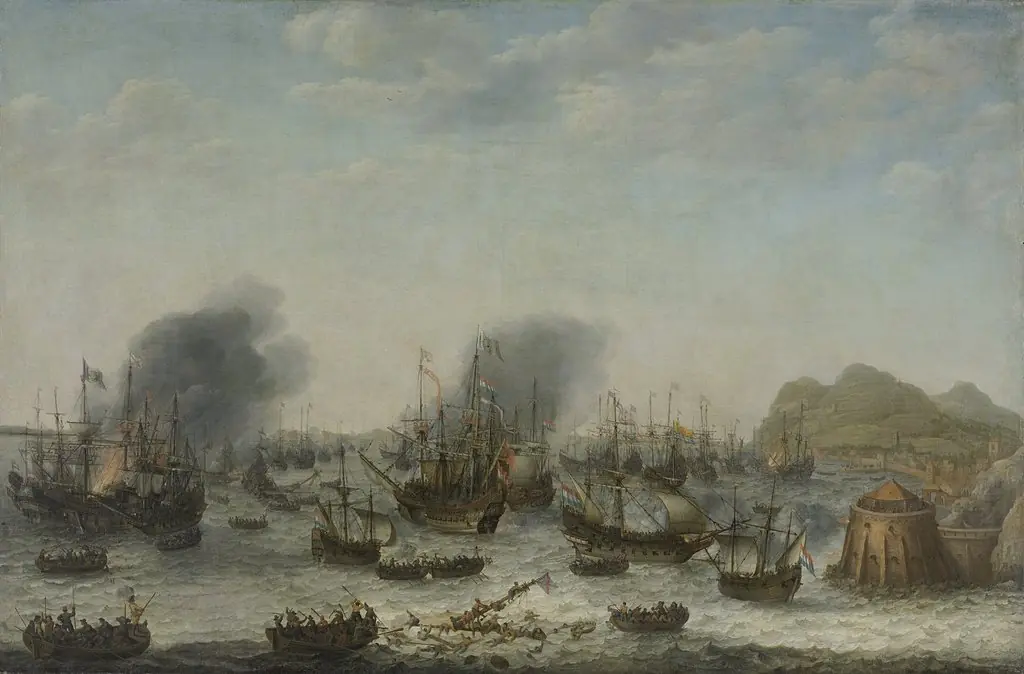 The defeat of the Spanish at Gibraltar by a Dutch fleet under the command of Admiral Jacob van Heemskerck, 25 April 1607
 Het beleg van Schenkenschans in 1636
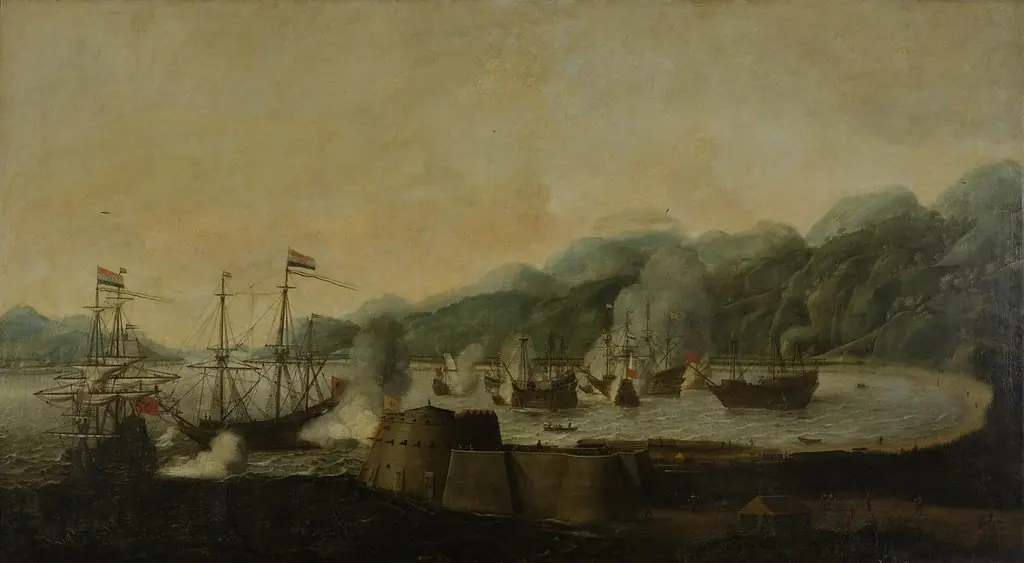 Surprise attack on three Portugese galleons in the Bay of Goa, 30 September 1639
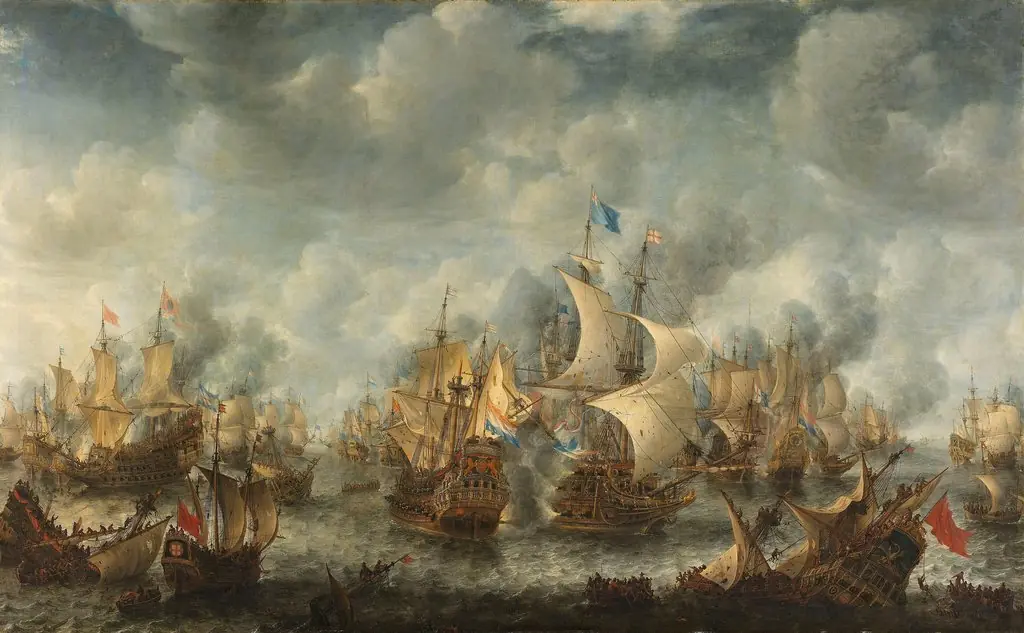 The Battle of Terheide
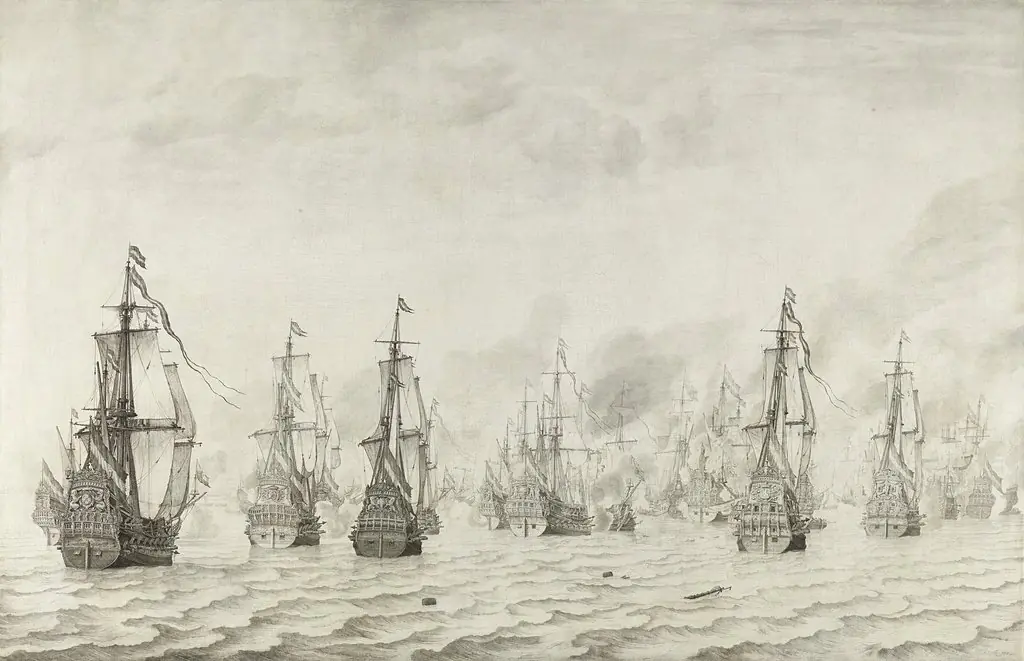 The Battle of Dunkirk
 The burning of the English fleet off Chatham, 20 June 1667
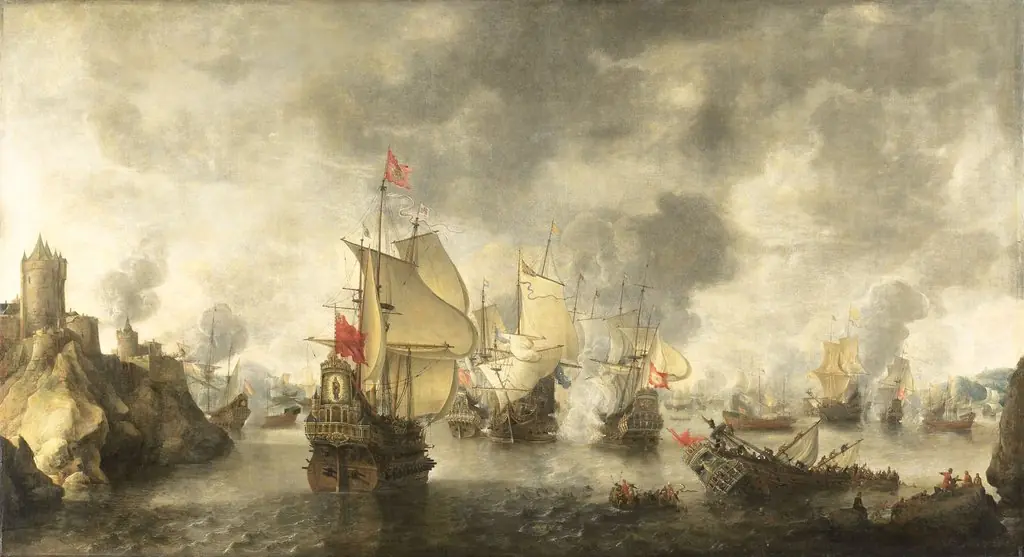 Battle of the combined Venetian and Dutch fleets against the Turks in the Bay of Foya, 1649
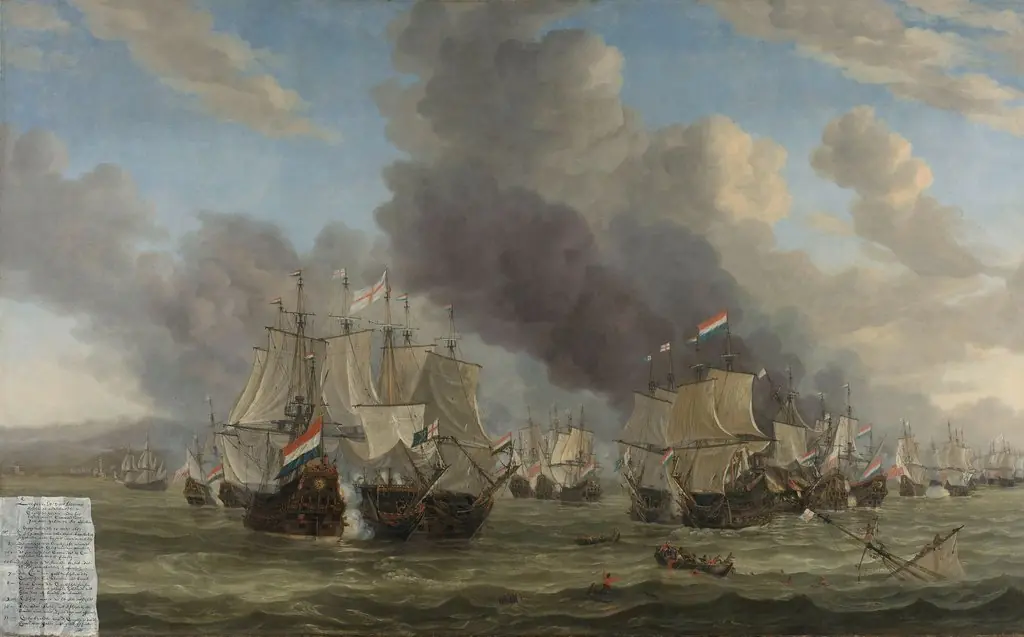 The Battle of Livorno
 Bombardment of Algiers by the United Anglo-Dutch Naval Squadron, 1816