Artwork
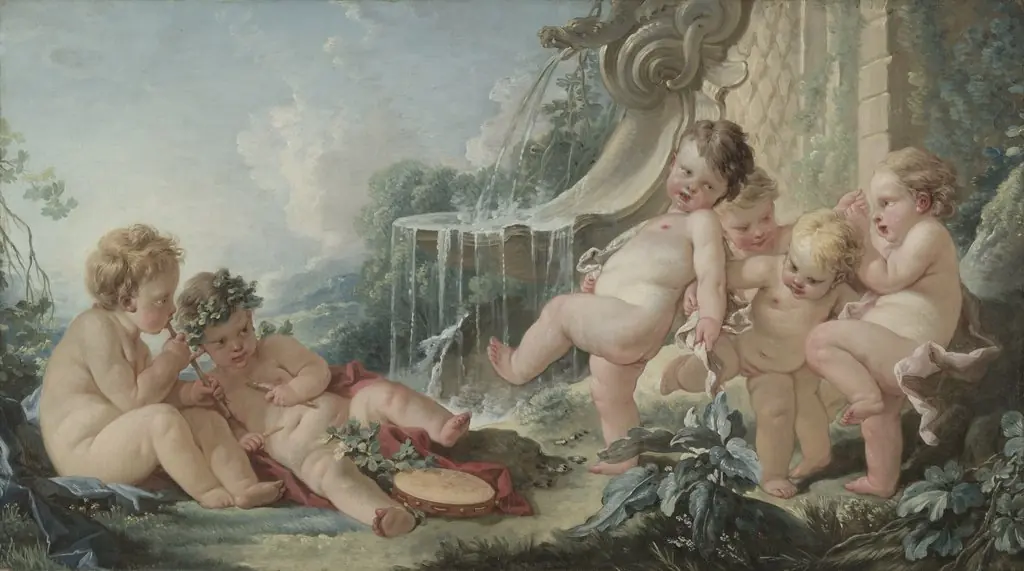
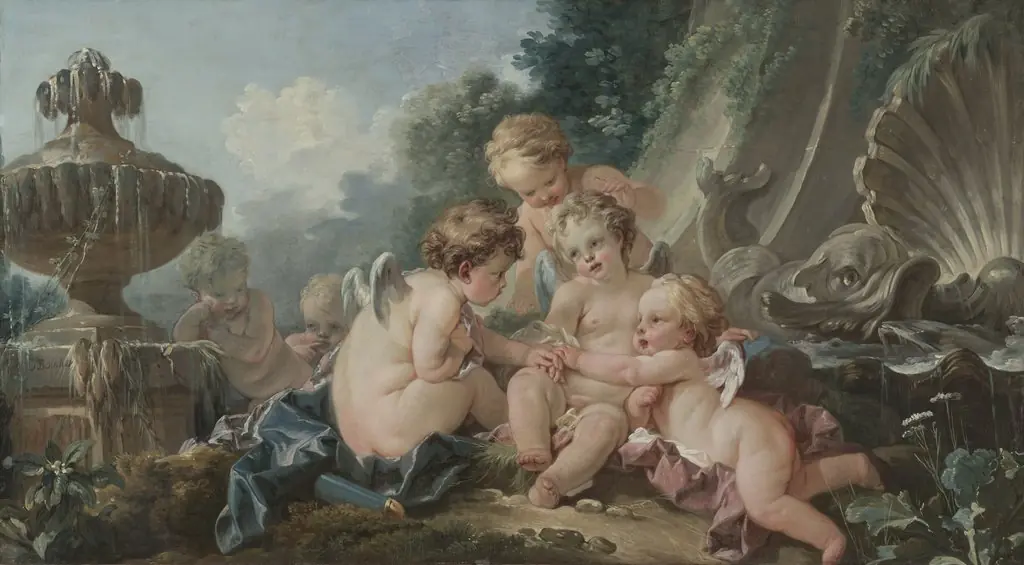
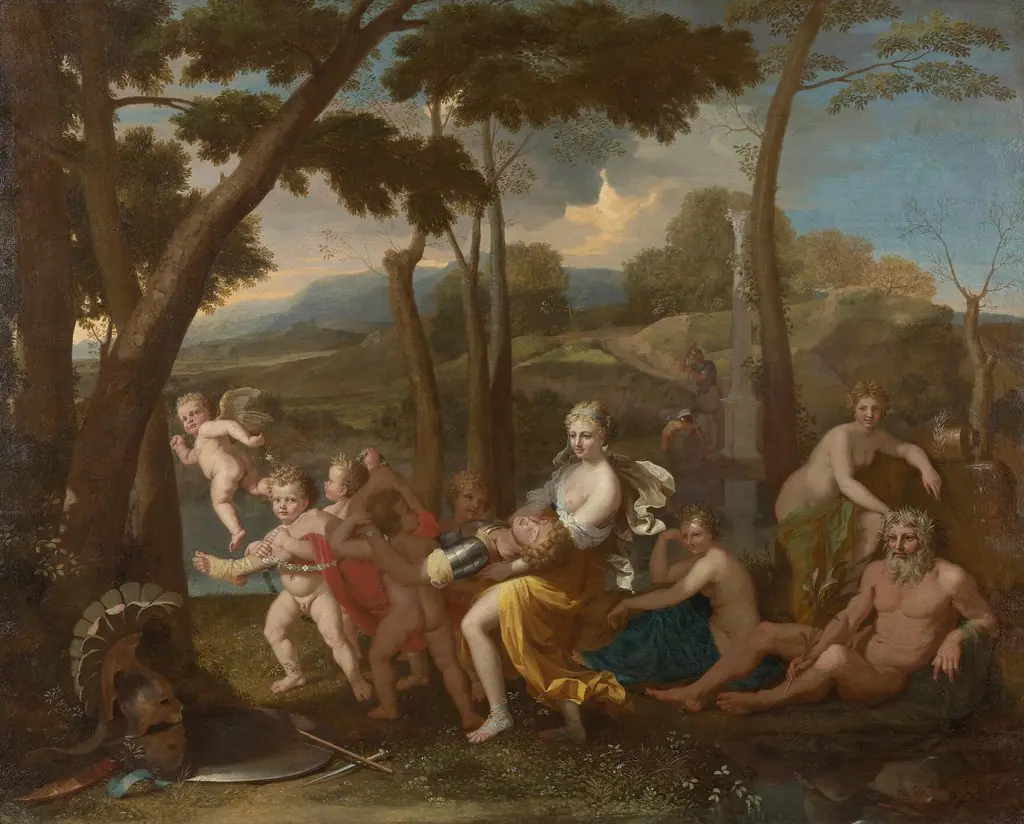
Playing Putti
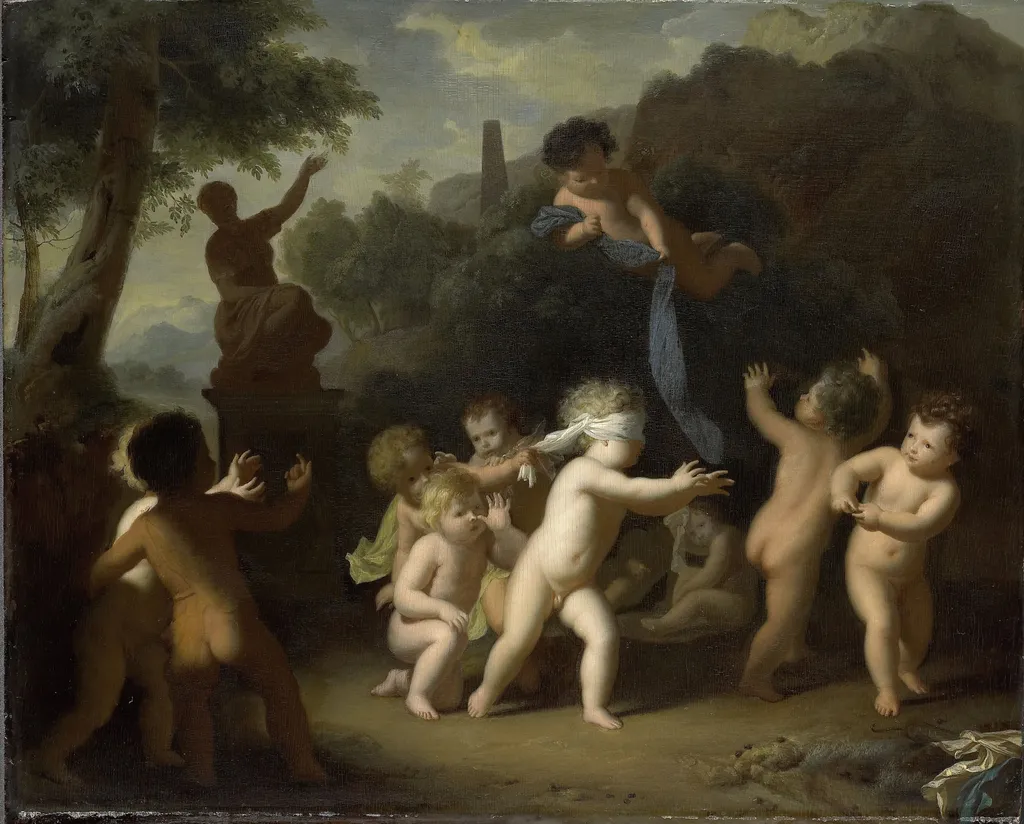
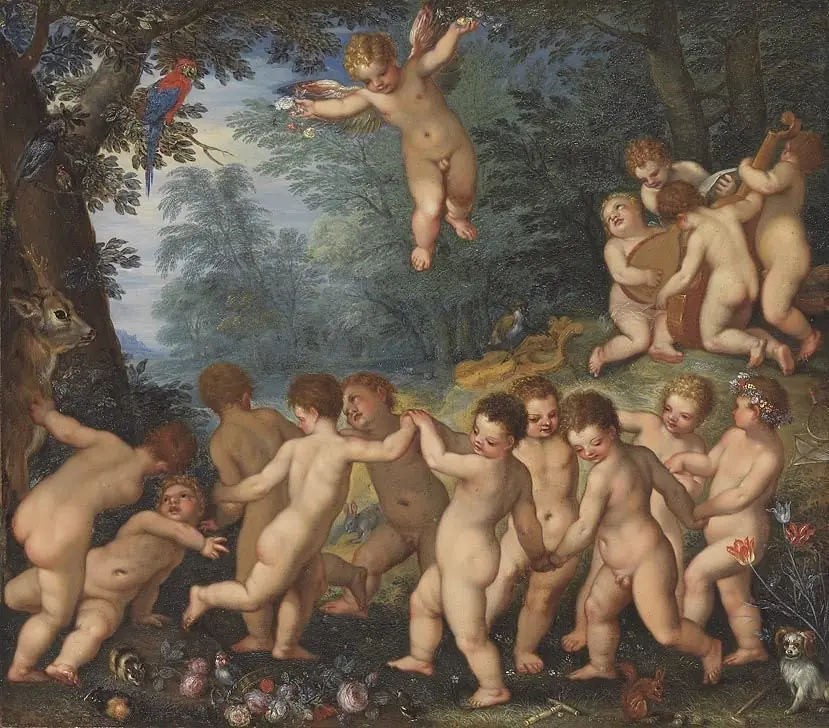
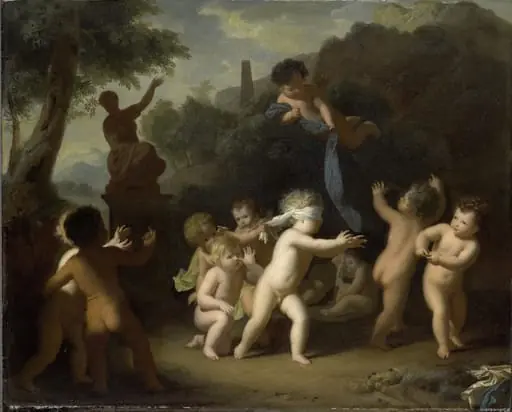
Playing Putti is an oil painting by the Rococo painting artist Hendrik van Limborch. It dates from 1710 and is held in the collection of the Rijksmuseum.
About this work
Technique & Style
Created in 1710 by Hendrik van Limborch, "Playing Putti" is a mythological painting executed in oil paint on a panel support.
Created in 1710 by Hendrik van Limborch, "Playing Putti" is a mythological painting executed in oil paint on a panel support. The work measures 27 cm in height and 34 cm in width. As part of the collection historically associated with Adriaan Leonard van Heteren Gevers, the piece is currently held by the Rijksmuseum within the Kabinet van Heteren Gevers.
The composition features putti, aligning with its classification as a mythological genre piece, though specific details regarding its current condition or handling history are not provided in the available records.
History & Provenance
Playing Putti is an oil painting on panel by Hendrik van Limborch, dated 1710. The work entered the collection of Adriaan Leonard van Heteren Gevers, a known Dutch collector of the period. Following this private ownership, the painting was incorporated into the Kabinet van Heteren Gevers, a named holding that subsequently transferred into the Rijksmuseum, where the painting is currently located. No further details of commission, intermediate ownership, or acquisition circumstances are documented in the available sources.
The painting's creation is fixed to the year 1710, with no surviving record of a specific patron or commissioning context for the work.
The painting Playing Putti by Hendrik van Limborch is held in the collection of the Rijksmuseum. It forms part of the Kabinet van Heteren Gevers, having been owned by Adriaan Leonard van Heteren Gevers. The provided records do not list specific inventory or accession numbers for the work, nor do they document any public exhibitions in its history.
Legacy
Playing Putti by Hendrik van Limborch exerted limited documented influence on subsequent artists, remaining primarily within the collection of the Rijksmuseum as a preserved mythological painting. Its legacy is chiefly tied to its preservation and scholarly attention within the museum's holdings rather than broader artistic impact.
Overview
Hendrik van Limborch, a Dutch artist active in the early eighteenth century, executed the oil painting Playing Putti in 1710. The work belongs to the Rococo period and is part of the Rijksmuseum’s collection. It portrays a light‑hearted mythological scene populated by cherubic figures.
Subject & Meaning
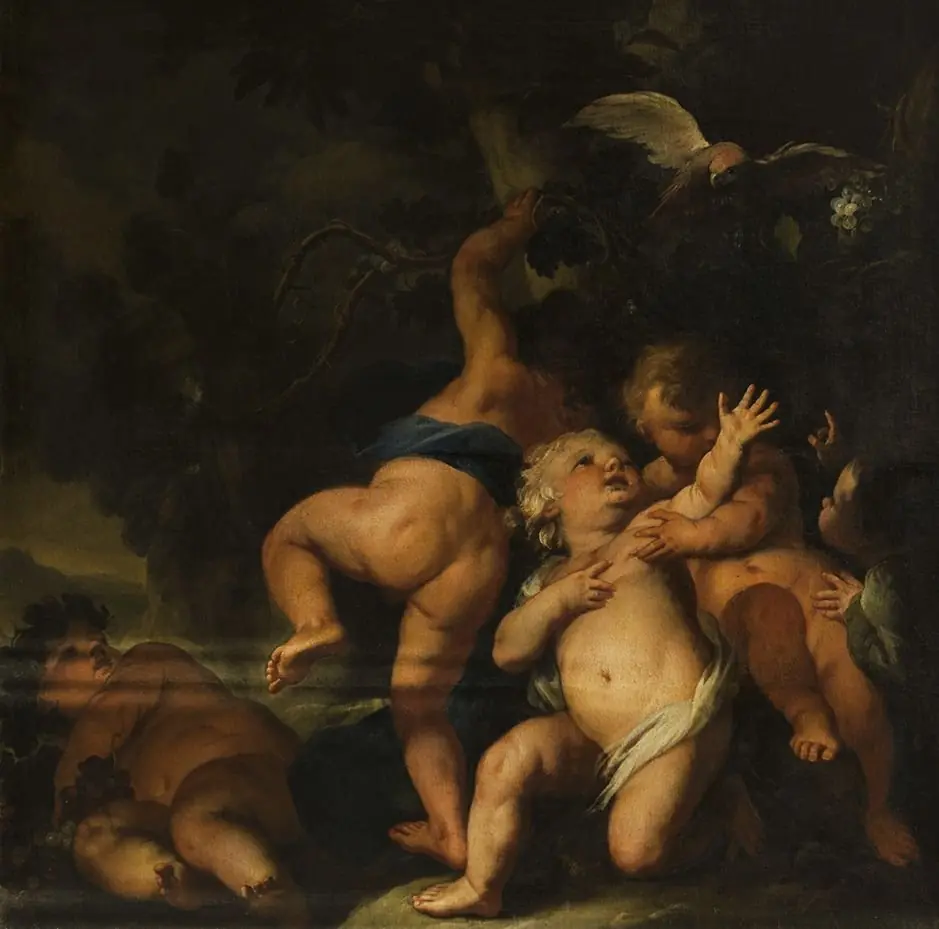
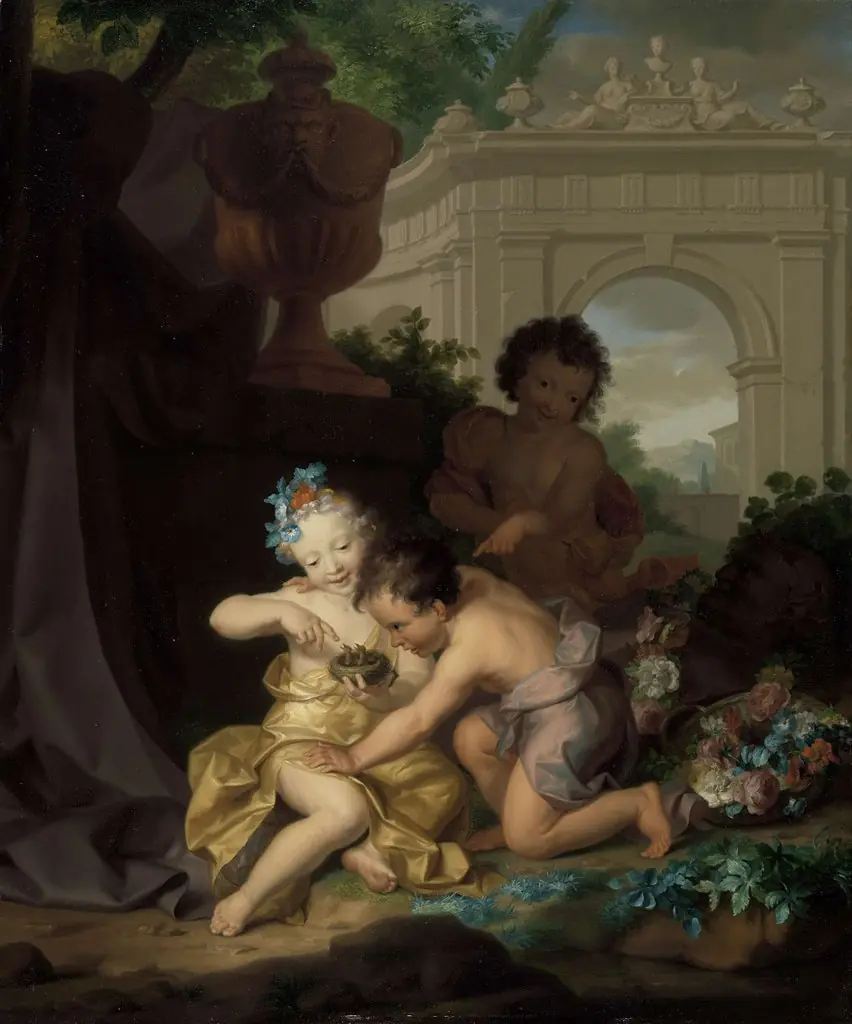
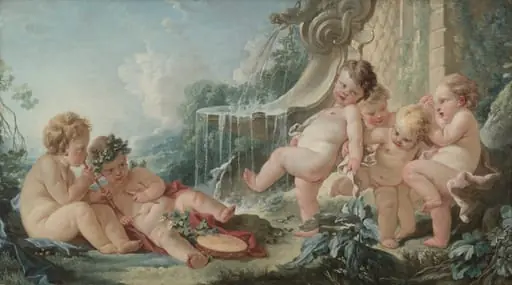
The composition centers on a group of nude putti, plump, childlike figures traditionally associated with classical mythology, engaged in various playful activities within a forest clearing. Their gestures, ranging from reaching upward to dancing, convey a sense of spontaneous joy, while a few adult onlookers add a narrative of observation.
Context
Putti have appeared in European art since antiquity, often symbolizing love, innocence, or divine presence. In the early eighteenth century, Dutch painters like Limborch incorporated these figures into Rococo compositions, blending classical motifs with the period’s emphasis on lightness and decorative charm.
Own this work as a print
Artist & collection

Artist
Hendrik van Limborch (9 March 1681 – 3 February 1759) was a painter and an engraver from the Dutch Republic.