Artwork
Cupids in Conspiracy
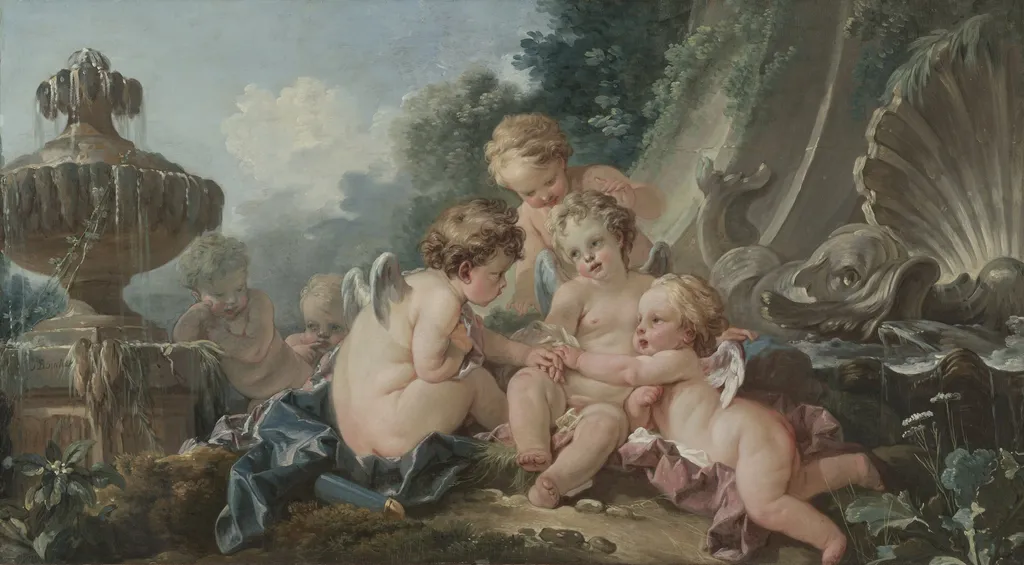
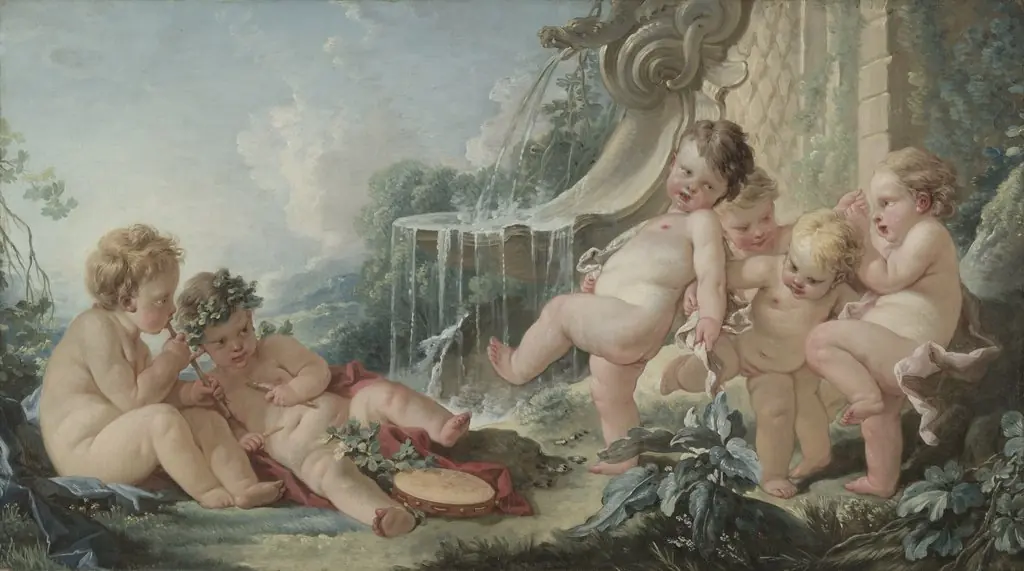
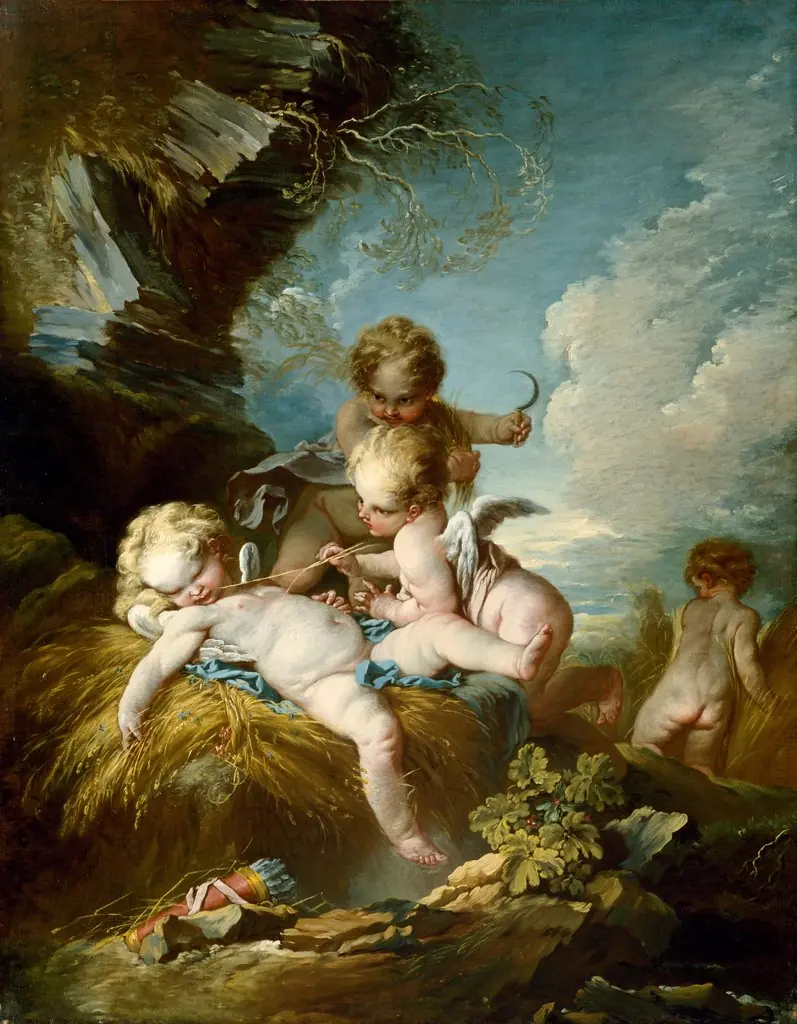
Cupids in Conspiracy is an oil painting by the Rococo painting artist François Boucher. It dates from 1740 and is held in the collection of the Cleveland Museum of Art.
About this work
Subject & Meaning
The composition focuses entirely on these divine figures, using their interaction to represent the capricious and conspiratorial nature of love itself.
Created in 1740, François Boucher's Cupids in Conspiracy is a mythological painting that depicts a group of Cupids engaged in a secret plot. As a work of the Rococo genre, the piece utilizes the figure of Cupid to explore themes of playful intrigue and amorous schemes rather than serious religious or historical narrative. The title suggests a narrative moment where these mythological agents of love are collaborating on a mischievous or romantic design, embodying the lighthearted and often eroticized treatment of classical mythology characteristic of Boucher's style.
The composition focuses entirely on these divine figures, using their interaction to represent the capricious and conspiratorial nature of love itself.
Technique & Style
Created in 1740, Cupids in Conspiracy is an oil painting executed on a canvas support. The work measures 68.8 centimeters in height and 123.2 centimeters in width, reflecting the horizontal format typical of mythological scenes from this period. Executed by François Boucher in France, the piece utilizes the fluid handling and luminous color palette characteristic of the artist's Rococo style.
The medium of oil paint allows for the soft blending of tones and the detailed rendering of the mythological figures, specifically the Cupids depicted within the composition. The physical dimensions and materials align with the classification of a mythological painting from the mid-18th century French school, currently held in the collection of the Cleveland Museum of Art.
Overview
Painted in 1740, François Boucher's Cupids in Conspiracy is a quintessential example of French Rococo mythology. The oil on canvas depicts a gathering of putti, or chubby infant figures, engaged in a playful, secretive assembly within an idealized garden setting. Boucher arranges the figures in a loose, diagonal composition that guides the viewer's eye across the scene, where the children lounge on rocks and amidst lush greenery.
Their poses are dynamic yet relaxed, with some whispering closely together to suggest the titular conspiracy, while others hold flowers or gaze outward. The artist employs a soft, pastel palette dominated by pinks, blues, and greens, characteristic of his mature style during the 1740s. The background features a misty atmosphere and a fountain, enhancing the dreamlike quality of the environment.
This work reflects Boucher's specialization in lighthearted mythological subjects and his mastery in rendering delicate flesh tones and fluid drapery. It stands as a significant piece in his career, demonstrating his ability to transform classical themes into charming, decorative scenes that appealed to the aristocratic taste of mid-eighteenth-century France.
History & Provenance
This oil painting, completed by François Boucher in 1740, has since become part of a public collection. Cupids in Conspiracy is currently housed at The Cleveland Museum of Art, where it is available for viewing. Its journey from creation to its present institutional home reflects its enduring artistic and historical value.
Artist & collection

Artist
François Boucher was a French painter, draughtsman and etcher, who worked in the Rococo style.