Artwork
Peace and Patriotism Mourning on the Tomb of Joan-Derk, Baron van der Capellen tot den Pol
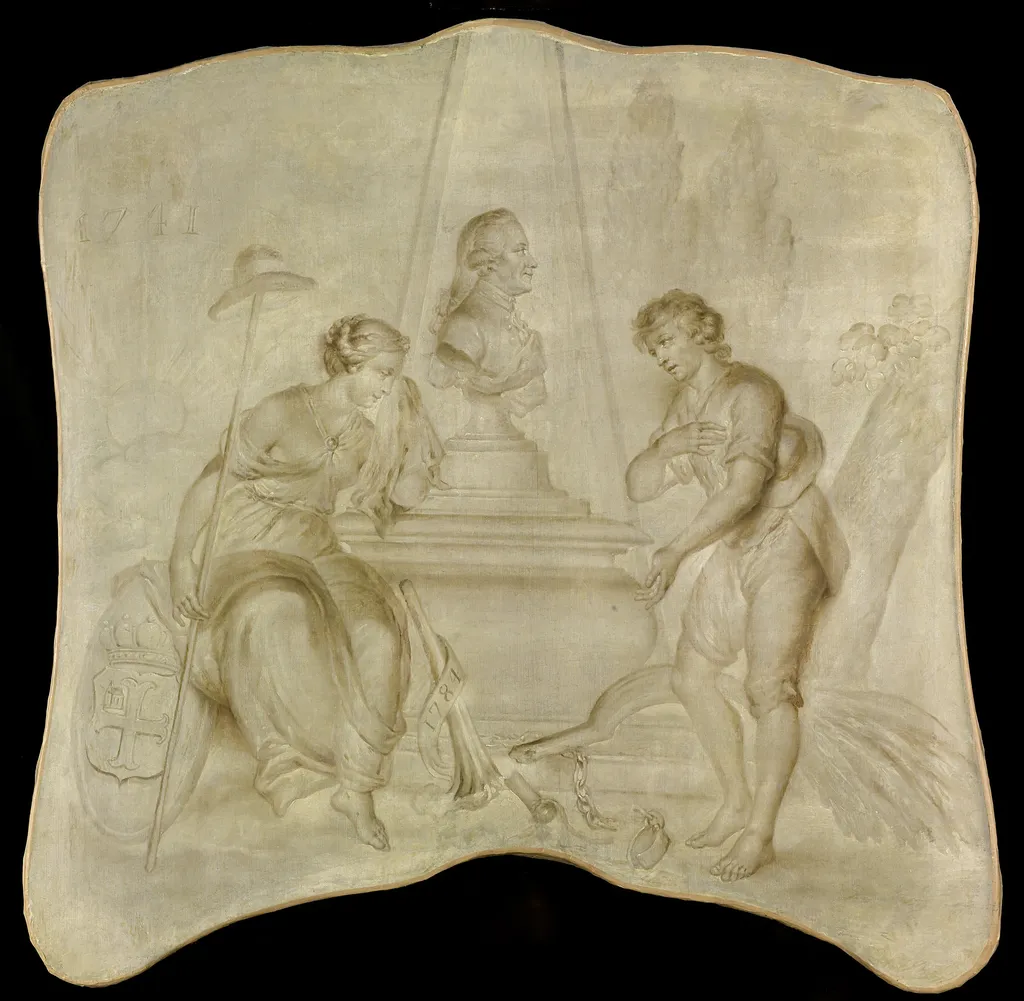
Peace and Patriotism Mourning on the Tomb of Joan-Derk, Baron van der Capellen tot den Pol is an oil painting by the Rococo painting artist Hendrik Willem Schweickhardt. It dates from 1794 and is held in the collection of the Rijksmuseum.
About this work
Technique & Style
The subdued tonality and controlled modeling reflect the neoclassical influence in Dutch art of the period, favoring restraint over dramatic chiaroscuro.
The painting is executed in oil on canvas, measuring 100 cm in height and 102 cm in width. Its handling aligns with late eighteenth-century Dutch portraiture, employing smooth, blended brushwork to render the figure’s somber attire and the austere setting with restrained detail. The composition centers on a standing mourner in contemporary black dress, positioned before a draped tomb inscribed with the name of the deceased, creating a stark vertical axis that emphasizes solemnity.
The palette is subdued, dominated by blacks, grays, and deep browns, with subtle accents of white and red to highlight the tomb’s inscription and the mourner’s cuffs. The subdued tonality and controlled modeling reflect the neoclassical influence in Dutch art of the period, favoring restraint over dramatic chiaroscuro.
History & Provenance
The work was painted in 1787 by Hendrik Willem Schweickhardt as an oil on canvas depiction of mourning on the tomb of Joan-Derk, Baron van der Capellen tot den Pol. It entered the collection of the Rijksmuseum in Amsterdam, where it remains on public display.
The painting Peace and Patriotism Mourning on the Tomb of Joan-Derk, Baron van der Capellen tot den Pol is housed in the Rijksmuseum collection in Amsterdam. It bears the inventory number SK-A-2295. The work has been part of several exhibitions at the Rijksmuseum, including 'Rijksmuseum Masterpieces' and '17th and 18th Century Paintings'.
Overview
This 1794 oil painting by Hendrik Willem Schweickhardt presents an allegorical scene centered on a funerary monument. The work, part of the Rijksmuseum’s collection, depicts three figures arranged around a sculpted bust of Joan-Derk, Baron van der Capellen tot den Pol, a prominent Dutch political figure. The composition balances stillness and emotion, using symbolic gestures to evoke themes of remembrance and national sentiment.
Subject & Meaning
The painting allegorizes grief and reverence for Joan-Derk, Baron van der Capellen tot den Pol, whose bust occupies the central pedestal. The standing figure, likely representing Peace, rests a hand on the monument while holding a fan, a subtle emblem of restraint. The kneeling woman, embodying Patriotism, clutches what may be a letter or document, suggesting devotion to the baron’s ideals. Together, they mourn a figure associated with progressive political reforms in the late 18th-century Netherlands.
Context
The painting emerged during a period of upheaval in the Dutch Republic, marked by conflict between royalist factions and reformist Patriots. Joan-Derk, Baron van der Capellen tot den Pol, had been a vocal advocate for democratic change before his death in 1784. Schweickhardt’s work reflects the era’s tendency to memorialize political figures through allegory, blending personal mourning with broader national narratives of resistance and idealism.
Legacy
Though not widely reproduced, the painting contributes to the visual record of late 18th-century Dutch political sentiment. Its allegorical approach aligns with contemporaneous works that sought to elevate public figures to symbolic status. Within the Rijksmuseum, it serves as a quiet counterpoint to more overtly propagandistic images, offering a nuanced reflection on the intersection of personal loss and collective identity.
Own this work as a print
Artist & collection
Artist
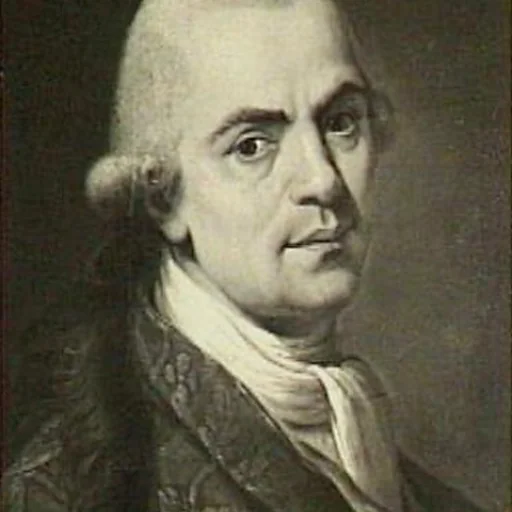
Hendrik Willem Schweickhardt (1747–1797) was an artist, born in Hamm.

- Two Lovers Seated at the Foot of a Large Tree, Surprised by Two Girls
 Harpocrates (or Horus), God of Silence
 L'Arrivée du Courrier
 Mythological Scene
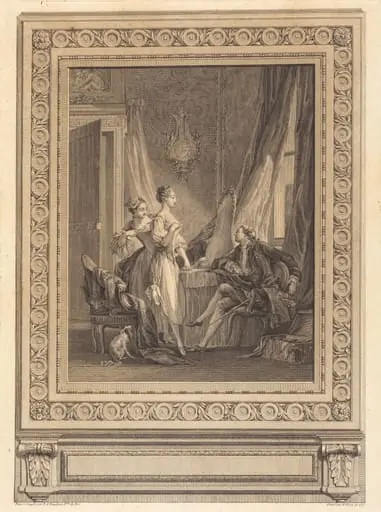 La toilette
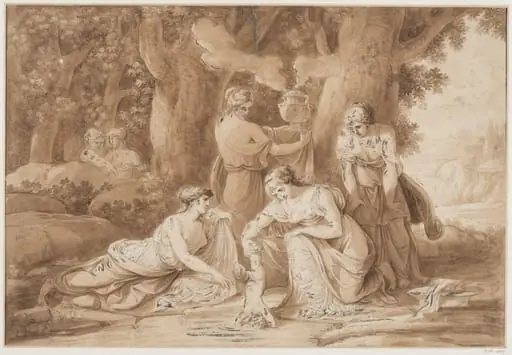 Thetis dipping Achilles
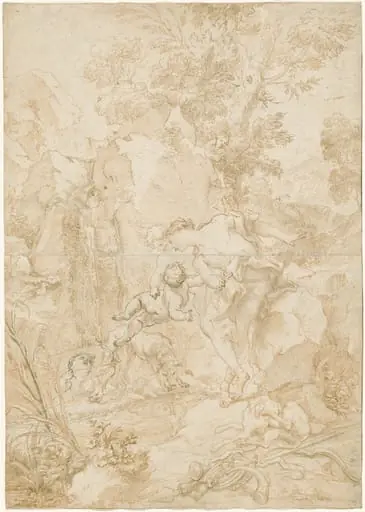 Echo and Narcissus
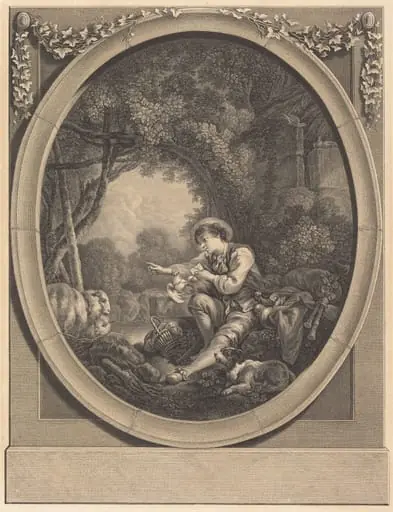 Le Départ du Courrier
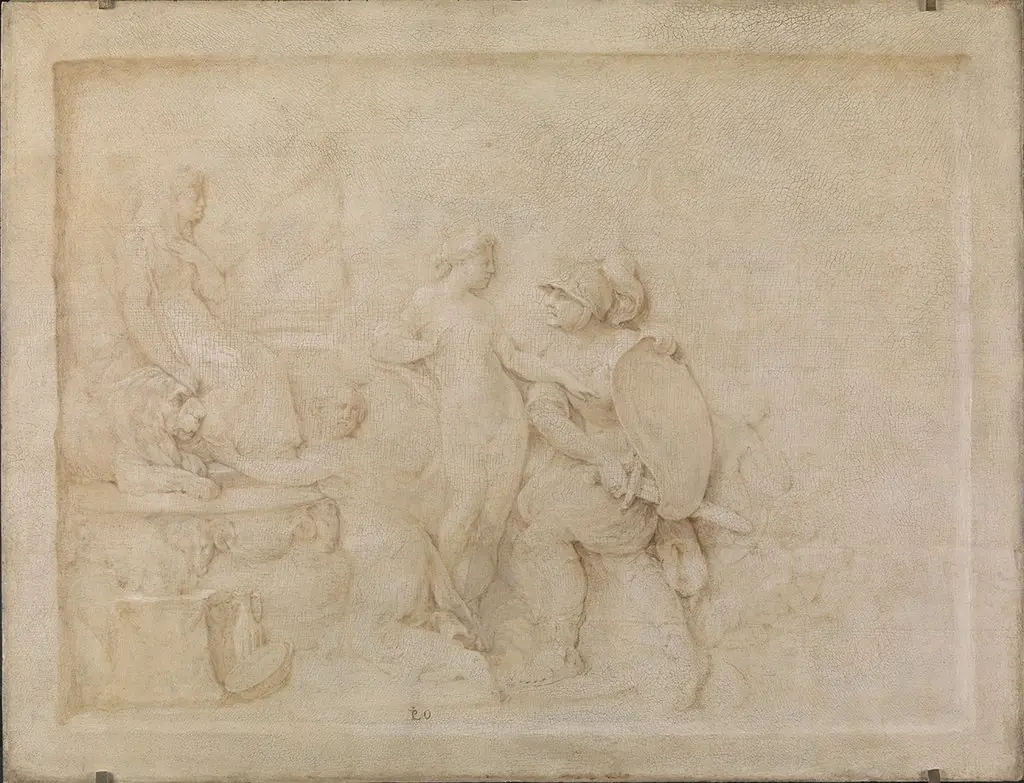 Aeneas hindres af Venus i sin hævn mod Helena, som har søgt tilflugt ved Cybeles alter
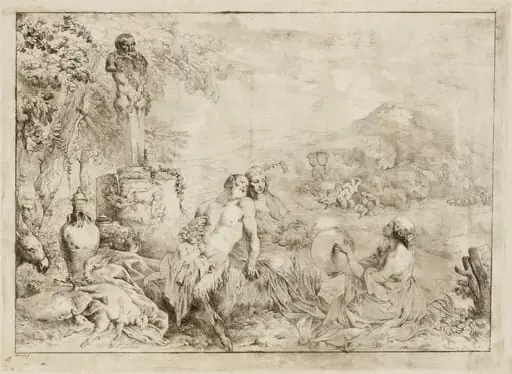 Landscape with a Satyr Family and Classical Sculpture
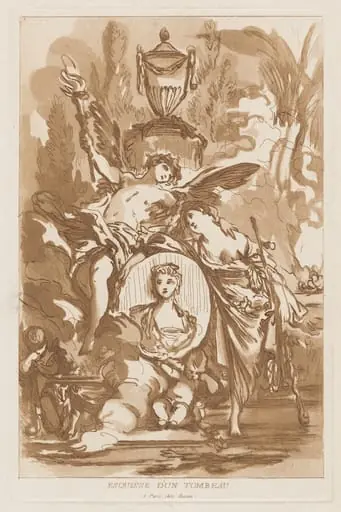 Esquisse d’un tombeau (Sketch for a Tomb)
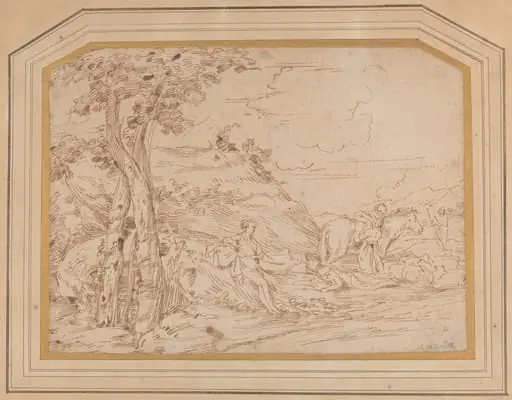 A Wooded Landscape with a Shepherd and His Family