Artwork
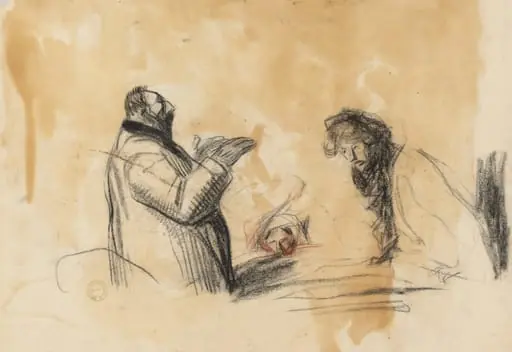
Dr. Péan Operating
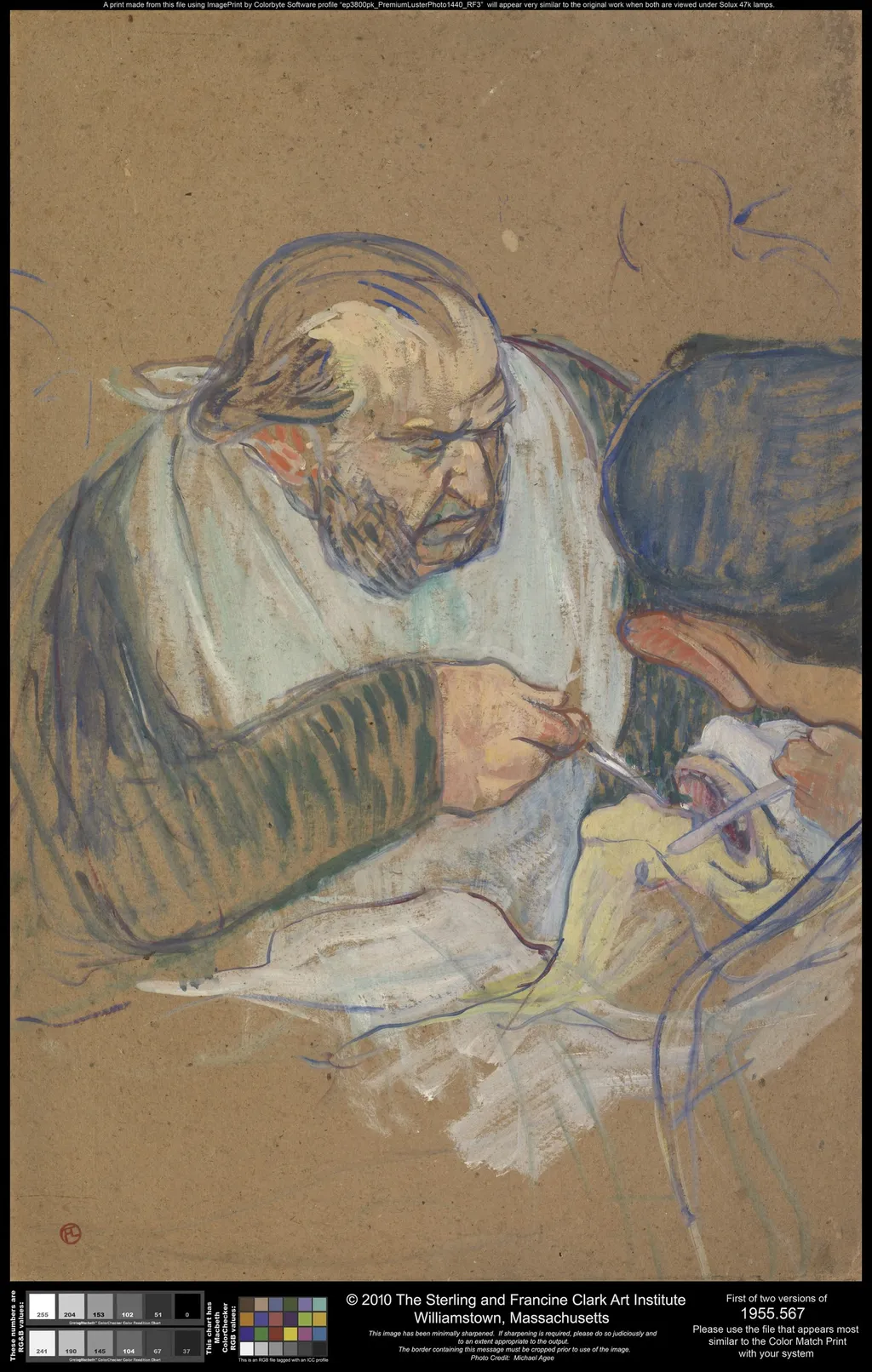
Dr. Péan Operating is an unspecified painting by the Post-Impressionist artist Henri de Toulouse-Lautrec. It dates from 1896 and is held in the collection of the Clark Art Institute.
About this work
Overview
Henri de Toulouse-Lautrec’s oil painting *Dr. Péan Operating* was executed in 1896. The work belongs to the late‑nineteenth‑century French art scene and is presently part of the Clark Art Institute’s collection. It exemplifies the artist’s interest in documenting everyday urban occurrences beyond the conventional salon subjects.
Subject & Meaning
The canvas portrays a surgical procedure conducted by the French physician Dr. Jules‑Alexandre Péan, a figure associated with advances in abdominal surgery. By focusing on a clinical setting, Toulouse‑Lautrec extends his usual concern for marginalised or overlooked moments, inviting viewers to consider the intersection of modern medicine and public curiosity in the Belle Époque.
Technique & Style
Rendered with the loose brushwork and vivid coloration typical of post‑impressionism, the painting balances precise anatomical detail with the artist’s characteristic observational immediacy. Toulouse‑Lautrec’s background in printmaking informs the composition’s strong outlines and flattened perspective, while the palette captures the artificial lighting of an operating theatre.
History & Provenance
Created during a prolific period when the artist was documenting Parisian life, *Dr. Péan Operating* entered the public domain through acquisition by the Clark Art Institute. The museum’s records indicate the work has remained in its collection since the mid‑20th century, providing scholars with a stable reference point for studies of Toulouse‑Lautrec’s lesser‑known subjects.
Context
The painting emerges from a broader cultural fascination with scientific progress and the spectacle of surgery that characterized late‑19th‑century France.
The painting emerges from a broader cultural fascination with scientific progress and the spectacle of surgery that characterized late‑19th‑century France. Toulouse‑Lautrec’s choice to depict a medical procedure aligns with his broader oeuvre, which frequently captured the theatricality of public spaces—from cabarets to hospitals—reflecting the era’s shifting boundaries between entertainment and everyday experience.
Artist & collection
Artist
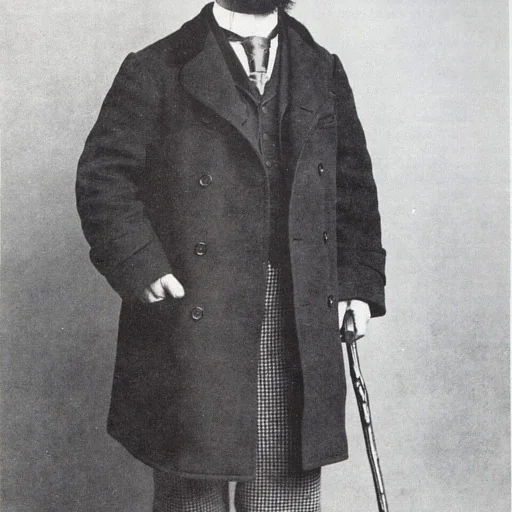
Comte Henri Marie Raymond de Toulouse-Lautrec-Montfa (24 November 1864 – 9 September 1901), known as Toulouse-Lautrec (French: ), was a French painter, printmaker, draughtsman, caricaturist, and illustrator.

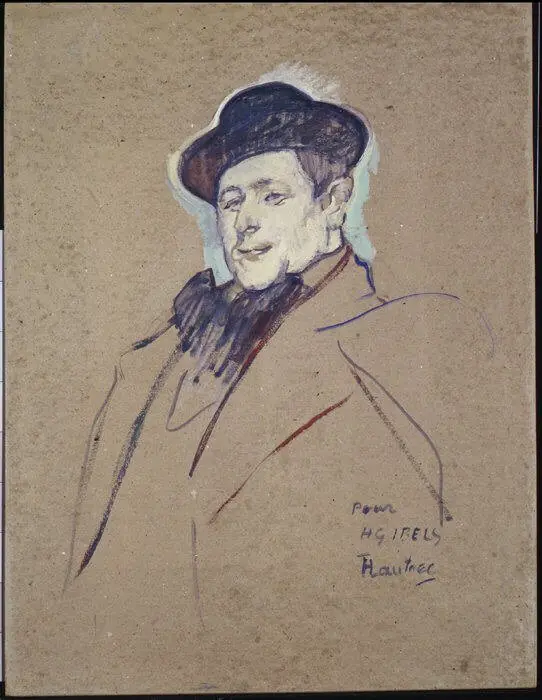
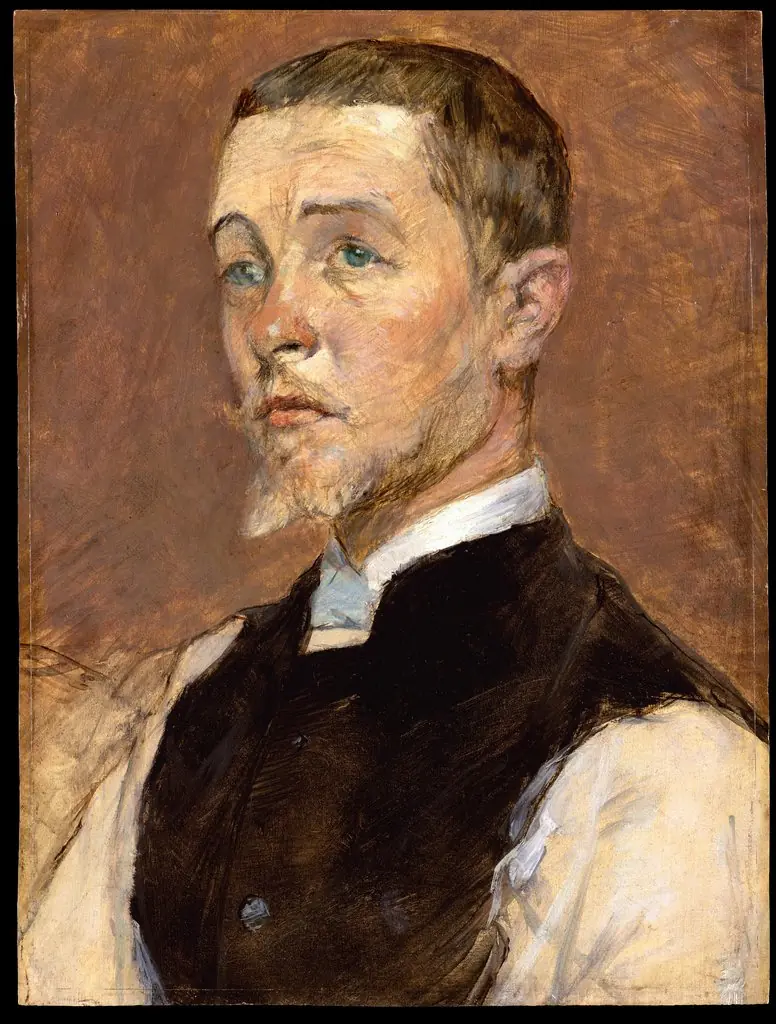
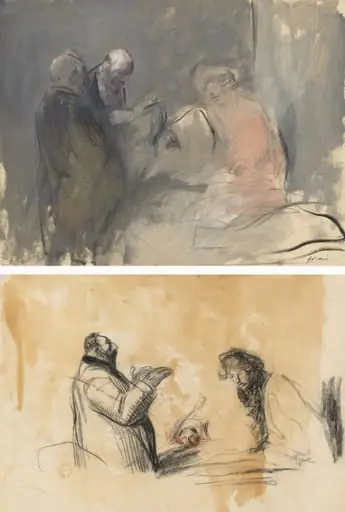 In the Hospital (recto) Sketch for In the Hospital (verso)
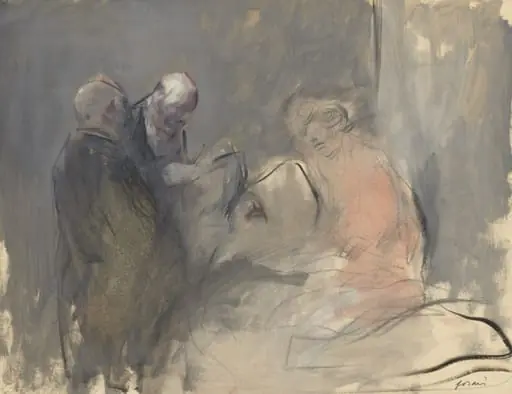 In the Hospital (recto)
![Five Sheep; Head of a Woman and Head of a Bearded Man [recto], by Paul Gauguin](https://artifactworldgallery.com/img/paul-gauguin--five-sheep-head-of-a-woman-and-head-of-a-bearded-man-recto--b52e1d9f193e7f08-w320.webp) Five Sheep; Head of a Woman and Head of a Bearded Man [recto]
Five Sheep; Head of a Woman and Head of a Bearded Man [recto]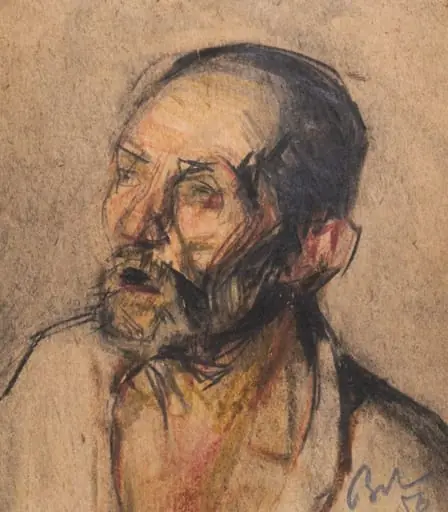 Portret de țăran
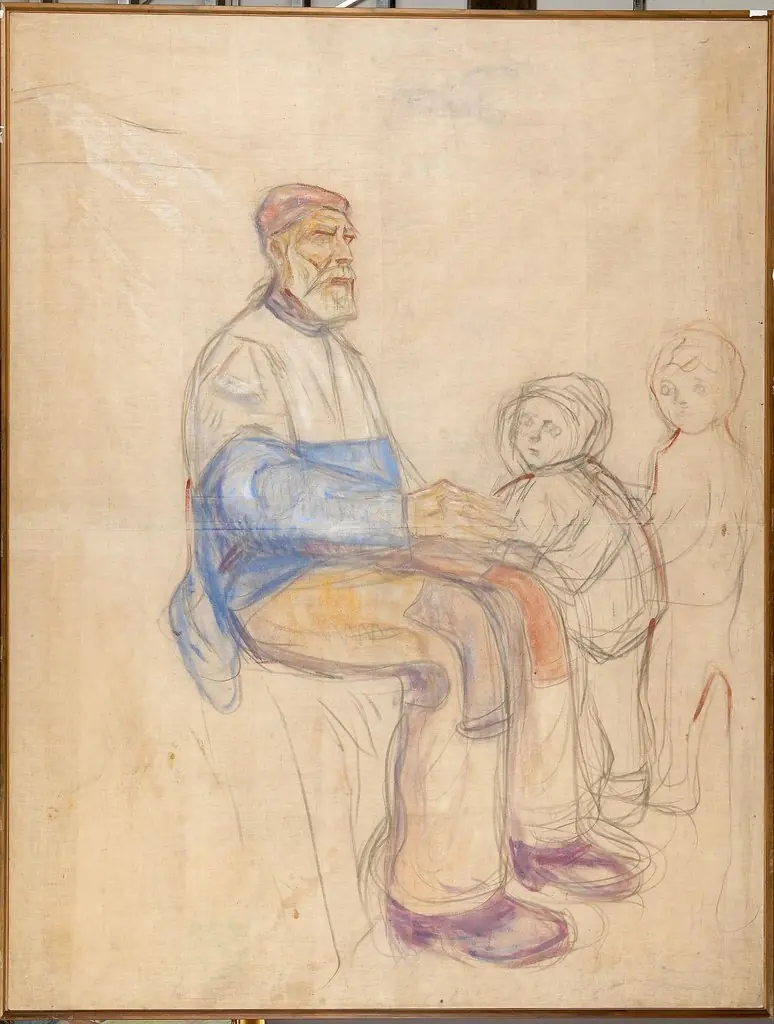 History: Study for the Old Man and Two Boys
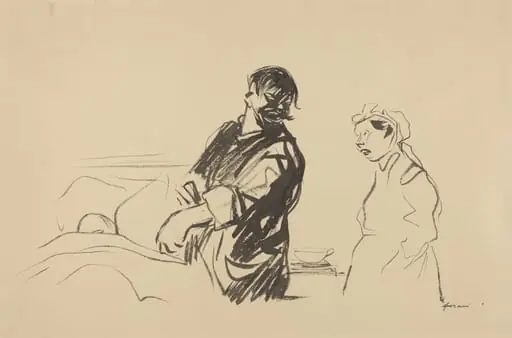 Hospital Scene
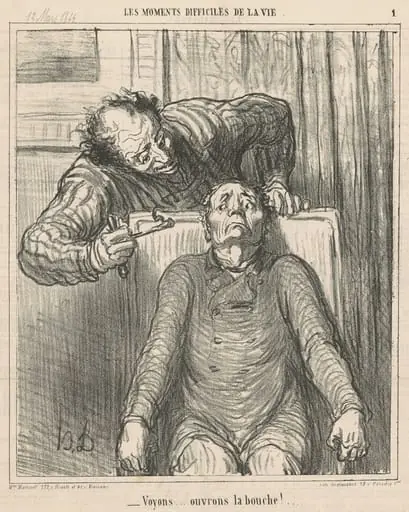 Voyons ... ouvrons le bouche! ...
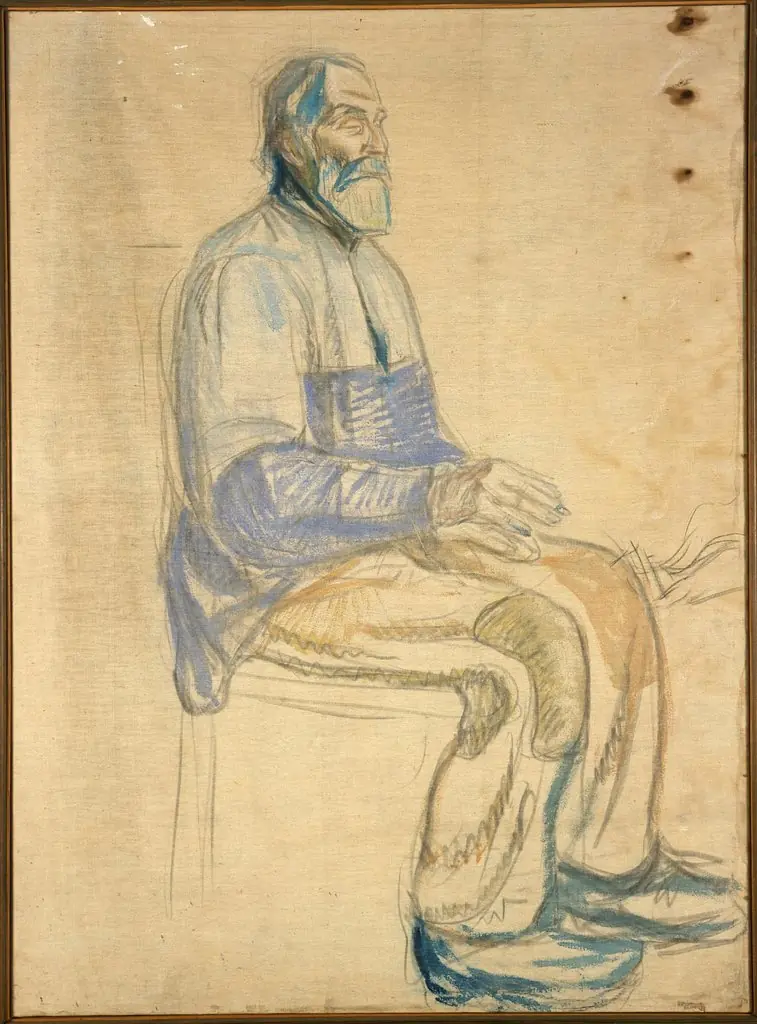 History: Study for the Old Man
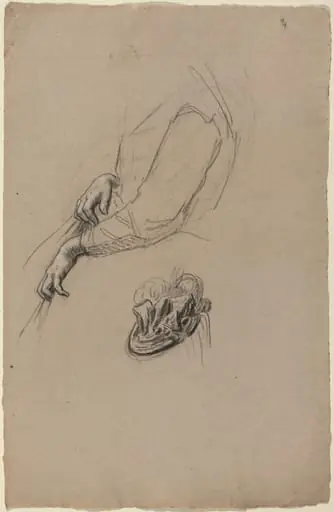 Young Woman's Hands and Beribboned Hat
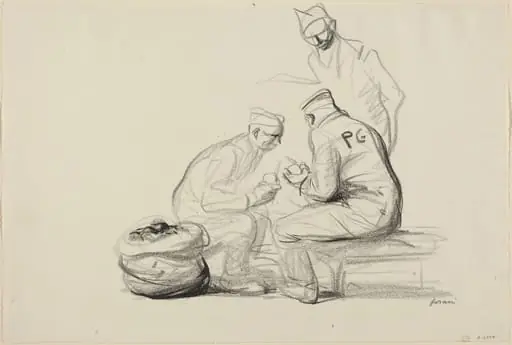 Poilu and German Prisoners
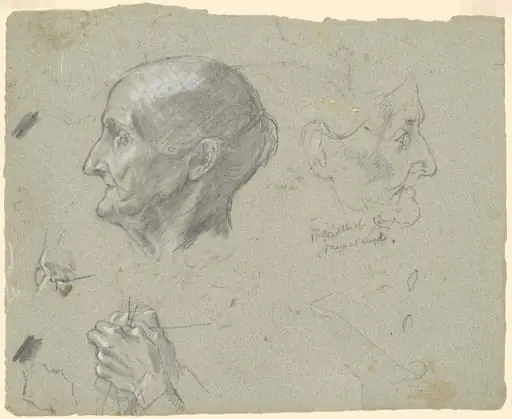 Studies of an Elderly Woman Knitting
 Sketch for In the Hospital (verso)