Artwork
Marcelle Lender Dancing the Bolero in "Chilpéric"
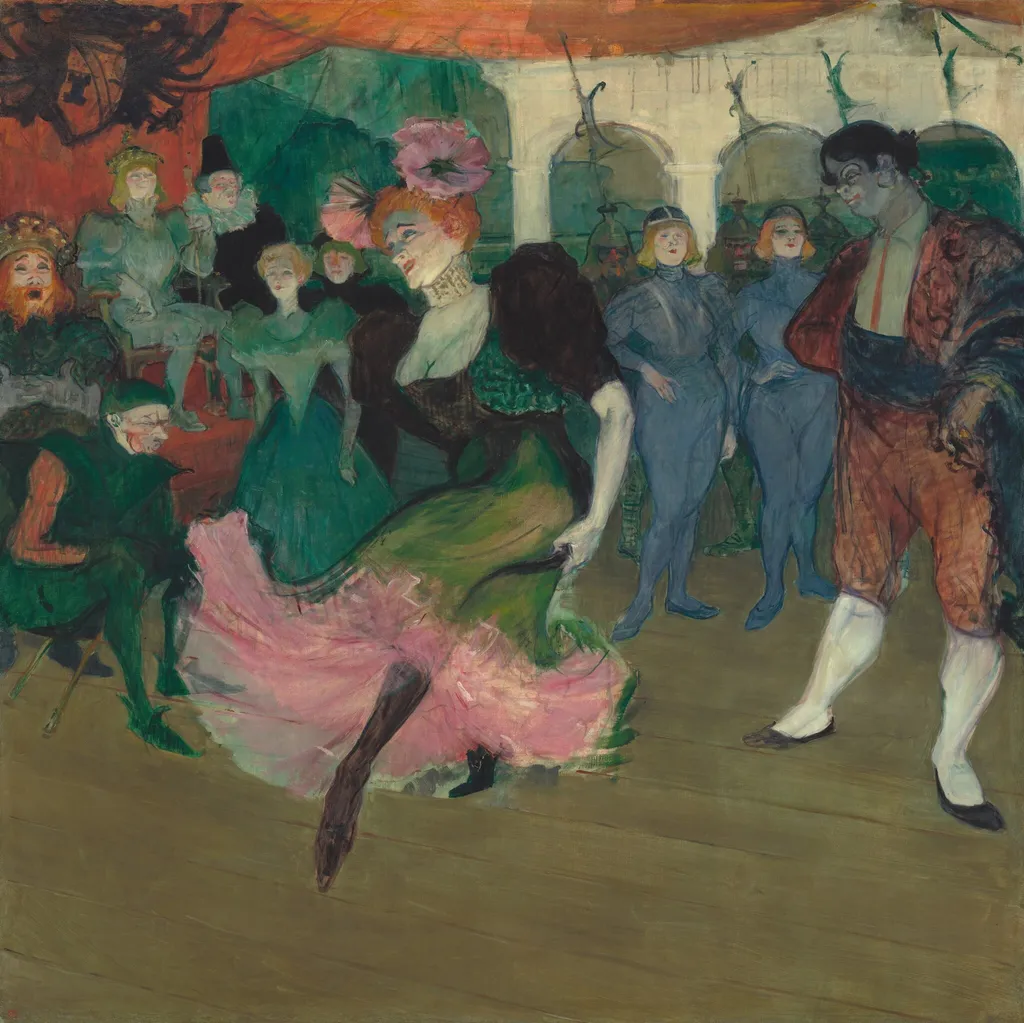
Marcelle Lender Dancing the Bolero in "Chilpéric" is an oil painting by the Impressionist artist Henri de Toulouse-Lautrec. It dates from 1896 and is held in the collection of the National Gallery of Art.
- Inscription
- Inscribed:lower left estate stamp in red: HTL [in a circle]
About this work
Subject & Meaning
By freezing her in mid-movement, Toulouse-Lautrec emphasizes the kinetic energy of dance and the glamour of contemporary stage culture.
The painting portrays the dancer Marcelle Lender executing a bolero within the comic operetta “Chilpéric,” a theatrical scene that highlights the fascination with stage performance in late-nineteenth-century Paris. By freezing her in mid-movement, Toulouse-Lautrec emphasizes the kinetic energy of dance and the glamour of contemporary stage culture. The work, created in 1896, is part of the National Gallery of Art’s collection in Washington, D.C., having passed through the artist’s estate, Maurice Joyant, and John Hay Whitney before its donation in 1998.
Technique & Style
Toulouse-Lautrec executed this work in oil on canvas in 1896, a medium and support consistent with his principal painting practice. The canvas measures 145 by 149 centimeters, producing a nearly square format that frames the dancer with minimal spatial excess. The composition isolates the figure against a darkened background, directing attention to the silhouette of the bolero dancer and the saturated red of her costume.
The estate stamp of the artist, his monogram within a circle at the lower left corner, provides a material link to Toulouse-Lautrec's posthumous inventory. The work is held in the collection of the National Gallery of Art in Washington, D.C., having entered as a partial and promised gift in 1990 and completed as a gift in 1998.
History & Provenance
The work, an oil on canvas painted in 1896, portrays the dancer Marcelle Lender performing the bolero in the operetta Chilpéric. It was first recorded in the artist’s estate in 1901 and subsequently passed to Maurice Joyant, then to Mme M.G. Dortu; the painting was exhibited in 1931 before being sold on 1 August 1950 through Hector Brame to John Hay Whitney. After Whitney’s death the piece entered the National Gallery of Art, Washington, D.C., with a partial gift in 1990 and the transfer completed in 1998. Its creation coincides with Toulouse-Lautrec’s series of theatrical portraits from the mid-1890s.
Marcelle Lender Dancing the Bolero in "Chilpéric" is held by the National Gallery of Art in Washington, D.C. The painting entered the museum's collection as a partial and promised gift from Mr. and Mrs. John Hay Whitney in 1990, with the gift formally completed in 1998. The work was lent by Madame Dortu to a 1931 exhibition.
Legacy
The painting Marcelle Lender Dancing the Bolero in “Chilpéric” entered the National Gallery of Art in Washington, D.C., through the gift of John Hay Whitney, a process that began in 1990 and was finalized in 1998. Its presence in a major U.S. museum has made the work a reference point for studies of Henri de Toulouse-Lautrec’s fascination with Parisian stage culture and the figure of the dancer Marcelle Lender. An earlier showing in a 1931 exhibition associated with Madame M.G. Dortu helped sustain Lender’s posthumous reputation, while the painting’s place in the NGA collection continues to inform interpretations of Lautrec’s blend of realism and theatricality.
Overview
Henri de Toulouse-Lautrec's 1896 oil on canvas, "Marcelle Lender Dancing the Bolero in 'Chilpéric'," captures the celebrated actress and dancer Marcelle Lender mid-performance. This work exemplifies the artist's deep engagement with the vibrant theatrical life of fin-de-siècle Paris, focusing on the energy and spectacle of the stage. It highlights his characteristic style in depicting the city's entertainers.
Context
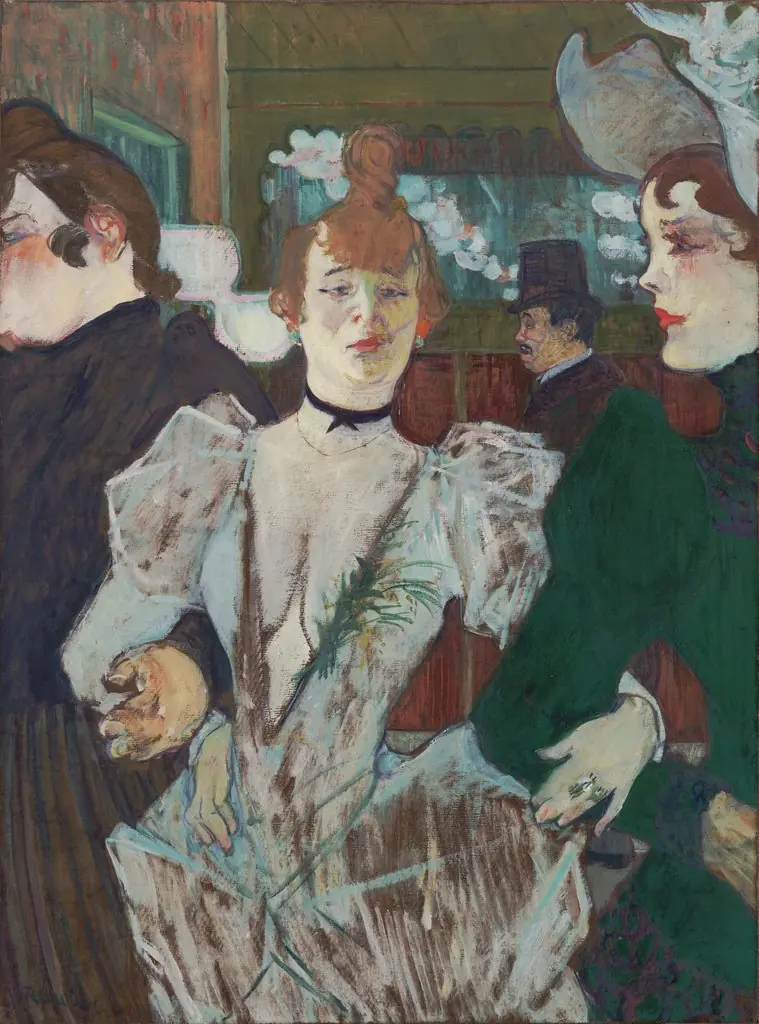
Born into an aristocratic family, Henri de Toulouse-Lautrec's personal circumstances and his immersion in the theatrical and cabaret scenes of late 19th-century Paris profoundly influenced his artistic output. His work, including this portrayal of Marcelle Lender, provides a window into the city's lively, often unconventional, cultural milieu and his particular interest in its performers and marginalized inhabitants.
Own this work as a print
Artist & collection
Artist
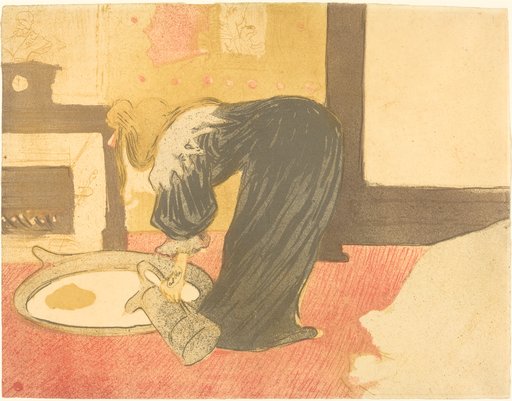
Comte Henri Marie Raymond de Toulouse-Lautrec-Montfa (24 November 1864 – 9 September 1901), known as Toulouse-Lautrec (French: ), was a French painter, printmaker, draughtsman, caricaturist, and illustrator.

 Studied in the Edo/Japonisme course