Artwork
Les Liliacées: Tradescantia discolor
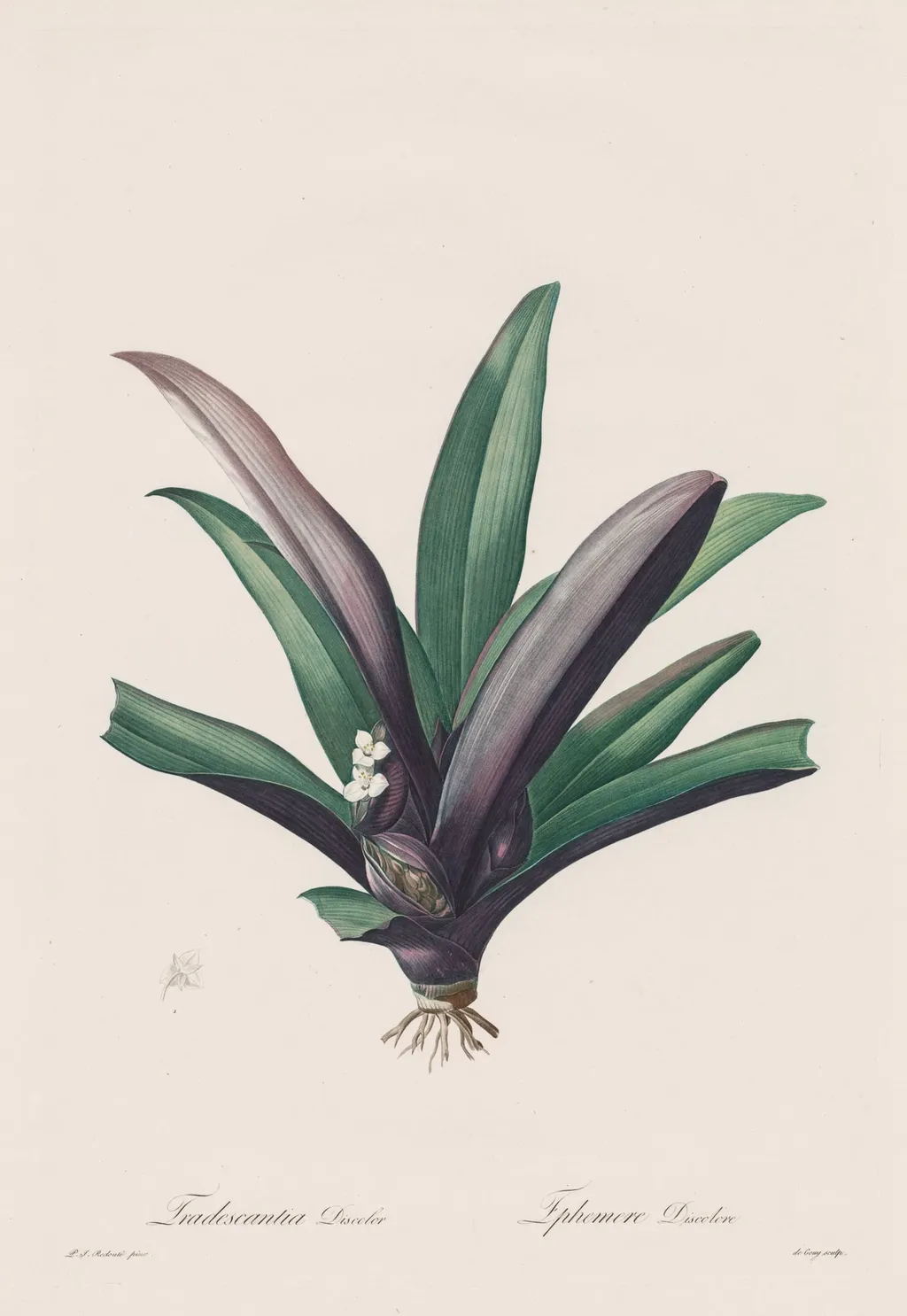
Les Liliacées: Tradescantia discolor is a print by the Romanticist artist Henry Joseph Redouté. It dates from 1809 and is held in the collection of the Cleveland Museum of Art.
- Accession no.
- 1955.329
About this work
Overview
Set against a neutral background, the painting emphasizes the precise anatomical details and naturalistic coloration typical of Redouté's scientific approach.
Created in 1809, Les Liliacées: Tradescantia discolor is a botanical illustration by the French artist Henry Joseph Redouté. The work depicts the Tradescantia discolor, a species characterized by its long, pointed leaves that display a distinct coloration: green on the upper surface and a vibrant purple beneath. Redouté arranges the foliage in a dynamic fan shape, with individual leaves overlapping to create depth and volume.
At the center of this vegetative cluster emerges a delicate white flower with three petals, serving as the focal point of the composition. Set against a neutral background, the painting emphasizes the precise anatomical details and naturalistic coloration typical of Redouté's scientific approach. This piece is part of his extensive series on liliaceous plants, produced during a period when he was renowned for combining rigorous botanical accuracy with the aesthetic sensitivity of fine art.
The work exemplifies the high standards of French botanical illustration in the early 19th century, serving both as a scientific record and an artistic achievement.
Subject & Meaning
The image focuses on a single specimen whose long, lance‑shaped leaves are green externally and display a deep violet hue on their inner surfaces. The leaves fan out in a layered arrangement, and a modest white flower with three petals rises from the centre, emphasizing the plant’s delicate structure.
Technique & Style
Redouté employs a restrained palette and fine line work to render the foliage and flower with clarity against an unadorned background. Subtle gradations of colour convey the leaf thickness and translucency, while the clean composition reflects the precision typical of early‑19th‑century botanical illustration.
History & Provenance
The print was produced during Redouté’s prolific period of botanical publishing in the Napoleonic era. It later entered the holdings of the Cleveland Museum of Art, where it remains accessible to scholars and visitors as an example of scientific art from the Romantic period.
Own this work as a print
Artist & collection
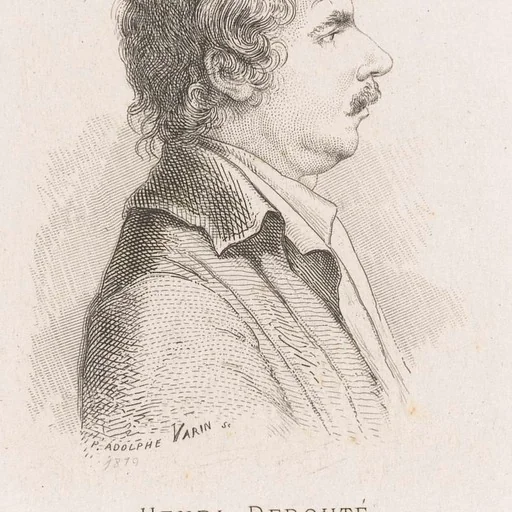
Artist
Henry Joseph Redouté (1766–1852) was a French artist, born in Saint-Hubert.