Artwork
Hyde Street Trolley
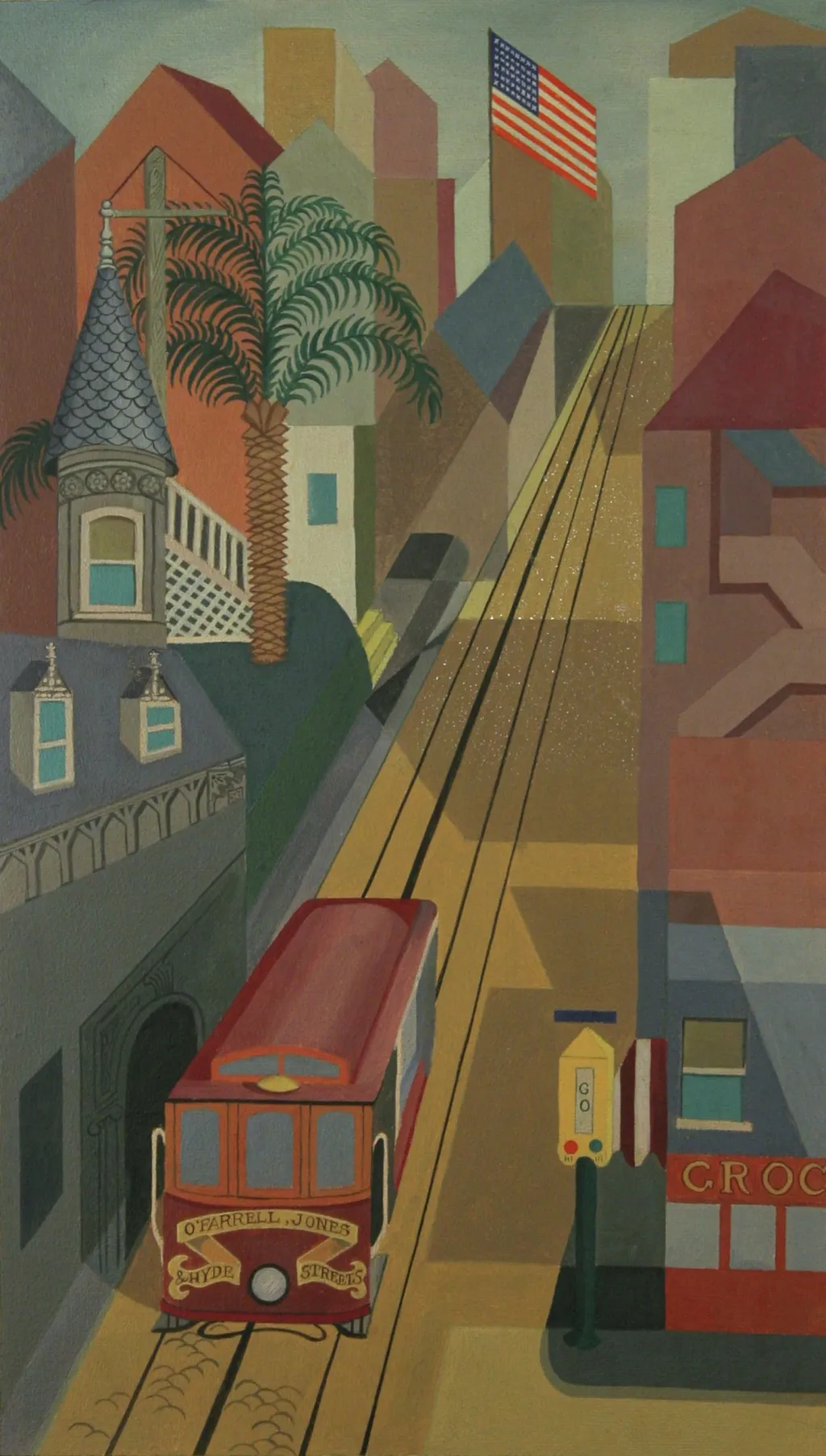
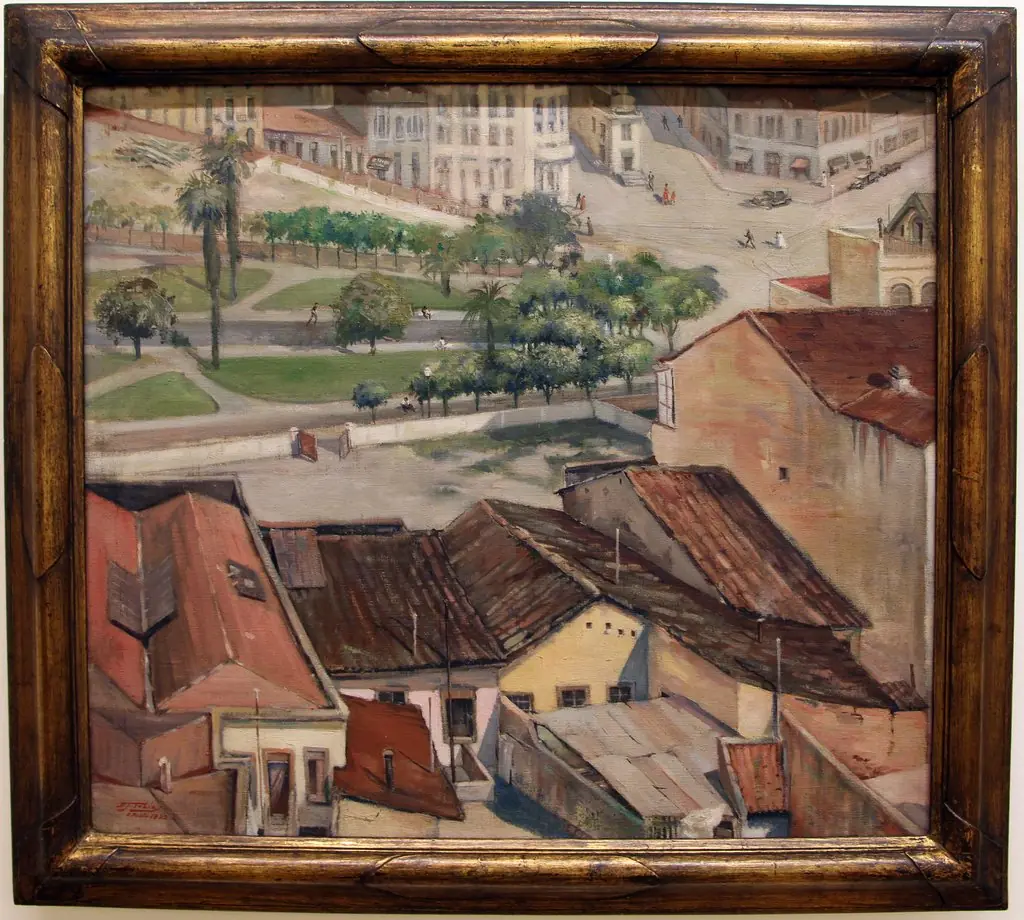
Hyde Street Trolley is an unspecified painting by Hilaire Hiler. It dates from 1942 and is held in the collection of the Detroit Institute of Arts.
About this work
Overview
Hilaire Hiler painted Hyde Street Trolley circa 1942, reflecting his interdisciplinary approach that merged visual art with psychological inquiry.
Hilaire Hiler painted Hyde Street Trolley circa 1942, reflecting his interdisciplinary approach that merged visual art with psychological inquiry. The work captures a San Francisco streetscape during a period of urban transition, rendered not as a documentary image but as an investigation into how color influences spatial perception. Hiler’s background in both art and psychoanalysis informed his deliberate use of hue to evoke mood and movement within the scene.
Subject & Meaning
The painting portrays a red trolley moving along tracks on Hyde Street, its signage marking the intersection with O’Farrell and Jones. Surrounding buildings, varied in style and color, suggest a dense, layered urban environment. Palm trees and American flags introduce symbolic contrasts, tropical softness against civic rigidity, while the muted sky grounds the scene in everyday reality.
Hiler’s focus lies not in narrative but in the psychological resonance of color relationships within a shared public space.
Technique & Style
Hiler employed a structured yet expressive palette, assigning distinct hues to architectural elements to create visual rhythm without relying on traditional perspective. Brushwork is deliberate but not overly detailed, emphasizing flat planes of color over realistic texture. The trolley’s red form acts as a focal anchor, while the gray sky and varied building tones establish a tonal harmony rooted in his theories of chromatic interaction. The composition channels a sense of motion through alignment and color contrast rather than dynamic gesture.
History & Provenance
Created during Hiler’s time in the United States after years spent in Europe, the painting emerged from his engagement with American urban life and his ongoing study of color psychology. It entered the collection of the Detroit Institute of Arts, where it remains as part of a broader effort to document mid-century American artists who bridged scientific and aesthetic inquiry. Its preservation reflects institutional recognition of Hiler’s unique contribution to color theory in visual art.
Context
In the early 1940s, American cities were undergoing modernization, with streetcars still central to public transit before the rise of automobiles. Hiler’s interest in trolleys aligned with broader cultural observations of urban rhythm and collective experience. His work stood apart from both social realism and abstraction, instead proposing color as a structural and emotional language capable of conveying the quiet complexity of ordinary urban moments.
Legacy
Hyde Street Trolley exemplifies Hiler’s enduring influence on the study of color perception in art. Though less known than his contemporaries, his integration of psychological frameworks into visual composition paved the way for later explorations in color theory. The painting endures not as a nostalgic record but as a calibrated study in how hue organizes visual experience, offering a quiet alternative to dominant narratives of modernist abstraction.
Artist & collection
Artist
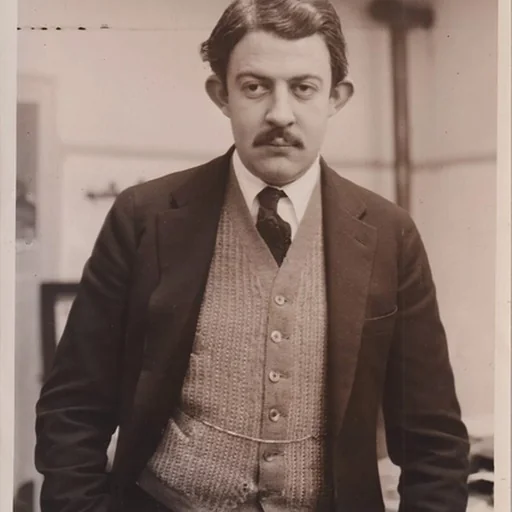
Hilaire Harzberg Hiler (July 16, 1898 – January 19, 1966) was an American artist, psychologist, and color theoretician who worked in Europe and United States during the mid-20th century.