Artwork
Plate 16: Wild Boar
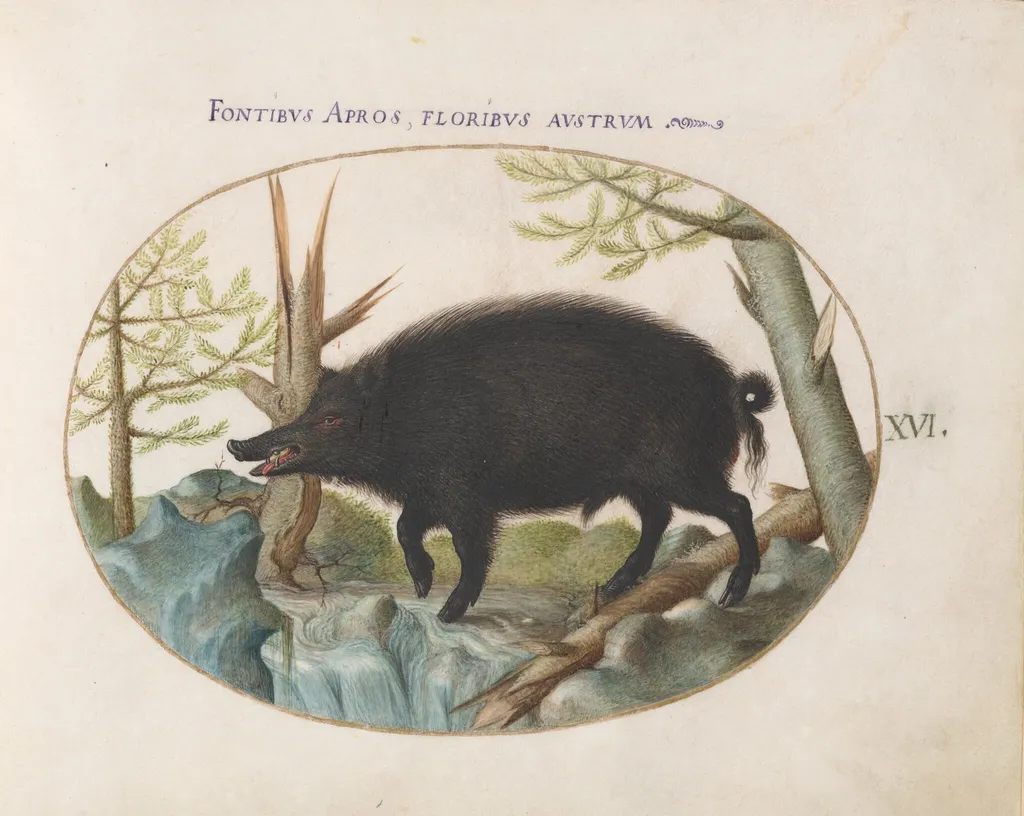
Plate 16: Wild Boar is a gouache drawing by the Renaissance artist Joris Hoefnagel. It dates from 1594 and is held in the collection of the National Gallery of Art. Created circa 1594, this small-scale work depicts a wild boar rendered in watercolor and gold pigment on parchment.
- Inscription
- Inscribed:upper center in violet ink: FONTIBVS APROS, FLORIBVS AVSTRVM; center right in black ink: XVI.; animal in image numbered 1, in red ink. Facing page: upper center in brown ink: Quanta est gula, quae sibi totos ponit Apros; middle center in black ink: Solus amor veneris, sola insatiata cupido / Sollicitat mentem stimulis, stimulus domat effera corda. / Quis nisi te dominum vitae mortisque fatetur / Magne amor, et Regum et populorum maxime princeps?; lower center in brown ink: Actus Aper, setis iram denunciat hirtis: / Et ruit oppositi nitens in vulnera ferri / Pressus, et emisso moritur su[per]viscera telo.
About this work
Overview
Created circa 1594, this small-scale work depicts a wild boar rendered in watercolor and gold pigment on parchment. The animal is positioned within a modest woodland setting, surrounded by foliage that frames its muscular form. The piece exemplifies the meticulous observation characteristic of Joris Hoefnagel’s natural studies, combining scientific detail with decorative elegance.
Subject & Meaning
The central figure is a European wild boar, shown in a moment of stillness that highlights its coarse fur, powerful shoulders, and alert posture. The surrounding plants and trees provide a contextual backdrop, suggesting the creature’s natural habitat and underscoring the artist’s interest in portraying fauna within their ecological environment.
Technique & Style
Hoefnagel employed transparent watercolor washes to model the boar’s anatomy, layering pigments to achieve depth and texture. Accents of gold paint are applied sparingly, outlining key features and adding a subtle luminous quality. The use of parchment as a support allows for fine brushwork and a delicate surface suitable for the intricate detailing typical of late‑Renaissance miniaturists.
History & Provenance
The drawing forms part of Hoefnagel’s extensive series of natural history illustrations produced for patrons interested in scientific observation and decorative art. Though the original commission remains unidentified, the work survived in a collection of manuscript plates that were later assembled into printed folios of fauna and flora during the early 17th century.
Context
At the turn of the 17th century, Flemish artists like Hoefnagel were instrumental in merging empirical study with artistic practice, laying groundwork for the independent floral still‑life genre in northern Europe. This piece reflects that transitional moment, where detailed observation of wildlife coexisted with the ornamental aesthetics of manuscript illumination.
Own this work as a print
Artist & collection

Artist
Joris Hoefnagel or Georg Hoefnagel (1542 – 24 July 1601) was a Flemish painter, printmaker, miniaturist, draftsman and merchant.

 Forum Vulcani: The Hot Springs at Pozzuoli
 Plate 76: Insects with a Pink and Cream Columbine
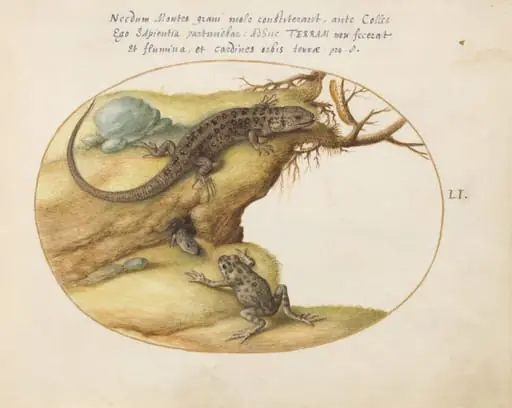 Plate 51: Two Sand Lizards, a Common Parsley Frog(?), and a Caterpillar
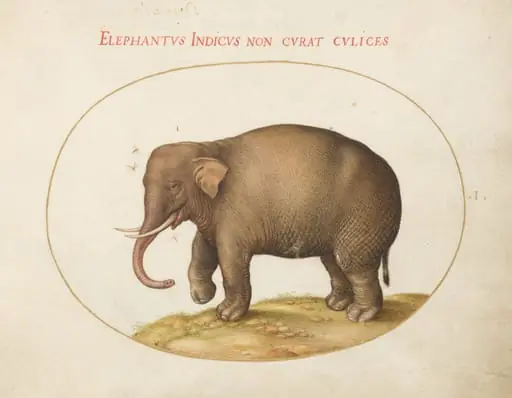 Plate 1: Elephant with Insects
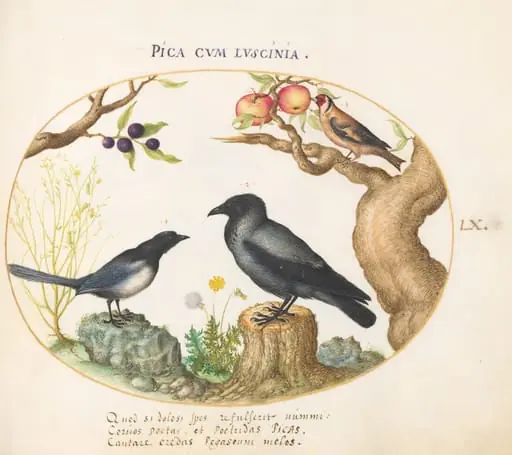 Plate 60: Magpie, Crow, and Goldfinch
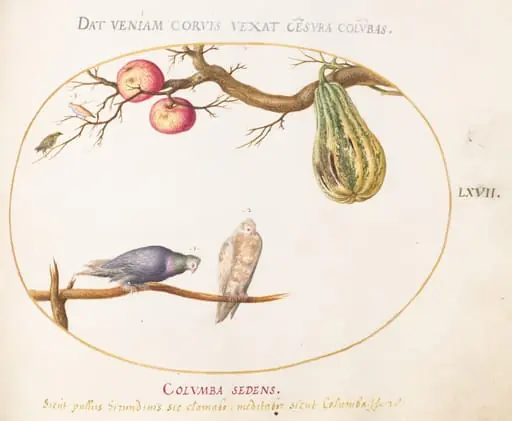 Plate 67: Two Doves beneath a Gourd and Apples
 Plate 31: Seven Moths
 Plate 21: Swamp Hen and Woodcock with a Streaked Rosefinch, a Finch, and Oak Galls
- Plate 17: Old World Porcupine (Hystrix) and Wild Pig
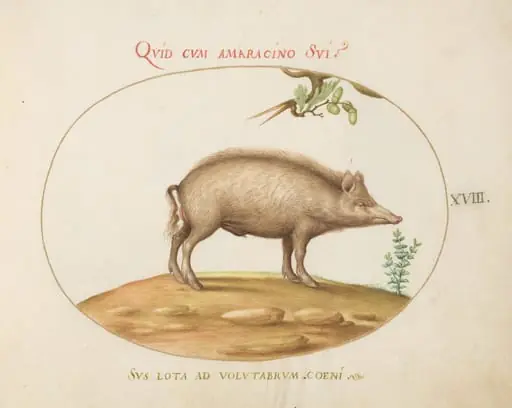 Plate 18: A Pig with Acorns
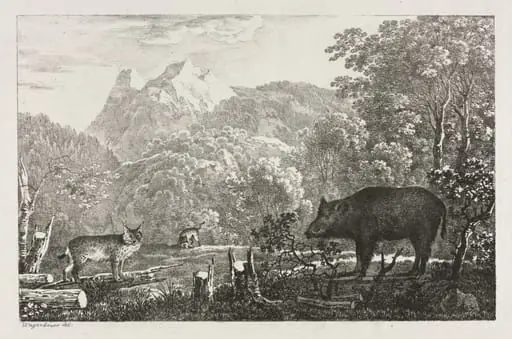 Wild Boar, Wildcat and Lynx
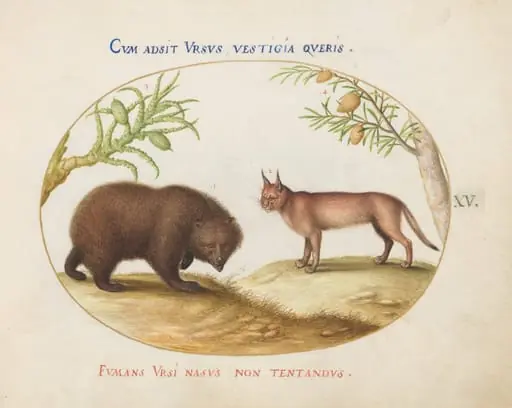 Plate 15: A Bear and a Lynx(?)
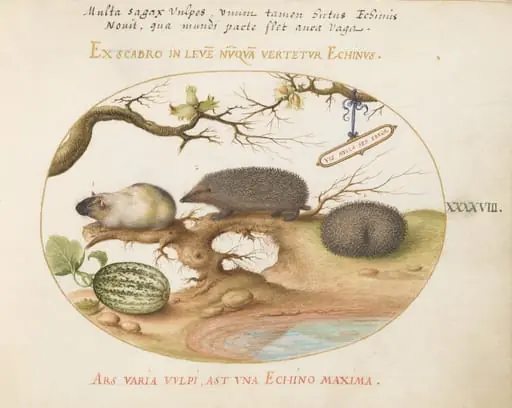 Plate 48: Guinea Pig and Hedgehogs with Melon and Cobnuts
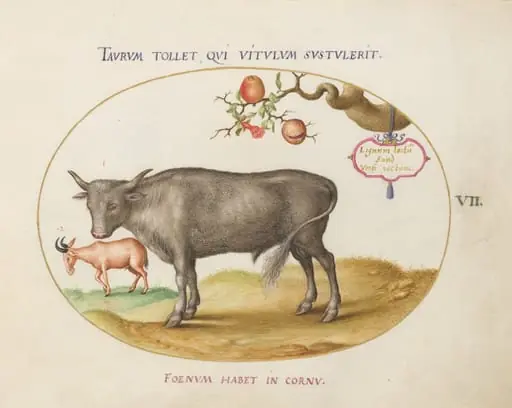 Plate 7: A Bull and a Horned Animal
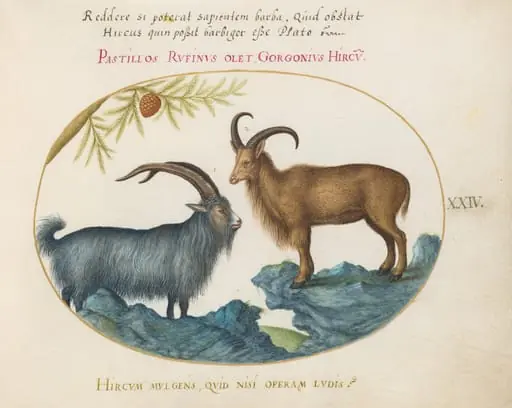 Plate 24: A Wild Goat and a Barbary Sheep(?)
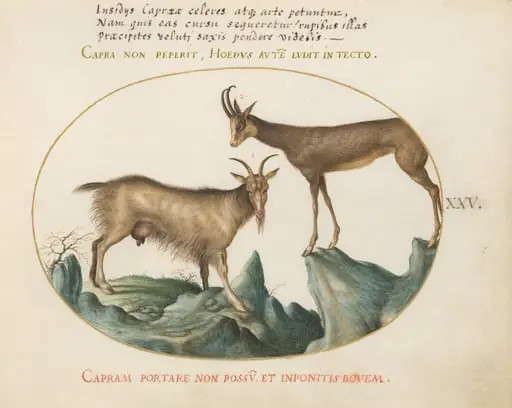 Plate 25: Two Wild Goats
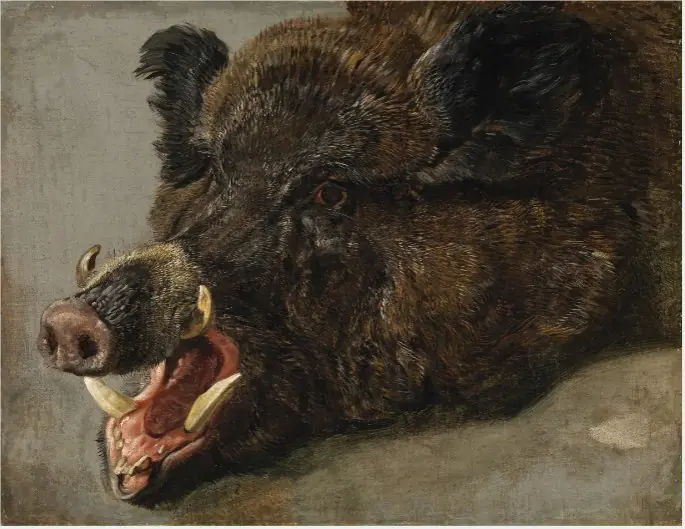 The Head of a Wild Boar
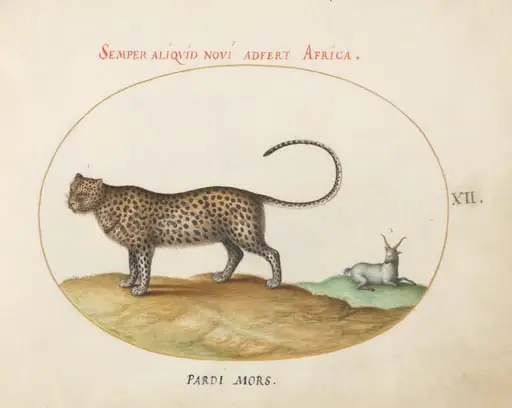 Plate 12: A Cheetah(?) and a Wild Sheep