Artwork
Plate 25: Two Wild Goats
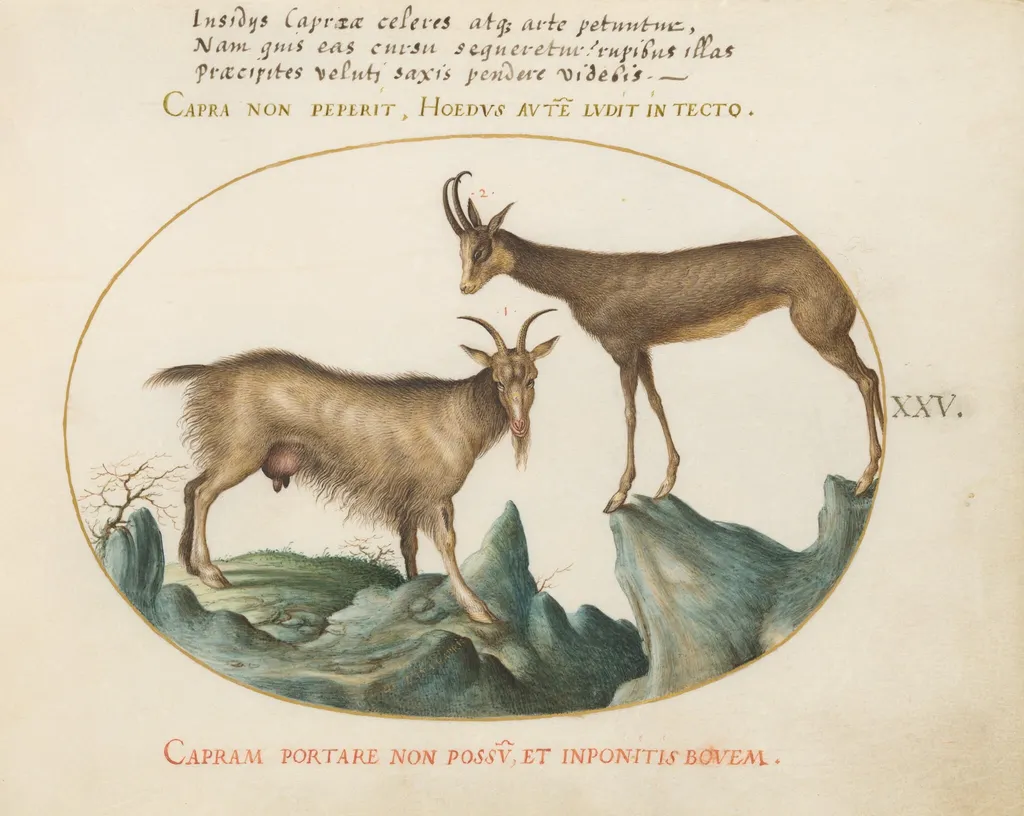
Plate 25: Two Wild Goats is a gouache drawing by the Renaissance artist Joris Hoefnagel. It dates from 1594 and is held in the collection of the National Gallery of Art.
- Inscription
- Inscribed:upper center in black ink: Insidys Capraeae celeres atq[ue] arte petuntur, / Nam quis eas cursu sequeretur rupibus illas / praecipites veluti saxis pendere videbis. / upper center in (gold?): CAPRA NON PEPERIT, HOEDVS AVTE[M] LVDIT IN TECTO.; center right in black: XXV.; animals in image numbered .1. and .2., in red ink; on rock in lower center of image in (gold?): DI LANA CAPRI; lower center in red ink: CAPRAM PORTARE NON POSSU[M], ET INPONITIS BOVEM. Facing page: upper center in (gold?): Pendentem summa Capream de rupe videbis: / Casuram speres, decipit illa canes.; lower center in brown ink: Capra calce profundit lac, quod dedit.
About this work
Overview
Plate 25: Two Wild Goats is a drawing created by Joris Hoefnagel around 1594. It is executed in watercolor and gold paint on parchment.
Subject & Meaning
The drawing depicts two goats on a rocky outcropping, set against a simple landscape of trees and hills, all contained within a circular border highlighted in gold. The surrounding text is in Latin.
Technique & Style
Hoefnagel's use of watercolor and gold paint on parchment achieves a detailed, soft appearance. The watercolor technique likely involved layering washes to build up the colors and achieve the desired level of precision.
History & Provenance
As a Flemish artist, Hoefnagel was among the last practitioners of manuscript illumination. His work reflects the era's focus on observational accuracy and contributed to the development of topographical and still-life genres in northern Europe.
Own this work as a print
Artist & collection

Artist
Joris Hoefnagel or Georg Hoefnagel (1542 – 24 July 1601) was a Flemish painter, printmaker, miniaturist, draftsman and merchant.

 Forum Vulcani: The Hot Springs at Pozzuoli
 Plate 76: Insects with a Pink and Cream Columbine
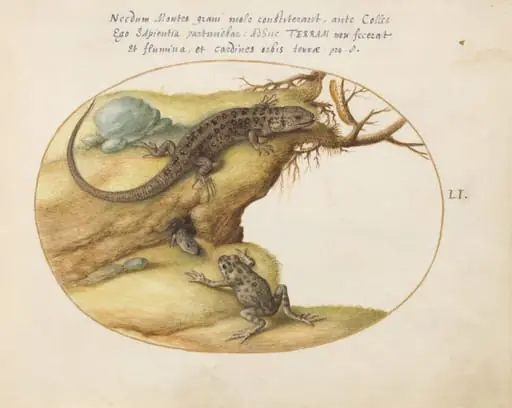 Plate 51: Two Sand Lizards, a Common Parsley Frog(?), and a Caterpillar
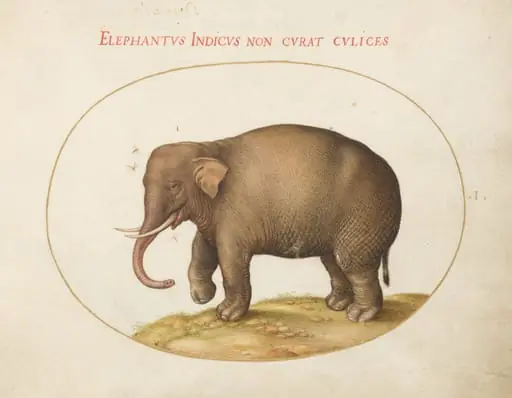 Plate 1: Elephant with Insects
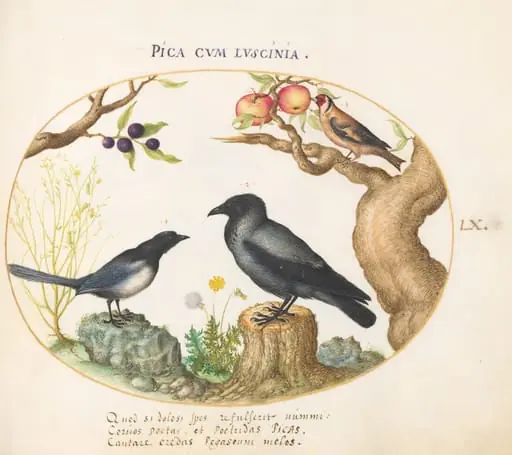 Plate 60: Magpie, Crow, and Goldfinch
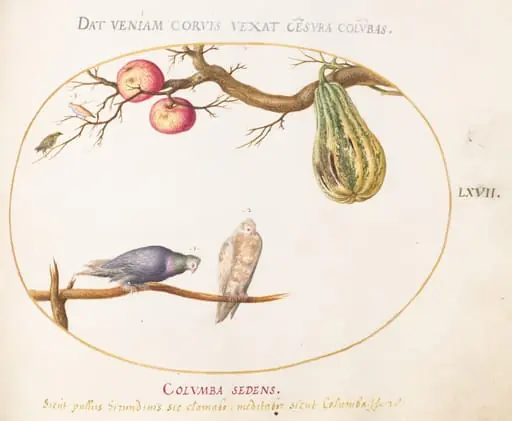 Plate 67: Two Doves beneath a Gourd and Apples
 Plate 31: Seven Moths
 Plate 21: Swamp Hen and Woodcock with a Streaked Rosefinch, a Finch, and Oak Galls
- Plate 24: A Wild Goat and a Barbary Sheep(?)
 Plate 3: Camel, Ibex, and Goat
 Plate 12: A Cheetah(?) and a Wild Sheep
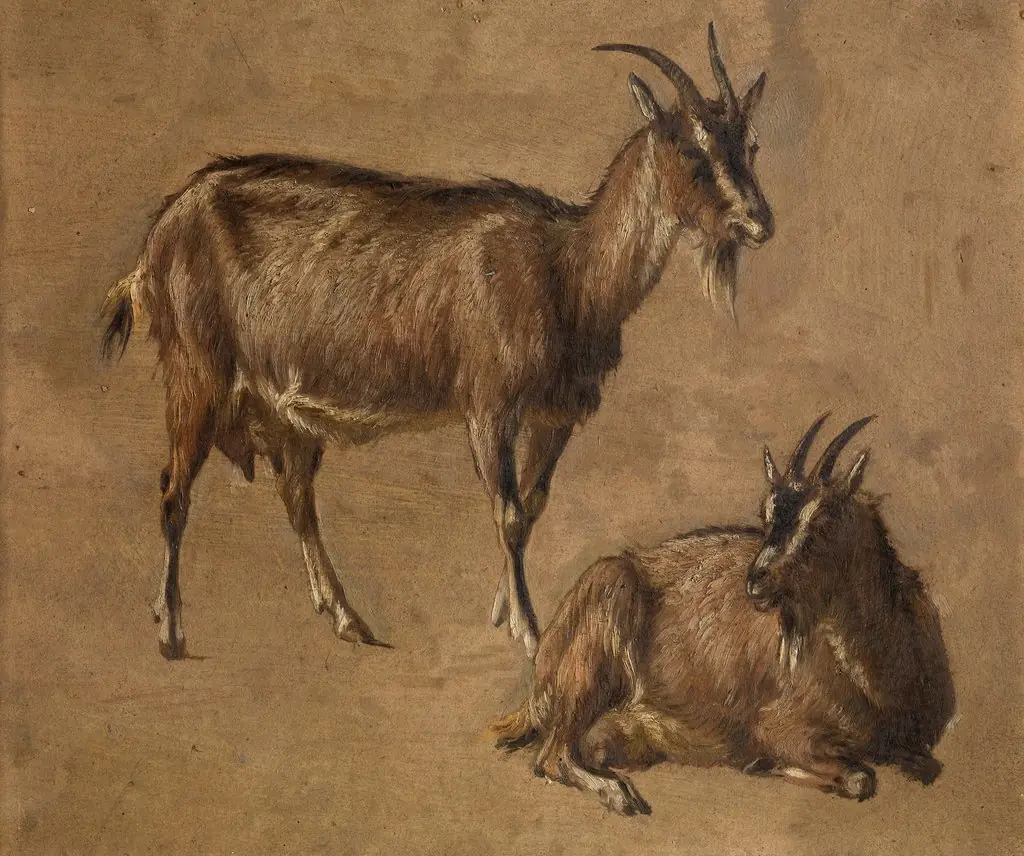 Goats
Goats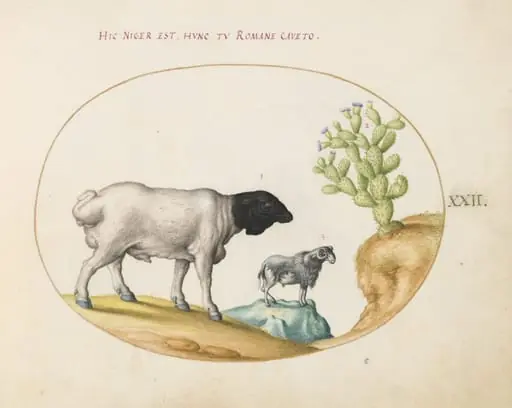 Plate 22: Blackhead Persian Sheep and a Sheep with a Long Tail, with a Cactus
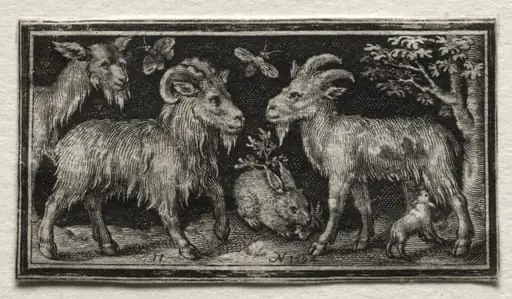 Goats and Hare
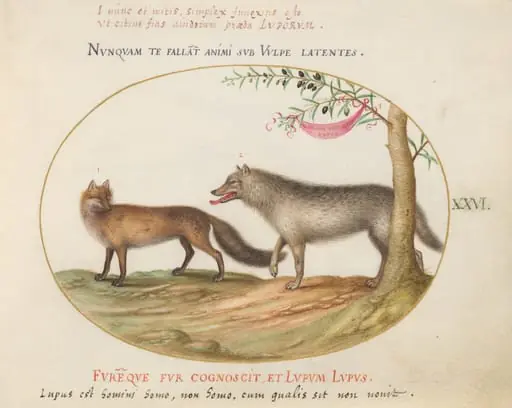 Plate 26: A Red Fox and a Wolf
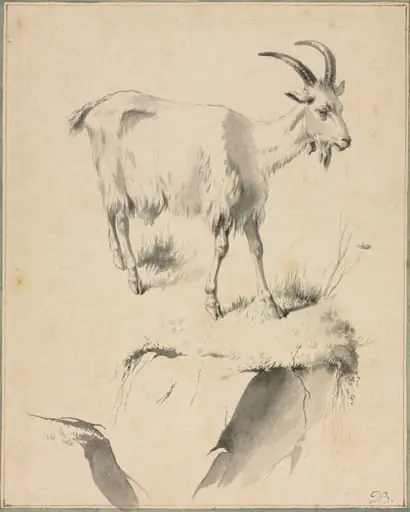 Study of a Goat
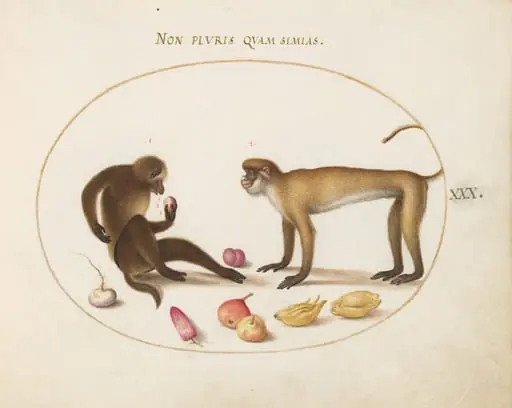 Plate 30: Two Monkeys
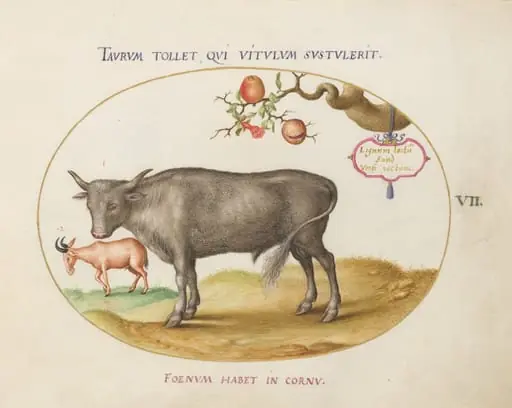 Plate 7: A Bull and a Horned Animal