Artwork
Plate 69: Nine Bees and Other Insects
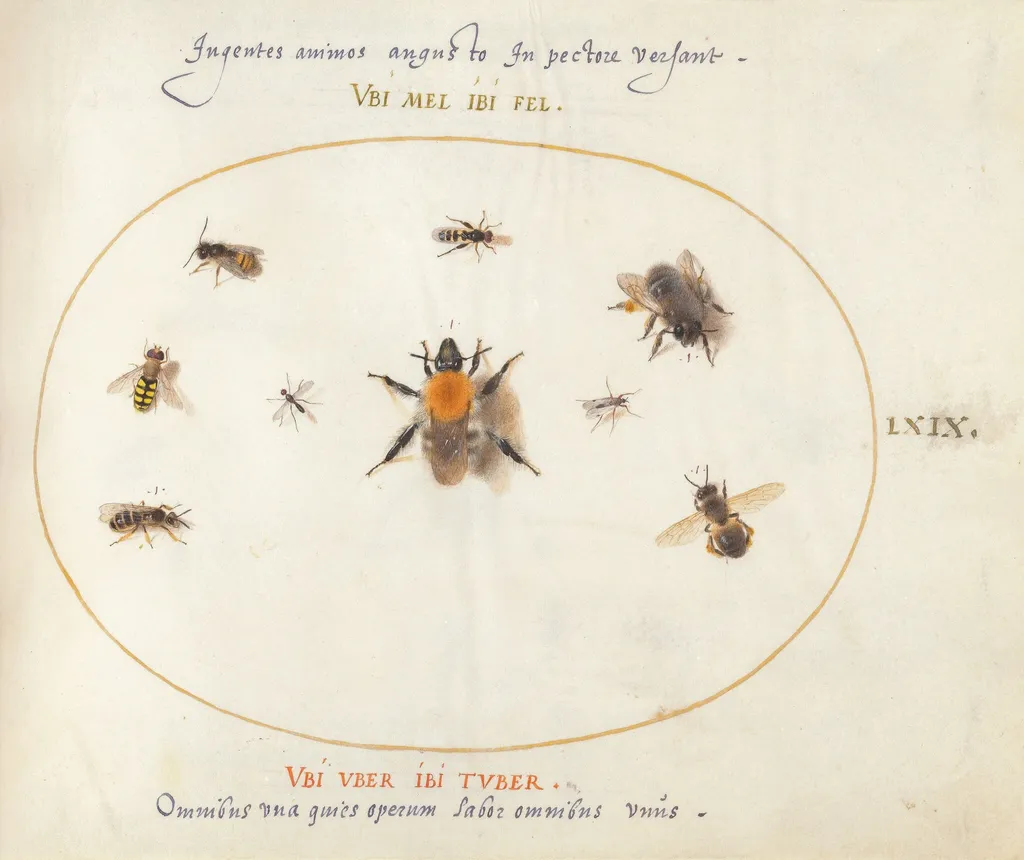
Plate 69: Nine Bees and Other Insects is a gouache drawing by the Renaissance artist Joris Hoefnagel. It dates from 1594 and is held in the collection of the National Gallery of Art.
- Inscription
- Inscribed:Upper center in blue/violet ink: Ingentes animos angusto in pectore versant. (“[They] harbor great spirits in tiny breasts.” Virgil, _Georgics_, 4.83, 4.184) (trans. Bass 2019, 3) / VBI MEL IBI FEL. (“There is no honey without bile.”) (trans. Bass 2019, 4); insects in image numbered .1., in red ink; center right in (gold?): LXIX.; lower center in red/orange ink: VBI VBER IBI TVBER. (“There is no rose without thorns.”) (trans. Bass 2019, 4); lower center in black ink: Omnibus una quies operum labor omnibus unus. (“They all have one job, and one respite from labor.” Virgil, _Georgics_, 4.83, 4.184) (trans. Bass 2019, 4) Facing page: Upper center in red ink: Non laudes virum in specie sua: Neq[ue] spernas hominem in / visu suo. Brevis in volatilibus est Apis: et initium / dulcoris habet fructus eius. Eccl: 11: (“Praise not a man for his beauty, neither despise a man for his look. The bee is small among flying things, but her fruit has the chiefest sweetness.” Ecclesiasticus 11:2-3) (Latin Vulgate Bible); center in black ink: Dum puer alveolo furatur mella Cupido, / Furanti digitum cuspide fixit APIS. / Sic etiam nobis brevis et peritura voluptas, / Quam petimus tristi mixta dolore nocet.; lower center in red ink: In apes ne fervas, ne malum feras.; lower center in blue/black ink: Illis ira modum supra est [lesaeque?] venenum / Morsibus inspirant, et spicula caeca relinquunt / Affixa venis, animasq[ue] in vulnere ponunt.
About this work
Overview
Plate 69: Nine Bees and Other Insects is a watercolor and gold paint drawing on parchment created by Joris Hoefnagel around 1594. It is a characteristic example of the artist's detailed natural history illustrations.
Subject & Meaning
The drawing depicts nine insects, including various types of bees and flies, arranged in a circular pattern. The insects are rendered in intricate detail, with some facing towards the center and others outwards, against a light beige background.
Technique & Style
Hoefnagel's use of watercolor and gold paint on parchment showcases his skill in manuscript illumination techniques, while the naturalistic depiction of insects reflects his nearly scientific approach to representing flora and fauna.
Context
Created during the late 16th century, this work contributed to the transition from manuscript illumination to independent still-life painting in northern Europe, influencing the development of naturalistic and floral genres.
Own this work as a print
Artist & collection

Artist
Joris Hoefnagel or Georg Hoefnagel (1542 – 24 July 1601) was a Flemish painter, printmaker, miniaturist, draftsman and merchant.

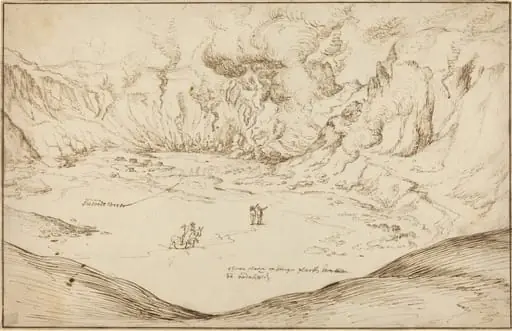 Forum Vulcani: The Hot Springs at Pozzuoli
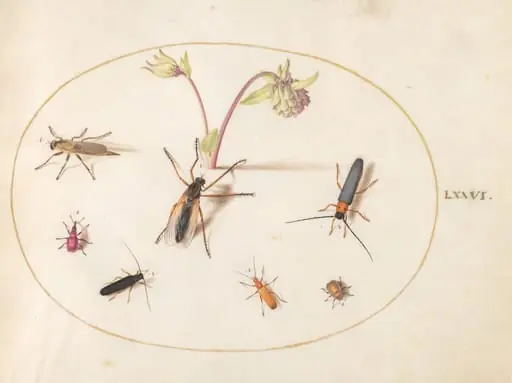 Plate 76: Insects with a Pink and Cream Columbine
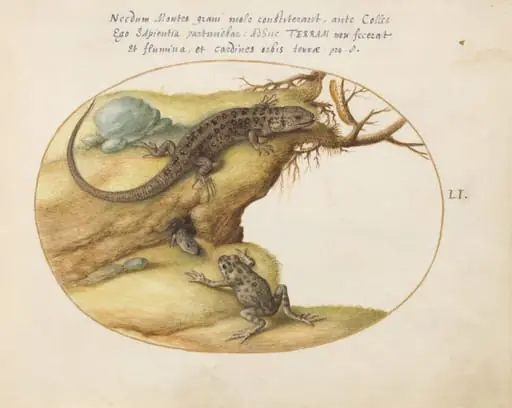 Plate 51: Two Sand Lizards, a Common Parsley Frog(?), and a Caterpillar
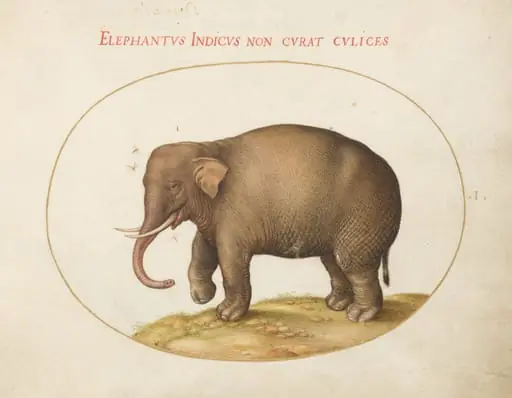 Plate 1: Elephant with Insects
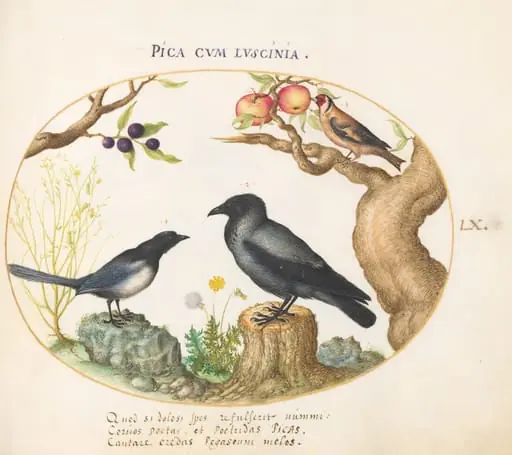 Plate 60: Magpie, Crow, and Goldfinch
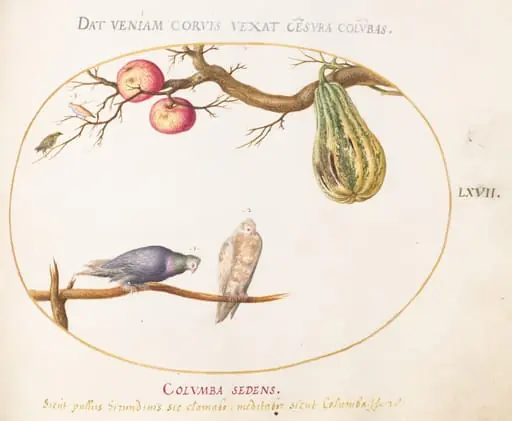 Plate 67: Two Doves beneath a Gourd and Apples
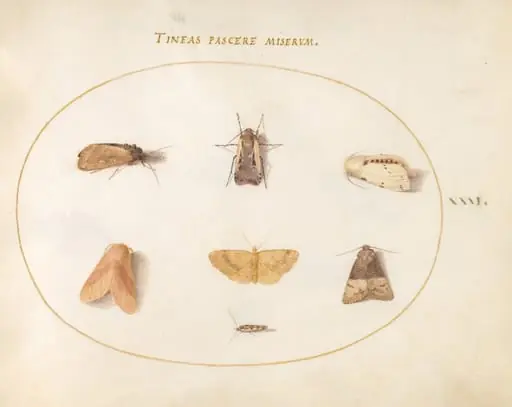 Plate 31: Seven Moths
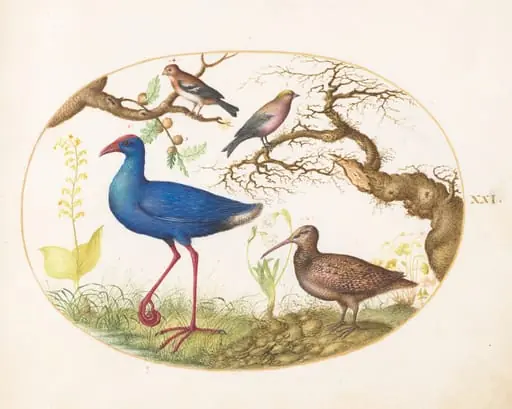 Plate 21: Swamp Hen and Woodcock with a Streaked Rosefinch, a Finch, and Oak Galls
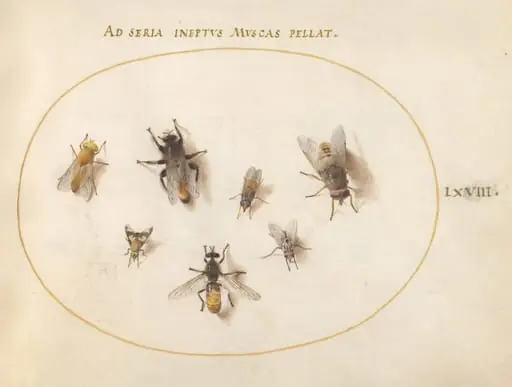
- Plate 68: Seven Bees and Flies
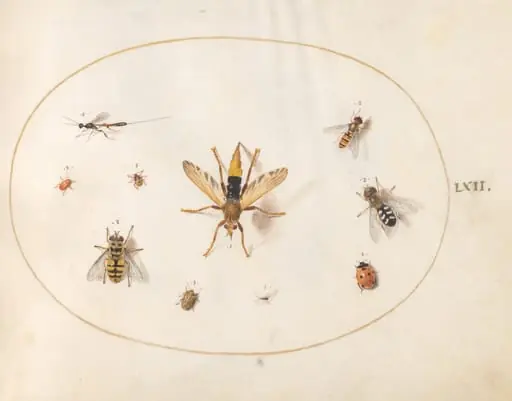 Plate 62: Ten Insects
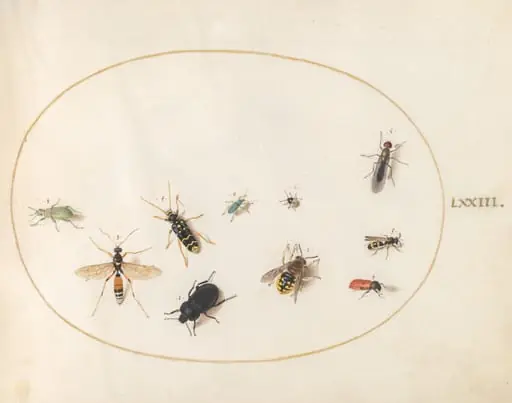 Plate 73: Ten Insects
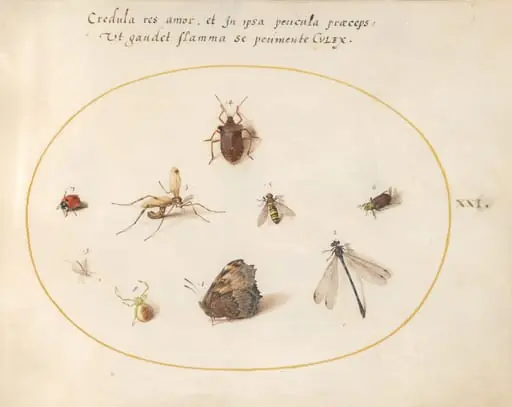 Plate 21: A Butterfly with a Dragonfly, a Ladybug, and Five other Insects
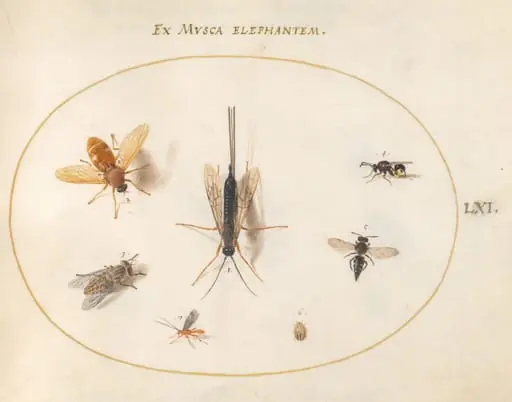 Plate 61: Seven Insects, Including Flies
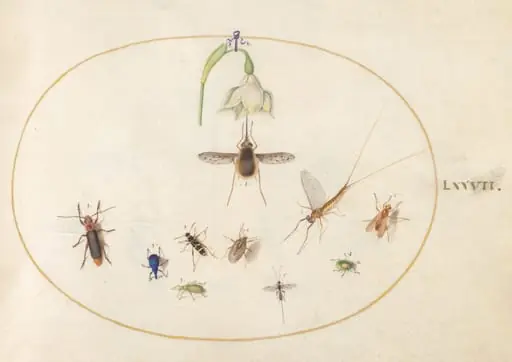 Plate 77: Dotted Bee Fly with a White Flower, a Mayfly, a Blue Weevil, and Other Insects
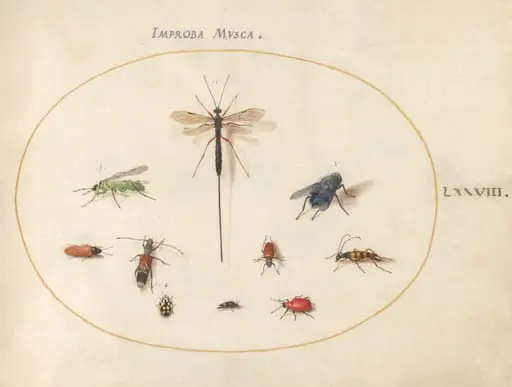 Plate 78: Ten Insects, Including a Blue Fly
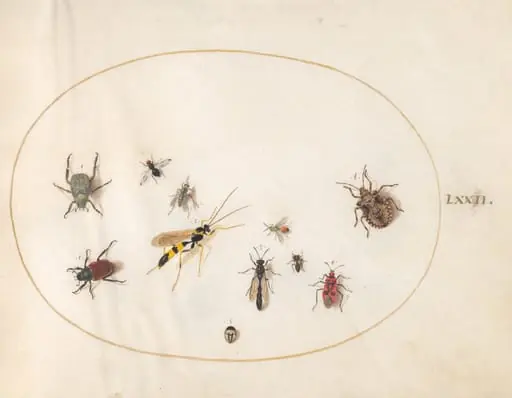 Plate 72: Shield Bug, Cinnamon Bug, Wasp, and Other Insects
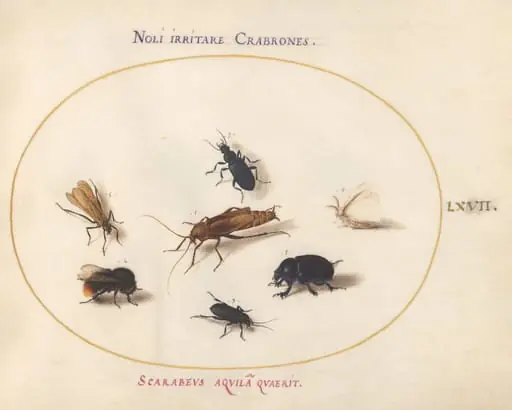 Plate 67: Seven Insects, Including a White Butterfly and a Bee
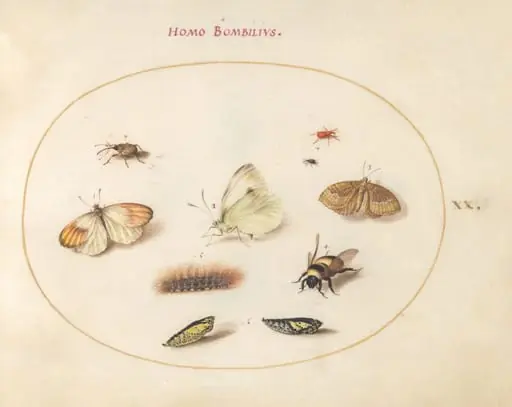 Plate 20: Three Butterflies, a Caterpillar, a Bee, Two Chrysalides, and Three Weevils
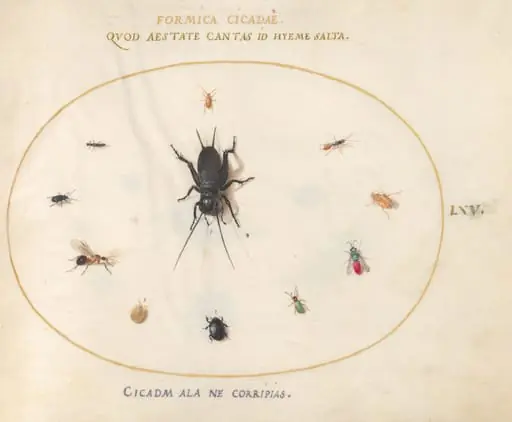 Plate 65: A Cricket Surrounded by Insects, Including a Ruby-Tailed Wasp