Artwork
Plate 62: Ten Insects
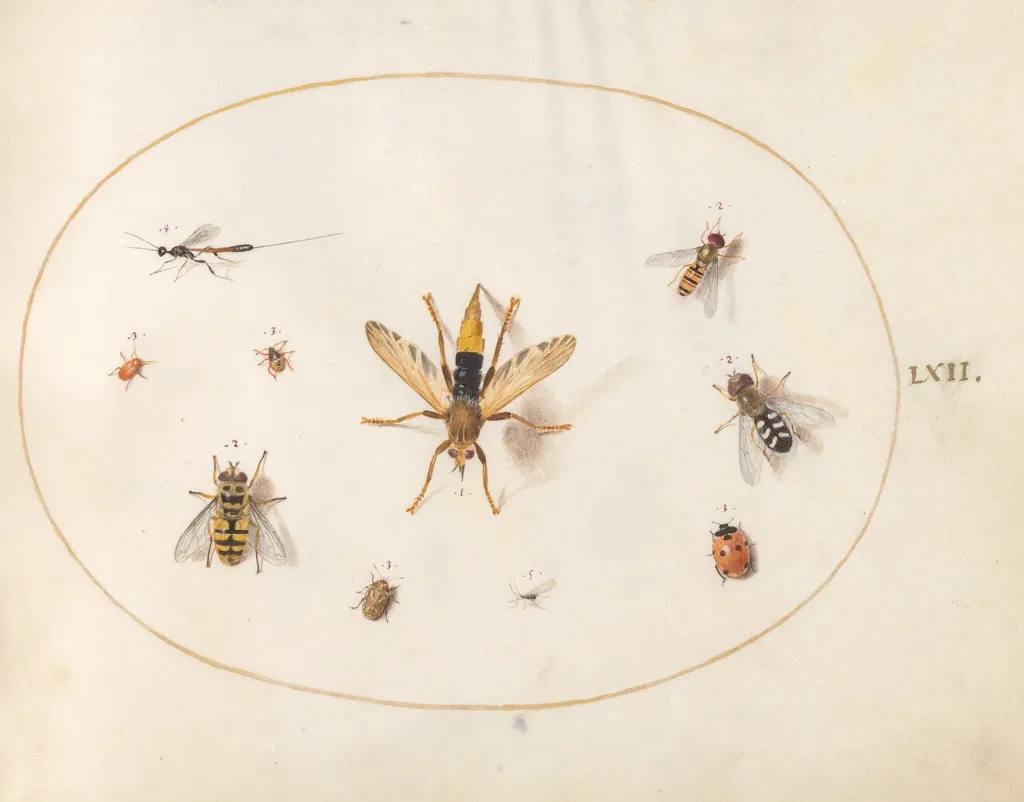
Plate 62: Ten Insects is a gouache drawing by the Renaissance artist Joris Hoefnagel. It dates from 1594 and is held in the collection of the National Gallery of Art.
- Inscription
- Inscribed:Center right in brown ink: LXII. Facing page: Upper center in blue/black ink: Mel invenisti commede quod sufficit tibi / ne forte saciatus evomas illud.pro: 25. (“You have found honey, eat what is sufficient for you, lest being glutted with it you vomit it up.” Proverbs 25:16) (Latin Vulgate Bible); lower center in blue/black ink: sicut qui Mel multum commedit non est ei bonum / sic qui scrutator est magestatis, opprimetur a gloria.pro.25. (“As it is not good for a man to eat much honey, so he that is a searcher of majesty, shall be overwhelmed by glory.” Proverbs 25:27) (Latin Vulgate Bible)
About this work
Overview
Created circa 1594, Plate 62: Ten Insects is a small-scale drawing by the Flemish artist Joris Hoefnagel. Executed in watercolor with gold paint on a sheet of parchment, the work presents a group of ten insects rendered with meticulous attention to form and surface.
Subject & Meaning
The composition features a dragonfly, a beetle and seven additional insects, each isolated against a neutral background. The gold edging that frames each creature emphasizes their delicate structures, suggesting a blend of scientific observation and decorative appreciation.
Technique & Style
Hoefnagel employed fine watercolor washes to model the insects’ bodies, while applying gold paint to outline and highlight their contours. The use of parchment as a support, combined with the ornamental gold treatment, reflects the artist’s background in manuscript illumination and his skill in integrating naturalistic detail with decorative motifs.
History & Provenance
As one of the later examples of manuscript illumination, the drawing illustrates Hoefnagel’s transition toward the emerging northern European still‑life tradition. The piece is part of a larger corpus of his natural history illustrations, which were circulated among collectors interested in both scientific and aesthetic qualities.
Context
During the late sixteenth century, Flemish artists increasingly combined empirical study of flora and fauna with the luxurious visual language of illuminated books. Hoefnagel’s work exemplifies this trend, positioning detailed observation within a format that resembles miniature jewelry rather than a purely scholarly diagram.
Own this work as a print
Artist & collection

Artist
Joris Hoefnagel or Georg Hoefnagel (1542 – 24 July 1601) was a Flemish painter, printmaker, miniaturist, draftsman and merchant.

 Forum Vulcani: The Hot Springs at Pozzuoli
 Plate 76: Insects with a Pink and Cream Columbine
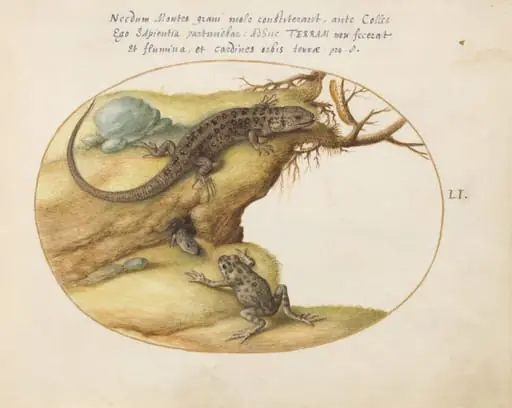 Plate 51: Two Sand Lizards, a Common Parsley Frog(?), and a Caterpillar
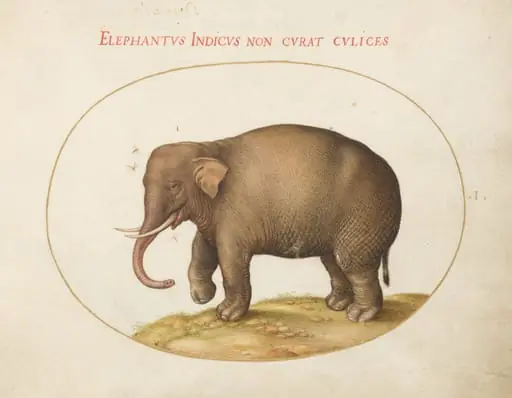 Plate 1: Elephant with Insects
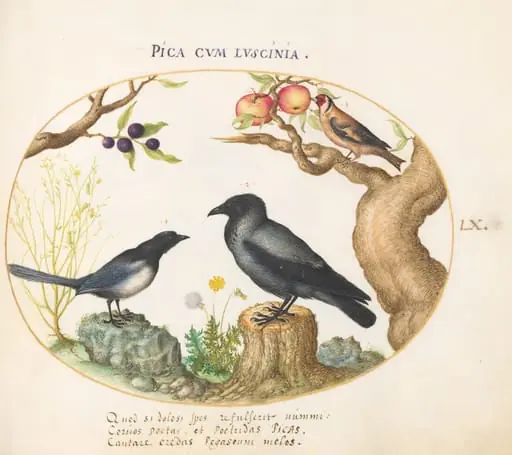 Plate 60: Magpie, Crow, and Goldfinch
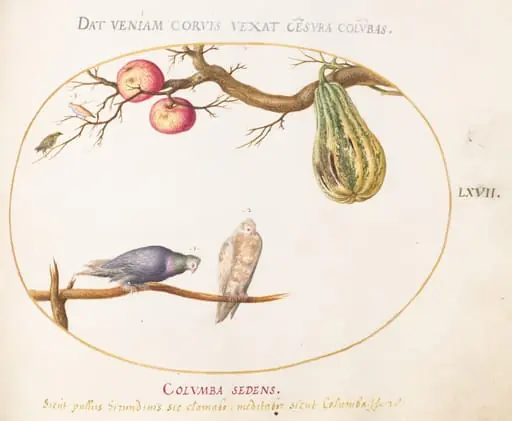 Plate 67: Two Doves beneath a Gourd and Apples
 Plate 31: Seven Moths
 Plate 21: Swamp Hen and Woodcock with a Streaked Rosefinch, a Finch, and Oak Galls
 Plate 73: Ten Insects
 Plate 49: A Grasshopper, a Caterpillar, a Butterfly, a Moth, and Other Insects
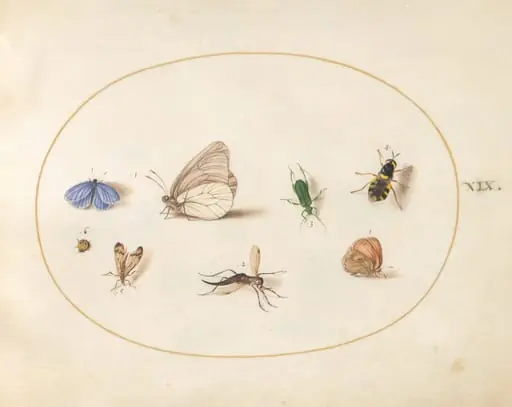 Plate 19: Two Butterflies with Five Other Insects
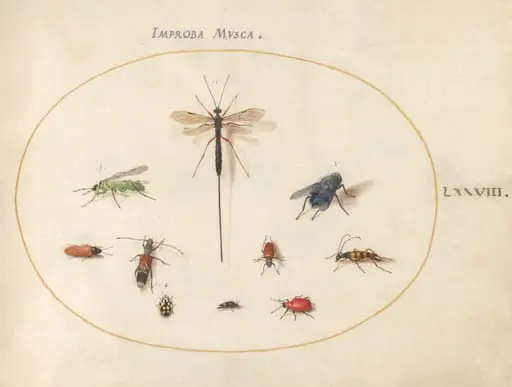 Plate 78: Ten Insects, Including a Blue Fly
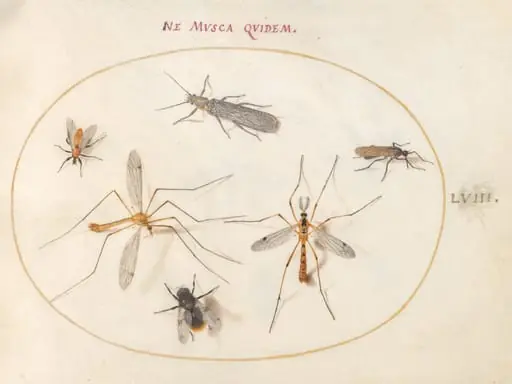 Plate 58: A Bee and Five Other Insects
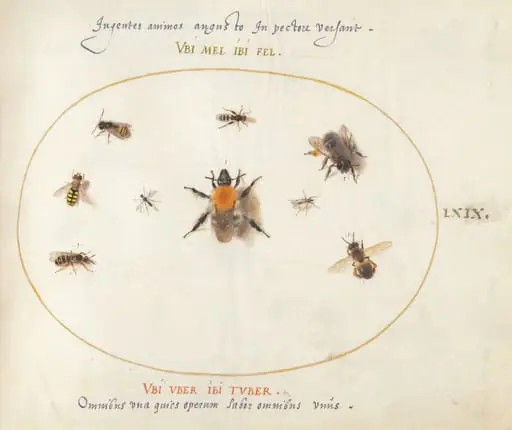 Plate 69: Nine Bees and Other Insects
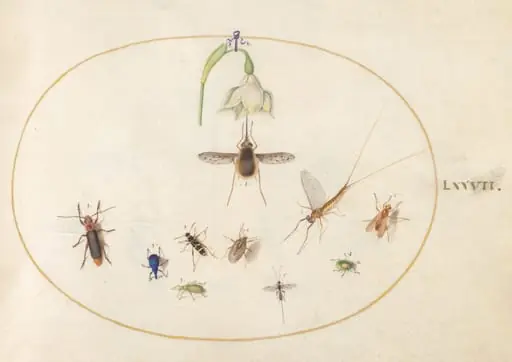 Plate 77: Dotted Bee Fly with a White Flower, a Mayfly, a Blue Weevil, and Other Insects
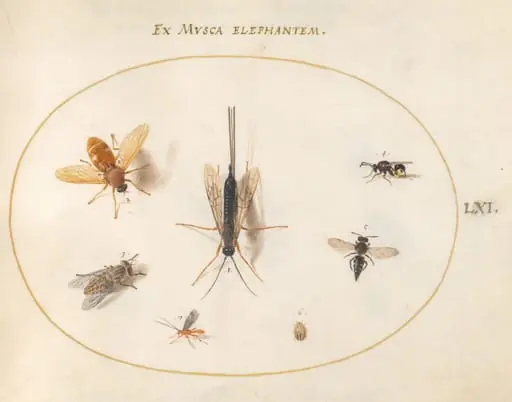 Plate 61: Seven Insects, Including Flies
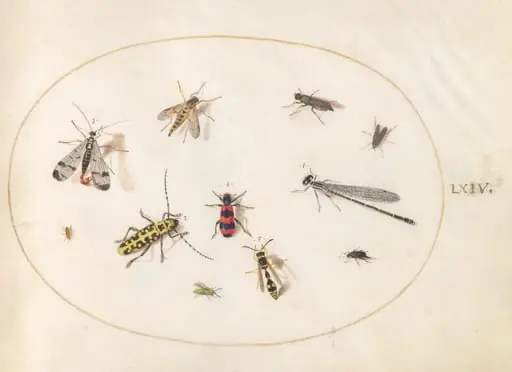 Plate 64: Eleven Insects, Including a Dragonfly and Longhorn Beetle
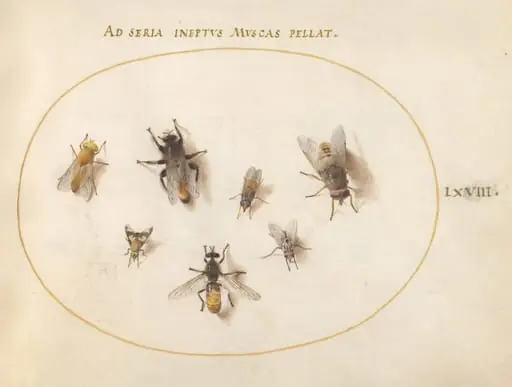 Plate 68: Seven Bees and Flies
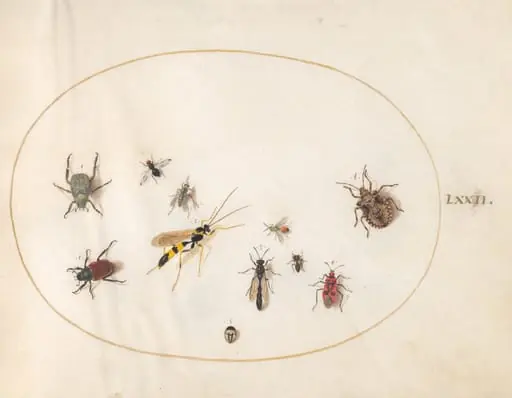 Plate 72: Shield Bug, Cinnamon Bug, Wasp, and Other Insects