Artwork
Untitled
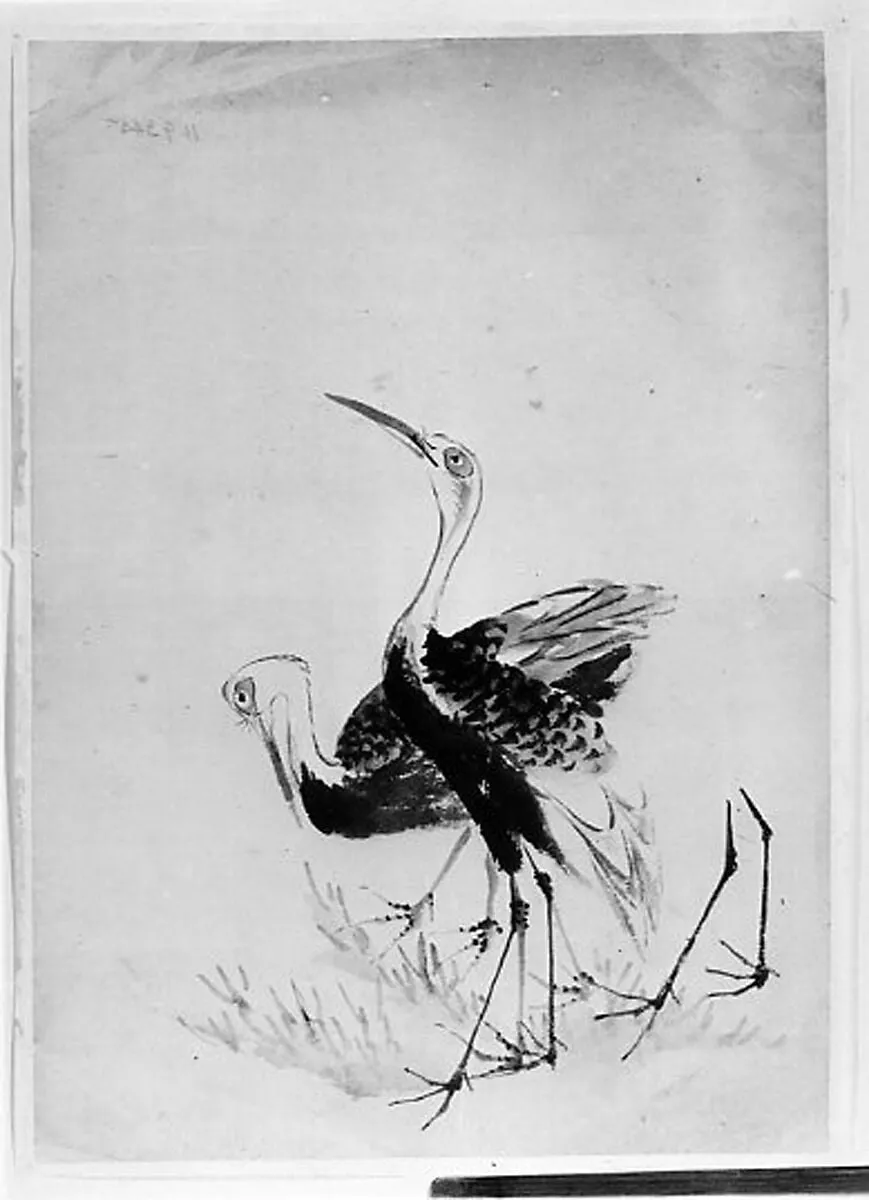
Untitled is a watercolor painting. It dates from 1834 and is held in the collection of the Metropolitan Museum of Art.
About this work
Subject & Meaning
Classified as a landscape, the work utilizes ink and watercolor on paper to render the bird, a figure deeply embedded in Japanese iconography.
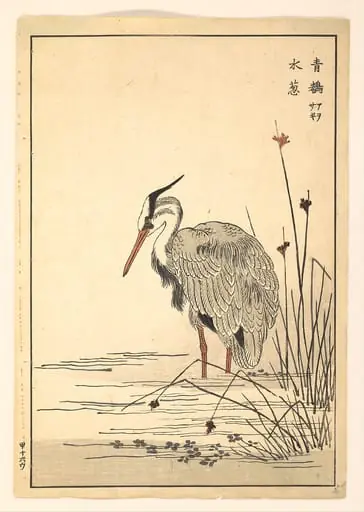
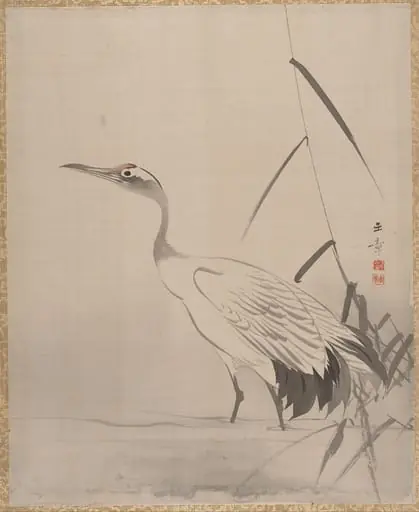
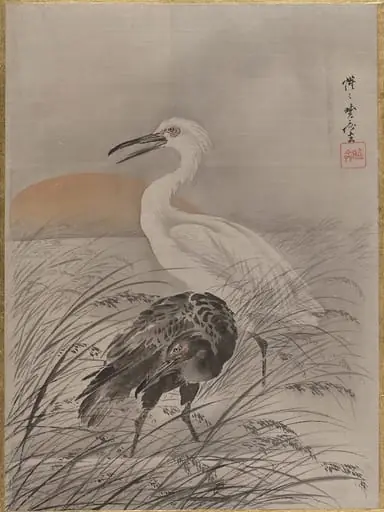
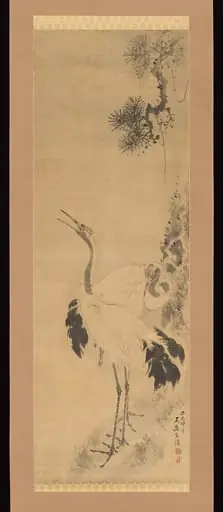
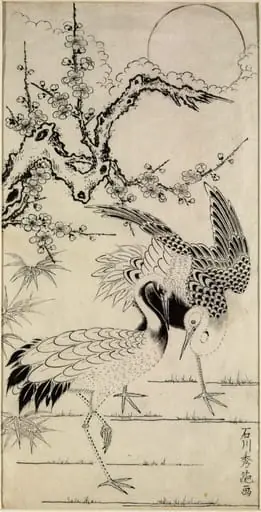
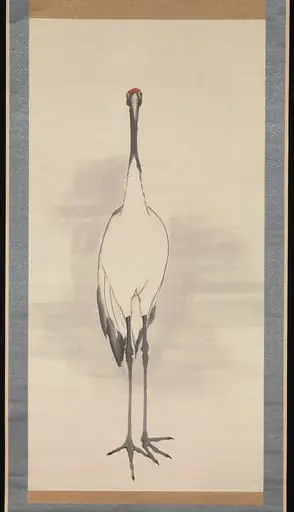
Created in 1834 by an artist of the Hokusai School, this unmounted painting depicts a crane as its sole subject. Classified as a landscape, the work utilizes ink and watercolor on paper to render the bird, a figure deeply embedded in Japanese iconography. While the specific narrative context is not detailed in available records, the crane traditionally symbolizes longevity, fidelity, and good fortune in East Asian art.
The composition focuses entirely on this avian form, presenting it within a sparse setting that emphasizes its symbolic weight rather than a complex environmental backdrop.
Technique & Style
Created in 1834 by the Hokusai School, this unmounted painting is executed in ink and watercolor on paper. The work measures 39.1 cm in height and 27.6 cm in width. Classified as a landscape, the composition depicts a crane. The piece is currently held in the collection of the Metropolitan Museum of Art in New York.
History & Provenance
Created in 1834 in Japan, this unmounted painting on paper is attributed to the Hokusai School. The work, which depicts a crane using ink and watercolor, measures 39.1 cm in height and 27.6 cm in width. It currently resides in the collection of the Metropolitan Museum of Art.
No specific details regarding its original commission or intermediate ownership history prior to entering the museum's holdings are provided in the available records.
Overview
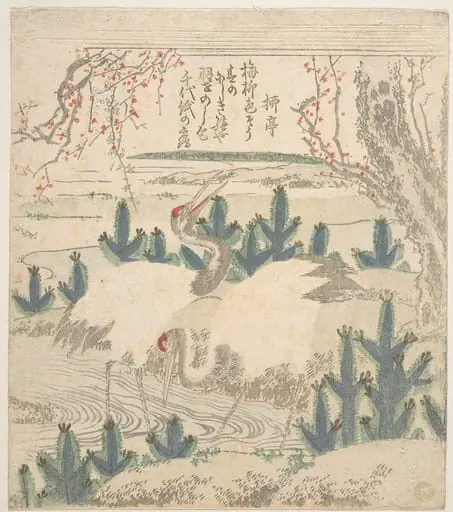
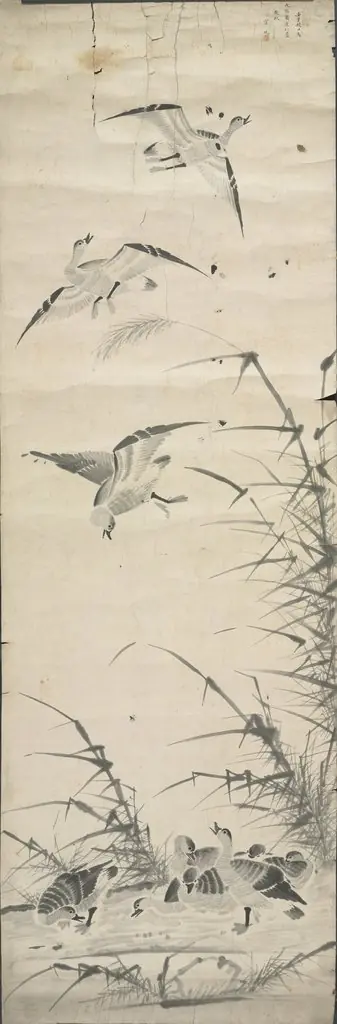
This untitled work, created by the Hokusai School in 1834, is an unmounted painting rendered in ink and watercolor on paper. It captures a natural scene featuring two cranes. The composition presents the birds in shallow water, one of them lowering its long neck as if to drink, conveying a moment of quiet observation.
Context
This painting exemplifies a prevalent artistic trend in 19th-century Japan, where practitioners frequently aimed to capture transient moments with speed and efficiency. The emphasis on quick execution and a lively, unconstrained hand allowed artists to imbue their subjects with a sense of immediacy and naturalism, reflecting a broader aesthetic valuing spontaneous expression.
Artist & collection