Artwork
Cape Spartell from the West

Cape Spartell from the West is a chalk drawing by the Baroque artist Wenceslaus Hollar. It dates from 1670 and is held in the collection of the National Gallery of Art.
- Inscription
- Inscribed:upper center in brown ink: Cape Spartell, from the West, about, halfe League distance at Sea; points on drwg. labeled: Point of Gibraltar / Apes Hill / Bay o f Tangier; other hand(s) v//: 65 (circled) / 1 (circled) 2238
About this work
Overview
Hollar, a Czech artist active in England, specialized in topographical imagery, and this work exemplifies his precision in rendering landscape details.
Created in 1670 by Wenceslaus Hollar, this drawing combines pen and brown ink with watercolor over black chalk on two joined sheets of laid paper. Hollar, a Czech artist active in England, specialized in topographical imagery, and this work exemplifies his precision in rendering landscape details. The piece captures a specific coastal promontory with careful attention to natural form and spatial depth.
Subject & Meaning
The drawing depicts Cape Spartell, a rocky headland at the western entrance to the Strait of Gibraltar. Viewed from the west, the scene emphasizes the rugged coastline and its relationship to the sea. Hollar’s focus on geographic accuracy suggests a documentary intent, possibly tied to maritime navigation or territorial observation rather than romanticized scenery.
Technique & Style
Hollar employed black chalk for initial underdrawing, refined with fluid pen lines and muted watercolor washes to suggest light and texture. The use of two joined sheets allowed for a broader composition without sacrificing detail. His method prioritizes clarity and structure over expressive brushwork, reflecting his engraving background and commitment to observational fidelity.
History & Provenance
The drawing was made during Hollar’s later years in London, after decades of producing topographical prints for patrons across Europe. Its survival in a single, unaltered state indicates it was likely a private study or preparatory work, not commissioned for publication. No record of early ownership is widely documented, but it remains within institutional collections today.
Context
In the late 17th century, detailed coastal views were valued for both scientific and strategic purposes, particularly in regions like Gibraltar, a contested maritime chokepoint. Hollar’s work aligns with broader European efforts to map and document geography, often serving military or commercial interests, even when executed as artistic studies.
Legacy
Though less known than his engravings, this drawing illustrates Hollar’s consistent approach to landscape as measured observation. It contributes to understanding how artists of the period translated cartographic needs into visual form, bridging the gap between art and documentation in pre-modern survey practices.
Artist & collection
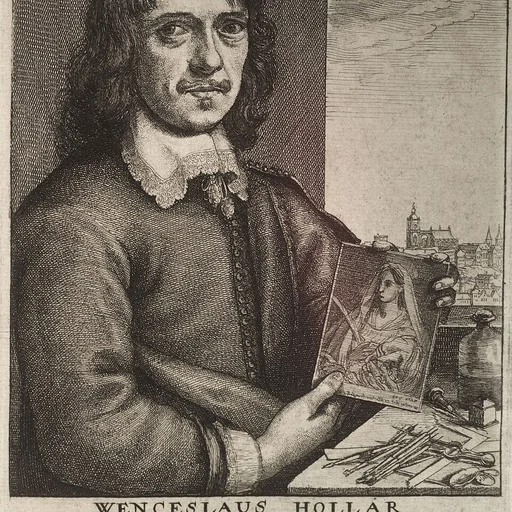
Artist
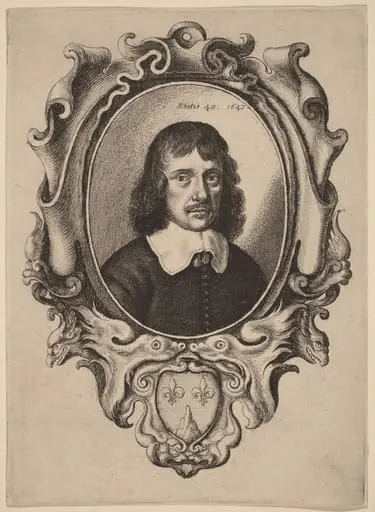
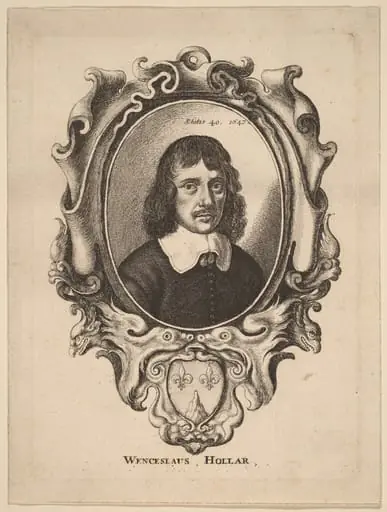
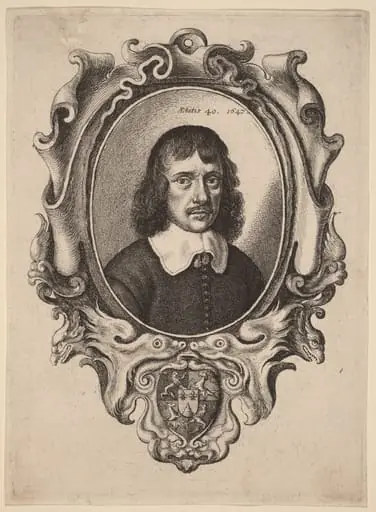
Wenceslaus Hollar (Czech: Václav Hollar (Czech pronunciation: ), German: Wenzel Hollar; 23 July 1607 – 25 March 1677) was a Czech engraver, etcher and painter.

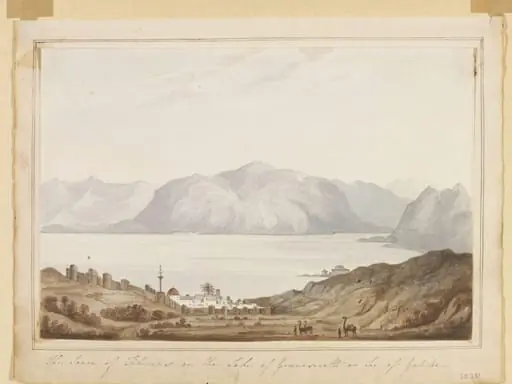
- The Town of Tiberias on the Lake of Gennesereth or Sea of Galilee
 Untitled
![View of the Black Castle at Wiclow [sic], County of Wicklow, 24 miles from Dublin [...], by Gabriel, ca.1729-1817 Beranger](https://artifactworldgallery.com/img/gabriel-ca-1729-1817-beranger--view-of-the-black-castle-at-wiclow-sic-county-of-wicklow-24--e655d3281baa9667-w320.webp) View of the Black Castle at Wiclow [sic], County of Wicklow, 24 miles from Dublin [...]
View of the Black Castle at Wiclow [sic], County of Wicklow, 24 miles from Dublin [...] Άποψη των Δαρδανελίων
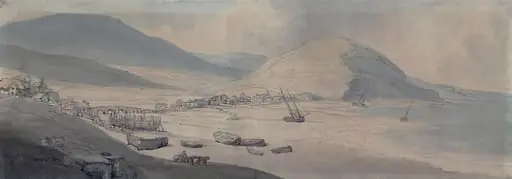 The Mouths of the Rheidol and Ystwyth at Aberystwyth
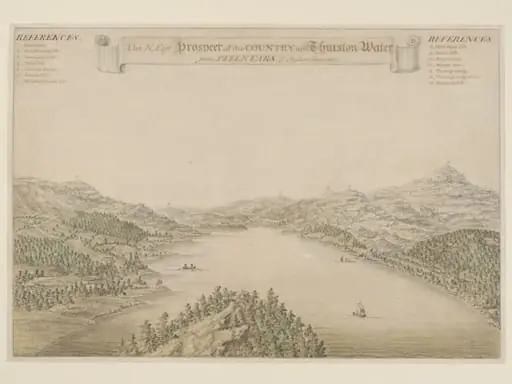 The North East Prospect of the Country up Thurston Water from Peelnears
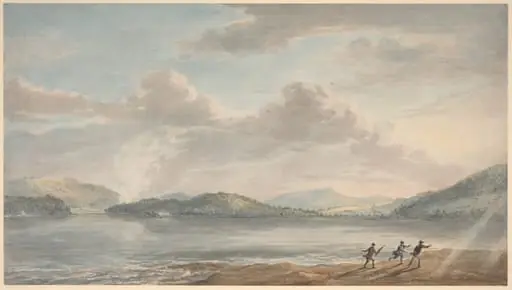 The Tide Rising at Briton Ferry
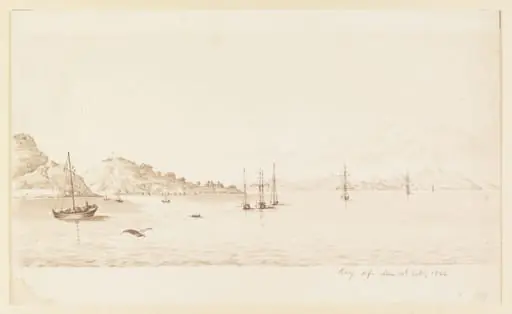 Bay of Aden
 View of Smyrna (Izmir)
 Grassdale Pikes
 Painting
 Αρχαία ερείπια κοντά στο Δαφνί