Artwork
Holy Mountain IV
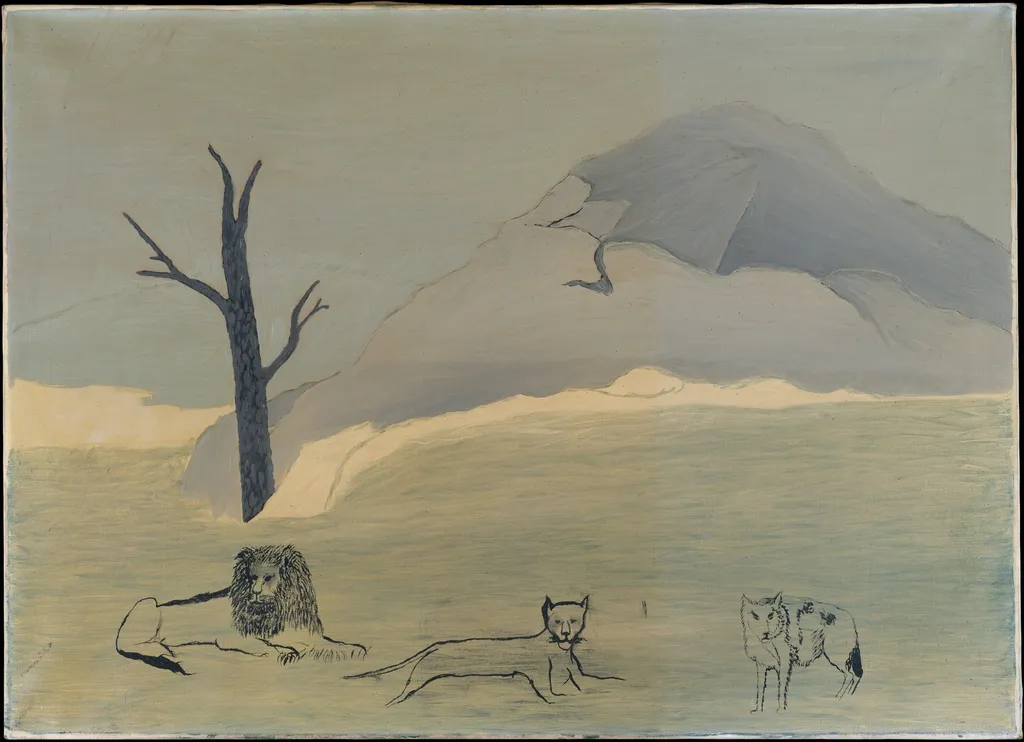
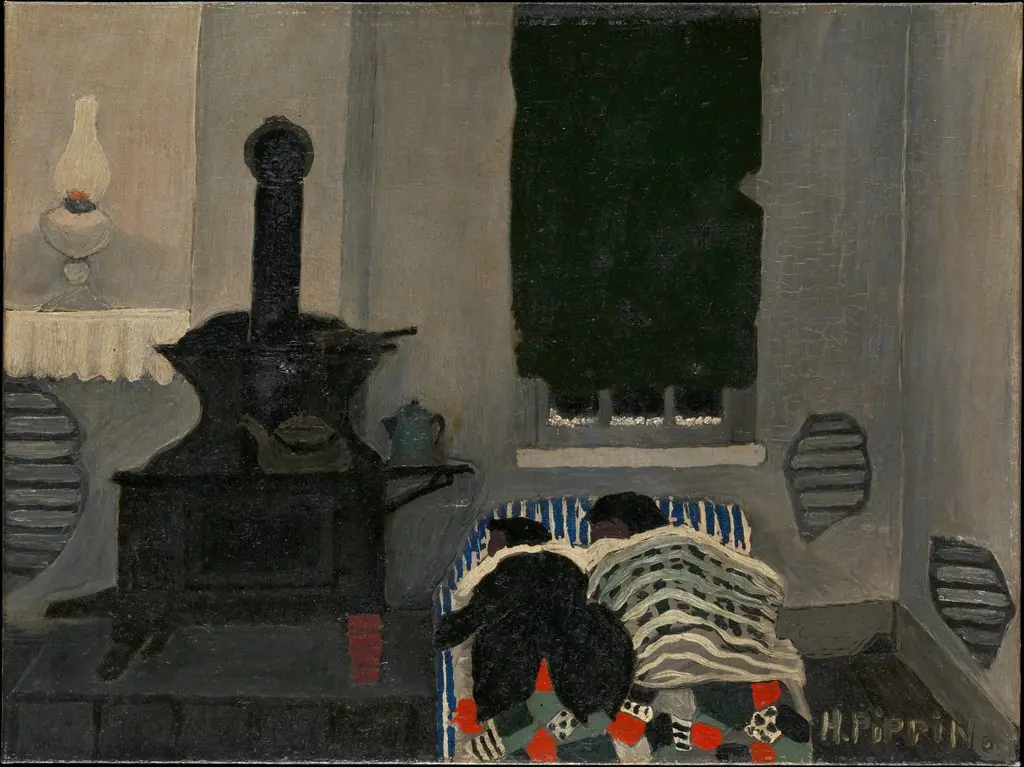
Holy Mountain IV is an oil painting by the Naïve art artist Horace Pippin. It dates from 1946 and is held in the collection of the Metropolitan Museum of Art.
About this work
Subject & Meaning
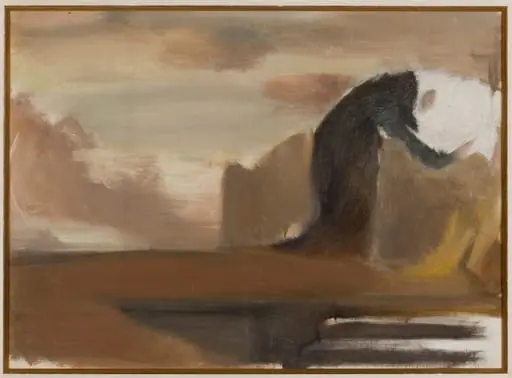
Holy Mountain IV shows a lion positioned before a mountainous landscape, as indicated by the work’s title and its depiction of a lion and a mountain.
Holy Mountain IV shows a lion positioned before a mountainous landscape, as indicated by the work’s title and its depiction of a lion and a mountain. The composition aligns with the painting’s designation as the fourth in a series titled Holy Mountain, suggesting a thematic focus on a sacred or elevated natural setting. While the specific iconographic interpretation is not detailed in the sources, the juxtaposition of the lion, a traditional emblem of strength and vigilance, with the mountain, a symbol of endurance and spiritual ascent, invites contemplation of the work’s titular theme.
History & Provenance
Holy Mountain IV was created by Horace Pippin in 1946, as indicated by both the artist’s record and the work’s Wikidata entry, which assigns the inception year to 1946.
The painting entered the collection of the Metropolitan Museum of Art, where it remains located. Its dimensions are recorded as 91.4 cm in width and 66 cm in height.
Holy Mountain IV is held in the collection of the Metropolitan Museum of Art in New York. The work, created by Horace Pippin in 1946, is an oil painting on canvas measuring 66 cm in height and 91.4 cm in width. Specific inventory or accession numbers for the piece are not provided in the available records. The sources do not contain information regarding the artwork's exhibition history.
Legacy
The 1946 oil painting Holy Mountain IV by Horace Pippin is part of the Metropolitan Museum of Art’s collection, a fact that underscores its standing within the artist’s later output and within the broader narrative of mid‑twentieth‑century American folk art. Documented as depicting a lion against a mountainous landscape, the work exemplifies Pippin’s synthesis of biblical themes and personal symbolism. Its inclusion in a major public institution has contributed to sustained scholarly attention, positioning the painting as a reference point for studies of African‑American artistic expression and influencing subsequent generations of artists who cite Pippin’s narrative depth and stylistic vigor.
Overview
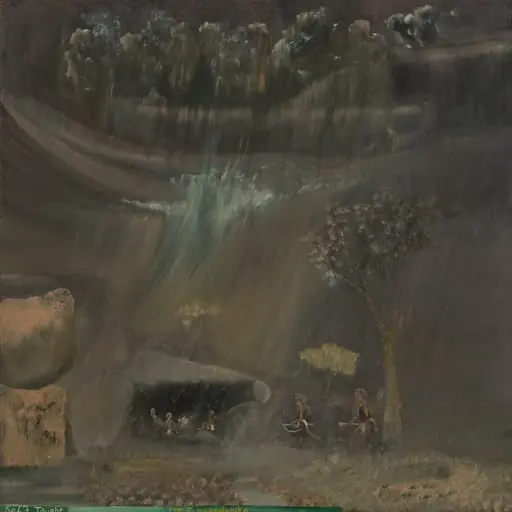
Horace Pippin's 1946 oil painting, Holy Mountain IV, presents a serene landscape populated by a trio of animals. This work is part of a series by the artist exploring themes of peace and harmony. Executed in oil, the painting is currently housed in the collection of The Metropolitan Museum of Art.
Technique & Style
Pippin employed oil paint with a distinctive application, characterized by thick, visible brushstrokes, particularly evident in the rendering of the mountain and tree. This impasto technique adds texture and depth to the surface. The palette primarily consists of muted yellows and grays, with the animal forms delineated by simple black outlines, contributing to the painting's direct and unadorned aesthetic.
Own this work as a print
Artist & collection

Artist
Horace Pippin was an American painter who painted a range of themes, including scenes inspired by his service in World War I, landscapes, portraits, and biblical subjects.