Artwork
Self-Portrait
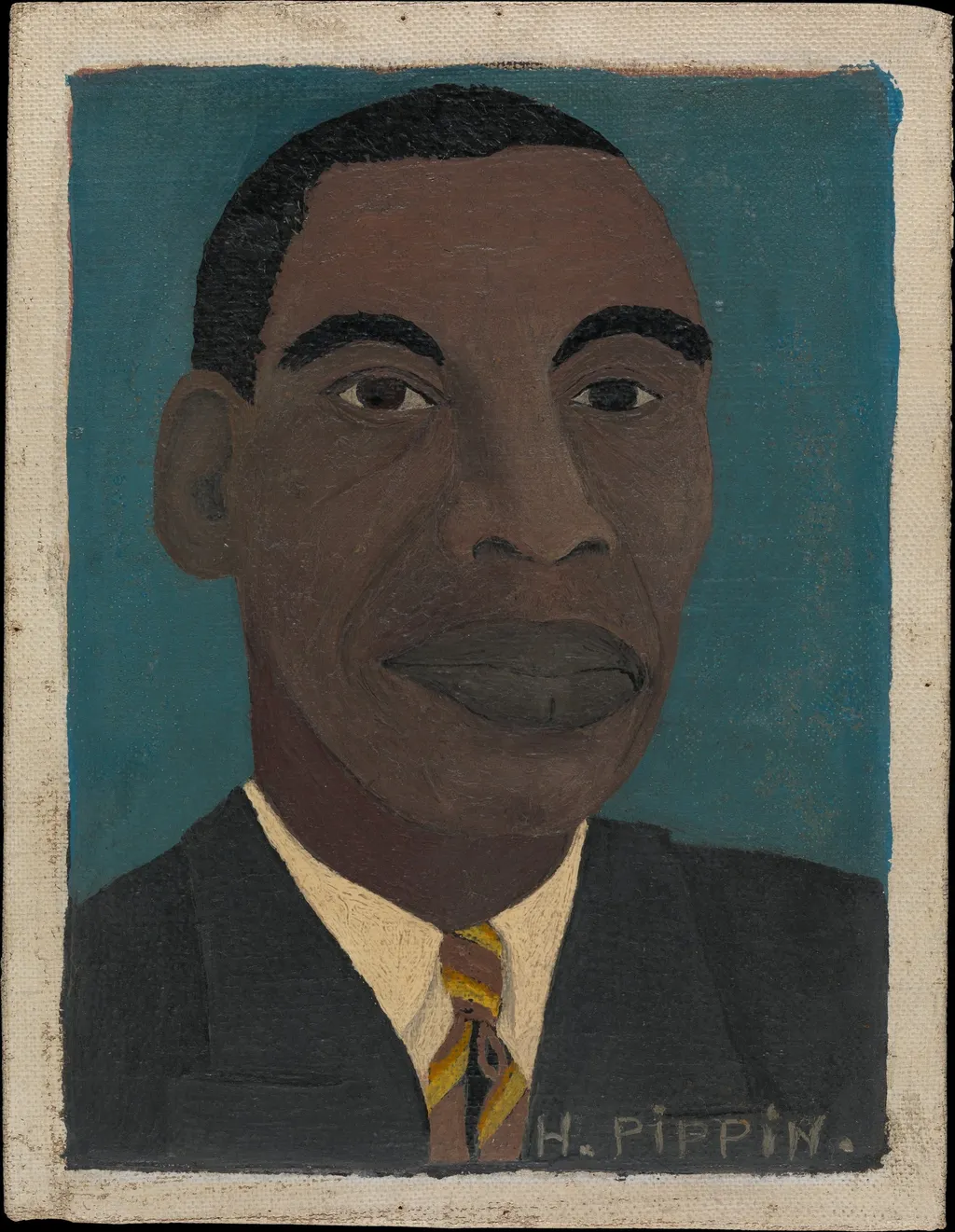
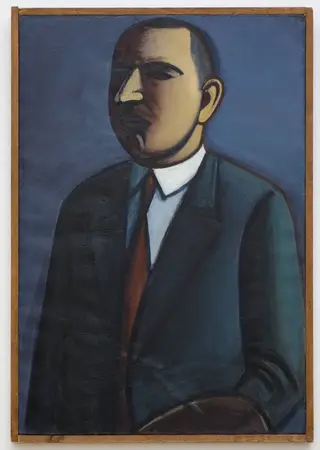
Self-Portrait is an oil painting by the American Folk Art artist Horace Pippin. It dates from 1944 and is held in the collection of the Metropolitan Museum of Art.
About this work
Subject & Meaning
Classified as a self-portrait and portrait painting, the work uses the conventions of self-representation to assert the sitter's individuality and dignity.
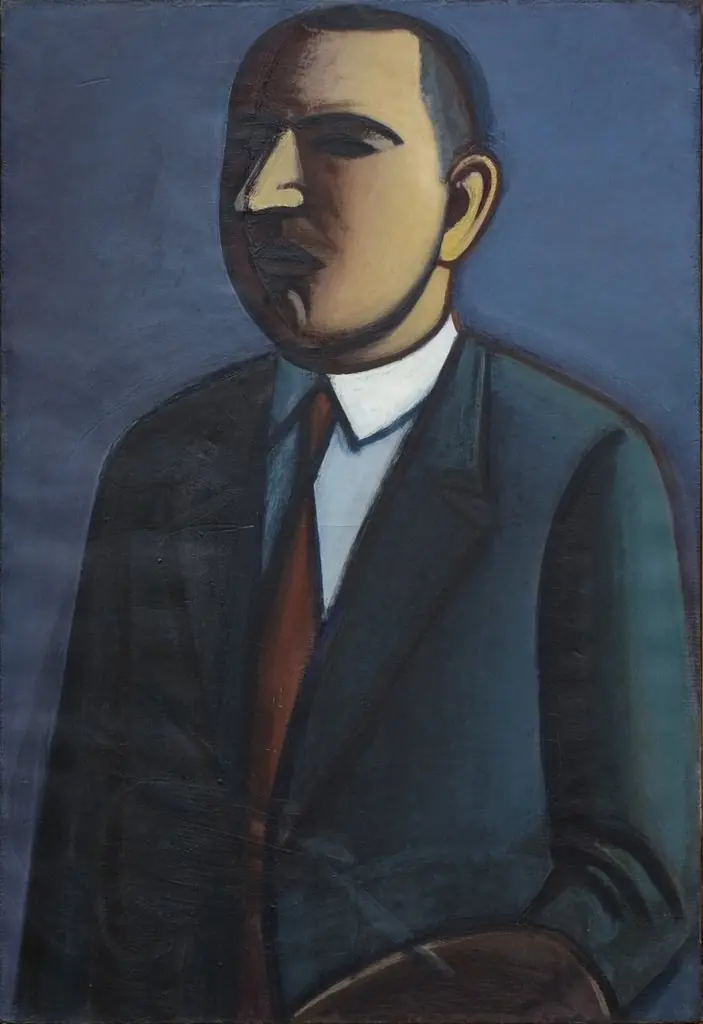
Pippin's Self-Portrait depicts the artist himself, rendered as a Black man wearing a necktie, presenting a direct, frontal likeness that emphasizes personal presence over narrative. Classified as a self-portrait and portrait painting, the work uses the conventions of self-representation to assert the sitter's individuality and dignity. Created in 1944, the painting operates on a modest scale, focusing attention on the subject's gaze and attire rather than on symbolic props or allegorical settings.
The straightforward depiction of a Black subject in formal dress carries implicit meaning about self-presentation and visibility, while the absence of additional iconographic elements keeps the emphasis on identity itself. As a self-portrait, the painting functions both as a record of the artist's likeness and as a statement of authorship, with the depicted Horace Pippin serving as the main subject.
Technique & Style
The Self-Portrait by Horace Pippin (1944) is executed in oil paint on canvas, employing a restrained yet deliberate handling characteristic of Pippin's mature style. The composition is tightly cropped, focusing on the artist's head and shoulders against a neutral background, which emphasizes his direct gaze and the tactile rendering of facial features. The brushwork is controlled and linear, with smooth blending in the flesh tones and more visible, deliberate strokes in the hair and clothing details.
The palette is subdued, dominated by earthy browns and ochres, with subtle highlights on the face and tie that draw attention to his expression. The painting's small scale (approximately 21.6 × 16.5 cm) and intimate framing underscore its personal, introspective nature.
History & Provenance
Horace Pippin created the oil-on-canvas self-portrait in 1944. The work depicts the artist himself wearing a necktie and measures approximately 21.6 by 16.5 cm. It is held in the collection of the Metropolitan Museum of Art and is classified as a portrait. No specific commission details or intermediate ownership records are provided in the available sources, and no accession number or exhibition history is recorded.
The piece is a notable example of Pippin's late output, painted within a few years of his death in 1946.
Overview
Horace Pippin's 1944 Self-Portrait presents the artist as a dignified figure in a dark suit and striped tie against a solid blue background. Executed in oil paint, the work exemplifies Pippin's distinctive style, characterized by thick, textured application and simplified, deliberate forms. The artist's face is rendered in dark brown tones with clear, unadorned lines defining the eyes, nose, and mouth, while the edges of his collar and tie exhibit a slight unevenness typical of his hand.
Created late in his career, just two years before his death, this portrait reflects Pippin's mature confidence and his unique position as a self-taught American artist who bridged folk art traditions with social realism. The composition focuses entirely on the sitter, utilizing the stark, flat background to emphasize the psychological presence and formal solidity of the figure. This work stands as a significant testament to Pippin's ability to convey personal identity and resilience through a direct, unpretentious visual language that challenged conventional academic standards of his time.
Own this work as a print
Artist & collection

Artist
Horace Pippin was an American painter who painted a range of themes, including scenes inspired by his service in World War I, landscapes, portraits, and biblical subjects.