Artwork
Fancy Pitcher
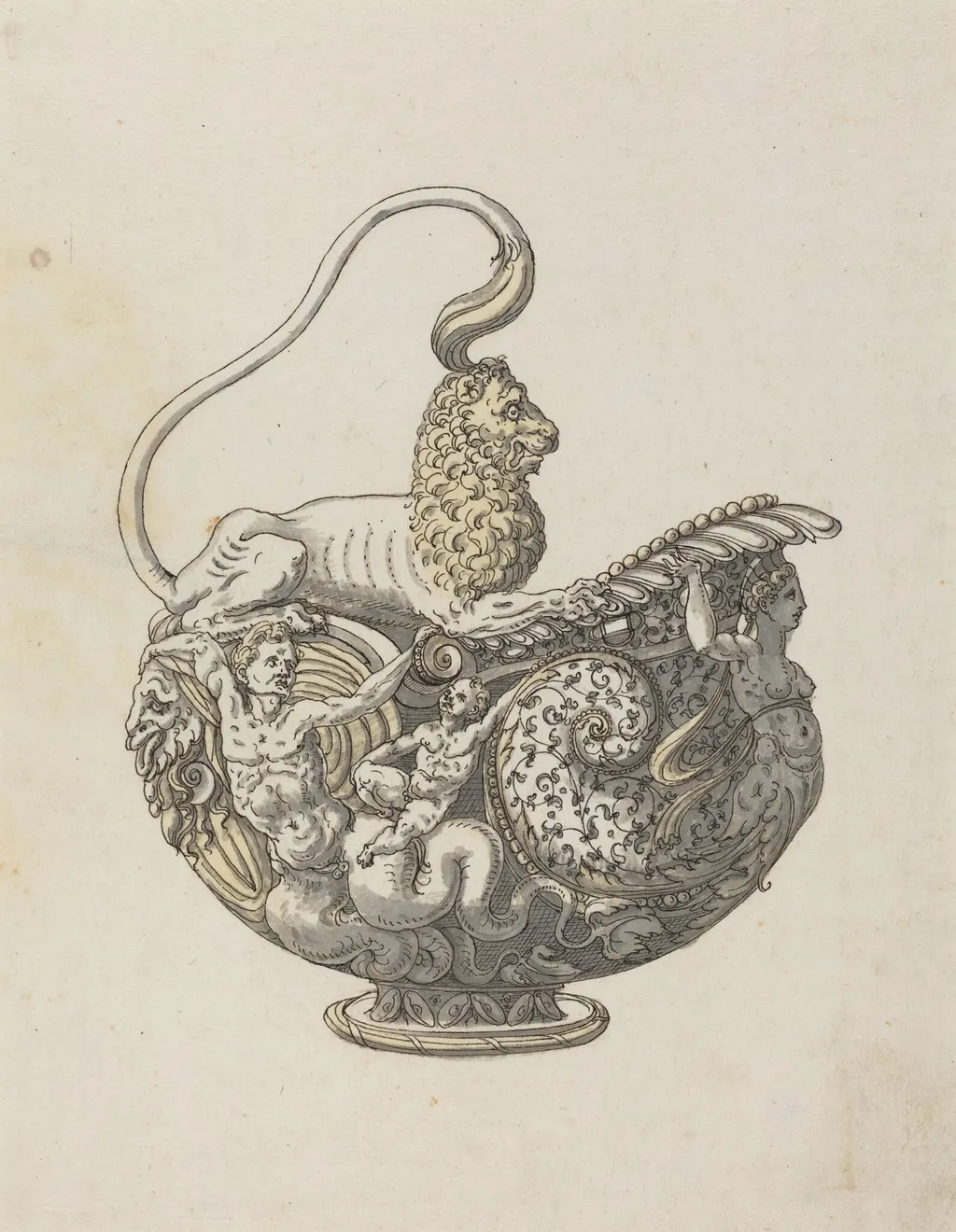
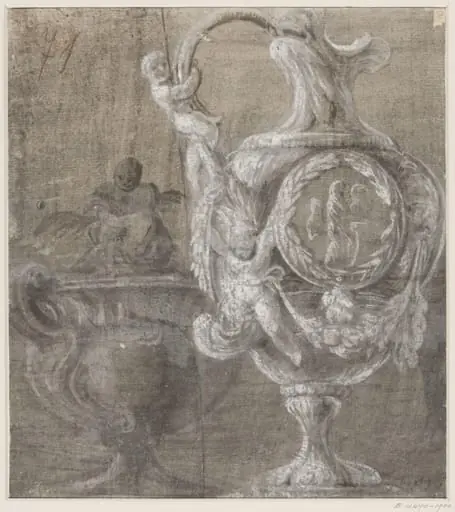
Fancy Pitcher is an ink drawing by the Renaissance artist Erasmus Hornick. It dates from 1559 and is held in the collection of the National Gallery of Art.
- Inscription
- Inscribed:upper right in graphite: 10; lower left verso: Ex coll. Liechtenstein (Schatzki); across bottom verso: Erasmus Hornick c.1550 / Hornick see MMA
About this work
Overview
Created in 1559 by Erasmus Hornick, this drawing depicts an imaginative vessel that blends ceramic form with animal and human elements.
Created in 1559 by Erasmus Hornick, this drawing depicts an imaginative vessel that blends ceramic form with animal and human elements. Executed in pen and black ink with subtle gray and yellow washes, the work captures a fantastical pitcher whose body resembles a decorated pot, crowned by a ram’s head and inhabited by two small figures emerging from its opening. The delicate shading and light washes lend it a soft, sketchlike quality, characteristic of Renaissance draftsmanship.
Subject & Meaning
The pitcher merges functional object with mythic creature, suggesting a playful engagement with the boundaries between utility and fantasy. The ram’s head and human figures emerging from the vessel may reflect Renaissance interests in transformation, hybridity, and the allegorical potential of form. Such combinations were often used to demonstrate artistic ingenuity rather than convey a specific narrative, inviting viewers to marvel at the imagination behind the design.
Technique & Style
Hornick employed fine pen lines to define contours and used light washes of gray and yellow to suggest volume and texture without heavy modeling. The shading is delicate, relying on hatching and tonal gradation rather than bold contrasts. This restrained approach gives the drawing a light, airy feel, aligning with the observational yet inventive spirit of 16th-century German draftsmanship, where precision served fantasy.
History & Provenance
The drawing is dated 1559 and attributed to Erasmus Hornick, a lesser-known artist active in the German-speaking regions during the mid-16th century. Its survival suggests it was valued as a study or curiosity, possibly kept in a collector’s cabinet. No definitive record of its early ownership exists, but its style and medium place it within the tradition of Northern Renaissance graphic art, where such inventive drawings were prized for their wit and skill.
Context
In the mid-1500s, artists across Europe explored hybrid forms as expressions of intellectual play and technical mastery. Hornick’s pitcher aligns with contemporaneous works that fused human, animal, and object motifs, common in decorative arts and Mannerist drawings. These creations responded to humanist interests in classical mythology and natural philosophy, transforming everyday items into vehicles for imaginative inquiry.
Legacy
Though Hornick’s oeuvre is limited, this drawing exemplifies how Renaissance draftsmen used the medium of ink and wash to explore whimsy and craftsmanship simultaneously. It stands as a quiet testament to the era’s fascination with the boundaries of form and function, influencing later traditions of decorative fantasy in European graphic arts without directly entering mainstream artistic discourse.
Own this work as a print
Artist & collection


- Design for a ewer with nude figures and serpents
 Jar with Neptune
 Suite of Vases: Plate 24
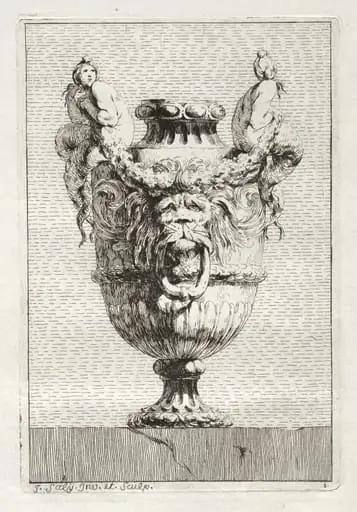 Suite of Vases: Plate 1
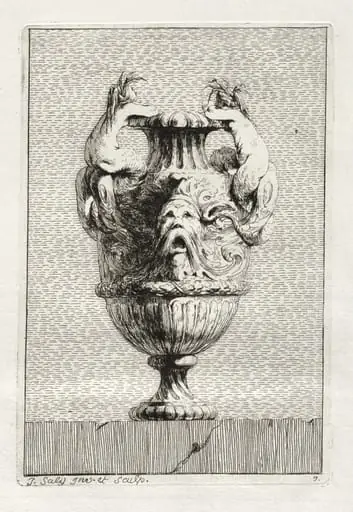 Suite of Vases: Plate 7
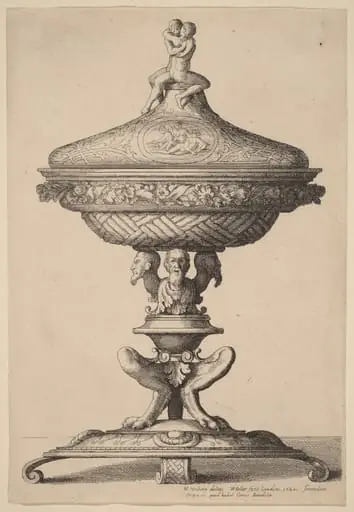 Ornate Goblet
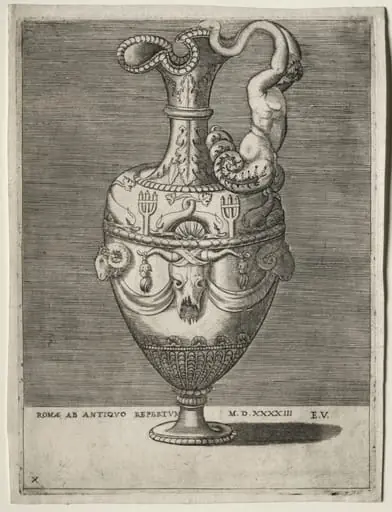 Ewer Ornamented with Dolphins
 Untitled
 Suite of Vases: Plate 9
 Copy of a design for a ewer
 Design for a Pendant with Sea-Monster Carrying a Woman on a Shell Flanked by a Triton and a Man with an Oar
 Design for a ewer and a vase