Artwork
Untitled
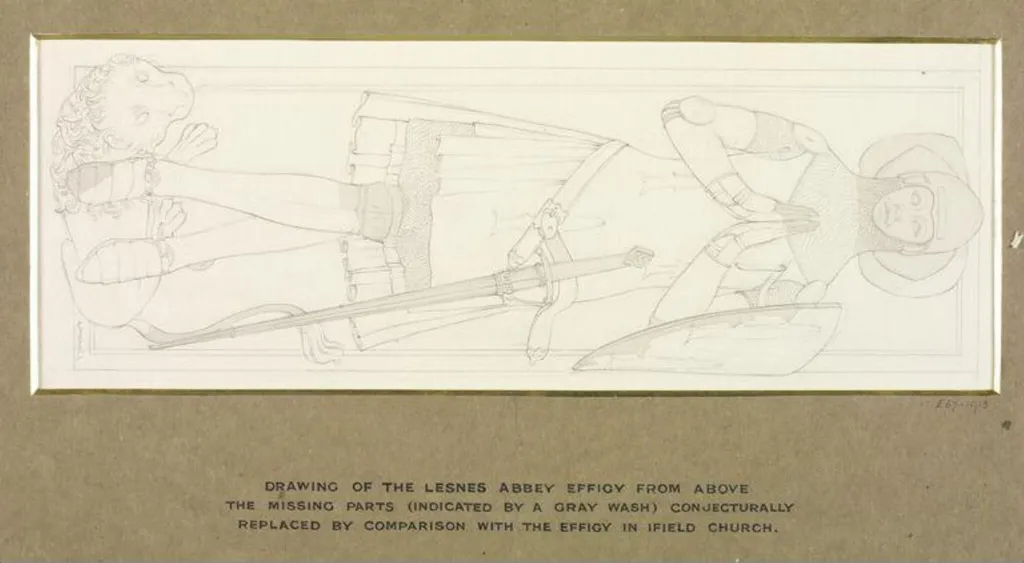
Untitled is a drawing by Alfred Howell. It dates from 1912 and is held in the collection of the Victoria and Albert Museum. This pencil drawing documents the condition of a sculpted funerary effigy prior to restoration.
About this work
Overview
Subtle linear details hint at features such as hair or drapery, while uneven shading indicates areas of damage or loss.
This pencil drawing documents the condition of a sculpted funerary effigy prior to restoration. Rendered from an elevated viewpoint, the figure appears elongated, with limbs arranged in an unnatural posture. Subtle linear details hint at features such as hair or drapery, while uneven shading indicates areas of damage or loss. The work serves as a preparatory study, recording the object’s state for repair.
Subject & Meaning
The drawing represents a medieval coffin effigy, a carved wooden or stone figure placed atop a tomb. Its fragmented state, visible in the stiff, disjointed contours, reflects deterioration over time. The faint annotations suggest the artist relied on comparative analysis, likely referencing another effigy to reconstruct missing elements.
The image functions as both a record of preservation efforts and a visual inventory of historical material culture.
Technique & Style
Executed in graphite, the drawing employs spare, controlled lines to outline the effigy’s form. Shading is minimal, restricted to light grays that denote depth or erosion rather than texture. The aerial perspective flattens the figure, emphasizing its structural layout over volumetric realism. This utilitarian approach prioritizes clarity and accuracy, aligning with documentary rather than expressive draftsmanship.
History & Provenance
The sketch originates from a study of a church effigy, though the specific location and date of execution remain unrecorded. Its purpose, mapping damage for restoration, suggests it was created in a conservation context, possibly during the 19th or early 20th century when systematic archaeological and art-historical documentation gained prominence. The drawing’s current association with the Victoria and Albert Museum indicates its later inclusion in institutional collections.
Context
Drawings of this kind emerged alongside growing interest in medieval art and architecture, particularly in Europe. Scholars and restorers often produced such studies to guide repairs, ensuring interventions aligned with original designs. The method of comparing damaged objects to intact examples reflects contemporary conservation practices, which balanced historical fidelity with practical reconstruction.
Artist & collection
Artist
This artist drew ink on paper in the early 1900s, leaving quiet studies untitled and dated.

- Untitled
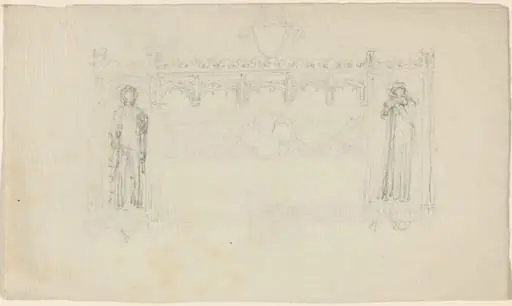 Design for the Simcoe Monument, Exeter Cathedral
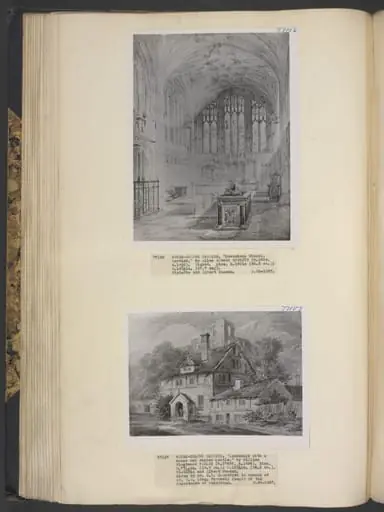 Beachamp Chapel, Warwick
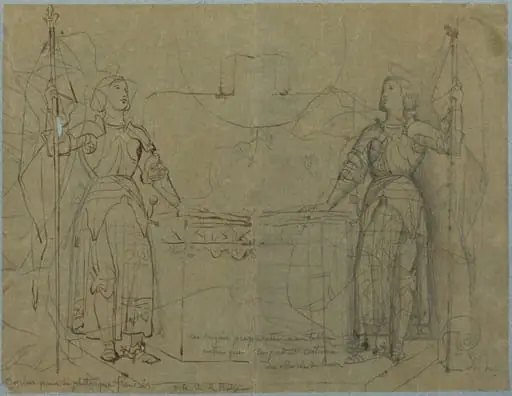 Joan of Arc Standing at the Altar at Reims Cathedral
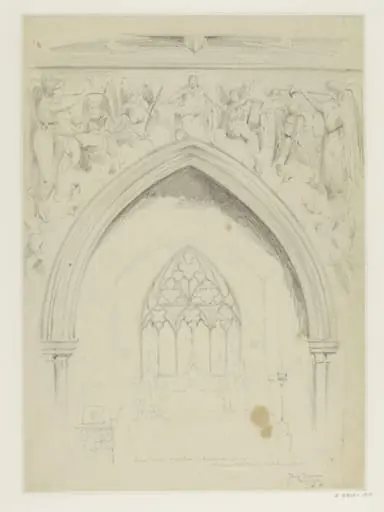 Untitled
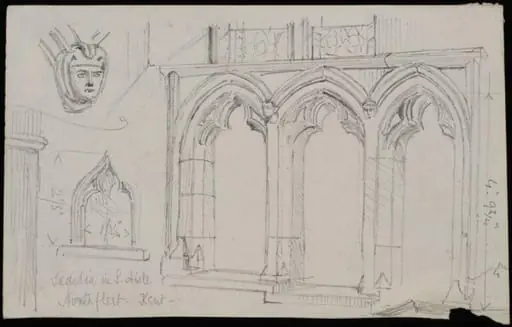 Sedilia, piscinas, screens and stallwork
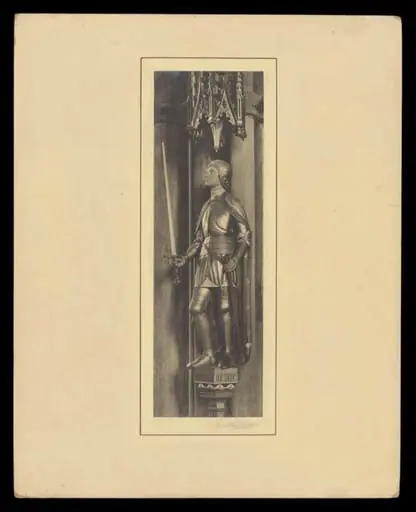 'Statue of Joan or Arc, Winchester'
 Netley Abbey
 From "Bizzarie di varie Figure"
 Print of Ellen Terry as Mistress Page
 Mars (from the Tarocchi, series A: Firmaments of the Universe, #45)
 Side chapel in an old church, with altar tomb