Icon of the Triumph of Orthodoxy
1375
unspecified
From the collection of British Museum
1375
unspecified
From the collection of British Museum
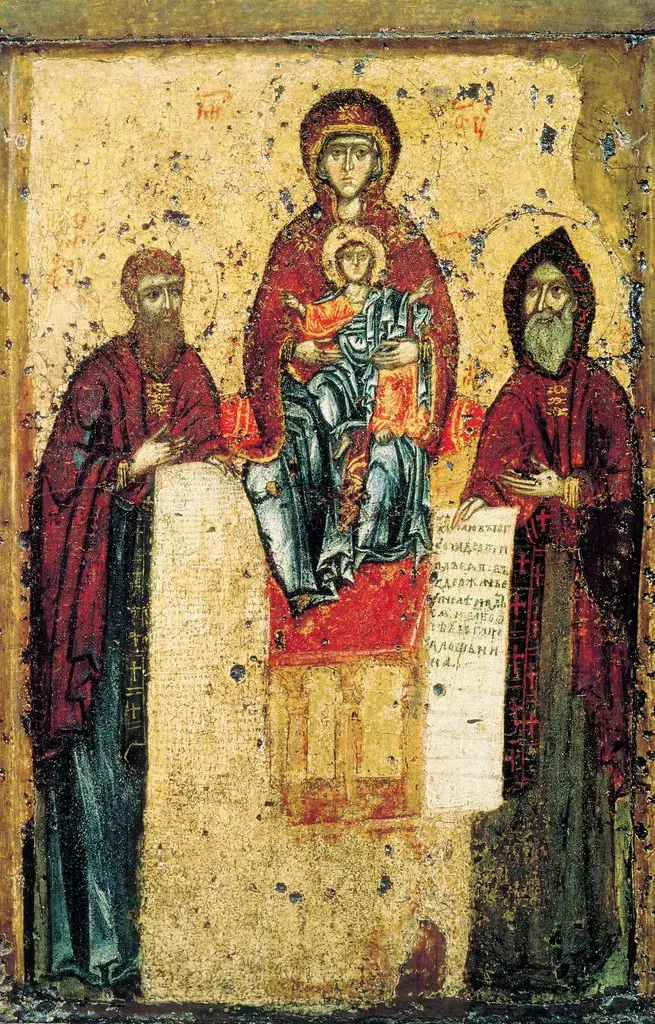
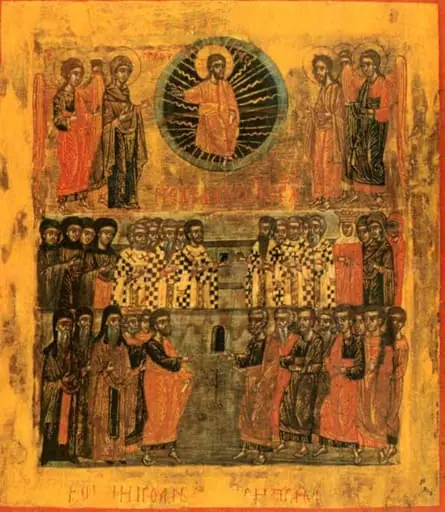
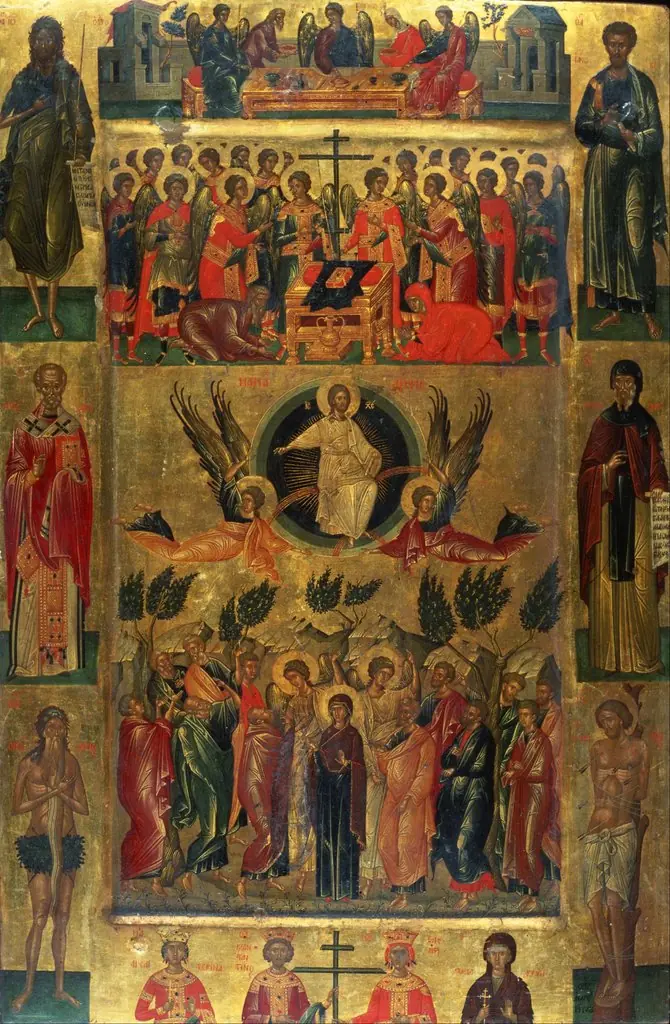
Icon of the Triumph of Orthodoxy is a 1375 unspecified by Unknown, a Byzantine icon painting work, depicting Christ Child, held at British Museum.
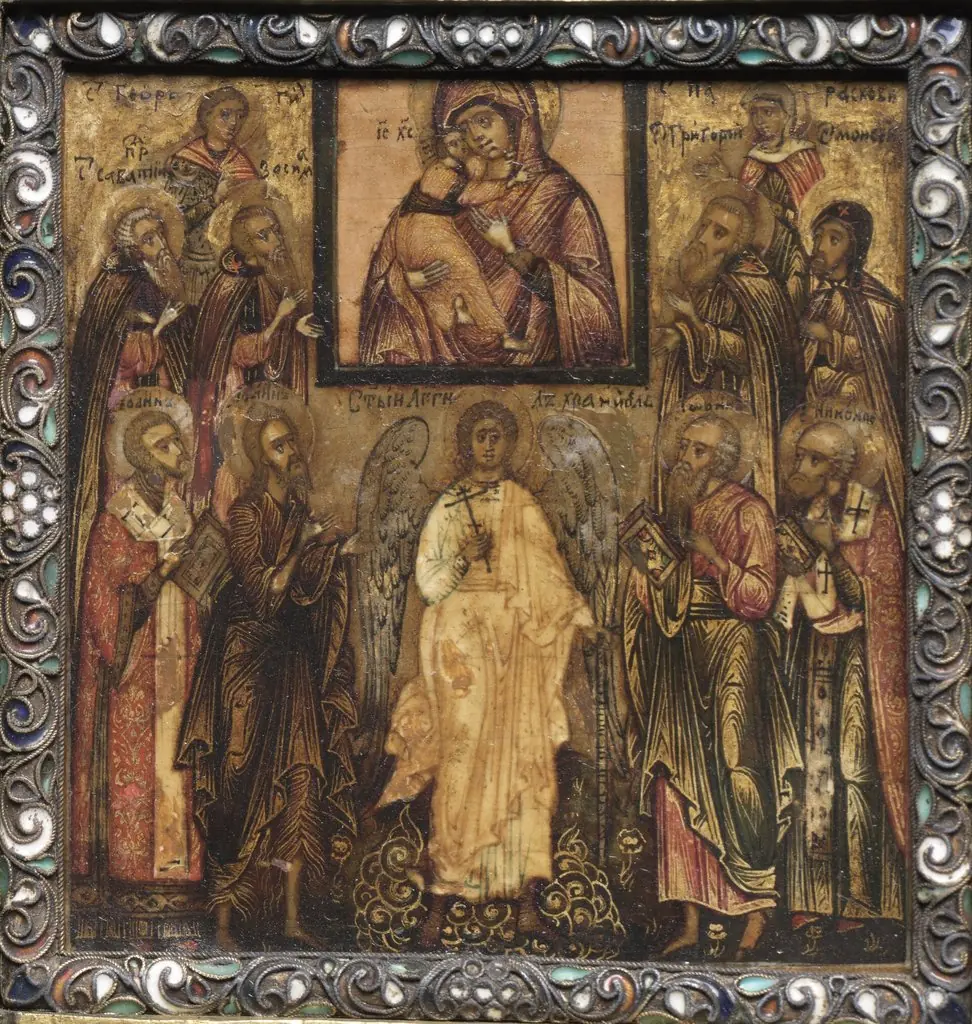
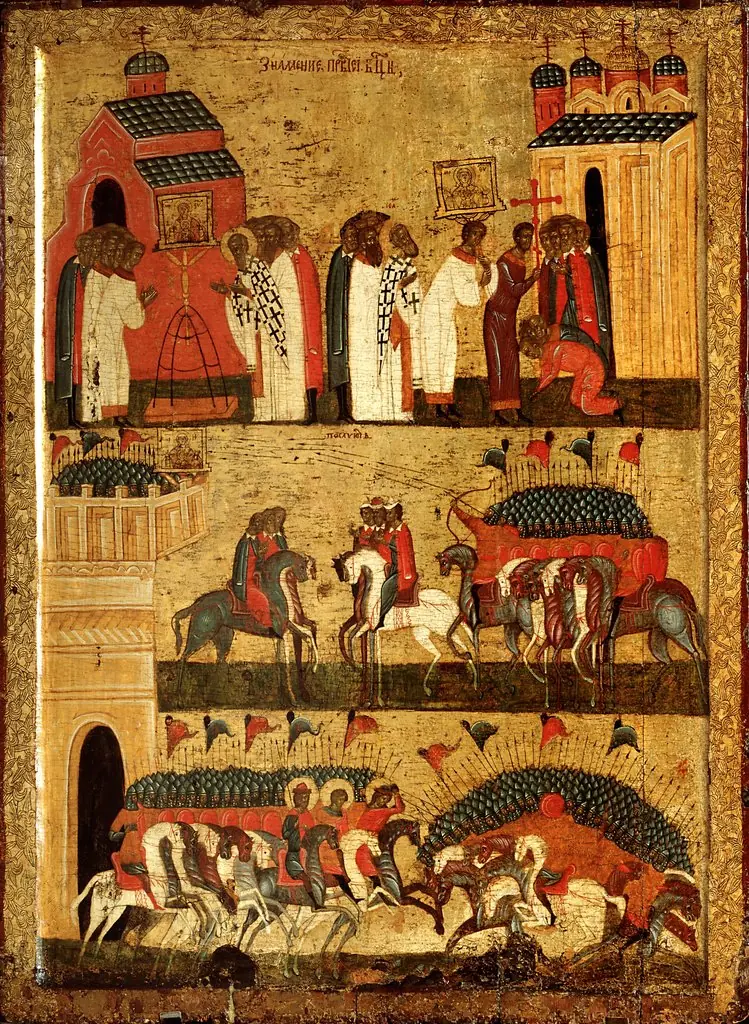
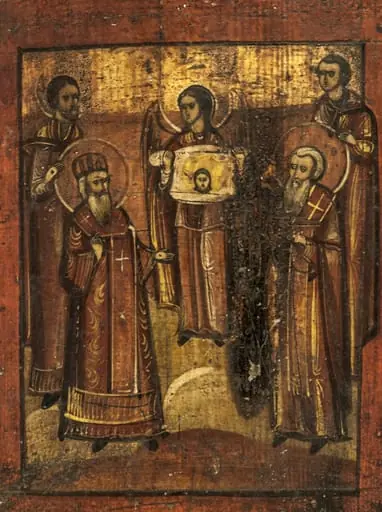
This painting depicts a group of people gathered around a central figure, with a large red cloth draped behind them. The figures are dressed in long robes, and some are holding objects such as books or staffs. In the center of the composition, a woman sits on a throne, holding a child. She is surrounded by a halo, and the child is also depicted with a halo. The background of the painting is a warm, golden color, which adds to the sense of reverence and importance. The painting appears to be a representation of a religious scene, possibly from the Eastern Orthodox tradition. The use of gold and red colors, as well as the depiction of halos around the central figures, suggests a sense of grandeur and sacredness. You might want to look up more about the British Museum.
The Icon of the Triumph of Orthodoxy (also known as the Icon of the Sunday of Orthodoxy) is a divine celebratory icon created around 1400 to commemorate the first feast of the Triumph of Orthodoxy on the first Sunday of Great Lent. The icon references the overcoming of the Byzantine Empire’s Eastern Orthodox faith from the dominance of the Islamic faith and the Byzantine Iconoclasm in 842. Shown in the icon's composition are important figures such as the Virgin Hodegetria, her child Jesus, and eleven saints and martyrs associated with the Triumph of Orthodoxy. Other elements and saints…
Source: wikipedia, available under CC BY-SA 4.0.
During the seventh century, the Constantinople’s Orthodox faith saw iconoclasms due to Islam’s dominance in the region and their practice of aniconism. Influenced by Islam's aniconism, iconoclasm of icons and violence against iconodules in the Orthodox faith had become more common. In 842, icon veneration became an acceptable practice again in the Orthodox church with the endorsement of Empress Theodora and the death of iconoclast Emperor Theophilos.Under the later coming threat of Islamic conquest, the Triumph of Orthodoxy on the first Sunday of Great Lent was created to be a reminder of…
Source: wikipedia, available under CC BY-SA 4.0.
Created in a style typical of Byzantine artwork, the composition of the icon uses elements of spirituality to overall represent a ceremonial feast between members of the Orthodox church.The composition can be seen to have two separate halves including figures placed in a formation that suggests a gathering for a celebration. The colors used are made up of bright and bold red, gold and brown colors. Other subtle colors such as white and blue are present in the clothing of the figures on the top right and bottom half of the composition. The artwork features high contrast between the space and…
Read the full account in the museum source.
Source: wikipedia, available under CC BY-SA 4.0.
Your cart is empty
Explore artworks →